(7% discount is applied at checkout)
Cart is empty
Your go-to destination for cutting-edge server products
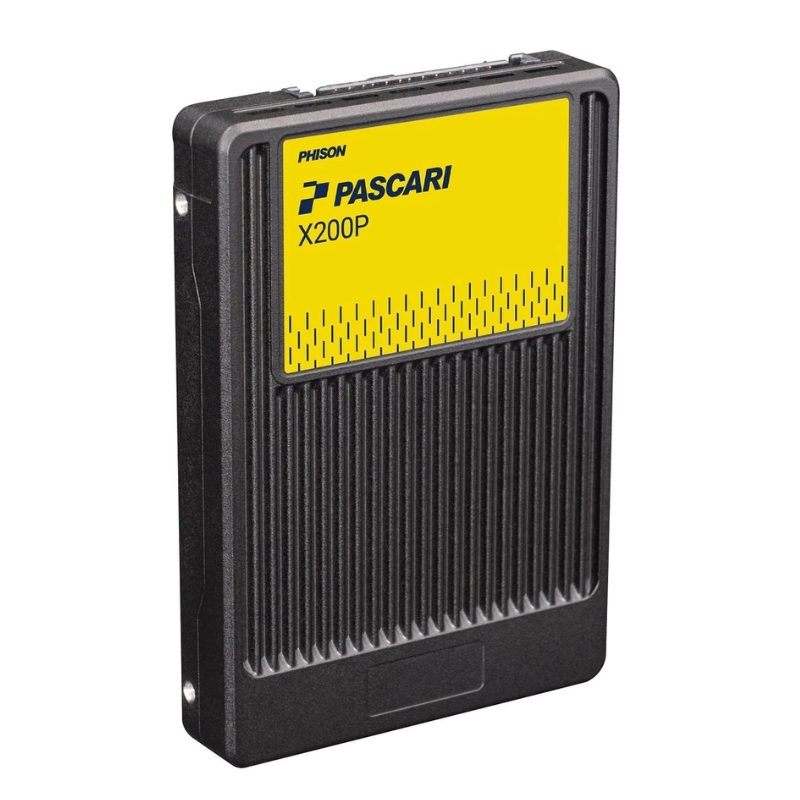


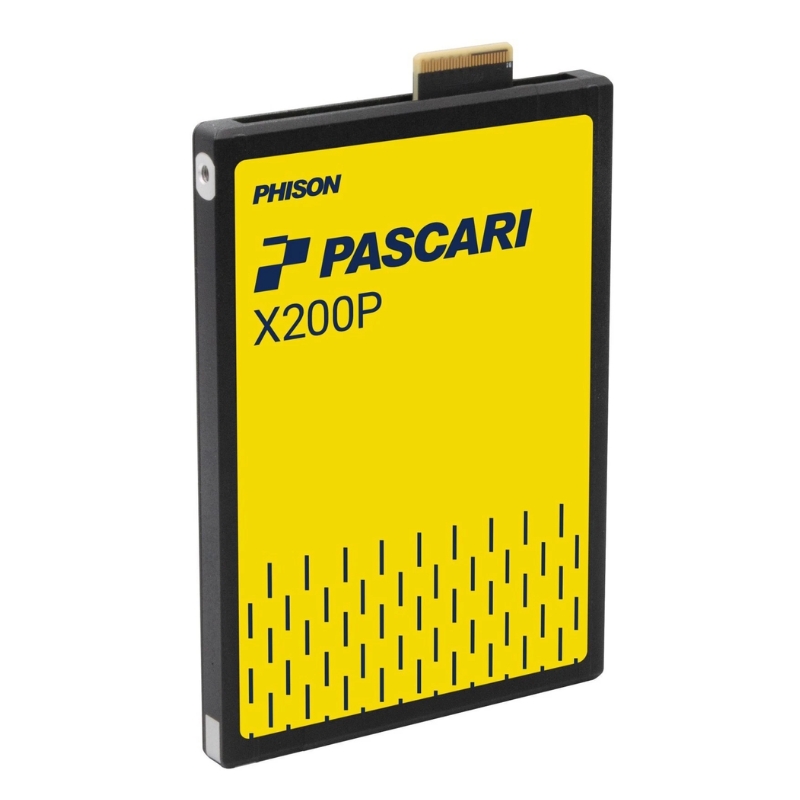
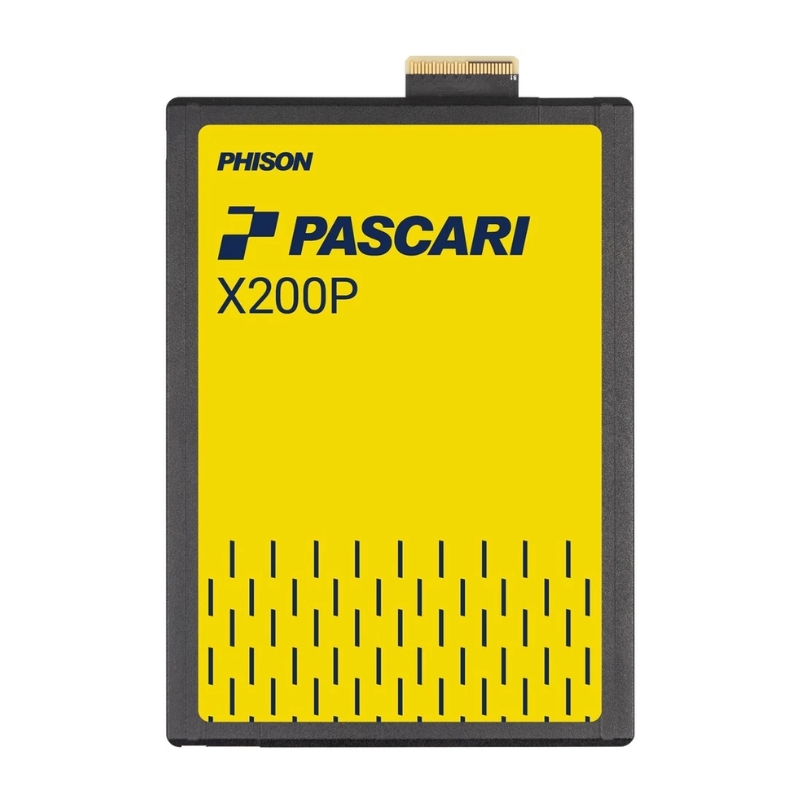
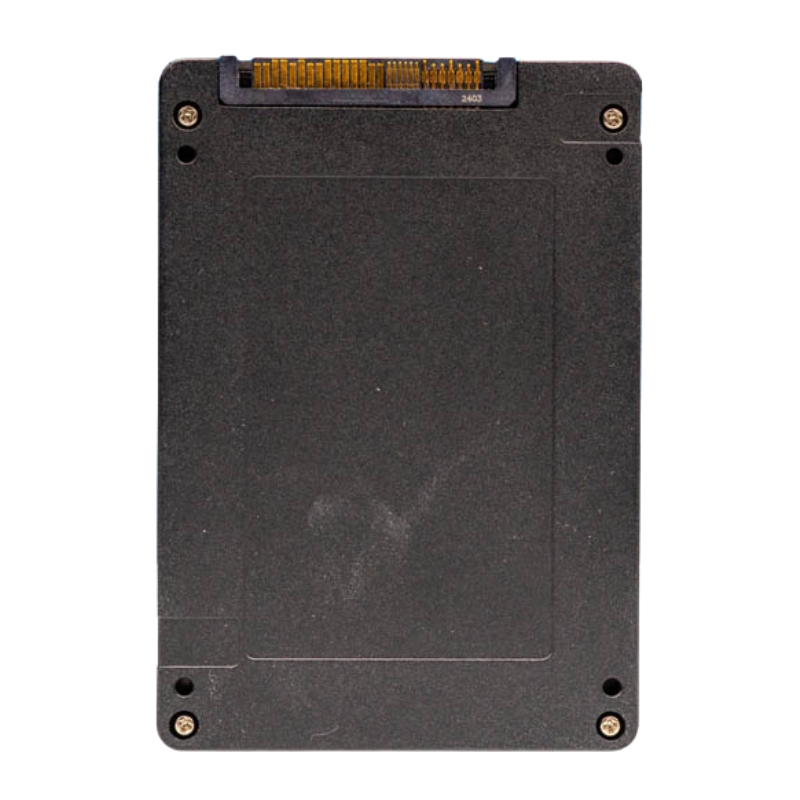
Phison XP208H033T84P224T0910 Pascari X200P 3.84TB U.2 15mm Gen5x4 PCIe NVMe Solid State Drive. New Sealed in Box (NIB) with 3 Years Warranty
The Phison XP208H033T84P224T0910 Pascari X200P 3.84TB U.2 NVMe SSD is a high-performance enterprise storage solution designed for next-generation servers and data center environments. Built on PCIe Gen5 x4 NVMe 2.0 architecture, this solid state drive delivers exceptional throughput, low latency, and enterprise-level endurance for mixed read and write workloads.
The Phison XP208H033T84P224T0910 Pascari X200P 3.84TB U.2 15mm Gen5x4 PCIe NVMe Solid State Drive represents a high-performance, enterprise-class storage solution engineered to meet the most demanding workloads in modern data centers, cloud infrastructures, and mission-critical computing environments. As part of the next-generation Gen5x4 PCIe NVMe SSD category, the Pascari X200P series embodies advanced flash management, superior throughput, and robust endurance, solidifying its role as a foundational storage platform for artificial intelligence, machine learning, real-time analytics, virtualization, and high-performance computing applications.
Modern enterprise storage demands interfaces that can sustain rapid data transfer, low latency, and high throughput. The Phison Pascari X200P leverages PCIe Gen5x4 technology, delivering a pathway to significantly higher data rates compared to previous PCIe generations. This interface supports four high-speed PCIe lanes, offering enhanced bandwidth that enables faster communication between the SSD and host system. When paired with the latest NVMe 2.0 specification, Gen5x4 SSDs such as the Pascari X200P maximize parallelism and advanced I/O queuing capabilities, resulting in improved performance for complex workloads and large-scale data operations.
PCIe has evolved from Gen3 to Gen5 in response to the exponential growth in data processing and storage needs. Each successive PCIe generation doubles the per-lane bandwidth, and with Gen5x4, SSDs achieve notable performance improvements over Gen4 offerings. NVMe, designed specifically for flash-based storage, revolutionizes how storage devices communicate with the host CPU, eliminating bottlenecks present in legacy interfaces and optimizing command sets for low-latency, high-concurrency operations. The combination of Gen5x4 and NVMe 2.0 delivers measurable gains in random I/O performance, sequential throughput, and sustained workload handling—making SSDs like the Pascari X200P ideally suited for enterprise environments.
A storage interface directly influences how quickly data can be transferred between the SSD and server architecture. In high-transaction environments such as database systems, virtualized infrastructures, and AI training clusters, latency and throughput become critical performance determinants. PCIe Gen5x4’s expanded bandwidth supports higher queue depths and accelerated data movement, reducing bottlenecks and ensuring that storage subsystems keep pace with modern CPU and memory architectures. By adopting this interface, the Pascari X200P enables more responsive storage performance that scales with workload intensity.
The Phison Pascari X200P utilizes the U.2 15mm form factor, a robust and serviceable design tailored for enterprise storage deployments. Unlike M.2 SSDs that are designed for compact systems, U.2 drives provide larger capacities and enhanced thermal management characteristics suitable for rack-mounted servers, storage arrays, and blade systems. The 15mm height ensures ample surface area for thermal dissipation and adds mechanical stability within enterprise chassis. U.2 connectors also support hot-swapping, simplifying maintenance and replacement without significant service interruption. This form factor’s resilience and serviceability make it a preferred choice for enterprise IT professionals demanding high uptime and ease of management.
Enterprise-grade SSDs must endure sustained workloads and varying thermal conditions. The larger U.2 15mm form factor provides greater surface area for heatsinks, thermal pads, and airflow optimization. Effective thermal management preserves performance during intensive read/write cycles and prevents throttling that can occur with smaller form factors under heavy use. Additionally, the increased mechanical robustness of U.2 drives improves shock and vibration resistance, which is essential in data centers where rack-mounted systems are subject to dynamic operational stresses.
Hot-swapping capabilities in U.2 SSDs enable technicians to replace or install drives without powering down systems, which is fundamental in enterprise environments requiring high availability and minimal service windows. IT administrators can perform maintenance, capacity expansion, or drive replacements with reduced risk of downtime. These features align with the operational priorities of large-scale storage environments where uptime and continuous service delivery are critical metrics of infrastructure success.
Storage capacity is a pivotal consideration in enterprise deployments, and the 3.84TB capacity of the Phison Pascari X200P provides substantial room for data-intensive applications. Large-capacity SSDs enable consolidation of workloads, reduction of storage device count, and improved floor space efficiency in data centers. With nearly 4TB per drive, organizations can implement high-density storage strategies that meet increasing data retention and performance requirements without resorting to complex multi-drive configurations. This capacity range serves a variety of use cases, from primary data storage to tiered caching layers, virtual machine libraries, high-resolution media storage, and analytics datasets.
High-capacity SSDs reduce the need for extensive drive arrays to meet storage requirements. Fewer devices equate to streamlined management, lower power consumption, and reduced cabling complexity. Consolidating storage into high-capacity SSDs simplifies provisioning and enables IT environments to scale more predictably. Enterprises running large-scale virtualization environments can allocate significant storage space to virtual machine images while maintaining performance consistency and reducing fragmentation across multiple devices.
With 3.84TB of available storage, IT architects can allocate distinct drive partitions for various workload classes, including transactional databases, log files, data warehouses, and caching operations. This flexibility supports multi-tiered storage architectures that balance performance with cost, allowing frequently accessed data to reside on high-speed NVMe storage while less active datasets may be archived to lower-tier systems. Such tiered approaches optimize total cost of ownership (TCO) and maximize resource utilization within the enterprise storage ecosystem.
Enterprise storage solutions must meet stringent durability and data protection standards, and the Phison Pascari X200P is engineered with endurance-focused design to withstand high write workloads. Drive endurance is a measure of how much data can be written over the lifetime of the SSD before failure, and enterprise-grade SSDs often exceed consumer-grade endurance specifications by significant margins. Phison XP208H033T84P224T0910 is built to handle consistent heavy I/O operations typical of database transactions, virtualization hypervisors, cache-intensive applications, and mixed read/write workloads.
Advanced wear leveling techniques distribute write and erase cycles evenly across NAND flash cells to maximize usable lifespan. Through intelligent flash translation layer (FTL) algorithms, the Pascari X200P minimizes write amplification and balances memory utilization to prevent premature failure in high-stress scenarios. This flash management strategy is crucial for maintaining predictable performance and prolonging the operational life of the SSD in enterprise contexts.
Error correction code (ECC) and data protection features ensure that memory cell errors are detected and corrected without impacting system stability. Enterprise SSDs incorporate robust ECC engines capable of identifying and resolving multi-bit errors, safeguarding data integrity even under strenuous workloads. These mechanisms support resilience in environments requiring continuous uptime, transaction consistency, and high data fidelity, such as financial systems, healthcare records platforms, and cloud storage services.
Enterprise SSDs often include power loss protection circuits that provide capacitive or battery-backed buffer power to complete in-flight write operations in the event of unexpected power failure. This feature protects against data corruption and ensures that critical write operations are not interrupted mid-process, which is crucial for enterprise workloads where any data loss or corruption could result in significant operational impacts.
Performance is a defining characteristic of Gen5x4 PCIe NVMe SSDs, and the Pascari X200P delivers high throughput and low latency across diverse I/O patterns. Sequential read and write speeds approach theoretical maximums afforded by PCIe Gen5x4 bandwidth, while random I/O performance ensures responsive access for applications with non-linear data requests. High IOPS performance is essential in virtualization, database servicing, distributed file systems, and analytics frameworks where thousands of transactions may occur simultaneously.
High sequential throughput benefits workloads such as large file transfers, media streaming, backup operations, and big data ingestion. The ability to move large blocks of data rapidly minimizes waiting periods, accelerates batch processing jobs, and enhances overall system responsiveness during bulk storage operations. Gen5x4 PCIe leverage ensures that enterprise servers can saturate available bandwidth, achieving performance levels that were previously unattainable with earlier technologies.
Transactional workloads, including database queries, transactional logging, and metadata lookups, rely on strong random I/O performance. Enterprise-grade SSDs like the Pascari X200P deliver IOPS performance capable of sustaining demanding mixed read/write patterns with minimal latency. These capabilities improve application responsiveness, reduce queue depths, and accelerate time-sensitive operations that form the backbone of modern enterprise systems.
Security is a critical consideration in enterprise storage solutions, and modern SSDs incorporate multiple layers of protection to safeguard sensitive data. Features may include hardware-based encryption, secure erase commands, and compatibility with industry-standard security protocols. These mechanisms help protect data at rest and support compliance with regulatory frameworks governing data privacy and protection.
Hardware encryption engines embedded within enterprise SSDs provide transparent data protection without significant performance overhead. By offloading encryption processes from host CPUs, these drives enable secure storage environments with minimal impact on throughput or latency. Encryption ensures that stored data remains confidential and tamper-resistant, supporting compliance with enterprise security policies and regulatory requirements.
The Phison XP208H033T84P224T0910 Pascari X200P 3.84TB U.2 Gen5x4 PCIe NVMe SSD fits into a variety of enterprise deployment scenarios. In cloud infrastructure, it supports scalable storage tiers, enhances VM performance, and accelerates containerized workloads. In virtualization clusters, it enables high-performance storage-backed caching and improves multi-tenancy support. For AI and machine learning platforms, it facilitates rapid dataset access, faster model training iterations, and responsive data preprocessing frameworks. Data analytics platforms leverage high throughput and low latency to shorten query times and improve insights delivery, while HPC applications benefit from consistent performance under heavy compute loads.
Cloud service providers require reliable and scalable storage solutions to meet SLAs, support multi-tenant environments, and balance performance with cost-efficiency. High-density SSDs like the Pascari X200P enable storage virtualization, tiered storage architectures, and accelerated I/O for tenant workloads, improving service delivery and customer satisfaction across distributed infrastructure services.
AI training and big data analytics involve moving large datasets rapidly between storage and compute resources. SSDs with high throughput and strong random performance reduce data bottlenecks, supporting faster data preprocessing, model iteration, and real-time analytics. The Pascari X200P’s PCIe Gen5x4 architecture ensures that storage systems remain aligned with the performance demands of advanced analytics and AI frameworks.
Enterprise SSDs must integrate seamlessly with server motherboards, storage controllers, RAID configurations, and operating systems. The Phison Pascari X200P supports standard NVMe drivers, enterprise-class firmware management tools, and compatibility with server-grade operating systems. This ensures that IT administrators can deploy, monitor, and manage storage devices within existing infrastructure frameworks without extensive customization, promoting smooth integration and predictable operation.
Enterprise SSDs often include firmware update capabilities and support remote monitoring interfaces that allow IT teams to track drive health, performance metrics, and error logs. Firmware updates improve security, optimize performance, and address compatibility enhancements. Remote telemetry and monitoring support proactive maintenance, predictive failure analysis, and capacity planning—critical components of modern IT operations.
RAID configurations remain a staple in enterprise storage for redundancy and performance scaling. NVMe drives like the Pascari X200P can operate within RAID arrays using NVMe-over-Fabrics (NVMe-oF) or through RAID controllers designed for NVMe support. Integration with storage virtualization technologies allows for dynamic provisioning, snapshotting, and tiered storage policies that align with workload SLAs and performance objectives.
Technology evolves rapidly, and forward-looking enterprises must adopt storage solutions that are adaptable to future performance demands. The Phison XP208H033T84P224T0910 Pascari X200P Gen5x4 PCIe NVMe SSD offers a roadmap for long-term scalability, ensuring that infrastructure investments remain relevant as data growth, application complexity, and storage performance expectations increase. By embracing cutting-edge interface technology, high-capacity storage, and enterprise-class endurance, organizations can build resilient, high-performance data platforms capable of supporting next-generation workloads and digital transformation strategies.
Emerging applications in AI, edge computing, real-time analytics, and hybrid cloud architectures demand storage solutions that can scale in capacity and performance. Gen5x4 SSDs provide the bandwidth required for high-throughput workloads while maintaining low latency. This scalability enables enterprises to adapt to evolving computing paradigms without frequent hardware overhauls, ensuring that storage infrastructures remain robust in the face of technological change.
Modern data centers prioritize performance, efficiency, manageability, and resilience. The Pascari X200P’s blend of high capacity, enterprise-grade reliability, and next-generation performance aligns with these objectives, enabling organizations to consolidate storage resources, reduce operational complexity, and deliver consistent service levels. As data center priorities evolve toward distributed architectures, hybrid cloud integration, and automation-centric operations, SSD solutions like the Pascari X200P provide the necessary foundation for future success.


 Contact Us
 Information
 Catalog
 Solid State Drives (SSD)
 Network Switches
 Hard Disk Drives
 HBA & Controllers
 PC & Servers
 PC & Server Memory
 CPU & Processors
 Network Routers
 Power Supplies
 Tape Drives & Libraries
 Network Devices
 Computer & Network Cables