(7% discount is applied at checkout)
Cart is empty
Your go-to destination for cutting-edge server products
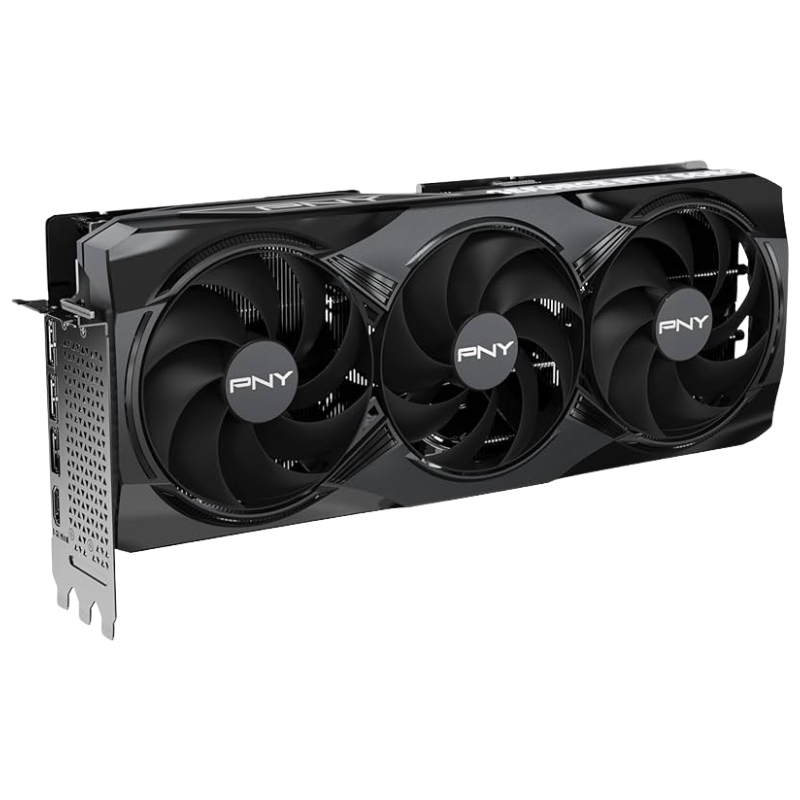


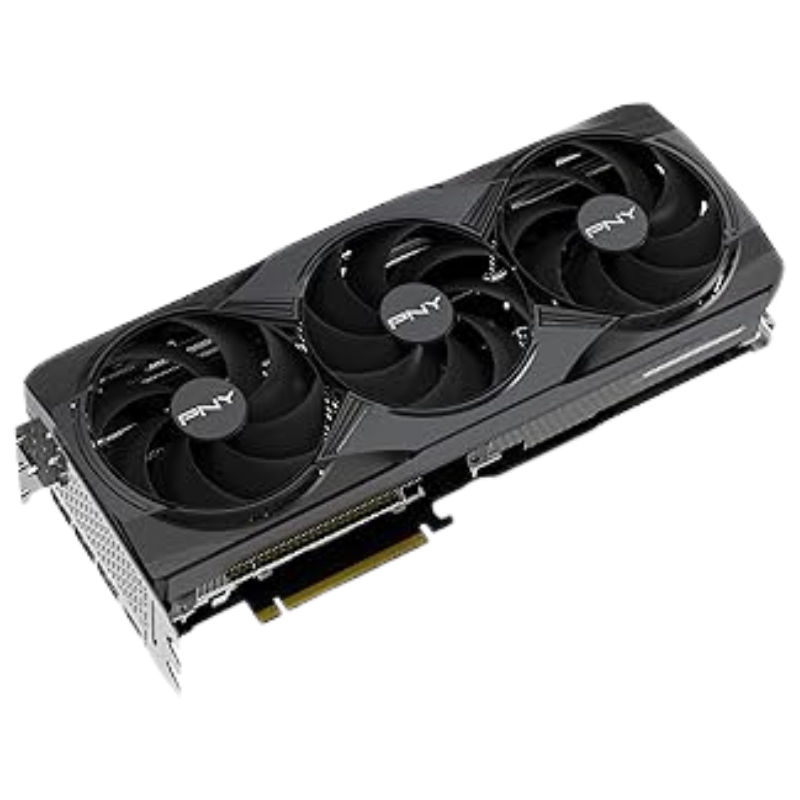
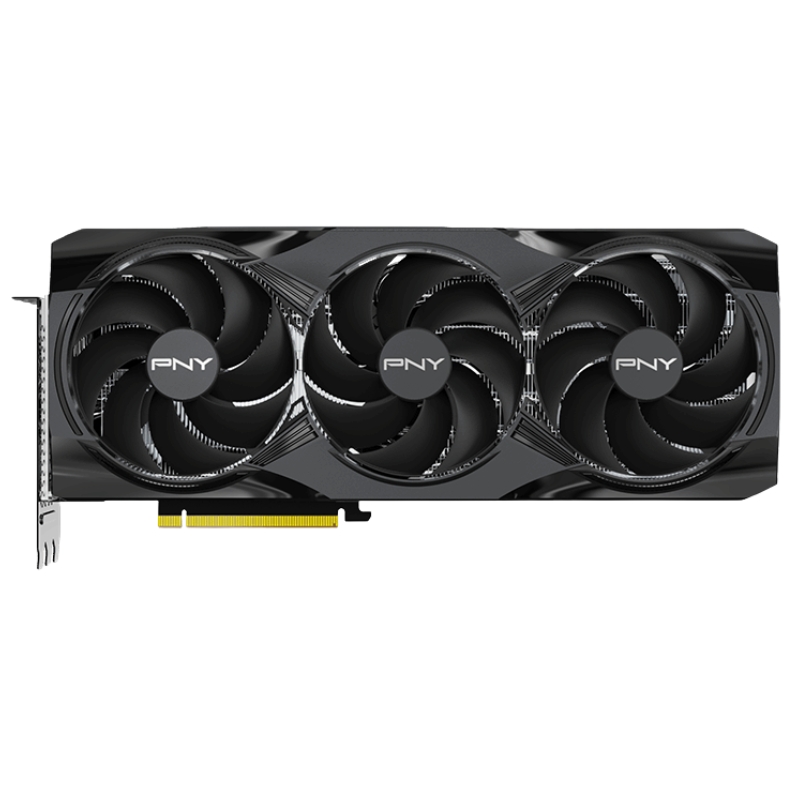
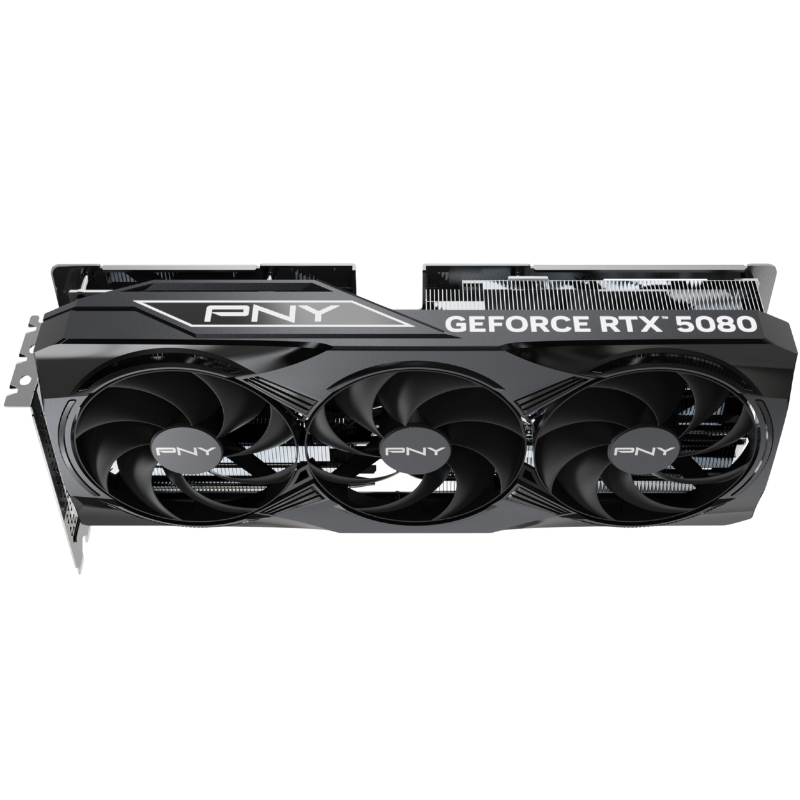
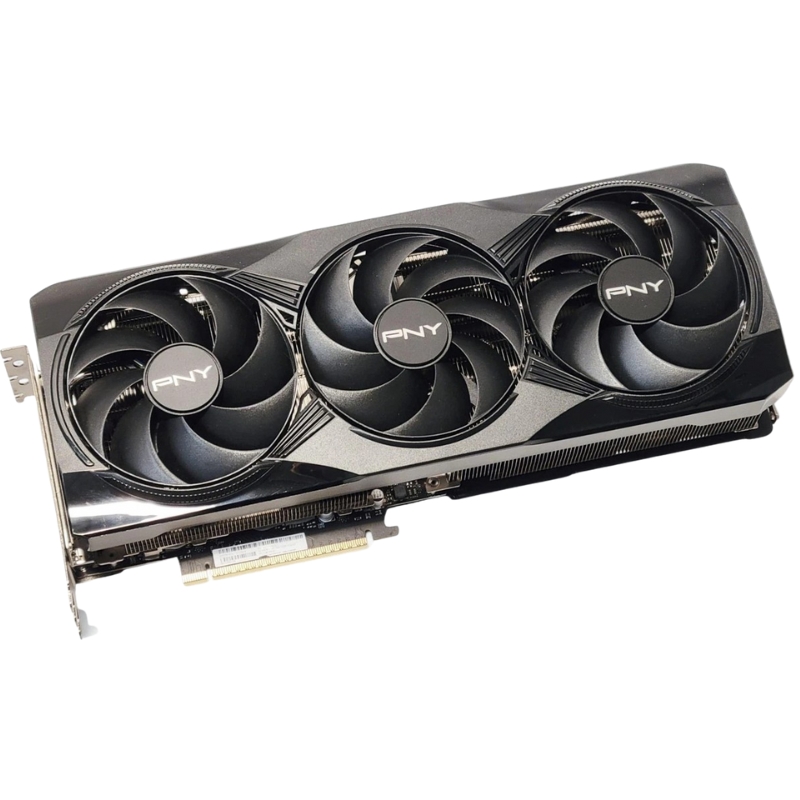
PNY Technology VCG508016TFXPB1 Nvidia Geforce RTX 5080 16GB GDDR7 Triple Fan Blackwell Cuda Cores 10752 Memory GPU. New Sealed in Box (NIB) with 1 year Replacement Warranty
The PNY Technology VCG508016TFXPB1 Nvidia GeForce RTX 5080 16GB GDDR7 Triple Fan Blackwell represents a class-leading discrete graphics solution designed for gamers, content creators, and professionals who demand high frame rates, advanced ray tracing, and accelerated AI workflows. Built on NVIDIA’s Blackwell architecture and tuned by PNY with a factory overclock and a robust triple-fan cooling solution, this RTX 5080 variant is positioned to deliver significant generational performance gains over previous architectures while supporting the latest platform features such as DLSS 4, PCIe 5.0, and DisplayPort 2.1b/HDMI 2.1b connectivity. The card’s specifications—including 10,752 CUDA cores, 16GB of GDDR7 memory on a 256-bit bus, and a boost clock in the 2.7 GHz range—are engineered to support high-refresh 4K gaming, complex 3D rendering, and smooth live streaming at ultra settings.
The Nvidia Blackwell architecture is the foundation of the RTX 50-series and is optimized for both rasterization and hardware-accelerated ray tracing. It introduces architectural enhancements to core throughput, tensor processing for AI workloads, and more efficient ray-tracing engines which collectively improve real-time lighting, global illumination, and AI-driven upscaling algorithms. For the PNY RTX 5080, Blackwell’s improvements translate into higher sustained frame rates in modern titles and faster iteration times in creative applications that leverage CUDA and Tensor cores. These architectural changes also increase efficiency at high shader loads, which helps the card maintain performance while running complex shaders, simulations, or multi-camera editing timelines.
With 10,752 CUDA cores, the PNY RTX 5080 provides a significant parallel compute surface for shader workloads and CUDA-accelerated applications. The balance between CUDA cores, updated RT cores for ray tracing, and enhanced Tensor cores for AI tasks is deliberate: it allows developers and power users to take advantage of new features such as Multi Frame Generation and DLSS 4 while also accelerating compute-heavy tasks like GPU rendering, neural denoising, and AI inference. The result is a well-rounded GPU that performs strongly across gaming, workstation, and streaming workloads without being narrowly optimized for one primary use case.
The PNY RTX 5080 comes equipped with 16GB of GDDR7 memory running on a 256-bit interface, which produces an effective memory bandwidth in the high hundreds of gigabytes per second. This modern memory configuration enables higher texture fidelity, larger working datasets for creative applications, and better handling of ultra-resolution framebuffers when gaming at 4K or higher. GDDR7’s higher data rates compared with previous memory generations reduce memory-bound scenarios, enabling the GPU to reach higher sustained performance in both rasterized and ray-traced workloads. For users working with large 3D scenes, complex simulations, or high-resolution video timelines, the increased bandwidth reduces frame stalls and paging, translating into smoother editing and rendering experiences.
PNY’s triple-fan cooler is engineered to manage the RTX 5080’s heat output while maintaining an acceptable noise profile during heavy use. The combination of multiple axial fans, a dense fin-stack heatsink, and a well-designed vapor chamber or heat pipe assembly (depending on model variant) allows the card to dissipate the approximately 360 W thermal design power (TDP) under sustained loads. For gamers and creators who require long-duration stability—such as marathon streaming sessions or extended rendering jobs—the improved thermal headroom helps the GPU sustain higher boost clocks for longer periods before thermal throttling becomes a factor. Users building compact systems will want to verify case airflow and available clearance, because high-performance triple-fan cards require adequate intake and exhaust paths to optimize cooling efficiency.
The PNY RTX 5080 generally includes three DisplayPort 2.1b outputs and a single HDMI 2.1b port, enabling support for cutting-edge monitors and TVs with ultra-high refresh rates and high resolutions. DisplayPort 2.1b with UHBR modes supports multi-GPU and high-bandwidth scenarios, making the card capable of driving up to four displays and offering official support for 4K at 480Hz or 8K at 165Hz with Display Stream Compression where applicable. This output set makes the card a solid choice for competitive gamers using high-refresh monitors, as well as for creators who rely on multi-monitor setups for expanded timelines, color correction, and large canvas workspaces.
In modern AAA titles and esports titles that scale with GPU core counts and memory bandwidth, the RTX 5080 is designed to achieve high frame rates at 1440p and competitive 4K performance depending on settings. With hardware-accelerated ray tracing and NVIDIA’s DLSS 4 upscaling, gamers can enable advanced visual features while maintaining fluid frame pacing. Titles that leverage NVIDIA’s latest driver optimizations and DLSS implementations will see marked improvements in effective performance-per-frame, particularly when multi-frame generation and AI-assisted upscaling reduce the rendering load without sacrificing perceived image quality. The factory overclock on PNY’s OC variants further nudges peak frequencies to boost average frame rates in GPU-bound scenarios.
When integrating a high-performance triple-fan card into a system, builders should verify case clearance for card length, available PCIe slots for width and backplate ventilation, and internal airflow patterns to ensure effective heat rejection. The triple-fan design typically spans multiple expansion slots and benefits from unobstructed airflow to its intake fans. Sufficient distance from storage cages, power cables, and front intake obstructions is recommended to maintain lower operating temperatures and reduce fan noise at load. These physical considerations are particularly relevant for compact ATX and micro-ATX builds where space is constrained.
For competitive players and enthusiasts chasing high refresh rates at 1440p or pushing into 4K gameplay with ray tracing enabled, the PNY RTX 5080 offers a compelling combination of raw throughput and AI-enhanced frame generation. When paired with a high-refresh monitor, the card can sustain tight frame pacing and low-latency inputs, making it suitable for fast-paced shooters as well as demanding AAA titles with advanced visual effects. The card’s balance of CUDA cores, memory bandwidth, and boost clocks is tuned to provide consistent performance across a variety of titles.
Creators who render 3D scenes, edit multi-cam 8K footage, or perform GPU-accelerated compositing will find the RTX 5080’s blend of VRAM, bandwidth, and compute advantageous. The updated RT cores and Tensor cores accelerate ray-traced previews, AI denoising, and neural-enhanced upscaling, while CUDA acceleration shortens render times in supported engines. Streamers benefit from hardware-accelerated NVENC encoders that offload video transcoding from the CPU, allowing simultaneous gameplay and high-quality live encoding without significant frame loss. This makes the card an excellent choice for creators building a single-GPU workstation that handles both real-time editing and final render tasks.


 Contact Us
 Information
 Catalog
 Solid State Drives (SSD)
 Network Switches
 Hard Disk Drives
 HBA & Controllers
 PC & Servers
 PC & Server Memory
 CPU & Processors
 Network Routers
 Power Supplies
 Tape Drives & Libraries
 Network Devices
 Computer & Network Cables