(7% discount is applied at checkout)
Cart is empty
Your go-to destination for cutting-edge server products
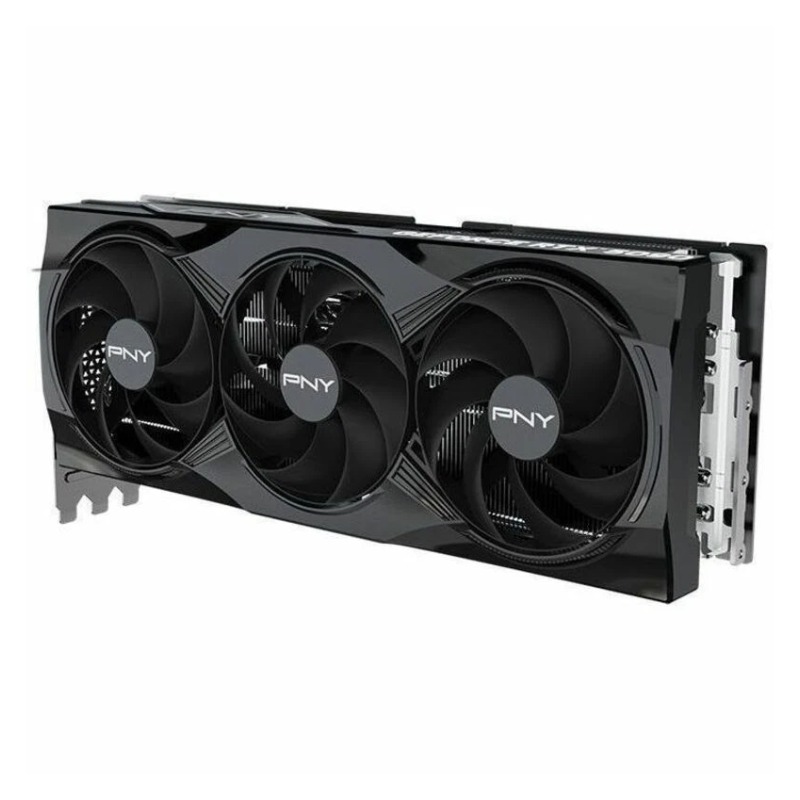


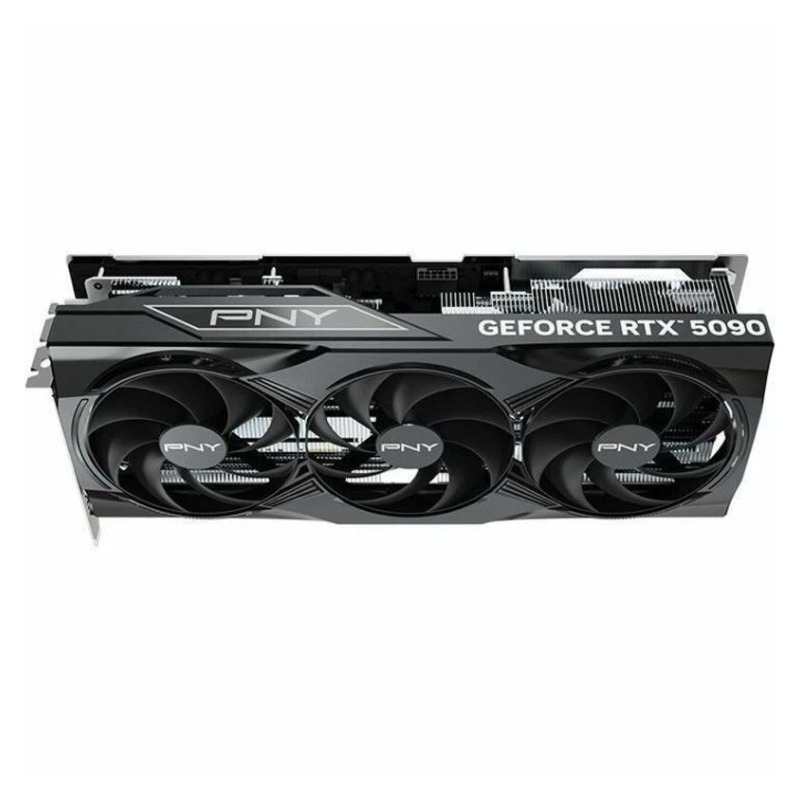
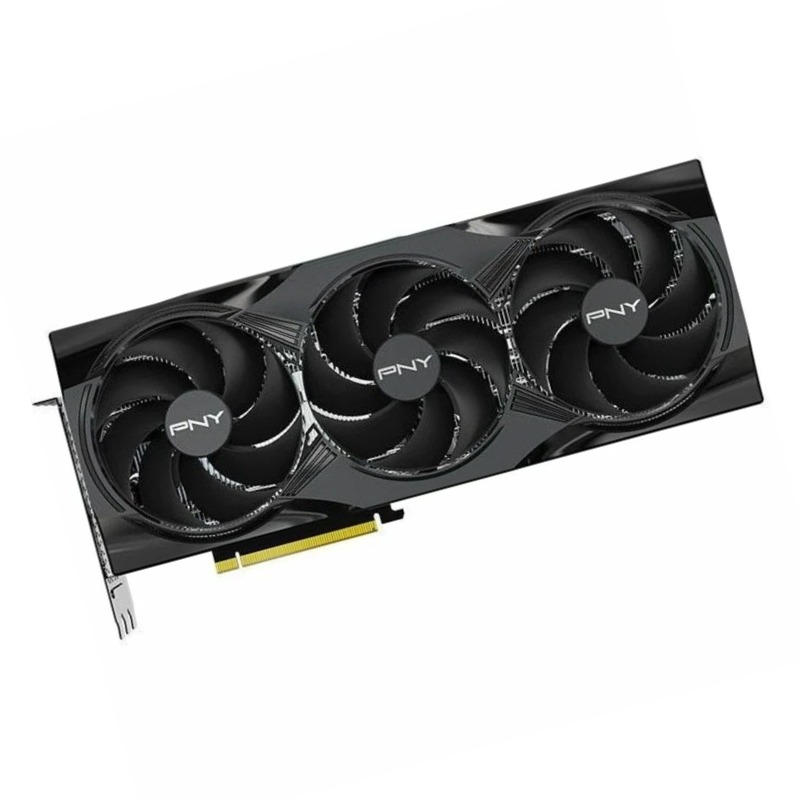
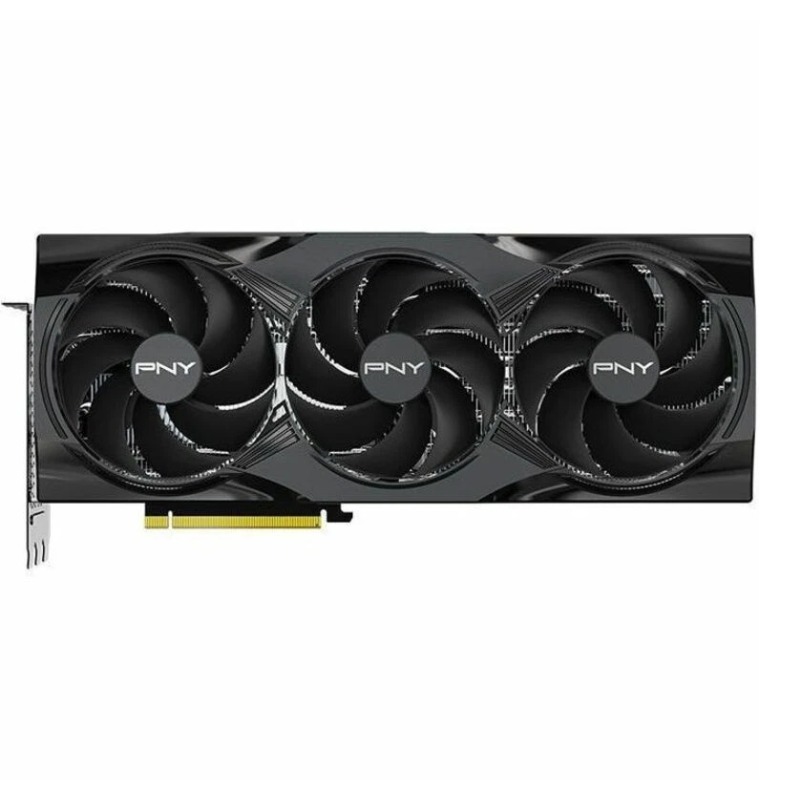
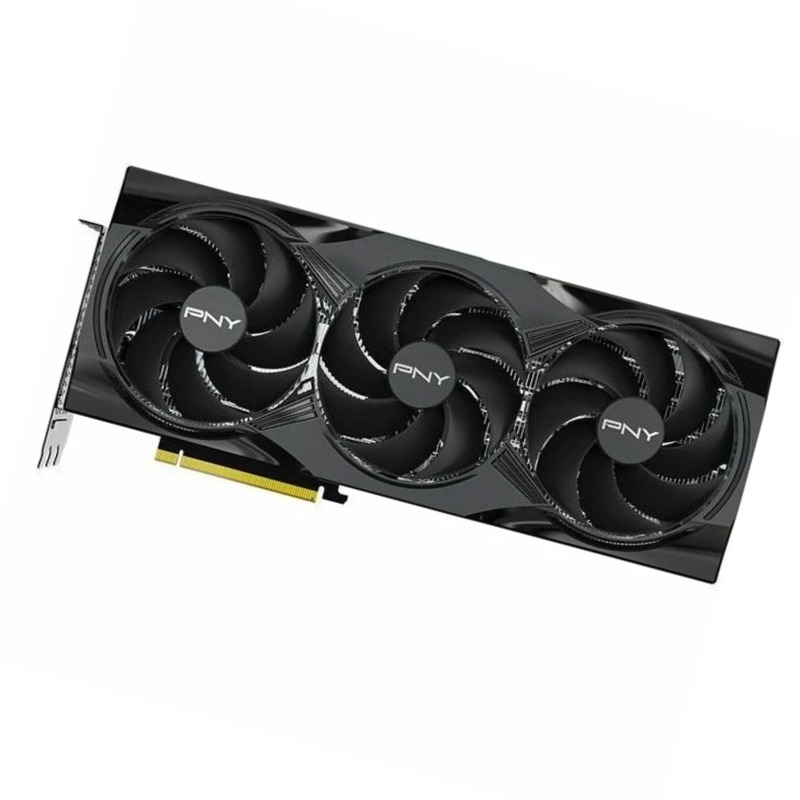
PNY Technology VCG509032TFXPB1 Blackwell architecture GeForce RTX 5090 with 32GB GDDR7 GPU. New Sealed ETA 2-3 Weeks. No Cancel No Return
The PNY Technology VCG509032TFXPB1 offers an outstanding leap in gaming and creative performance. Designed with the latest NVIDIA Blackwell architecture, it provides extreme power, speed, and reliability for enthusiasts and professionals alike.
Built for the most demanding applications, the RTX 5090 brings unparalleled graphical fidelity and computational speed. Whether you’re rendering 3D environments, editing 8K videos, or engaging in next-generation gaming, this card delivers cutting-edge efficiency and precision.
Its robust cooling mechanism ensures consistent frame rates and stable operation, even during intensive GPU loads.
Engineered for versatile systems, this GPU integrates smoothly with modern platforms and operating systems.
The PNY Technology 32GB VCG509032TFXPB1 is a top-tier example of the next-generation Nvidia Blackwell architecture GeForce RTX 5090 graphics card lineup. As a premium offering in the RTX 50 series, this category shines in delivering extreme performance, cutting-edge features, and future-proof capabilities. This category page covers the defining traits, use-case advantages, technical specifications, and buying considerations of this GPU class. It also dives into subcategories such as memory options, cooling designs, factory overclocked variants, and specialized editions.
The defining aspect of the RTX 5090 class is the integration of the **Blackwell architecture**. This architecture offers improved power efficiency, enhanced ray tracing cores, and next-generation AI accelerators. GPUs in this category, particularly the PNY 32GB VCG509032TFXPB1 variant, bring forth features like third-generation RT cores, improved Tensor cores, and redesigned SM units. The result: substantially higher throughput for real-time ray tracing, AI-assisted workloads, and computational graphics tasks.
One of the signature advancements is the expanded third-gen RT core design. These cores enable accelerated ray–triangle intersection tests and support for dynamic geometry, allowing for more realistic lighting, shadows, and reflections in real time. In tandem, the newer Tensor cores power DLSS (Deep Learning Super Sampling) and AI-based image enhancements at much higher efficiency. Multi-precision capabilities—such as support for FP32, FP16, INT8, and INT4 operations—make this category ideal for both gaming and professional deep learning workloads.
Hardware-wise, this category typically features a high-bandwidth memory (HBM or GDDR8, depending on final design) interface, wide bus widths (e.g. 512-bit or more), and advanced power delivery designs (often 18+ or 20+ phases). The PNY 32GB variant exemplifies this trend, offering an ample 32 GB of VRAM to handle ultra-high resolutions, multi-monitor setups, large compute datasets, endless texture capacity, and 3D rendering of sizable scenes.
Within this category, memory configurations center on high-capacity, high-speed video memory—frequently in the 24 GB to 48 GB range—but the 32 GB variant is a mainstream sweet spot. Memory type choices may include GDDR8 or HBM3E, both delivering blistering bandwidth. The PNY 32 GB subcategory ensures that the user can run 8K gaming, complex real-time ray tracing, or GPU compute workloads without memory bottlenecks.
Subcategory variations often arise in memory frequency and memory bus width. Some models in this category adopt factory-overclocked memory profiles, offering modest boosts in bandwidth (e.g. +2–5 %) beyond reference speeds. Others use an enhanced memory controller for error correction or ECC support (especially useful in professional or research contexts).
Another memory-based differentiation is cooling for memory modules—some designs include dedicated memory heatspreaders, memory-side vapor chambers, or copper inserts across memory banks. For high-demand workflows, these thermal enhancements preserve stable clock rates and prevent performance drop under sustained loads.
One of the hallmark strengths of the RTX 5090 category is delivering ultra-high performance in modern game engines with full ray tracing. Titles supporting DirectX Raytracing (DXR), Vulkan RT extensions, or proprietary engines (e.g. Unreal Engine 5 Nanite / Lumen) benefit heavily from the enhanced RT cores and AI smoothing of this architecture.
Gamers can expect to run demanding titles at 4K, 5K, and even 8K resolutions with all settings maxed and ray tracing enabled—often with DLSS or DLSS-like upscaling ensuring smooth framerates. The 32 GB memory buffer eliminates VRAM cap worries, even with large texture packs, mods, or multi-pass ray tracing effects. In competitive or immersive single-player environments, this card class significantly reduces or eliminates rendering bottlenecks.
Furthermore, this GPU class supports advanced rendering features such as multi-GPU (NVLink / NVLink-like bridges), hardware-accelerated ray tracing pipelines, variable rate shading, mesh shading, and advanced shading models. Combined, these capabilities make the category ideal for both gaming and content creation pipelines that demand instantaneous visual fidelity.
Beyond gaming, the RTX 5090 class also targets creators, engineers, and AI researchers. The 32 GB PNY model is fully capable of modeling large scenes in Blender, running GPU-accelerated simulations in CUDA, or training moderately sized neural networks. Its Tensor cores support mixed-precision training and inference, while RT cores accelerate denoising, rendering kernels, and ray tracing support.
For professionals in areas like 3D rendering, architecture, simulation, video editing, and scientific computing, the RTX 5090 category presents a compelling balance. Its high compute throughput paired with generous VRAM capacity enables handling of complex workloads—rendering high-poly scenes, volumetric lighting, large fluid or particle systems, or high-resolution video timelines. Users in AI, deep learning, or machine learning can run experiments, fine-tune models, or inference real-time on the GPU, albeit top-tier models may still prefer datacenter cards—yet the RTX 5090 class closes that performance gap for many users.
Given the energy demands of Blackwell-based RTX 5090 GPUs, power delivery is a critical subcategory distinction. These cards typically require high-quality VRM tiers (12VHPWR connectors or 8+8/8+6 PCIe power connectors). Boards in this category often sport 18-phase, 20-phase, or even more elaborate power delivery systems with premium inductors, capacitors, and MOSFETs.
PCB layout innovations include copper planes, multiple power zones, and split VRM zones dedicated to core, memory, and auxiliary circuits. On premium models, redundancy monitoring, thermal sensors, and power-limiting software are common. The PNY 32 GB TXFB1 edition leverages such design choices to maintain stable voltage under heavy load, mitigate voltage droop, and offer headroom for manual overclocking.
When selecting a GPU in the RTX 5090 category such as the PNY 32 GB, system compatibility is critical. The following considerations apply:
Category-wide, users can expect large generational leaps in metrics like:
Independent reviewers often measure FPS gains over previous-generation GPUs, ray tracing benchmarks, 3DMark suite scores, real-world rendering times, and AI model inference latency. The PNY 32 GB RTX 5090 variant typically yields performance leaps of 40–90 % over the previous generation flagship in many modern titles and workloads, thanks to improvements in architecture, memory, and cooling design.Use-Case Scenarios and Target Audiences
Typical users in this category fall into several segments:
For each of these audiences, the RTX 5090 category—including the PNY 32 GB model—delivers unmatched capability. Gaming users benefit from top-tier framerates even under max ray tracing. Content creators farm render jobs faster, load large scenes fluidly, and experience real-time previews. Researchers and AI developers run more experiments concurrently or test larger batch sizes without memory overflow. Professionals get smoother CAD manipulation and simulation feedback. In custom builds, the card’s performance becomes the centerpiece of the system.
Some representative scenarios where a PNY 32 GB RTX 5090 excels:
In each use case, the expansive VRAM, architectural enhancements, and thermal headroom of this category provide a fluid experience where lesser cards would struggle or overload.


 Contact Us
 Information
 Catalog
 Solid State Drives (SSD)
 Network Switches
 Hard Disk Drives
 HBA & Controllers
 PC & Servers
 PC & Server Memory
 CPU & Processors
 Network Routers
 Power Supplies
 Tape Drives & Libraries
 Network Devices
 Computer & Network Cables