(7% discount is applied at checkout)
Cart is empty
Your go-to destination for cutting-edge server products
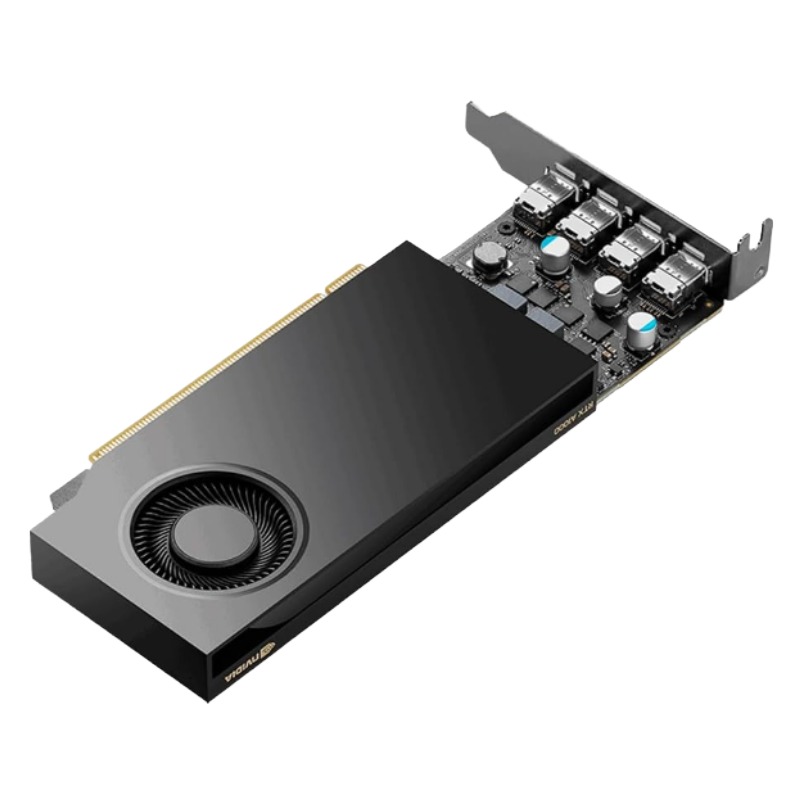


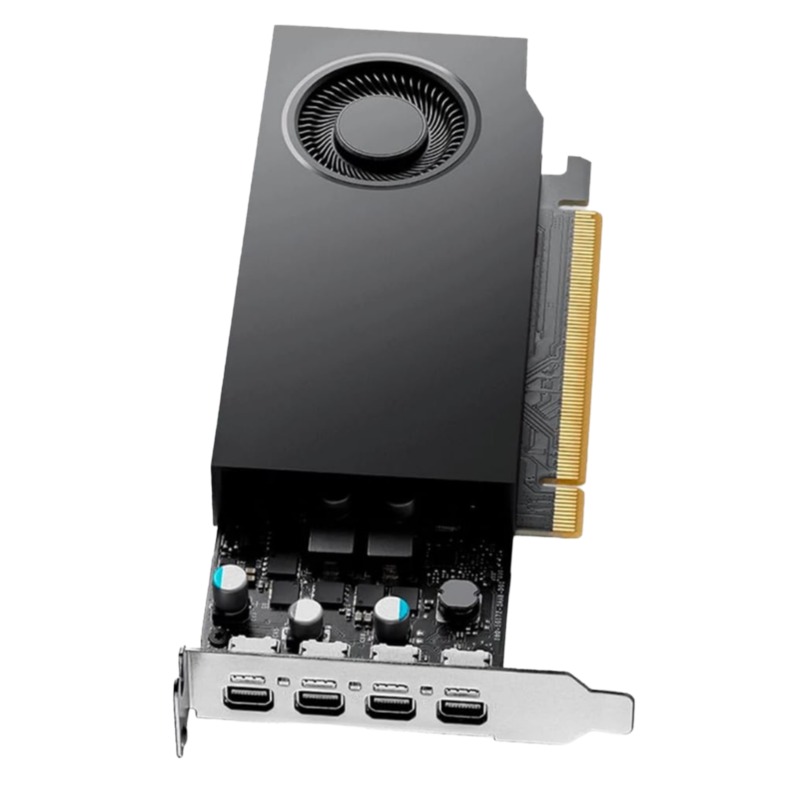
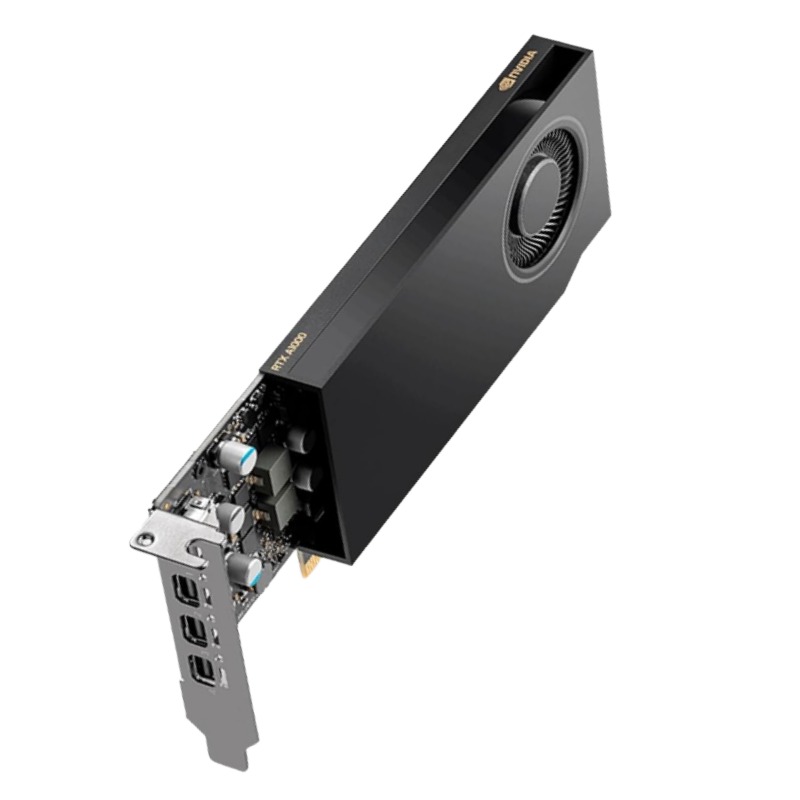
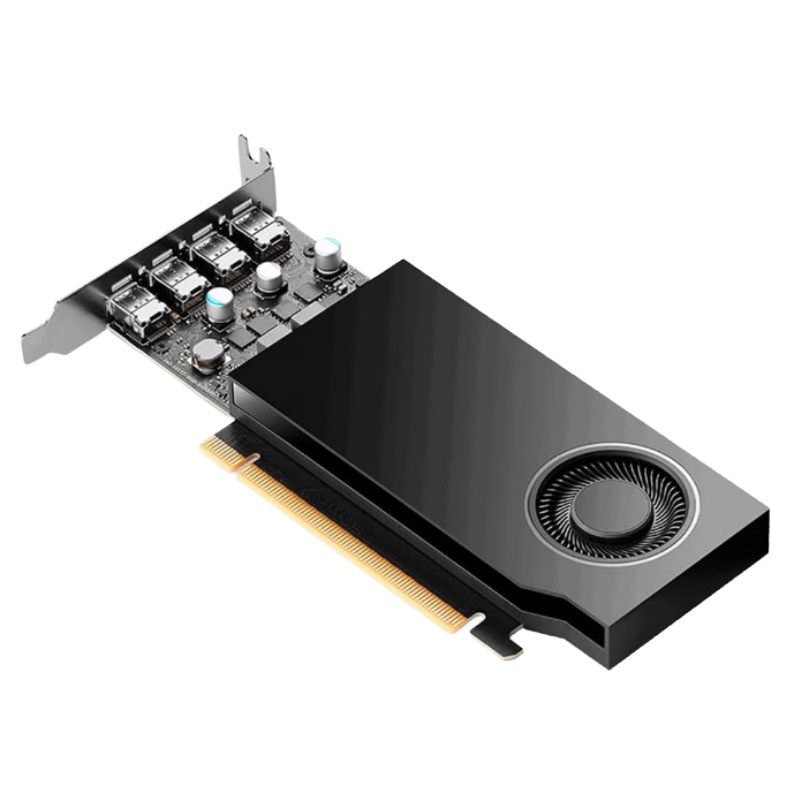
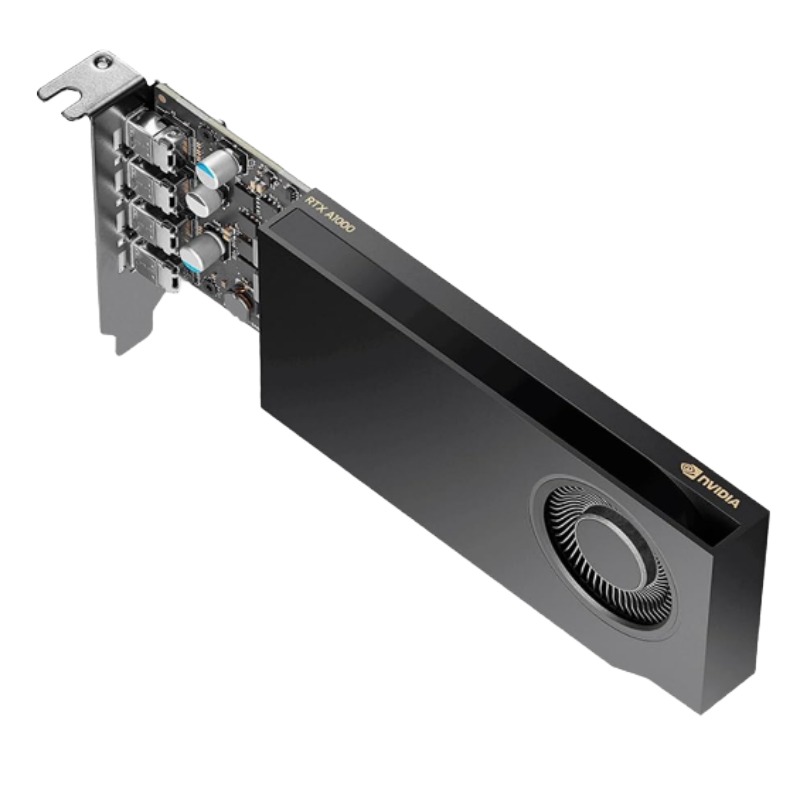
PNY Technology VCNRTXA1000ATX-B NVIDIA RTX A1000 Professional Graphics Board 8GB GDDR6 GPU. New Sealed in Box (NIB) with 3 Years Warranty.
The PNY Technology VCNRTXA1000ATX-B NVIDIA RTX A1000 is a compact yet powerful professional-grade graphics solution designed for modern workloads. Built on advanced GPU architecture, it delivers reliable performance for CAD, 3D modeling, AI-assisted workflows, and content creation environments requiring stable graphical output.
This professional GPU is engineered with efficient memory handling and optimized data throughput, ensuring smooth rendering and multitasking in demanding workstation environments.
The graphics card is built with modern connectivity standards to ensure compatibility with current workstation systems and enterprise-level setups.
Designed for reliability and consistent output, this GPU is tailored for professionals who require sustained performance in high-demand environments. Its architecture balances power efficiency with strong computational capability, making it suitable for continuous workloads.
The PNY Technology VCNRTXA1000ATX-B NVIDIA RTX A1000 Professional Graphics Board represents a compact yet powerful entry in NVIDIA’s workstation GPU lineup, designed specifically for professional creators, engineers, designers, and technical users who require stable performance in CAD, 3D modeling, AI inference, and multi-display environments. Built on the efficient NVIDIA Ampere architecture, this GPU delivers a balanced combination of compute performance, power efficiency, and enterprise-grade reliability suitable for small form factor workstations and edge computing systems.
Unlike consumer-grade graphics cards, the RTX A1000 focuses on long-term stability, certified drivers, and optimized workloads in professional applications such as Autodesk tools, Blender, SolidWorks, Adobe Creative Cloud, and AI-assisted workflows. With 8GB of GDDR6 memory and a 128-bit memory interface, it provides a strong foundation for moderate to advanced workloads without excessive power consumption or thermal output.
At the heart of the RTX A1000 lies the NVIDIA Ampere architecture, which introduces significant improvements in performance-per-watt efficiency, ray tracing capabilities, and AI acceleration compared to previous-generation Turing-based workstation GPUs. The architecture integrates CUDA cores, RT cores, and Tensor cores into a unified processing model that allows simultaneous rendering, simulation, and AI computation.
The Ampere-based design ensures that workloads such as ray-traced rendering, GPU-based simulation, and machine learning inference benefit from parallel processing optimization. This makes the RTX A1000 particularly valuable for professionals who require responsiveness in real-time rendering and interactive 3D environments.
The GPU features approximately 2304 CUDA cores, enabling highly parallel computation for rendering engines, scientific simulation software, and GPU-accelerated encoding tasks. CUDA cores are essential for accelerating tasks that would otherwise rely on CPU processing, allowing significantly faster execution times in compatible software ecosystems.
The RTX A1000 is equipped with 8GB of high-speed GDDR6 memory, designed to handle demanding graphical datasets, complex 3D scenes, and multi-layered textures. This memory capacity is suitable for mid-to-high complexity workloads such as architectural visualization, product design, and light-to-moderate 4K video editing.
A 128-bit memory interface ensures efficient data transfer between GPU cores and VRAM, maintaining stable throughput for rendering and compute tasks. While not designed for ultra-high-end 8K production environments, it provides a well-balanced bandwidth of approximately 192 GB/s, which supports most professional workloads without bottlenecking.
The memory subsystem is optimized for consistency rather than peak gaming-style burst performance. This makes it ideal for workstation environments where reliability and sustained performance are more important than short-term frame rate spikes.
The inclusion of dedicated RT cores enables hardware-accelerated ray tracing, allowing users to simulate realistic lighting, reflections, and shadows in real-time. This is particularly beneficial for 3D artists and architectural visualization professionals who require physically accurate rendering without excessive render times.
Tensor cores in the RTX A1000 accelerate AI-based workloads such as denoising, image enhancement, neural rendering, and machine learning inference. These cores significantly reduce processing time in AI-assisted workflows, especially in applications using frameworks like CUDA, TensorRT, and OpenCL.
AI acceleration improves productivity in creative and technical environments by enabling faster previews, real-time adjustments, and automated enhancements in imaging and video production workflows.
The RTX A1000 supports up to four simultaneous displays, making it ideal for multi-monitor workstation setups used in trading desks, control centers, engineering environments, and content creation studios.
The GPU supports resolutions up to 4K and beyond depending on configuration, enabling crisp visual output across multiple screens. It is capable of driving professional display arrays for productivity-intensive environments.
Typically equipped with multiple Mini DisplayPort outputs, the card allows flexible connectivity to modern monitors, adapters, and professional display hubs, ensuring compatibility across a wide range of workstation configurations.
One of the defining features of the RTX A1000 is its low total board power, typically around 50 watts. This makes it highly suitable for compact workstations, edge devices, and systems with limited power supply capacity. Its energy efficiency allows integration into systems where high-performance GPUs would normally be impractical.
The GPU uses a compact active cooling solution designed to maintain optimal thermal performance under sustained workloads. The cooling system is engineered for workstation environments where consistent operation is critical.
Its low-profile and single-slot design ensures compatibility with space-constrained PC builds, including slim tower workstations and industrial computing systems. This makes it an ideal choice for enterprise deployments where physical space is limited.
The RTX A1000 is well-suited for CAD software such as AutoCAD, SolidWorks, and CATIA. Its stable driver ecosystem ensures consistent performance in precision modeling tasks, assembly design, and simulation environments.
For video editors working with Adobe Premiere Pro, DaVinci Resolve, or similar platforms, the GPU accelerates rendering, effects processing, and timeline playback. Its 8GB VRAM capacity supports moderate 4K workflows efficiently.
With Tensor core acceleration, the RTX A1000 is capable of handling AI inference tasks, including natural language processing models, image classification, and lightweight neural network training workloads in professional environments.
The card uses a PCIe 4.0 x8 interface, ensuring high-speed communication with the CPU and system memory. This allows efficient data transfer for compute-heavy applications without introducing significant latency bottlenecks.
The RTX A1000 supports multiple operating systems, including Windows and Linux distributions, making it suitable for enterprise environments, server-based rendering systems, and development workstations.
Unlike gaming GPUs, the RTX A1000 uses NVIDIA Studio and enterprise drivers designed for stability, long-term reliability, and compatibility with professional software suites. These drivers undergo extensive validation for workstation applications.
The GPU is designed for long lifecycle deployment in professional environments where downtime must be minimized. This makes it ideal for corporate engineering teams, production studios, and scientific computing setups.


 Contact Us
 Information
 Catalog
 Solid State Drives (SSD)
 Network Switches
 Hard Disk Drives
 HBA & Controllers
 PC & Servers
 PC & Server Memory
 CPU & Processors
 Network Routers
 Power Supplies
 Tape Drives & Libraries
 Network Devices
 Computer & Network Cables