(7% discount is applied at checkout)
Cart is empty
Your go-to destination for cutting-edge server products
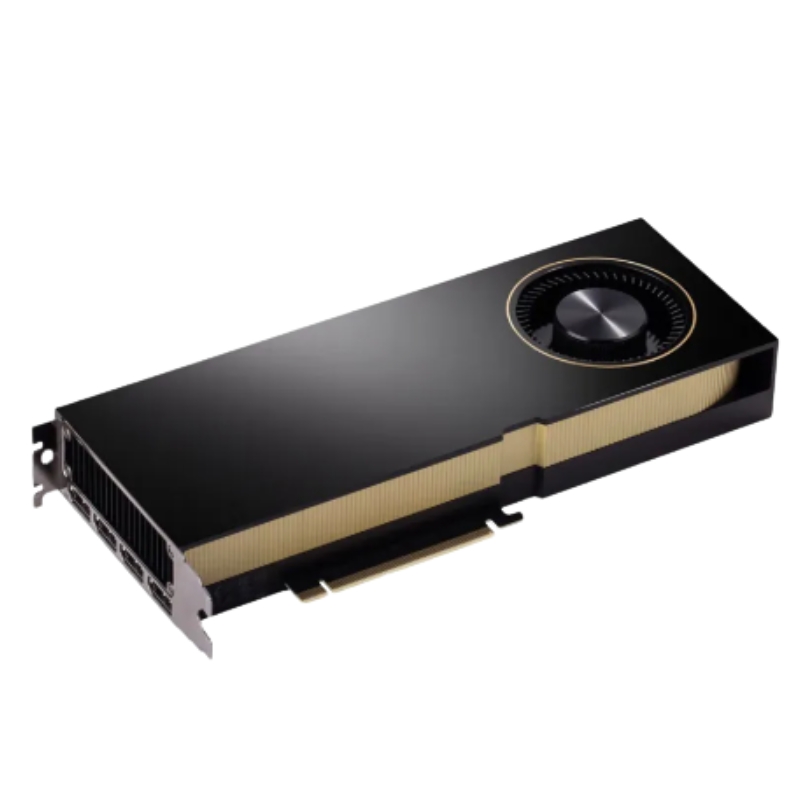


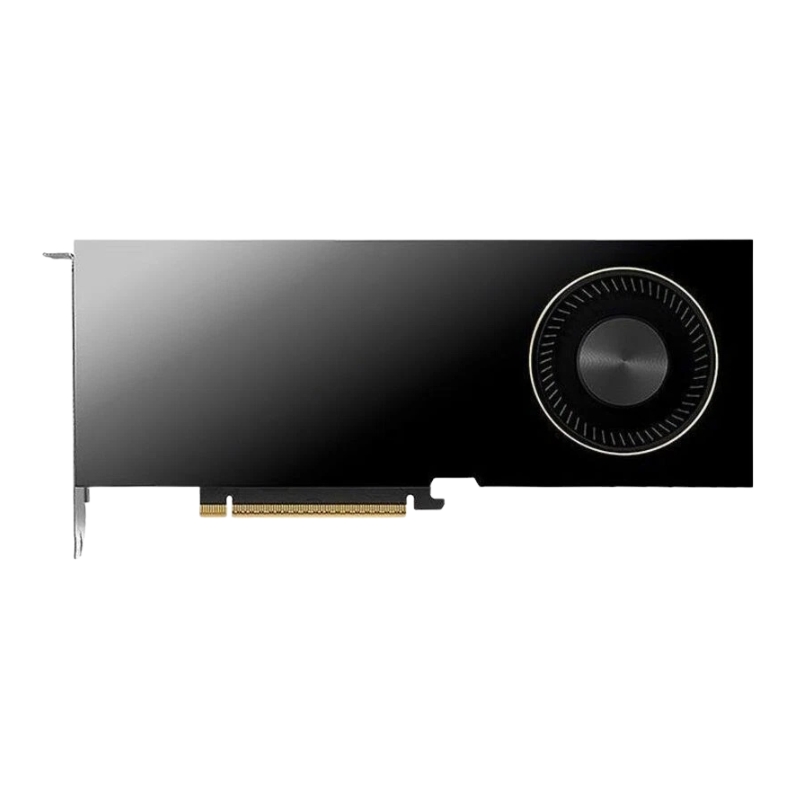
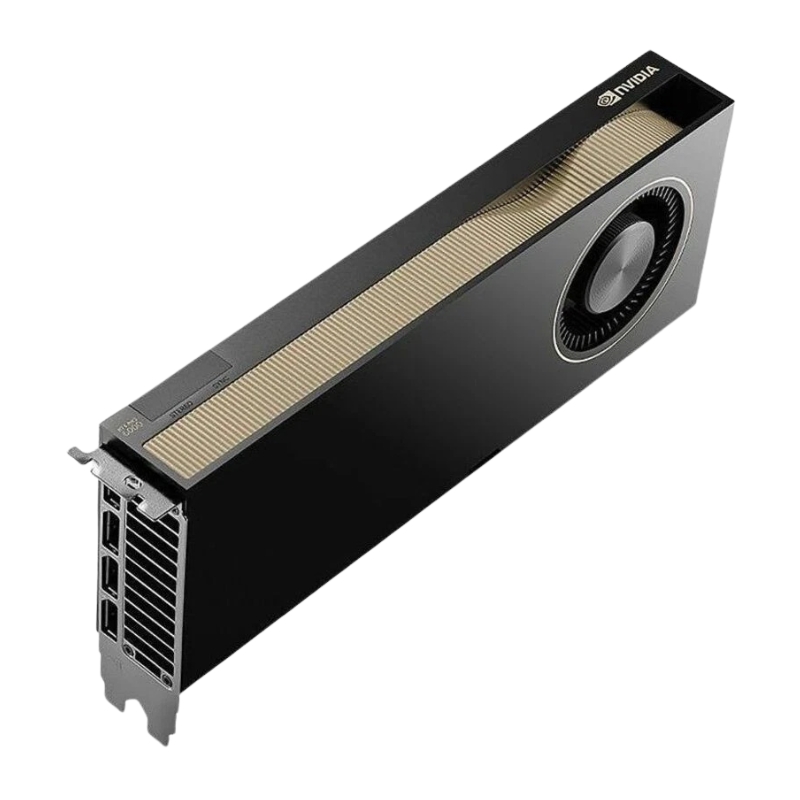
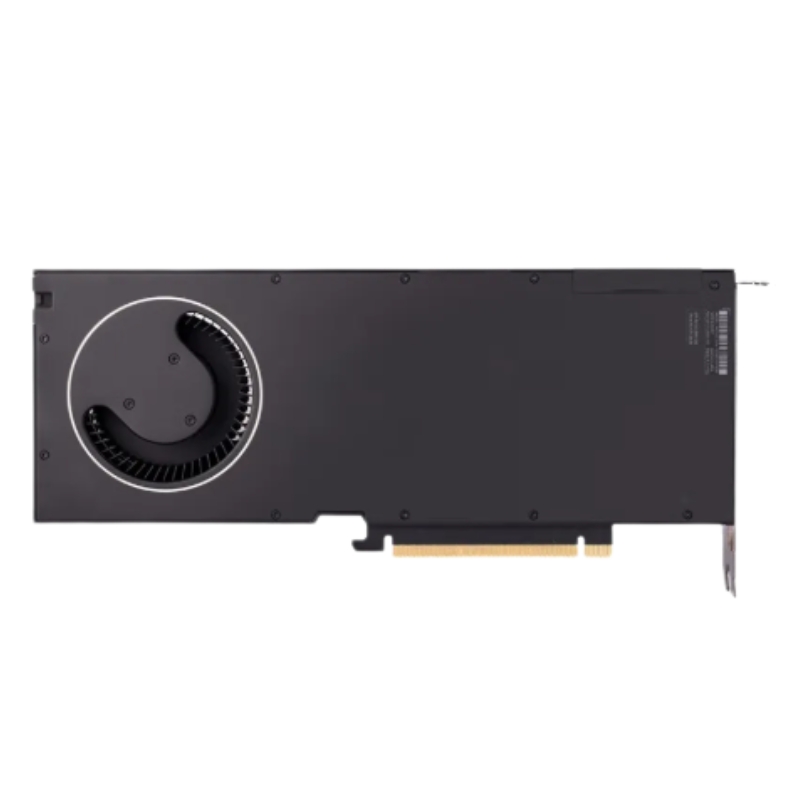
PNY Technology VCNRTXPRO6000MQ-PB Nvidia 96GB Rtx Pro 6000 Blackwell Max-Q Workstation Edition 300w Max Power Consumption GPU. New Sealed in Box (NIB) With 3 Years Warranty. Call (Eta 2-3 Weeks)
The PNY Technology VCNRTXPRO6000MQ-PB Nvidia RTX Pro 6000 Blackwell Max-Q Workstation Edition is a next-generation professional GPU engineered for demanding AI, design, and visualization workloads. Powered by 24,064 CUDA cores, 752 NVIDIA Tensor Cores, and 188 NVIDIA RT Cores, this powerful graphics card ensures remarkable computing power and efficiency. With 96GB of GDDR7 ECC memory and a 300W max power draw, it delivers cutting-edge performance for professional creators and developers alike.
The Nvidia RTX Pro 6000 Blackwell Max-Q from PNY Technology offers unmatched computational capabilities and robust design suitable for advanced professional environments.
The RTX Pro 6000 Max-Q utilizes the latest GDDR7 memory technology, delivering blazing speeds and reliability for massive data workloads. Its memory architecture enhances multitasking, simulation, and AI model training with precision and consistency.
The RTX Pro 6000 Blackwell Max-Q combines high efficiency with top-tier performance. Thanks to advanced NVIDIA architecture, it delivers faster rendering, superior ray tracing, and AI-driven workflows while maintaining optimal thermal and power management.
With an intelligent power delivery system, the RTX Pro 6000 Max-Q maintains top-tier performance while minimizing energy waste. This design makes it ideal for workstation environments requiring reliability and continuous operation.
To achieve optimal performance, ensure your system meets or exceeds the following specifications. These requirements guarantee stable operation and full compatibility with the GPU’s architecture.
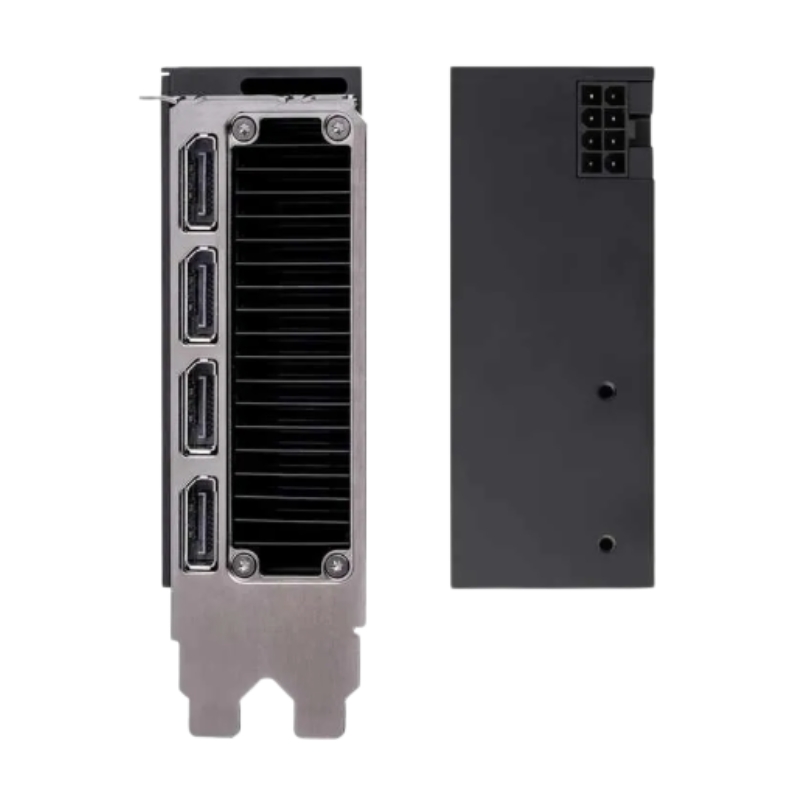
The Nvidia RTX Pro 6000 Max-Q features multiple high-performance display outputs to support next-generation monitors, high-resolution displays, and immersive multi-screen setups.
PNY’s engineering excellence ensures the RTX Pro 6000 Max-Q operates efficiently even under extreme workloads. Its dual-slot cooling structure maintains optimal GPU temperatures, extending the card’s lifespan and preserving stable output performance.
This workstation GPU integrates seamlessly into professional systems using PCI Express 5.0 architecture, offering forward compatibility and outstanding throughput. It supports multiple professional-grade software platforms optimized for NVIDIA CUDA and RTX technologies.
The Blackwell architecture of the RTX Pro 6000 Max-Q boosts neural rendering, path tracing, and deep learning tasks. Its AI-powered cores accelerate rendering speed and model accuracy for next-gen professional workloads.
The card’s energy-efficient design ensures stable high-load performance with a maximum power usage of 300W. Combined with PNY’s precision thermal control, it guarantees both efficiency and durability in professional workstation environments.
With four DisplayPort 2.1 interfaces, users can connect multiple ultra-high-definition screens, making it ideal for visual professionals who demand clarity and precision.
The PNY Technology VCNRTXPRO6000MQ-PB represents the pinnacle of professional graphics technology, built upon NVIDIA's groundbreaking Blackwell architecture. This workstation-class GPU is engineered specifically for professionals who demand uncompromising performance in visualization, AI acceleration, and computational tasks. The RTX Pro 6000 Blackwell Max-Q variant combines cutting-edge silicon design with power-efficient operation, making it ideal for high-performance mobile workstations and compact desktop systems where thermal management and power consumption are critical considerations.
At the heart of the RTX Pro 6000 Blackwell lies NVIDIA's most advanced GPU architecture to date, featuring significant improvements in computational density, energy efficiency, and AI acceleration capabilities. The Blackwell architecture introduces next-generation streaming multiprocessors with enhanced FP32 and INT32 throughput, improved ray tracing cores, and fourth-generation tensor cores optimized for mixed-precision AI workloads. This architectural advancement enables professionals across industries to tackle increasingly complex datasets and simulations with unprecedented efficiency.
The Blackwell architecture represents NVIDIA's response to the growing computational demands of professional workflows. With redesigned execution pipelines, the architecture delivers higher instructions per clock across both floating-point and integer operations. The memory subsystem has been completely rearchitected with a new cache hierarchy that reduces latency for memory-bound applications. For AI workloads, the new tensor cores support additional data formats including FP8 and INT4, providing flexibility for both training and inference tasks while maintaining the precision required for professional applications.
For computer-aided design professionals, the PNY RTX Pro 6000 Blackwell Max-Q delivers exceptional viewport performance when working with complex assemblies and high-polygon models. The GPU's enhanced geometry pipeline and tessellation performance ensure smooth navigation and manipulation of detailed models in applications like Siemens NX, SolidWorks, CATIA, and Autodesk Inventor. Real-time rendering capabilities allow designers to visualize materials, lighting, and shadows with photorealistic accuracy without the need for lengthy rendering cycles.
The dedicated ray tracing cores in the Blackwell architecture accelerate both interactive and final-frame rendering. For architectural visualization professionals using applications like V-Ray, Arnold, or Blender Cycles, the RTX Pro 6000 provides significant reductions in render times compared to previous generations. The combination of hardware-accelerated ray tracing and AI-denoisiing enables near-real-time feedback during lighting setup and material adjustment phases, dramatically improving creative workflows.
Content creation professionals working in video editing, visual effects, and motion graphics will appreciate the RTX Pro 6000 Blackwell's comprehensive media engine. With support for AV1 encode and decode, professionals can work with high-resolution, high-frame-rate footage efficiently. The GPU's video processing capabilities extend to real-time effects application, color grading, and multi-stream 8K playback in applications like Adobe Premiere Pro, DaVinci Resolve, and After Effects.
The tensor cores in the RTX Pro 6000 Blackwell accelerate AI-powered features increasingly integrated into creative applications. From automated rotoscoping and object removal in video editing to style transfer and upscaling in image editing applications, the GPU offloads these computationally intensive tasks from the CPU. For 3D artists, AI-accelerated denoising in interactive rendering provides cleaner previews in seconds rather than minutes, while neural graphics primitives enable new approaches to content creation.
Researchers and data scientists working with large datasets benefit from the RTX Pro 6000 Blackwell's computational capabilities. The GPU's double-precision floating-point performance accelerates scientific simulations in fields like computational fluid dynamics, finite element analysis, and molecular dynamics. With NVIDIA's CUDA platform and support for programming models like OpenACC, researchers can leverage the parallel processing power of the GPU for a wide range of high-performance computing applications.
The Blackwell architecture includes specialized hardware for deep learning training and inference. With tensor cores optimized for sparse matrix operations—common in neural network workloads—the RTX Pro 6000 delivers exceptional performance for AI research and development. The GPU's large memory capacity enables training of larger models without the need for model parallelism or frequent data transfers between system and GPU memory.
The PNY RTX Pro 6000 Blackwell Max-Q is built on NVIDIA's latest GPU architecture, featuring a significant increase in CUDA cores compared to previous generations. These parallel processors are organized into streaming multiprocessors that efficiently handle diverse computational workloads. The GPU's single-precision floating-point performance reaches new heights for professional applications, while specialized hardware units accelerate ray tracing, AI, and media processing tasks simultaneously.
Equipped with a substantial allocation of high-speed GDDR6X memory, the RTX Pro 6000 Blackwell can handle massive datasets and complex scenes without performance degradation. The memory interface width and clock speeds have been optimized to deliver maximum bandwidth while maintaining power efficiency. Error correction code (ECC) memory protection ensures data integrity for mission-critical applications in scientific computing, financial modeling, and engineering simulation.
The RTX Pro 6000 Blackwell supports multiple high-resolution displays simultaneously, making it ideal for digital content creation workflows that require extensive screen real estate. With support for the latest display standards including DisplayPort 2.1, the GPU can drive 8K displays at high refresh rates with HDR support. For virtual reality applications, the GPU delivers the performance and low latency required for comfortable, immersive experiences in professional VR environments.
Connectivity options include support for PCI Express 5.0, doubling the bandwidth available between the GPU and system components compared to previous generations. This increased bandwidth is particularly beneficial for data-intensive applications that stream large datasets from system memory or storage. The GPU also features NVIDIA's NVLink interface for multi-GPU configurations, enabling memory pooling and increased computational power for the most demanding professional workloads.
The Max-Q designation indicates that this variant of the RTX Pro 6000 Blackwell has been optimized for power-efficient operation without compromising professional-grade performance. Advanced power management features dynamically adjust clock speeds and voltage based on workload demands, maximizing performance within thermal design constraints. This makes the GPU particularly well-suited for mobile workstations and compact desktop form factors where cooling capacity may be limited.
In professional environments where noise levels are a concern, such as recording studios, broadcast facilities, or open office layouts, the RTX Pro 6000 Blackwell Max-Q's acoustic profile has been carefully engineered. Through intelligent fan control algorithms and thermal design improvements, the GPU maintains professional performance while minimizing audible noise during typical operation. This allows professionals to focus on their work without distraction from cooling system noise.
Unlike consumer-grade graphics cards, the PNY RTX Pro 6000 Blackwell undergoes rigorous testing and certification with leading professional applications from vendors including Autodesk, Dassault Systèmes, Siemens, and Adobe. These certifications ensure stability, performance, and compatibility with the specific features and APIs used by professional software. PNY provides dedicated professional driver support with optimized profiles for these applications, delivering reliable performance for mission-critical workflows.
For IT departments managing fleets of workstations, the RTX Pro 6000 Blackwell offers enterprise-friendly features including remote management capabilities, consistent driver updates through enterprise channels, and compatibility with workstation management tools. The GPU supports multi-user virtualization environments, allowing multiple professionals to share a single physical workstation with GPU-accelerated performance for their individual sessions.
In the AEC industry, professionals work with increasingly complex Building Information Modeling (BIM) data that includes detailed 3D geometry, material information, and scheduling data. The RTX Pro 6000 Blackwell accelerates visualization of these complex models, enabling real-time navigation and design review. For rendering photorealistic presentations, the GPU's ray tracing capabilities produce accurate lighting simulations with global illumination and realistic material responses.
The GPU's performance enables virtual reality walkthroughs of architectural designs at high frame rates and resolutions, providing clients and stakeholders with immersive experiences of unbuilt spaces. For construction planning, 4D simulations that show the progression of construction over time benefit from the GPU's computational capabilities, allowing project teams to identify potential issues before ground is broken.
Industrial designers and engineers working on product development benefit from the RTX Pro 6000 Blackwell's ability to handle complex surface models with high precision. The GPU accelerates simulation-driven design workflows, allowing engineers to perform structural, thermal, and fluid flow analysis directly within their CAD environment. For digital prototyping, real-time rendering provides accurate representations of materials and finishes before physical prototypes are created.
For 3D printing applications, the GPU accelerates the processing of high-resolution mesh data and supports real-time visualization of lattice structures and complex internal geometries. The computational capabilities enable simulation of the printing process itself, predicting potential issues like warping or stress concentrations before sending designs to additive manufacturing systems.
In medical applications, the RTX Pro 6000 Blackwell accelerates visualization of complex volumetric data from CT, MRI, and ultrasound scanners. The GPU's ray tracing capabilities enable realistic rendering of anatomical structures for surgical planning and medical education. For research applications, the computational power supports AI-assisted diagnosis and analysis of medical images, potentially identifying patterns that might be missed by human observation alone.
The GPU's performance enables interactive manipulation of 3D reconstructions from medical imaging data, allowing surgeons to plan complex procedures with better understanding of patient-specific anatomy. For training applications, physically-based simulation of surgical procedures provides realistic haptic feedback and visual representation of tissue deformation and instrument interaction.
To fully leverage the capabilities of the PNY RTX Pro 6000 Blackwell Max-Q, appropriate system configuration is essential. The GPU requires a compatible workstation with adequate power supply capacity and cooling solution. While the Max-Q variant is designed for efficiency, system integrators should ensure proper airflow and thermal management to maintain consistent performance during extended computational tasks. Driver compatibility with the operating system and professional applications should be verified before deployment.
For applications that scale across multiple GPUs, the RTX Pro 6000 Blackwell supports configurations using NVIDIA's NVLink technology. This high-speed interconnect enables memory pooling and direct GPU-to-GPU communication, beneficial for applications like large-scale simulation, rendering farms, and AI training with massive datasets. IT professionals should consider workload requirements when deciding between single and multi-GPU configurations, as not all applications efficiently utilize multiple GPUs.
PNY VCNRTXPRO6000MQ-PB provides specialized drivers for the RTX Pro 6000 Blackwell that are optimized for stability and performance in professional applications. These drivers undergo extensive testing with ISV partners to ensure compatibility and reliability. For enterprise environments, driver management tools allow IT administrators to deploy and maintain consistent driver versions across multiple workstations, reducing support overhead and ensuring predictable performance.
Different professional applications have unique performance characteristics and may benefit from specific GPU settings. CAD applications typically prioritize viewport performance and geometry processing, while rendering applications benefit from high computational throughput and memory bandwidth. Understanding these workload patterns allows professionals and IT administrators to optimize system settings for their specific use cases, potentially including application-specific profiles that automatically adjust GPU behavior.
The PNY VCNRTXPRO6000MQ-PB RTX Pro 6000 Blackwell Max-Q is designed to support emerging technologies and API standards that will define future professional workflows. With support for DirectX Ultimate, Vulkan Ray Tracing, and OpenGL 4.6, the GPU ensures compatibility with next-generation professional applications. The architecture's AI capabilities position it well for the increasing integration of machine learning across creative and technical applications.
As real-time ray tracing evolves toward full path tracing, the RTX Pro 6000 Blackwell's dedicated hardware acceleration provides a foundation for this transition. Professional applications are increasingly adopting these rendering techniques for their physical accuracy, and the GPU's computational capabilities ensure smooth performance even as algorithms become more complex. For visualization professionals, this means progressively closer alignment between interactive previews and final rendered output.
The tensor cores in the RTX Pro 6000 Blackwell represent a strategic investment in the AI-driven future of professional computing. As software developers increasingly incorporate AI features for tasks like content generation, data analysis, and process automation, the GPU's dedicated AI acceleration hardware will deliver responsive performance for these capabilities. This positions professionals using the RTX Pro 6000 to benefit from emerging AI-powered workflows without requiring hardware upgrades.
The intersection of AI and graphics represents one of the most promising areas for innovation in professional visualization. Neural rendering techniques that use AI to enhance or generate imagery are becoming increasingly sophisticated, and the RTX Pro 6000 Blackwell provides the computational foundation for these approaches. For architectural visualization, product design, and media production, these techniques offer new possibilities for creating photorealistic imagery with reduced computational requirements.


 Contact Us
 Information
 Catalog
 Solid State Drives (SSD)
 Network Switches
 Hard Disk Drives
 HBA & Controllers
 PC & Servers
 PC & Server Memory
 CPU & Processors
 Network Routers
 Power Supplies
 Tape Drives & Libraries
 Network Devices
 Computer & Network Cables