(7% discount is applied at checkout)
Cart is empty
Your go-to destination for cutting-edge server products
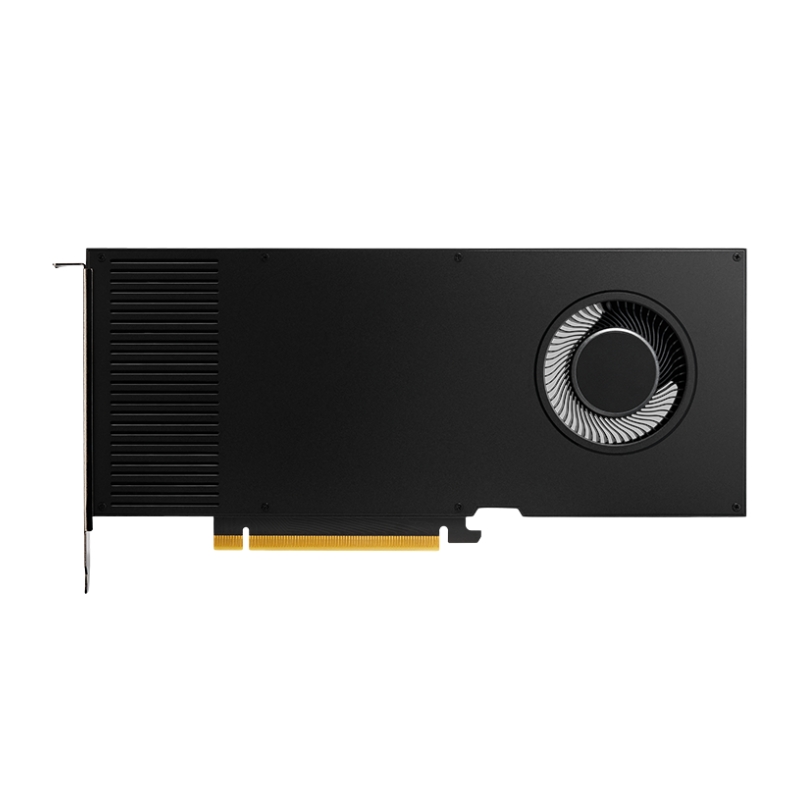


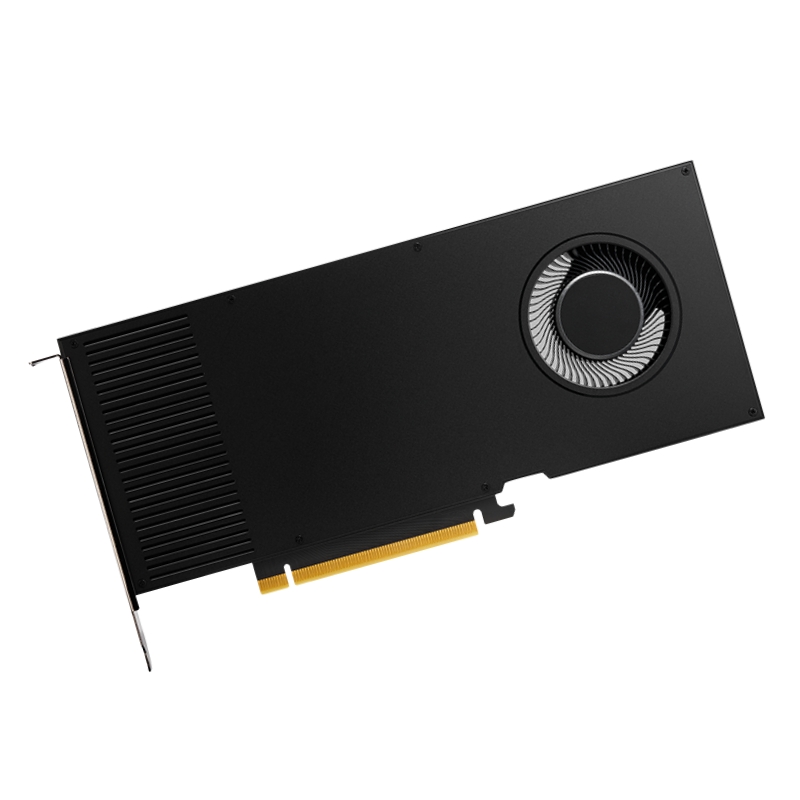
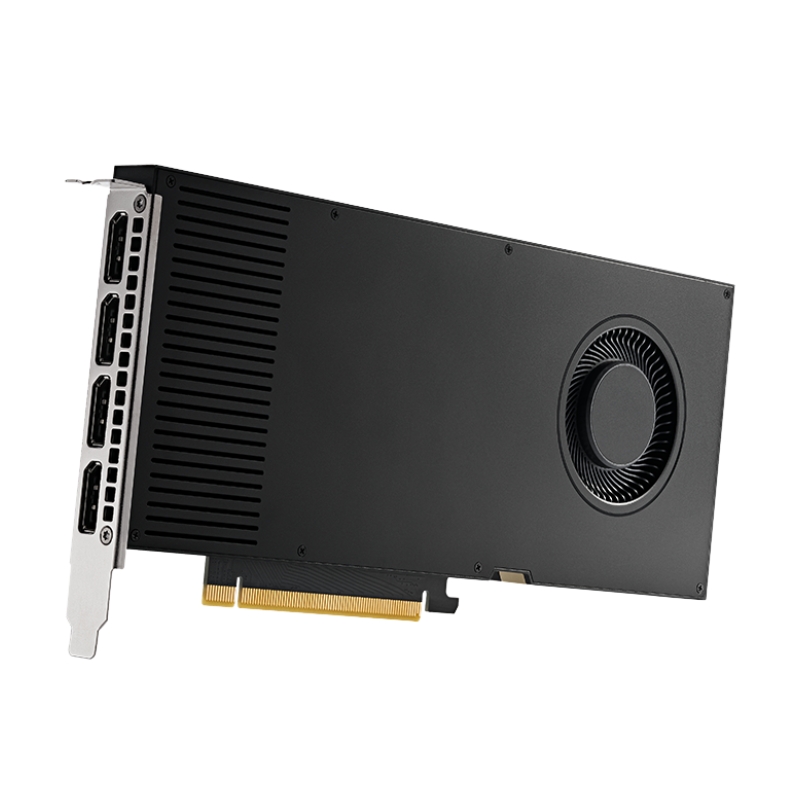
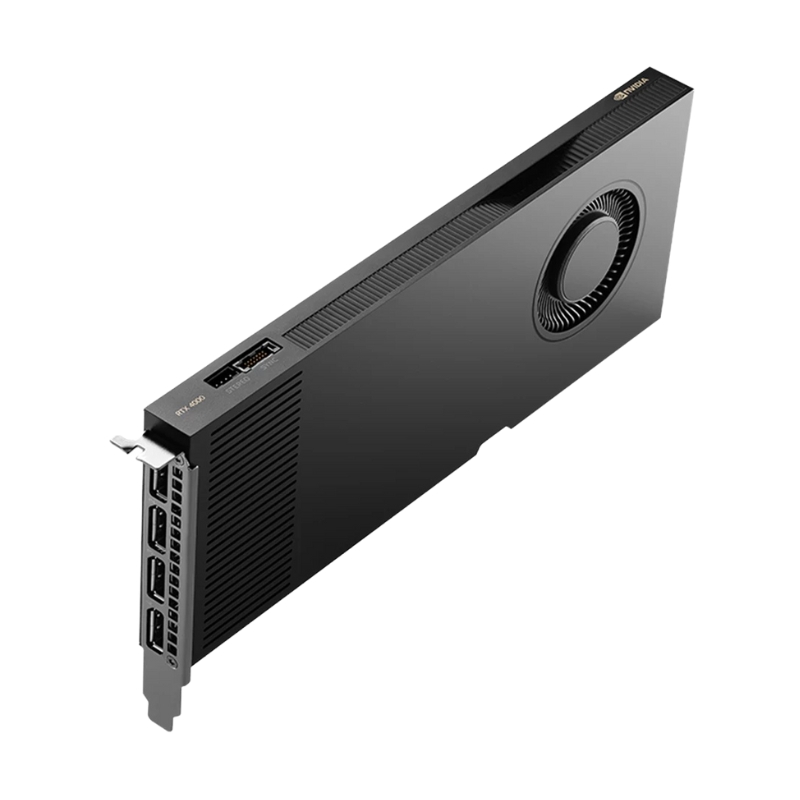
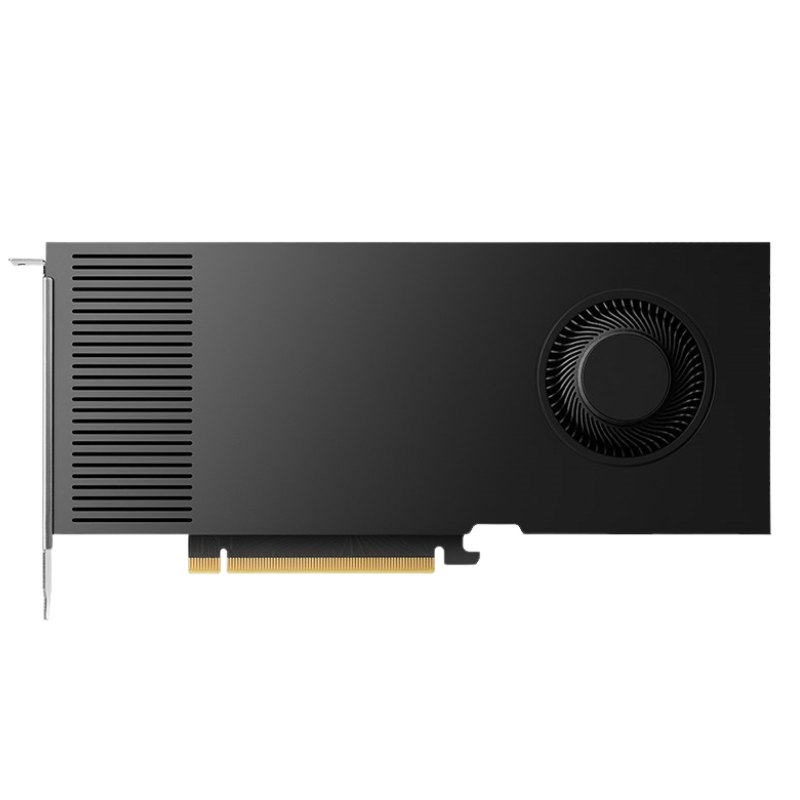
PNY VCNRTX4000ADALP-PB Nvidia Rtx 4000 SFF 20GB GDDR6 Ada Generation Graphics Card PCIE 4.0 X16 - 4 X Display port. New Sealed in Box (NIB) with 3 Year Warranty
The PNY VCNRTX4000ADALP-PB is a high-performance, compact-sized graphics card powered by the NVIDIA Ada Lovelace architecture. Designed for creative professionals, workstation users, and AI developers, this 20GB GDDR6 graphics card offers exceptional rendering, AI acceleration, and ray tracing capabilities.
Key Features and Benefits
The VCNRTX4000ADALP‑PB family from PNY features the NVIDIA RTX 4000 architecture built upon the Ada Lovelace design. This category covers the compact SFF (Small Form Factor) variants optimized to deliver outstanding performance in workstation, visualization, AI, and rendering workflows. In this section, we delve into every aspect of the VCNRTX4000ADALP‑PB line, exploring its architecture, memory design, cooling scheme, connectivity, software and driver support, real‑world applications, and comparative advantages over competing GPU offerings. This continuous description is crafted to inform, educate, and persuade professional and technical audiences while optimizing for search visibility and relevance around the target terms such as “PNY VCNRTX4000ADALP‑PB,” “RTX 4000 Ada GPU,” “SFF 20GB workstation graphics,” and related keyword variants.
The core of the VCNRTX4000ADALP‑PB is the NVIDIA Ada Lovelace architecture. Leveraging the 4 nanometer process (a custom node by TSMC in partnership with NVIDIA’s design goals), the Ada core pushes efficiency and performance in dense form factors. The GPU die spans approximately 294.5 mm² and contains about 35.8 billion transistors, reflecting the high complexity needed to deliver modern graphics, AI, and compute workloads. The architectural upgrades include improved ray tracing cores, next‑generation tensor cores, and more efficient scheduling and cache subsystems. By integrating such advanced features into the VCNRTX4000ADALP‑PB series, PNY offers professionals a compact solution without sacrificing computational capability.
The VCNRTX4000ADALP‑PB GPU includes 6,144 CUDA cores, carefully arranged in clusters to ensure high throughput for floating point and integer workloads. ROP and shader units are tuned to complement memory access and internal buses. Shader execution, control flow, and macro‑scheduling mechanisms have been refined from previous generation designs to reduce latency and branch divergence. The shader pipeline benefits from increased register file sizes, improved L2 cache, and streamlined instruction dispatching. This results in smoother performance in compute workloads, interactive rendering, and accelerated simulation tasks. For workloads that combine shading, compositing, and compute, the PNY Ada variant excels in parallel utilization and resource balancing.
One of the stand‑out attributes of the VCNRTX4000ADALP‑PB category is its generous 20 GB of GDDR6 memory. This ample capacity ensures that memory‑intensive workloads such as large 3D scenes, high‑resolution textures, volumetric datasets, or large AI models can be handled without frequent staging overhead. The memory interface is 160‑bit wide, paired with advanced memory controllers to sustain a bandwidth of around 320 GB/s. The memory controllers incorporate error correction, fine granularity scheduling, and bank conflict minimization, which improves effective throughput in real workflows.
To maximize utilization of the 20 GB, the VCNRTX4000ADALP‑PB series uses optimized prefetching, banking, and caching schemes that reduce latency impact on compute kernels. The GPU’s L1 and L2 caches are tuned to reduce off‑chip memory traffic and to service frequent reuse patterns. In particular, workloads involving AI inference or training, multi‑stage rendering passes, or compute shaders that share data benefit from intelligent memory access patterns. PNY’s firmware and driver stack further optimize memory residency, page fault handling, and coherency paths with host memory, ensuring seamless performance in mixed CPU‑GPU pipelines.
Thermal control is achieved through an active fansink system tailored for the compact envelope. The half length heat pipe, copper base, and fin array ensure conduction and convection efficiency, while a high‑efficiency blower fan pushes airflow across the heat exchanger and out through the chassis vents. Fine control of fan curves, temperature hysteresis, and fan ramping behaviors is handled by the PNY firmware and drivers, optimizing quietness under lighter loads and ramping up cooling under sustained full compute loads. Thermal throttling thresholds are set conservatively to preserve performance without overheating, and the cooling system is robust enough to maintain target junction temperatures under demanding render or simulation tasks.
One of the appealing features of the VCNRTX4000ADALP‑PB family is the low power consumption. With a maximum power draw of only 70 watts and no need for auxiliary connectors, these cards can run solely from the motherboard’s PCIe power lines. This attribute simplifies integration into systems where power supply capacity, cable routing, or thermal budget is constrained. Efficiency gains are derived from Ada’s architectural improvements and refined voltage/frequency scaling, allowing high performance per watt. In energy‑conscious or acoustically sensitive workstation environments, the VCNRTX4000ADALP‑PB configuration offers a strong balance of horsepower and power integrity.
The VCNRTX4000ADALP‑PB cards connect to the system via PCI Express 4.0 x16, offering double the per‑lane throughput over PCIe 3.0, thus reducing bottlenecks in data transfers, texture uploads, framebuffer swaps, and compute offload tasks. The enhanced interface is crucial for high‑bandwidth GPU workloads, enabling lower latency and better sustained transfer rates for GPU compute tasks, rendering engines, and AI pipelines. The architecture also supports backward compatibility with PCIe 3.0 and 2.0, though at correspondingly reduced bandwidths.
For multi-monitor and high-resolution visualization scenarios, the VCNRTX4000ADALP‑PB series provides four Mini DisplayPort 1.4a connectors. Each output supports high refresh rates, HDR capabilities, and Display Stream Compression (DSC) where applicable. The four outputs allow for extended desktop, clone, and mosaic display configurations. Users can drive 4× 4K monitors or combine into ultra‑wide or multi‑panel arrays. The outputs are certified for professional displays used in CAD, digital signage, simulation domes, VR/AR staging, and immersive environments.
On the media side, the VCNRTX4000ADALP‑PB architecture features dual encode (NVENC) and decode (NVDEC) engines with support for the AV1 codec. This makes it highly capable in video editing, streaming, real‑time encoding, and media transcoding workflows. The inclusion of AV1 improves efficiency and future‑proofing, delivering superior compression with lower bitrates compared to older codecs. PNY’s drivers optimize the use of NVENC/NVDEC paths to offload CPU work and enhance performance in media and broadcast environments.
NVIDIA Studio, Quadro Drivers, and Workstation Ecosystem
Although branded under the RTX umbrella, the VCNRTX4000ADALP‑PB series benefits from a workstation‑grade driver stack and certification ecosystem. Users can access NVIDIA Quadro (now RTX/Workstation) drivers optimized for advanced 3D software, CAD, DCC, simulation, and visual effects applications. These drivers receive rigorous testing, bug fixes, and optimizations aligned with creative and engineering software vendors. In addition, NVIDIA Studio drivers deliver performance in creative applications such as video editing, compositing, and content creation. PNY positions this GPU category as bridging the gap between consumer gaming GPUs and workstation‑level performance, giving access to rendering, compute, and visualization workflows in one card type.
Professional 3D Rendering and Visualization
Architects, design studios, and VFX houses will find the VCNRTX4000ADALP‑PB series ideal for rendering complex scenes with global illumination, volumetric lighting, and physically based shading. The four output displays support extended viewport layouts, real‑time camera previews, and multi‑monitor designer dashboards. When paired with render engines that support GPU path tracing or hybrid CPU/GPU compute, users benefit from accelerated convergence and interactive feedback loops. The card’s 20 GB memory space allows high texture resolution and large scene data sets to be resident on the card, reducing data swapping overhead.
Comparison with Legacy Quadro RTX 4000 and Other Professional GPUs
Compared to the existing Quadro RTX 4000 from prior generations, the VCNRTX4000ADALP‑PB variant offers advantages in memory, bandwidth, architecture, and power efficiency. The Ada architecture brings higher per‑watt performance, more advanced ray tracing and tensor core designs, and future codec compatibility. Legacy cards often required auxiliary power connectors; the newer variant’s 70 W envelope and no additional power cables simplify installation. In contrast to larger workstation GPUs, the Ada SFF series provides a balance between footprint and performance, particularly suited to compact workstation environments or blade systems.
System Compatibility and BIOS/UEFI Considerations
When integrating a VCNRTX4000ADALP‑PB GPU, system builders should ensure the host motherboard BIOS/UEFI supports PCIe 4.0 x16 or at least is backward compatible with older PCIe standards. BIOS settings may allow adjusting slot bifurcation, ASPM, or performance states affecting GPU behavior. Because the card draws only base PCIe power, power supply sizing is simplified, but total system power should still account for full system peak loads. The low profile and short length mean that many small form factor chassis, rackmount workstations, or compact towers can accept it without modification. Cooling within the chassis must allow sufficient airflow; front intake and exhaust fans are recommended to maintain positive pressure and support GPU airflow paths.
Balancing CPU, Memory, and Storage for GPU Efficiency
To fully harness the power of a VCNRTX4000ADALP‑PB GPU, system architects should balance CPU, system RAM, and storage subsystems. A modern multi‑core CPU with sufficient cache and memory bandwidth helps feed the GPU in compute tasks, render scheduling, and IO stitching. System memory capacity should accommodate data staging, frame buffering, and host‑side buffers. NVMe or high throughput SSDs reduce data swap latencies when working on large data sets. In workflows where assets stream dynamically to GPU memory, a fast storage subsystem reduces frame drop and stall risks.


 Contact Us
 Information
 Catalog
 Solid State Drives (SSD)
 Network Switches
 Hard Disk Drives
 HBA & Controllers
 PC & Servers
 PC & Server Memory
 CPU & Processors
 Network Routers
 Power Supplies
 Tape Drives & Libraries
 Network Devices
 Computer & Network Cables