(7% discount is applied at checkout)
Cart is empty
Your go-to destination for cutting-edge server products
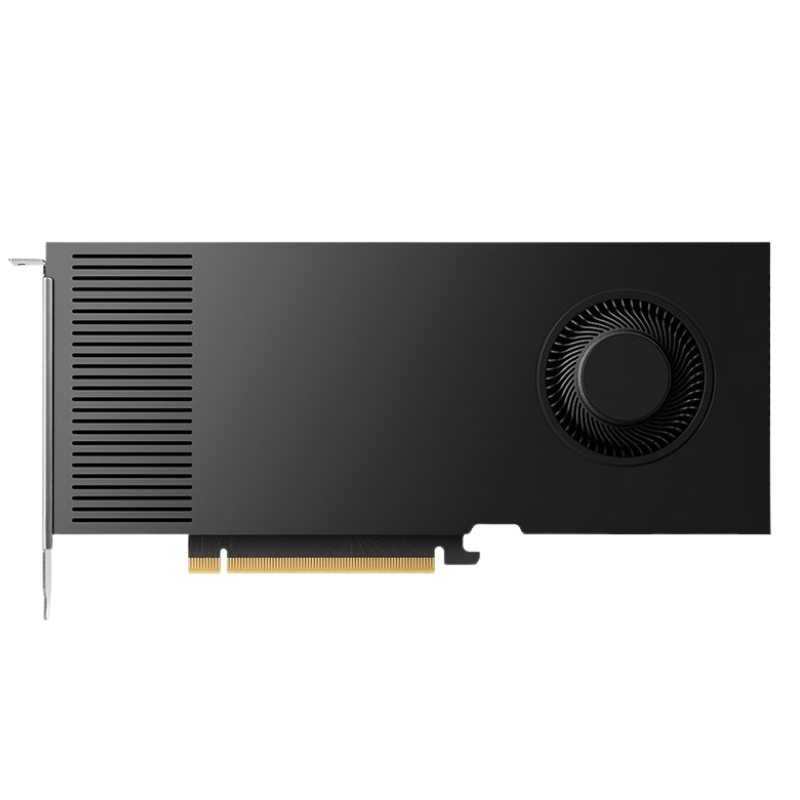


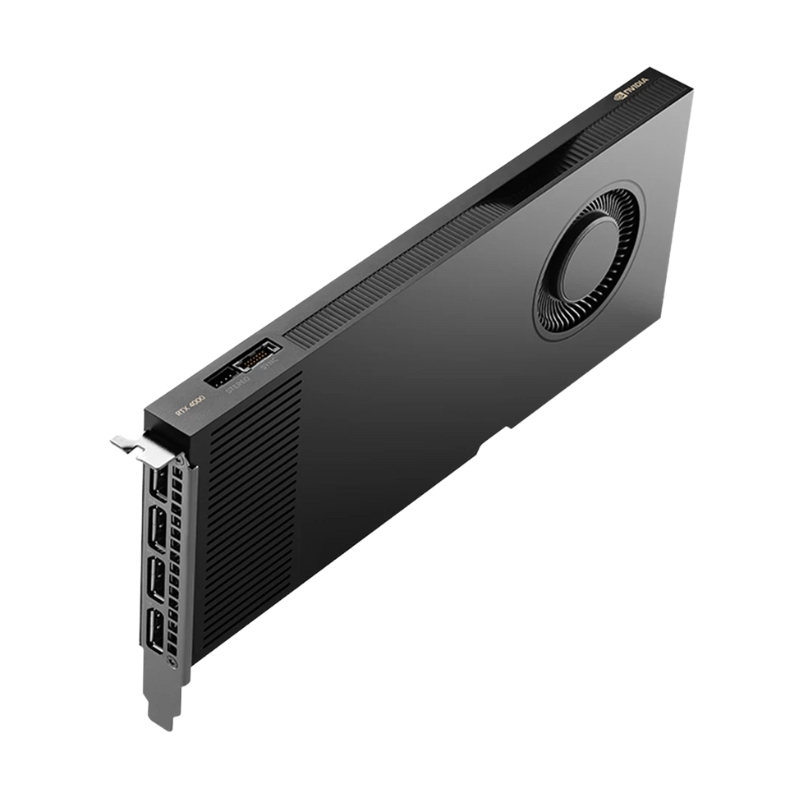
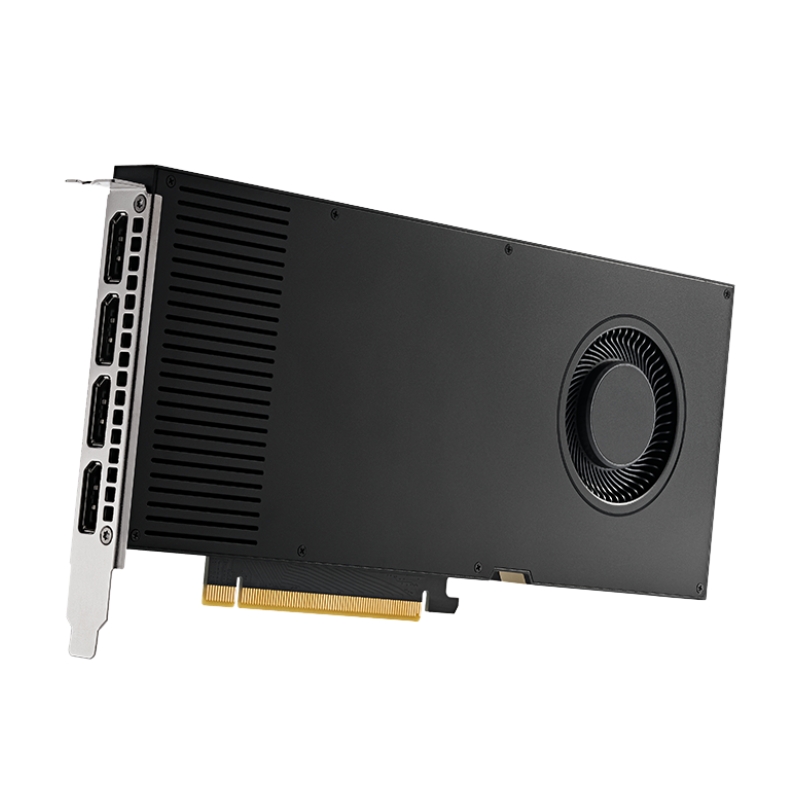
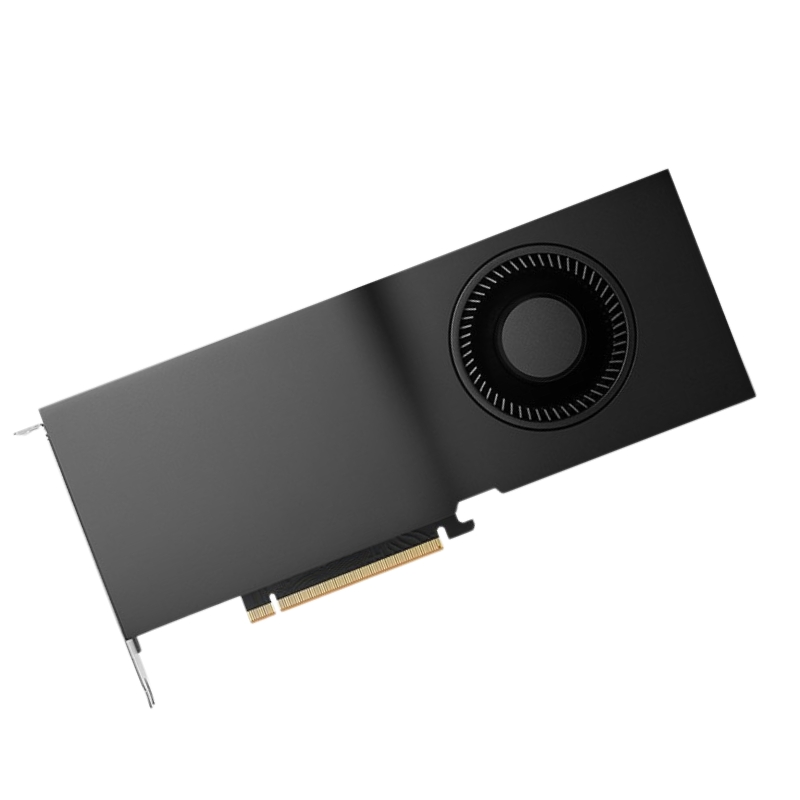
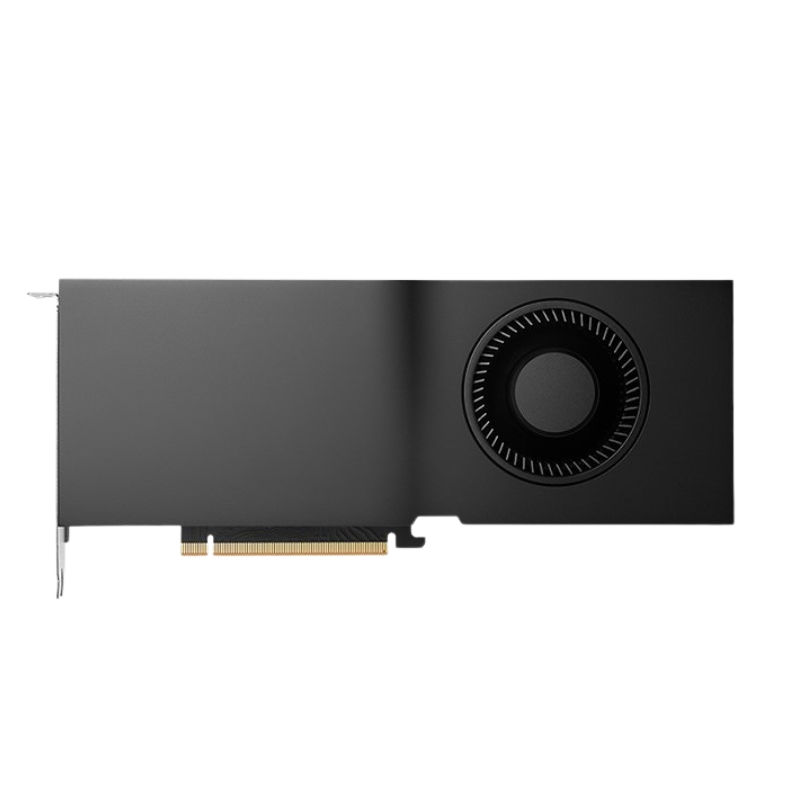
PNY VCNRTX6000ADA-BLK Nvidia Quadro Rtx 6000 Ada 48GB GDDR6 384 Bit Graphic Card PCI Express 4.0 X16. New Sealed in Box (NIB) with 3 Year Warranty. Call. Eta 2-3 Weeks. No Cancel No Return
The PNY VCNRTX6000ADA-BLK is a professional-grade graphics card powered by the cutting-edge Nvidia RTX 6000 Ada Lovelace architecture. Designed for high-performance computing, AI workloads, and rendering tasks, this 48GB GDDR6 GPU delivers unmatched power and efficiency for creative and scientific professionals alike.
Compared to earlier generations and rival products, the Nvidia RTX 6000 Ada GPU from PNY offers significantly improved core counts, enhanced memory bandwidth, and industry-leading performance for demanding creative and technical applications.
The VCNRTX6000ADA‑BLK falls under the high-end professional GPU category engineered by PNY in collaboration with Nvidia. This product class is centered around the Ada Lovelace architecture, representing the next leap in GPU design and computational capability. In the realm of workstation and professional graphics, the Ada generation introduces major improvements in power efficiency, core density, and AI-driven processing. This category is designed for users who demand top-tier performance for rendering, simulation, machine learning, and visualization workloads. The “48GB GDDR6 384-bit PCI Express 4.0 x16” specification is a defining factor, placing this model in the upper echelon of workstation class graphics cards.
Within Nvidia’s Quadro and RTX product lines, the VCNRTX6000ADA‑BLK occupies a unique niche. It bridges the gap between consumer-oriented RTX cards and mission-critical Quadro workstation GPUs. Here the Ada generation brings enhanced tensor core throughput, more RT cores, and improved memory bandwidth. Where prior generation Quadro or RTX cards might struggle with ultra-high resolution rendering or large scene datasets, this category is meant to handle them with ease. The combination of 48 GB of GDDR6 with a wide 384-bit memory interface enables sustained throughput that scales with demanding tasks.
At its core, the VCNRTX6000ADA‑BLK embodies the Nvidia RTX 6000 Ada GPU engine. Built on a 4 nm custom process by TSMC, it leverages state‑of‑the‑art semiconductor techniques to cram 76.3 billion transistors into a die measuring 608.4 mm². This unprecedented transistor density underlies the architectural jumps in performance and efficiency. The Ada Lovelace design philosophy emphasizes not just raw throughput but energy scaling and intelligent core scheduling. Within this category, the engineering focus is on enabling real‑time ray tracing, accelerated AI inference, and high-precision compute tasks in tandem.
Cards in this category feature 18,176 CUDA cores optimized for parallel processing. These cores are supported by the 3rd generation RT (ray tracing) core setup—142 RT cores in total—which accelerates realistic lighting, shadows, and reflections. To complement this, there are 568 Tensor cores designed specifically for mixed precision AI inference. This architecture allows for upward of 91.1 TFLOPS single-precision performance, alongside 210.6 TFLOPS of ray tracing throughput and 1,457 TFLOPS in tensor operations. The synergy between CUDA, RT, and Tensor cores positions the category as a top choice for workflows blending graphics and compute.
Memory is a critical determinant in high-end GPU performance, and the VCNRTX6000ADA‑BLK category sets a high benchmark by offering 48 GB of GDDR6 memory with ECC (error correction). The 384-bit memory interface works to maximize throughput, delivering up to 960 GB/s of effective memory bandwidth. This level of memory capacity and speed is essential for handling large data sets, complex simulations, volumetric rendering, and massive geometry scenes. In many professional applications, memory limitations are often the bottleneck—this category aims to push that boundary far higher.
The VCNRTX6000ADA‑BLK category supports PCI Express 4.0 x16. PCIe 4.0 doubles the bandwidth over PCIe 3.0, offering more headroom for high-throughput operations such as data transfers from system memory, storage, or multi-GPU configurations. In realistic workstation setups, this enhanced interface reduces data starvation and ensures that the GPU remains fed with data during peak workloads.
Card variants under this category frequently include four DisplayPort 1.4a outputs. These ports enable ultra-high resolution displays, multi-monitor setups, and connecting to VR or immersive display systems. The capability to drive a resolution up to 7680 × 4320 ensures that users working with 8K or beyond panels, immersive visualizations, or complex CAD setups are supported natively.
Cards in this category are engineered to occupy dual-slot width while remaining 10.5 inches in length and roughly 4.4 inches in height. The thermal solution is a blower-style or hybrid active-fan design. In professional workstations or server racks, blower-style coolers exhaust air out of the system, maintaining thermals in more constrained enclosures. The design must balance acoustic performance, heat dissipation, and consistent performance over extended workloads.
In the VCNRTX6000ADA‑BLK category, cards are specified with a maximum power consumption around 300 W. To safely deliver this power, a single PCIe CEM5 16-pin connector is used. That connector supports higher current delivery in a compact footprint, reducing cable clutter and enabling efficient layout in modern systems. Power efficiency is a hallmark of the Ada generation; the card must maintain performance while limiting waste heat and energy draw.
The shift to the 4 nm Ada architecture includes enhancements in power gating, dynamic frequency scaling, and fine-grained control of execution units. Within this product class, cards can dynamically scale down during idle or light workloads to conserve power, while ramping up aggressively during peak demand periods. The optimized balance of energy efficiency and compute performance is a distinguishing feature of this graphics card category.
This PNY category supports advanced virtualization frameworks such as NVIDIA vPC, vApps, and RTX Virtual Workstation (vWS). These technologies allow multiple virtual machines to share the GPU computing capabilities efficiently. The model supports vGPU profiles spanning 1 GB, 2 GB, 3 GB, 4 GB, 6 GB, 8 GB, 12 GB, 16 GB, 24 GB, and up to the full 48 GB. This flexibility makes it ideal for cloud-hosted workstations, remote simulation farms, and multi-tenant environments.
Within this product line, the video engines provide three hardware NVENC encoders and three NVDEC decoders. These units support contemporary codecs including AV1 encoding and decoding. That ensures high performance in content creation pipelines, live streaming, or high-resolution video projects. The offload of media duties from the CUDA cores helps maintain headroom for other compute tasks.
One of the principal domains for this graphics card category is 3D rendering and animation pipelines. In studios creating feature films, architectural visualizations, or real-time interactive media, the 48 GB memory buffer accommodates large scenes, high polygon counts, and complex textures. The powerful RT and Tensor cores speed up ray-traced lighting and AI denoising, enabling faster iterations and real-time previews. Studios requiring stable, predictable performance across long render jobs will find this category indispensable.
Researchers in computational fluid dynamics, molecular modeling, finite element analysis, and climate modeling demand GPUs that can sustain high throughput on double precision, tensor-accelerated workloads, and large datasets. Within this category, the card’s compute capabilities allow large-scale simulations while leveraging AI-enhanced solvers. The ECC memory ensures integrity and resilience during long runs, which is a crucial consideration in scientific computing environments.
Although the professional category might not always target general deep learning workloads, the architecture is still very well suited to hybrid AI-graphics tasks, mixed precision training, inference, and neural rendering. The large memory capacity allows larger batch sizes, more complex models, and multi-model inference—especially in environments where GPUs are shared across graphics and AI compute tasks. Enterprises that run inference engines, generative design, or machine learning-enhanced visualization benefit from the combined strengths of tensor core throughput and real-time rendering performance.
In medical applications, such as MRI reconstruction, volumetric rendering, CT scan 3D models, and surgical planning, the need is for precise, high-performance rendering. The VCNRTX6000ADA‑BLK category enables real-time interactions with large volumetric datasets, leveraging high memory throughput and ray tracing acceleration. The ECC memory and reliability features are essential in clinical environments where data consistency and predictability matter most.
For VR and immersive simulation setups, the category supports multi-display, high refresh rate panels, and synchronized frame output. The ability to handle high-resolution textures and complex geometry while maintaining smooth frame rates is paramount. The GPU’s virtualization features further allow remote systems to leverage shared GPU hardware for simulation training, visualization, and remote collaboration in digital twins or virtual factories.
The VCNRTX6000ADA‑BLK class differs from gaming-focused GPUs in several ways. First, workstation variants emphasize driver stability, error correction, precision, and certifications with professional software. Gaming GPUs often prioritize raw performance in games, whereas this category balances compute, graphics, and enterprise reliability. In workloads like CAD, simulation, or rendering, workstation GPUs in this category maintain optimized drivers and higher resilience over extended use.
The Ada generation represented in this category brings leaps over the prior Ampere or Turing-based professional GPUs. Core counts, memory bandwidth, energy efficiency, ray tracing capability, and AI performance have all moved forward. For users upgrading from older Quadro or even high-end RTX workstation models, this category enables substantial performance uplift, especially in memory-heavy, compute-heavy, or real-time hybrid GPU tasks.
When deploying cards within this category, system integrators must ensure adequate power delivery, cooling airflow, chassis clearance, and PCIe bandwidth. The PCIe 4.0 interface is backward compatible, but to harness full throughput, systems should ideally support PCIe 4.0 or above. Power supplies must include the necessary 16‑pin connector or adaptation, and thermal constraints must account for blower exhaust designs.
The VCNRTX6000ADA‑BLK class is targeted toward high-end professionals in visual effects, architectural firms, simulation labs, AI research groups, medical imaging centers, and virtual environment developers. These users demand uncompromising performance, long-term stability, and wide memory capacity. Their workflows often involve complex 3D scenes, real-time ray tracing, hybrid AI and graphics tasks, remote virtualization, and multi-display systems.
In production pipelines, cards from this category are integrated into rendering farms, simulation clusters, or high-power workstations. Projects involving feature film VFX will allocate the GPU for ray tracing, denoising, and compositing, while AI-driven tools might use tensor cores for generative operations. For large-scale engineering or scientific tasks, workloads are often partitioned across GPUs or time-sliced, with synchronization across memory and compute boundaries. The presence of large ECC memory ensures datasets larger than traditional GPU memory capacities can be processed without swapping.
Although this category is not oriented for consumer overclocking, enterprise users may fine-tune performance via driver settings, power limits, or clock targets within safe margins. Control of thermal headroom, voltage stability, and firmware updates becomes part of the system maintenance cycle. Automated monitoring tools may trigger throttling or fan adjustment thresholds to maintain performance stability and guard against hardware stress.


 Contact Us
 Information
 Catalog
 Solid State Drives (SSD)
 Network Switches
 Hard Disk Drives
 HBA & Controllers
 PC & Servers
 PC & Server Memory
 CPU & Processors
 Network Routers
 Power Supplies
 Tape Drives & Libraries
 Network Devices
 Computer & Network Cables