(7% discount is applied at checkout)
Cart is empty
Your go-to destination for cutting-edge server products
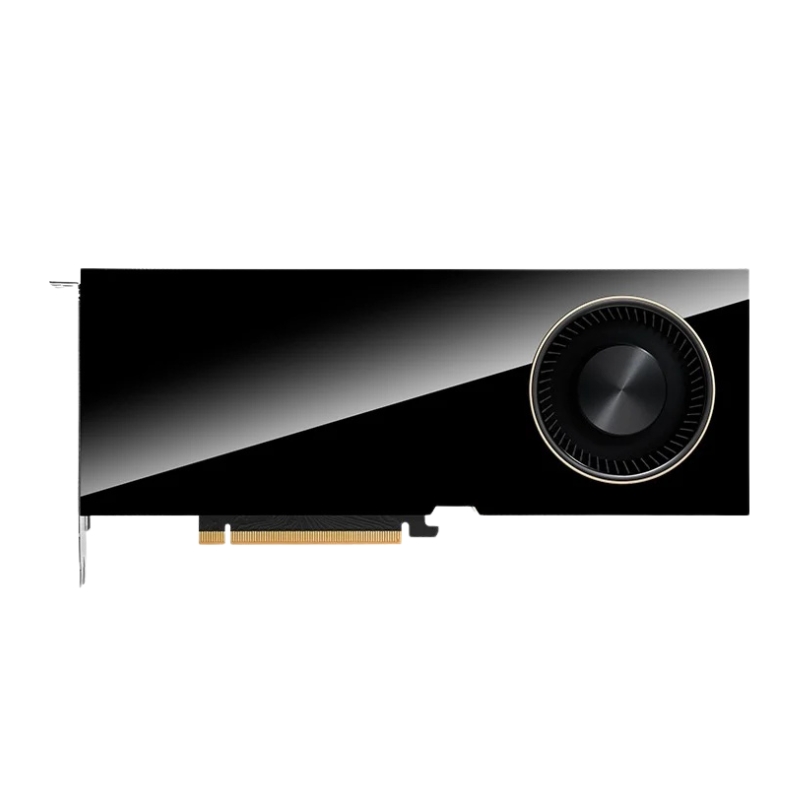


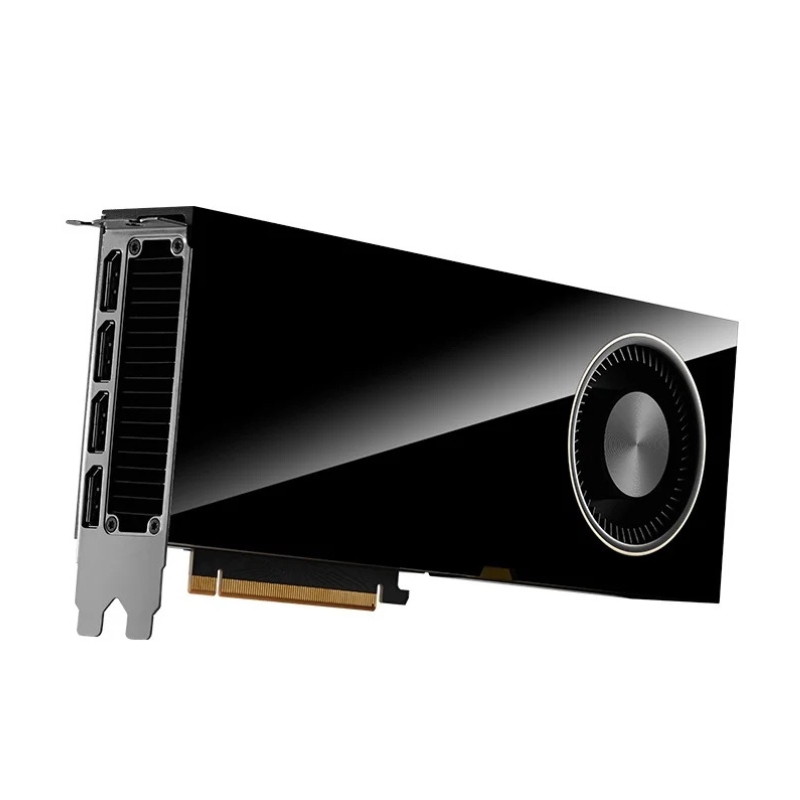
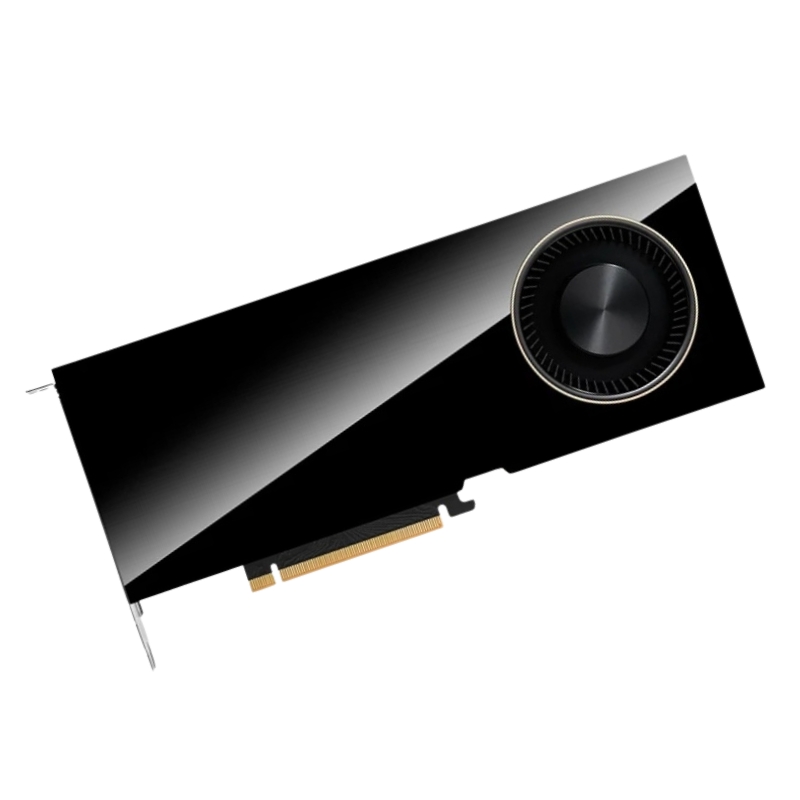
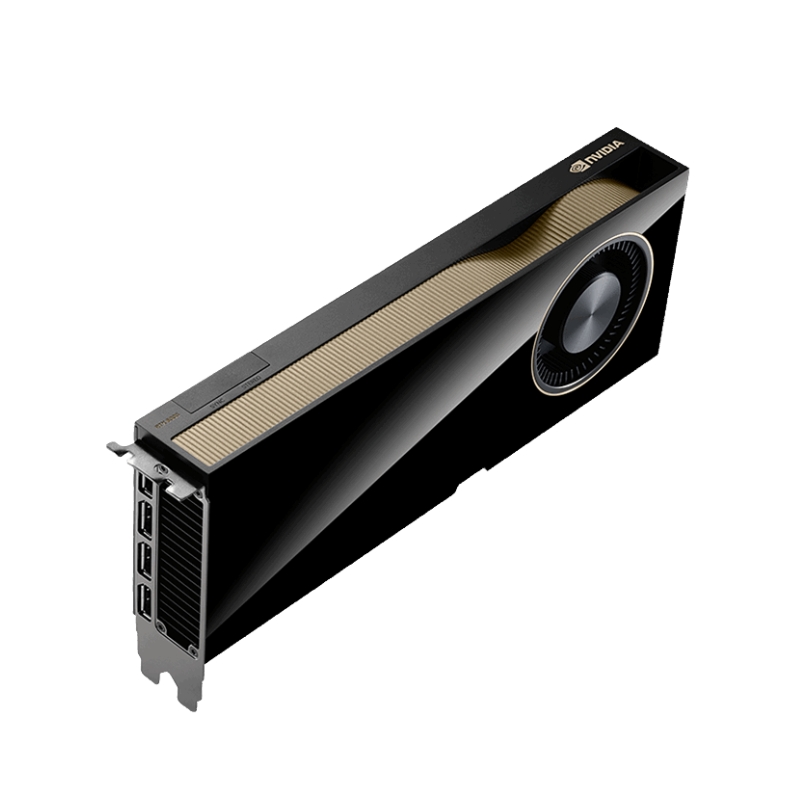
PNY VCNRTX6000ADA-PB Nvidia Quadro Rtx 6000 Ada 48GB GDDR6 384 Bit PCI Express 4.0 X16 Graphic Card. New Sealed in Box (NIB) with 3 Year Warranty. Call. Eta 2-3 Weeks. No Cancel No Return
The PNY VCNRTX6000ADA-PB is a high-performance professional graphics card powered by the cutting-edge NVIDIA RTX™ 6000 Ada Generation GPU. Designed for intensive workloads like AI development, 3D rendering, and data science, this workstation-grade GPU delivers extreme power, speed, and efficiency.
The “VCNRTX6000ADA‑PB” from PNY, built around the Nvidia Quadro RTX 6000 Ada GPU architecture, occupies a premium tier in the professional graphics card category. This class of workstation GPUs is engineered to deliver exceptional performance across design, simulation, rendering, artificial intelligence (AI), virtual reality (VR), and data science workloads. As part of the high-end Ada Lovelace Ada generation, this graphics card represents the intersection of extreme computational throughput, memory capacity, and reliability demanded in enterprise and creator environments.
Within the broader category of discrete graphics cards, the workstation GPU segment targets users who require deterministic performance, certified drivers, and large memory buffers. Unlike consumer gaming GPUs, workstation cards like the RTX 6000 Ada emphasize stability under sustained load, optimized compatibility with professional software suites (e.g. CAD, DCC, simulation), and enhanced precision features such as ECC memory and error correction. The VCNRTX6000ADA‑PB lies near the top of this category, offering 48 GB of GDDR6 ECC memory and an extensive feature set to support the most intensive computational tasks.
The Ada Lovelace architecture underpins the RTX 6000 Ada graphics card, and it introduces substantial advances in power efficiency, core density, and compute capabilities. Designed on a 4 nm custom process by TSMC, Ada enables more transistors and more cores in the same footprint compared to earlier generations. This architectural leap allows the VCNRTX6000ADA‑PB to host 18,176 CUDA cores, 142 third-generation RT cores, and 568 Tensor cores. The arrangement and scheduling of these cores are optimized for concurrent workloads—such as rendering, ray tracing, and AI inference—maximizing throughput without unnecessary bottlenecks.
The RTX 6000 Ada card’s parallel processing capabilities are a hallmark of this category. Its single-precision (FP32) throughput delivers around 91.1 TFLOPS, making it suitable for large-scale GPU compute tasks. Ray tracing performance reaches approximately 210.6 TFLOPS thanks to the Gen 3 RT cores, while the Tensor cores push tensor arithmetic to an approximate 1,457 TFLOPS—ideal for AI model training, deep learning inference, and tensor-based workflows. In continuous rendering pipelines, the card's architecture ensures that memory access and compute units operate in concert to avoid stalls or underutilization.
Equipped with 48 GB of GDDR6 memory featuring ECC support, the VCNRTX6000ADA‑PB stands out in the workstation GPU category for tasks requiring large frame buffers or massive dataset handling. The broad 384‑bit interface enables a memory bandwidth of up to 960 GB/s, ensuring that data moves swiftly between memory and compute cores. In workflows such as 8K rendering, volumetric simulation, or large neural network inference, this memory subsystem prevents bandwidth bottlenecks and maintains sustained throughput over long processing runs.
A critical part of the professional GPU category is the design of the interface, power delivery, and heat dissipation. The VCNRTX6000ADA‑PB uses a PCI Express 4.0 x16 interface, enabling peak interconnect bandwidth suitable for high-performance workstations. To support its full power envelope, it draws up to 300 W through a single PCIe CEM5 16‑pin power connector, simplifying cabling while offering a robust power rail configuration.
Physically, the card is a dual-slot unit with dimensions measuring approximately 4.4 inches in height and 10.5 inches in length. The compact, blower-style cooling system is engineered to push exhaust air out of the chassis, helping maintain thermal control within rackmount or workstation cases. This design conforms to the expectations in the workstation GPU category, where consistent thermal performance is essential for long, unattended render or compute tasks.
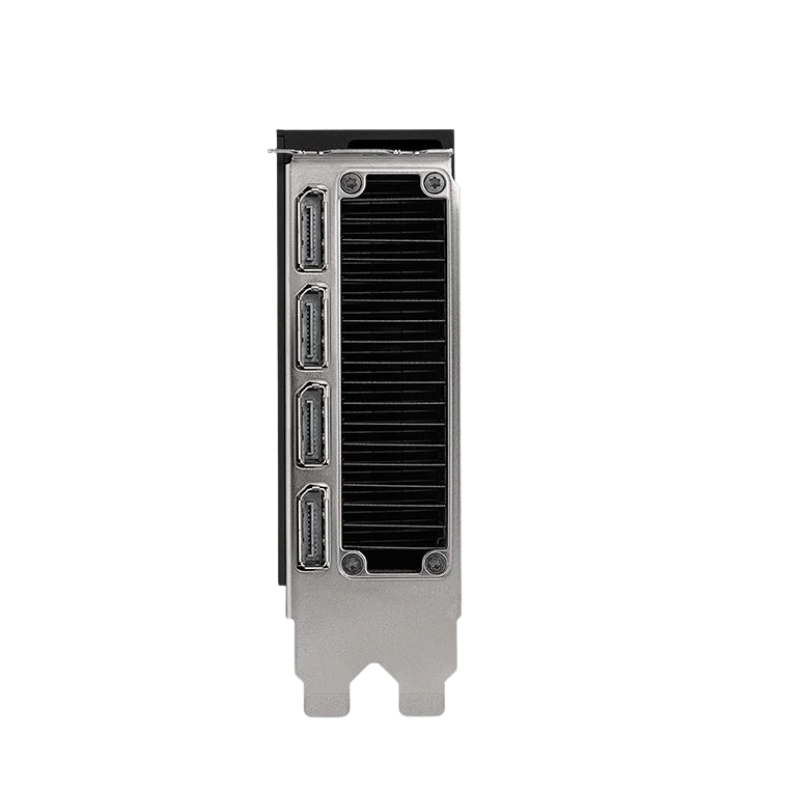
On the output side, the VCNRTX6000ADA‑PB provides four DisplayPort 1.4a connections. This arrangement enables flexible multi‑monitor and high-resolution configurations, supporting up to 7680 × 4320 (8K) output resolution. For professional visualization, immersive VR, or multi-display design studios, this level of connectivity ensures broad compatibility across modern high-resolution displays and projection systems.
One defining attribute of the workstation GPU category is the support for virtualization and multi-tenant GPU sharing. The VCNRTX6000ADA‑PB offers vGPU capabilities via NVIDIA’s VPC/vApps and RTX Virtual Workstation (vWS) software. These virtualization technologies allow slicing the physical GPU into multiple logical instances, with supported profiles ranging from 1 GB up to 48 GB. This flexibility is especially pertinent in cloud workstations, GPU sharing clusters, and enterprise environments where multiple users or virtual machines may run concurrently.
Unlike mainstream consumer cards, workstation GPUs in this category often come with certified drivers for professional creative and engineering tools such as Autodesk, Dassault Systèmes, Siemens NX, and others. The VCNRTX6000ADA‑PB benefits from NVIDIA’s driver ecosystem, which is tuned for stability, performance, and compatibility in mission-critical workflows. Engineers, architects, and visual effects artists depend on predictable results without graphical glitches or driver crashes.
Although gaming GPUs often offer similar raw core counts or memory bandwidth, they differ fundamentally from workstation cards in driver certification, stability under sustained workloads, ECC support, and deterministic rendering. The VCNRTX6000ADA‑PB and its category are optimized to run compute-heavy tasks without throttling, and to maintain prolonged stability in environments where a crash or artifact can disrupt an entire project timeline.
Every GPU category is best suited to certain kinds of work. The VCNRTX6000ADA‑PB targets industries and use cases such as architectural visualization, digital content creation, film and VFX postproduction, scientific research and simulation, AI model training, virtual production, and CAD/CAM engineering. In each domain, the abundant memory, high compute density, and certified driver support set it apart from general-purpose or gaming-grade alternatives.
In rendering pipelines using tools like V-Ray, Redshift, or Arnold, the card’s RT and Tensor cores enormously accelerate ray tracing, denoising, and AI-based image enhancements. The architecture ensures continuous throughput during batch renders or interactive previews, without memory overflow or bandwidth gridlock. For very large scenes, the 48 GB ECC buffer ensures that the entire dataset may reside in GPU memory, reducing CPU–GPU transfers and latency.
In data science or AI environments, the GPU category must support large models, tensor operations, and mixed-precision training. The RTX 6000 Ada’s Tensor cores deliver exceptional speed for deep learning tasks, and the vGPU features enable partitioning among multiple users or models. The memory bandwidth and ECC reliability become critical when processing large datasets or running continuous training cycles on multiple nodes.
When modeling physical phenomena with finite element analysis, computational fluid dynamics, or particle systems, GPU acceleration depends on predictable latency, memory access, and stability. The VCNRTX6000ADA‑PB’s architecture delivers balanced compute and memory throughput, while ECC ensures that long-running simulations remain error-free. In a cluster or workstation environment, professionals in aerospace, automotive, or materials science benefit from this GPU category for accelerated solvers and visualization.
Designers working in extended reality or digital twin platforms depend on real-time rendering and multi-display synchronization. The display outputs, frame lock capability, and synchronization features of the VCNRTX6000ADA‑PB support immersive environments at high fidelity. For architectural walkthroughs, VR presentations, and interactive simulation staging, this GPU category excels where consumer GPUs may struggle under prolonged high-resolution loads.
While the VCNRTX6000ADA‑PB does not support NVLink, it is still part of a GPU category that scales via PCIe, SLI alternatives, or multi-GPU software orchestration. In workstation servers or render farms, multiple cards of this class can be aggregated to handle massive project workloads. Software frameworks such as NVIDIA MPI, CUDA-aware clustering, and workload schedulers can distribute rendering, AI training, or compute tasks across many GPUs of this category, maintaining performance consistency.
Selecting within the class of high-end workstation GPUs involves weighing memory size, power budget, thermal considerations, and software compatibility. Users might choose a version with less memory if budgets are constrained or if their workloads seldom exceed that threshold, but the VCNRTX6000ADA‑PB offers maximal headroom. Cooling and chassis design must accommodate the blower-style dual-slot design. Power delivery systems need to support the 300 W draw reliably. Certification with preferred software is critical—users often review lists of supported drivers, application-specific performance, and long-term reliability. In essence, this category requires matching GPU capabilities to workflow demands and system constraints.
Understanding the full spec sheet helps users appreciate how this GPU firmly belongs in the elite workstation category. The architecture is built upon the custom 4 nm TSMC process, enabling a high transistor count of 76.3 billion and a die size of 608.4 mm². These characteristics position it at the leading edge of semiconductor density in this class. The parallel compute architecture—18,176 CUDA cores, 142 RT cores, 568 Tensor cores—enables simultaneous rendering, ray tracing, and AI acceleration. That kind of integration is characteristic of premium-class workstation cards.
Memory-wise, the 48 GB GDDR6 with ECC and the 384‑bit interface provide a bandwidth ceiling of 960 GB/s, a mark that few other GPUs in adjacent categories can match. This attribute helps avoid memory stalls and ensures sustained throughput. In the thermal and power domain, the dual-slot blower cooler and 300 W design integrate into professionally oriented chassis layouts, allowing stable operation under maximum load. The output stage with four DisplayPort 1.4a ports and support for 8K resolution aligns with advanced display and projection setups common to high-end studios and visualization centers.
The software and system-level features further reinforce this GPU’s positioning. The vGPU support with NVIDIA VPC/vApps and RTX Virtual Workstation software is a hallmark of enterprise and multi-tenant GPU categories. The ability to slice the physical GPU into multiple virtual instances is crucial in modern cloud, workstation sharing, or remote workstation environments. The support for 3D Vision via 3-pin Mini DIN, frame synchronization, and Quadro Sync compatibility adds further depth to its category alignment—especially in large-scale display walls or synchronized rendering farms. And despite the absence of NVLink, the inclusion of NVENC/NVDEC engines (3 each, with AV1 support) underlines its commitment to high-efficiency video encoding pipelines that many professional users depend upon.
Within the category, one of the differentiators is how GPU memory is partitioned across virtual machines or users. The VCNRTX6000ADA‑PB supports a wide range of vGPU profiles—from 1 GB up to the full 48 GB—allowing fine-grained allocation to diverse workloads. This flexibility helps administrators right‑size the memory allocation per user or per application, balancing utilization and performance. This configurability is a signature feature in the virtualized workstation GPU category and is a key reason why this model is chosen in enterprise deployments.
This GPU category is often deployed in pipelines where scalability is essential. Whether rendering large animation frames, training large AI models across multiple nodes, or driving synchronized displays in a VR lab, cards like the VCNRTX6000ADA‑PB excel when integrated into larger systems. Software tools manage workload distribution, memory paging, and inter-GPU coordination so the underlying hardware must reliably sustain high utilization across all subsystems. The architectural choices in Ada generation—balanced compute, efficient memory design, and cooling paths—make it naturally suited to scale without fingerprinting hotspots or resource starvation.
A key attribute that sets apart GPUs in premium workstation categories is error detection and correction. The ECC support in the VCNRTX6000ADA‑PB prevents silent data corruption during prolonged workloads—valuable in scientific computing, large render passes, or training tasks that run unattended overnight. Coupled with robust thermal management, validated driver stacks, and enterprise-grade support from NVIDIA and PNY, this card is built for durability and reliability over long service periods. That factor contributes heavily to the total cost of ownership (TCO) advantages in enterprise deployment.
This workstation GPU category appeals to system integrators, professional studios, research institutions, AI developers, and enterprise IT groups. Deployments typically appear in high-end workstations, server GPU nodes, render farms, or virtual desktop infrastructure (VDI) environments. Users selecting this class expect not just peak performance but sustained performance over years, full-stack integration with software, and minimal downtime risk due to hardware constraints or insufficient specification margins.


 Contact Us
 Information
 Catalog
 Solid State Drives (SSD)
 Network Switches
 Hard Disk Drives
 HBA & Controllers
 PC & Servers
 PC & Server Memory
 CPU & Processors
 Network Routers
 Power Supplies
 Tape Drives & Libraries
 Network Devices
 Computer & Network Cables