(7% discount is applied at checkout)
Cart is empty
Your go-to destination for cutting-edge server products
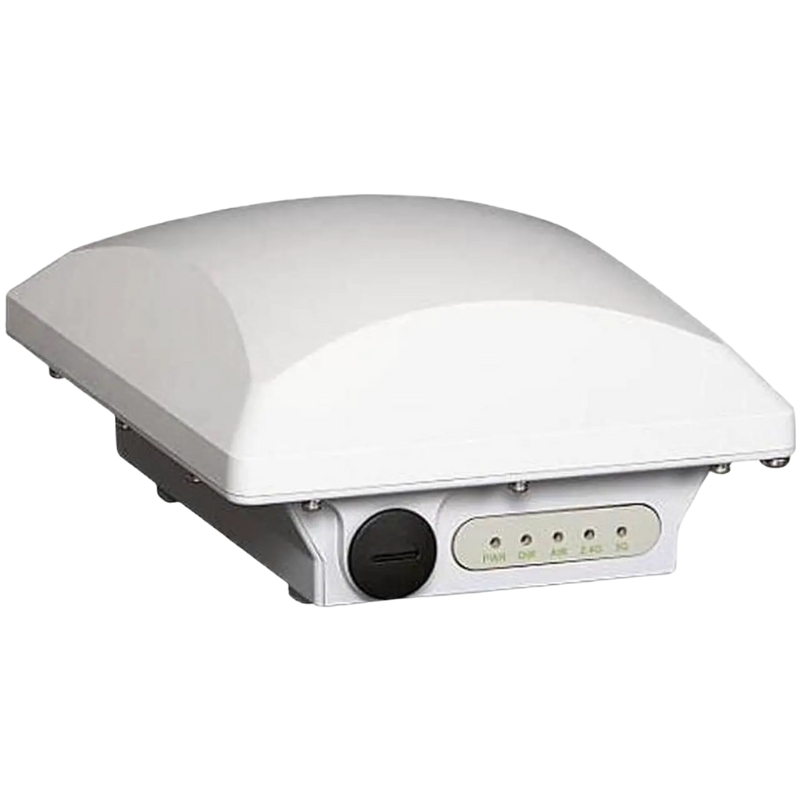


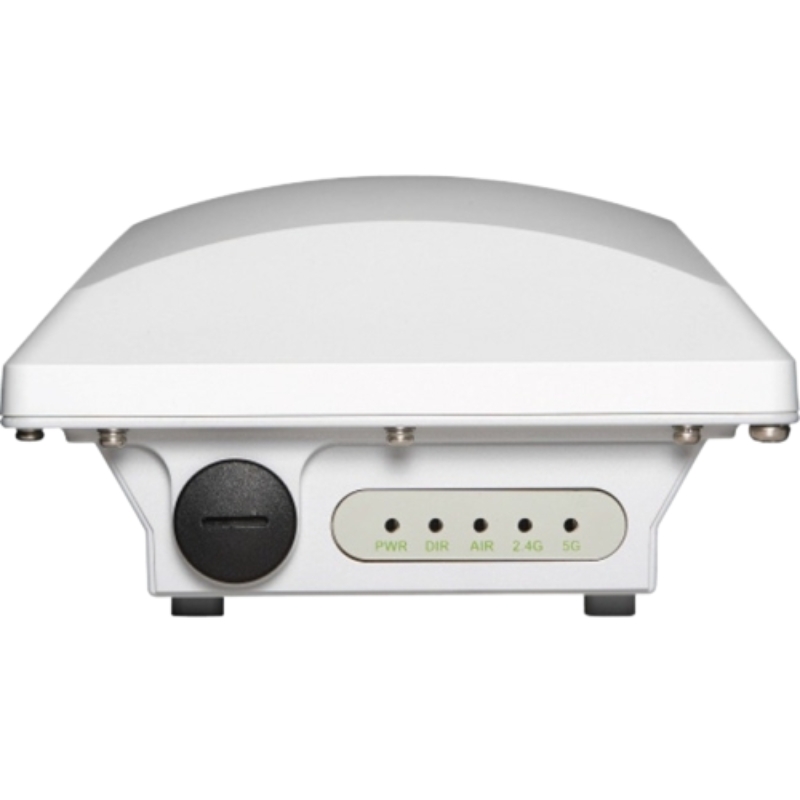
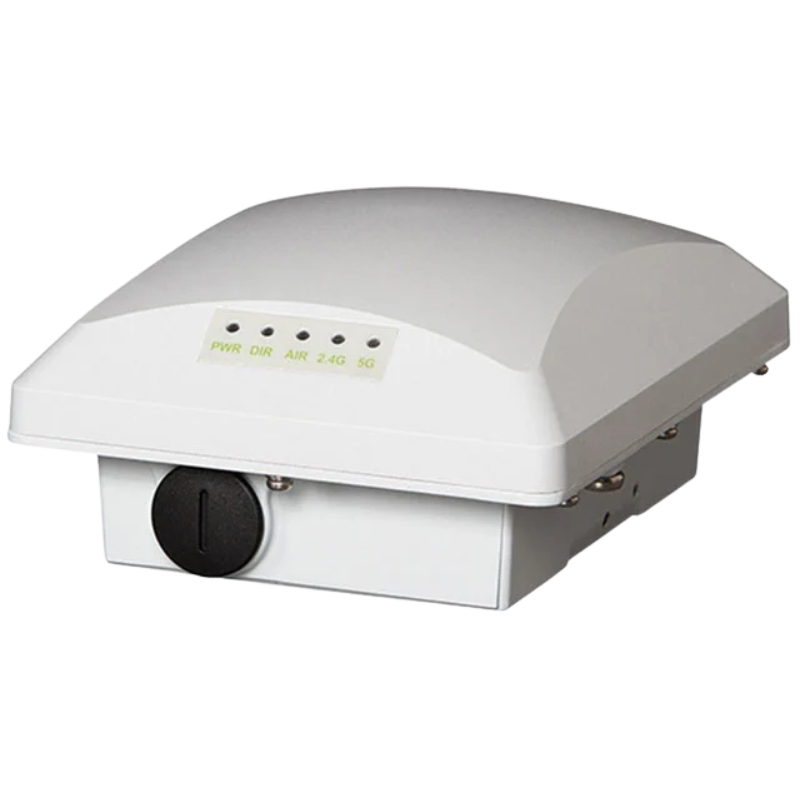
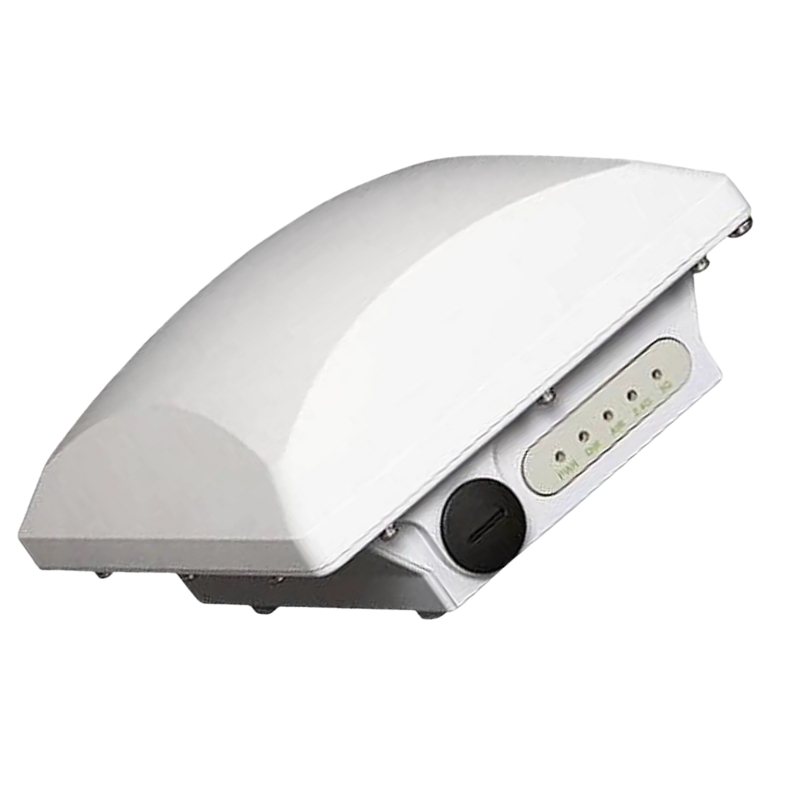
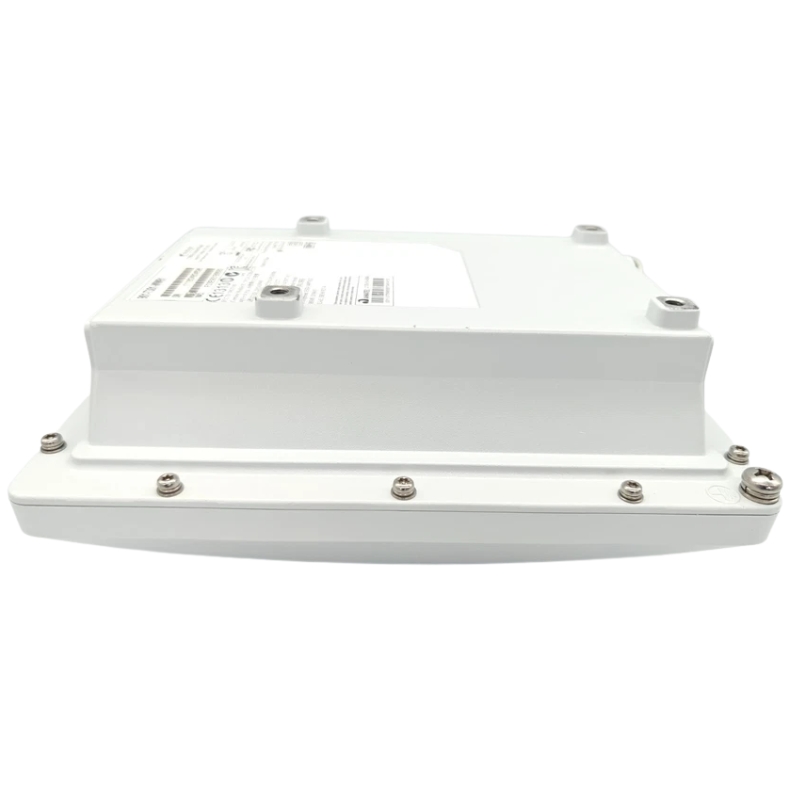
Ruckus 901-T301-US51 ZoneFlex IEEE 802.11ac 5 GHz 1.17GBPS Fast Ethernet Wireless Access Point. New Sealed with 1 Year Replacement Warranty
The Ruckus 901-T301-US51 ZoneFlex is a high-performance, carrier-grade outdoor wireless access point engineered to deliver robust, reliable, and high-speed Wi-Fi in challenging outdoor and semi-outdoor environments. Part of the esteemed Ruckus ZoneFlex family, this model integrates advanced technologies to create pervasive wireless coverage for public spaces, campuses, urban Wi-Fi deployments, and industrial settings. It is designed to withstand harsh weather conditions while providing seamless connectivity for a high density of concurrent users and devices.
The Ruckus 901-T301-US51 ZoneFlex Access Point represents a pinnacle of performance and reliability for demanding outdoor wireless deployments. Engineered to withstand the elements while delivering robust, high-speed connectivity, this dual-band 802.11ac Wave 2 access point is designed for service providers, municipalities, campuses, and enterprises seeking to extend their network perimeter beyond the walls of any building. It combines carrier-class hardware with the intelligent software of the Ruckus ZoneFlex OS to create a seamless, high-capacity wireless experience in parks, stadiums, parking lots, courtyards, and urban Wi-Fi hotspots.
At the heart of the ZoneFlex 901-T301 lies a powerful networking engine built for speed and concurrent client handling. It is architected to manage dense user environments where dozens to hundreds of devices require stable, high-throughput connections for data, voice, and video applications.
This access point leverages the 802.11ac Wave 2 standard, providing significant advancements over previous Wi-Fi generations. It operates concurrently on both the 2.4 GHz and 5 GHz frequency bands. The 5 GHz radio utilizes 3x3:3 MIMO (Multi-User, Multiple Input, Multiple Output) spatial streams alongside advanced technologies like 256-QAM modulation to achieve a maximum theoretical data rate of 1.3 Gbps. The 2.4 GHz radio supports 2x2:2 MIMO, delivering up to 400 Mbps. Combined, the unit offers a total aggregate peak data rate of 1.7 Gbps, ensuring ample bandwidth for multiple high-demand users and applications.
The 901-T301-US51 supports the IEEE 802.11ac Wave 2 standard, which is a significant advancement over previous Wi-Fi generations. It operates concurrently on both the 2.4 GHz and 5 GHz radio bands, providing a combined maximum aggregate data rate of up to 1.17 Gbps. This dual-radio, dual-concurrent design allows the access point to efficiently serve a mix of legacy 802.11n devices on the 2.4 GHz band and high-throughput 802.11ac devices on the cleaner, less congested 5 GHz band. The 802.11ac technology incorporates features like Multi-User MIMO (MU-MIMO), enabling the AP to communicate with multiple client devices simultaneously, drastically improving network efficiency and overall capacity in dense user environments.
In the 5 GHz band, the access point utilizes a 3x3:3 spatial stream configuration with support for 80 MHz channel bandwidth, which is key to achieving its high data rates. The 2.4 GHz radio also employs a 3x3:3 MIMO architecture, ensuring strong performance and coverage for bands prone to interference. The device is configured for regulatory domain US51, ensuring compliance with FCC regulations for operation in the United States.
For network backhaul and power, the access point features a Fast Ethernet interface. While the wireless radio is capable of speeds exceeding 1 Gbps, the wired uplink is a 10/100 Mbps Fast Ethernet port. This design indicates the AP is optimally deployed in scenarios where the primary goal is widespread coverage for a large number of users rather than maximizing throughput for a single device, or where the backhaul network infrastructure is based on Fast Ethernet. The port supports standards-based IEEE 802.3af Power over Ethernet (PoE), simplifying installation by allowing both data and power to be delivered over a single Ethernet cable from a compatible PoE switch or midspan injector.
A key feature of its Wave 2 designation is support for Multi-User MIMO (MU-MIMO). Unlike standard SU-MIMO (Single-User MIMO) which communicates with one client at a time, MU-MIMO allows the access point's radios to transmit data to multiple compatible clients simultaneously. This dramatically improves overall network efficiency and airtime fairness in environments with a mix of devices, reducing wait times and boosting perceived performance for every user on the network.
For network backhaul and power, the 901-T301 is equipped with two Gigabit Ethernet (10/100/1000 Mbps) RJ45 ports. These ports offer critical functionality for deployment flexibility. They support IEEE 802.3af/at Power over Ethernet (PoE), allowing the AP to be powered from a compatible PoE switch or midspan injector over a single Ethernet cable, simplifying installation in remote locations. The dual ports can be configured for failover or load balancing, providing redundancy and resilience. Additionally, the access point features a dedicated serial console port for out-of-band management.
The Ruckus 901-T301-US51 901-T301 is purpose-built for outdoor operation, featuring a rugged, weatherproof enclosure that meets stringent ingress protection standards. Its design philosophy ensures continuous operation through temperature extremes, moisture, and physical exposure.
Ruckus's patented BeamFlex+ technology is a game-changer for wireless performance. Unlike traditional access points with fixed antenna patterns, BeamFlex+ employs an adaptive antenna array with thousands of unique pattern combinations. In real-time, it intelligently selects the optimal antenna pattern for each individual client device, based on its location, mobility, and the prevailing RF environment. This results in stronger signal strength, reduced interference from neighboring devices or networks, and extended effective range for each connected client.
The access point employs ChannelFly, an innovative technology that uses machine learning to dynamically select the best-performing Wi-Fi channel. Instead of relying solely on traditional energy detection, ChannelFly actively tests and measures the real-world throughput capacity of available channels, switching clients to the channel that will deliver the highest actual performance. This is managed by the AP's Adaptive Radio Management (ARM) suite, which also handles transmit power control, band steering, and client load balancing across the dual radios to optimize the entire RF domain.
This access point is equipped with a comprehensive set of enterprise-grade features to ensure network security, support for advanced services, and seamless integration into larger network infrastructures.
The device supports a wide array of security protocols to protect data and network access. This includes WPA3-Personal and WPA3-Enterprise for the latest in Wi-Fi security, alongside WPA2-AES/TKIP for backward compatibility. It integrates with 802.1X/RADIUS authentication servers for robust user credential verification. Built-in features like a stateful packet inspection firewall, MAC address filtering, and VLAN tagging (supporting up to 16 SSIDs mapped to individual VLANs) enable precise network segmentation and policy enforcement for different user groups, such as guests, employees, or IoT devices.
A powerful feature for expansive outdoor deployments is the integrated SmartMesh networking capability. This allows the 901-T301 to form wireless backhaul links with other compatible Ruckus APs. In scenarios where running Ethernet cable to every AP location is impractical or cost-prohibitive, the mesh network can daisy-chain connectivity, with only one AP needing a wired uplink. The mesh is self-forming and self-healing, automatically finding the best path for backhaul traffic and rerouting around failures to maintain network availability.
The combination of outdoor durability, high performance, and intelligent software makes the Ruckus ZoneFlex 901-T301-US51 an ideal solution for a multitude of external wireless scenarios.
Municipalities and service providers deploy these APs to create city-wide or district-wide wireless hotspots. They can be mounted on light poles, traffic signals, or building facades to provide free or subscription-based internet access to citizens, visitors, and city workers, bridging the digital divide and enabling smart city initiatives.
Universities, colleges, and large school campuses use the 901-T301 to extend network coverage to outdoor common areas, quads, amphitheaters, sports fields, and parking lots. This supports digital learning, campus events, and allows students and faculty to remain connected everywhere.
Resorts, hotels, amusement parks, and golf courses utilize this AP to offer seamless guest Wi-Fi across pools, patios, gardens, and golf courses. The robust design handles high client density during events while providing a consistent, branded connectivity experience that enhances guest satisfaction.
In airports, seaports, rail yards, and large logistics centers, reliable outdoor Wi-Fi is essential for operations. The 901-T301 supports baggage handling systems, inventory management via mobile scanners, real-time tracking, and passenger information systems in harsh, open environments.
When paired with high-gain directional external antennas, the AP can be configured to establish dedicated wireless bridges. This is used to connect separate buildings (e.g., across a road or between campus buildings) or to provide backhaul for security camera networks and remote kiosks where fiber or copper is unavailable.


 Contact Us
 Information
 Catalog
 Solid State Drives (SSD)
 Network Switches
 Hard Disk Drives
 HBA & Controllers
 PC & Servers
 PC & Server Memory
 CPU & Processors
 Network Routers
 Power Supplies
 Tape Drives & Libraries
 Network Devices
 Computer & Network Cables