
(7% discount is applied at checkout)
Cart is empty
Your go-to destination for cutting-edge server products
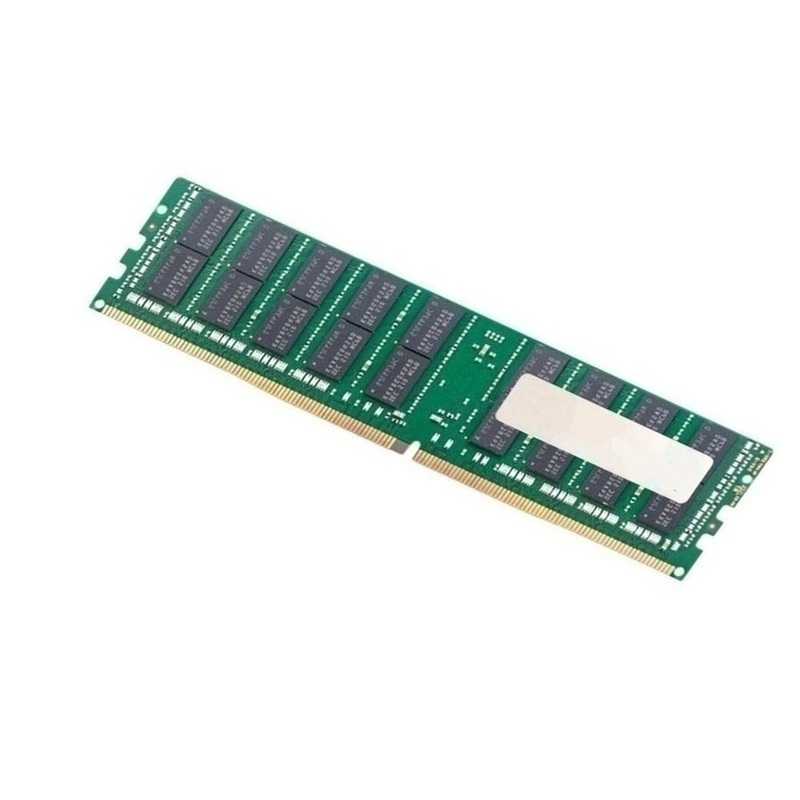
Samsung M393AAG40M32-CAE 128GB 3200mhz PC4-25600 CL22 ECC Registered DDR4 SDRAM 288-pin RAM. New (System) Pull with 1 year replacement warranty
| SKU/MPN | Warranty | Price | Condition | You save |
|---|---|---|---|---|
| M393AAG40M32-CAE | 1 Year Warranty | $1,560.00 | New (System) Pull | You save: $546.00 (26%) |
| M393AAG40M32-CAE | 1 Year Warranty | $2,098.00 | New Sealed in Box (NIB) | You save: $734.30 (26%) |
The Samsung M393AAG40M32-CAE is a high-performance memory module designed for intensive computing environments, offering robust features and exceptional reliability. This memory is perfect for enterprise-level applications where stability and speed are essential.
In the realm of enterprise computing and data center operations, system stability, data integrity, and unwavering performance are non-negotiable. At the heart of these critical systems lies server memory, a component far more advanced than standard desktop RAM. The Samsung M393AAG40M32-CAE represents a pinnacle of this specialized technology. This module is a 128GB DDR4 Registered Dual In-Line Memory Module (RDIMM) designed explicitly for server and workstation platforms that demand high capacity, reliability, and error correction. This crucial component reduces the electrical load on the controller, enabling the system to support a significantly greater number of memory modules and higher overall capacities without sacrificing signal integrity or clock speed. This makes RDIMMs like the Samsung M393AAG40M32-CAE the standard for multi-socket servers, high-density virtualization hosts, and memory-intensive applications such as in-memory databases, large-scale virtualization, and scientific computing.
Samsung's meticulous part numbering system reveals the key specifications of the module at a glance. Breaking down M393AAG40M32-CAE provides a complete blueprint of its capabilities.
The "M393" prefix typically denotes a DDR4 Registered RDIMM module intended for server use. This is a clear marker distinguishing it from consumer-grade memory products.
The "M32" indicates the module's organization and data width. It specifies a 64-bit data path standard for DIMMs, utilizing x4 DRAM chips. The "x4" configuration refers to the internal architecture of the individual memory chips, which has important implications for rank structure and overall reliability, especially when paired with ECC.
The suffix "-CAE" defines the module's performance profile. The "C" often correlates with a speed grade, here indicating a 3200 Megatransfers per second (MT/s) data rate. The "AE" further refines the specification, pointing to the CAS Latency (CL22), operating voltage (1.2V), and the specific revision of the DDR4 standard it adheres to, ensuring compatibility with supported server platforms.
The Samsung M393AAG40M32-CAE is engineered with a suite of technologies that cater to the rigorous demands of 24/7 server environments. Each specification is a carefully chosen parameter that balances speed, capacity, and absolute reliability.
This single module provides a staggering 128 gigabytes of memory. This immense capacity allows data center administrators to achieve high memory densities with fewer modules. For example, a dual-processor server with 16 memory slots could theoretically support up to 2 terabytes of RAM using modules of this density, enabling immense virtual machine consolidation or handling of enormous datasets entirely in RAM.
The module operates at a data rate of 3200 Megatransfers per second (MT/s), often referred to as 3200 Mbps. In the industry's standardized naming convention (PC4-25600), "PC4" denotes DDR4, and "25600" represents the peak theoretical bandwidth in megabytes per second (MB/s). This is calculated as (3200 MT/s * 64-bit/8 bits per byte) = 25,600 MB/s. This high bandwidth is crucial for feeding data-hungry multi-core CPUs and reducing bottlenecks in data-intensive applications.
The CAS Latency (CL) of 22 is a measure of the delay, in clock cycles, between when the memory controller requests data and when it is available. While higher than some consumer DDR4 kits, this latency is optimized for the stability and capacity demands of server environments. The registered buffer on RDIMMs adds a slight latency penalty, which is a justified trade-off for the immense gains in capacity and signal stability. In server workloads, overall throughput and error-free operation are often more critical than ultra-low latency.
The module operates at the standard DDR4 voltage of 1.2 volts. This represents a significant power efficiency improvement over the 1.5V standard of DDR3 technology. For data centers operating thousands of servers, this reduced voltage translates directly into lower power consumption, reduced heat output, and substantial savings on electricity and cooling costs over the hardware's lifetime.
ECC is a fundamental feature for any mission-critical server memory. It enables the module to detect and correct the most common types of internal data corruption (single-bit errors) on the fly. This happens transparently to the operating system and applications, preventing silent data corruption, system crashes, and computational errors that could lead to corrupted databases, financial miscalculations, or scientific inaccuracies. The Samsung M393AAG40M32-CAE includes dedicated ECC bits, making it an essential component for ensuring data integrity.
As a Registered RDIMM, this module includes a memory register (or buffer) for the command and address signals sent from the memory controller. This buffer reduces the electrical load, allowing server motherboards to support more memory modules per channel—often three or four RDIMMs instead of just one or two UDIMMs. This is the key technology that enables the high-capacity memory configurations required in modern servers. It enhances signal integrity and system stability, especially at high speeds and with large numbers of modules installed.
This is a Quad Rank (QR) module built using x4 DRAM chips. A "rank" is an independent set of DRAM chips that the memory controller can access simultaneously. A quad-rank module presents four such sets to the memory controller. The "x4" refers to the data width of the individual DRAM chips (4 bits wide). This specific combination (Quad Rank, x4) is highly advantageous for servers. It allows for the construction of very high-capacity modules while maintaining optimal electrical loading on the memory bus. Furthermore, x4 chips provide stronger error correction capabilities compared to x8 chips when using ECC, as they offer better "chip kill" or "SDDC" (Single Device Data Correction) functionality, allowing the system to survive the complete failure of a single DRAM chip.
The module uses the standard 288-pin connector layout defined for DDR4 RDIMMs. The physical notch on the connector is in a different position than that of a DDR4 UDIMM or DDR3 module, preventing accidental insertion into an incompatible motherboard socket. It is crucial to verify that your server or workstation motherboard specifically supports DDR4 Registered (RDIMM) memory and lists 128GB module capacities and 3200MT/s speed in its qualified vendor list (QVL) or memory compatibility list.
The combination of high capacity, ECC protection, and registered design makes the Samsung M393AAG40M32-CAE suited for a specific class of demanding computing environments.
In large-scale virtualization environments (using VMware vSphere, Microsoft Hyper-V, KVM, etc.), memory is often the primary limiting resource for virtual machine (VM) density. Servers populated with 128GB RDIMMs can host hundreds of VMs, improving consolidation ratios and maximizing the return on hardware, power, and rack space investment. This module is also ideal for cloud infrastructure stacks like OpenStack, where large, predictable memory pools are required for tenant instances.
Technologies such as SAP HANA, Oracle Database In-Memory, Microsoft SQL Server In-Memory OLTP, and various real-time analytics platforms rely on storing entire working datasets in RAM. The speed of 3200MT/s and the massive 128GB capacity per module directly accelerate query performance and transaction throughput, while ECC ensures the absolute integrity of the in-memory data, which is paramount for business-critical databases.
Scientific simulations, computational fluid dynamics, genomic sequencing, and financial modeling applications often work with enormous datasets that must be loaded into memory for processing. The bandwidth provided by 3200MT/s DDR4 helps feed multiple high-core-count CPUs, while the large capacity allows for more complex models and simulations to be run without constant disk swapping, drastically reducing time-to-solution.
Large-scale Enterprise Resource Planning (ERP), Customer Relationship Management (CRM), and supply chain management systems run on servers that require unwavering stability and large memory footprints for caching and user sessions. The ECC and registered design of this Samsung module provide the foundation for the rock-solid stability these applications demand.
Deploying high-density server memory requires careful planning to ensure compatibility and optimal performance.
The Samsung M393AAG40M32-CAE is designed for server platforms based on Intel Xeon Scalable Processors (Cascade Lake, Ice Lake, and compatible generations) and AMD EPYC Processors (2nd Generation "Rome", 3rd Generation "Milan", and later). It is not compatible with consumer-grade desktops (Intel Core or AMD Ryzen platforms), which typically only support unbuffered, non-ECC memory. Compatibility must always be confirmed against the server manufacturer's (Dell, HPE, Lenovo, Supermicro, etc.) official memory compatibility list or Qualified Vendor List (QVL) for the specific motherboard or system model.
Server memory architectures have strict rules for populating slots to achieve optimal performance (usually operating in a multi-channel mode). Using quad-rank modules like this one often affects the maximum supported speed and the number of modules that can be installed per channel. For instance, a system may support 3200MT/s with one or two modules per channel but might step down to 2933MT/s when all slots are populated with quad-rank DIMMs. Consulting the system's technical documentation is essential for proper configuration.


 Contact Us
 Information
 Catalog
 Solid State Drives (SSD)
 Network Switches
 Hard Disk Drives
 HBA & Controllers
 PC & Servers
 PC & Server Memory
 CPU & Processors
 Network Routers
 Power Supplies
 Tape Drives & Libraries
 Network Devices
 Computer & Network Cables