
(7% discount is applied at checkout)
Cart is empty
Your go-to destination for cutting-edge server products
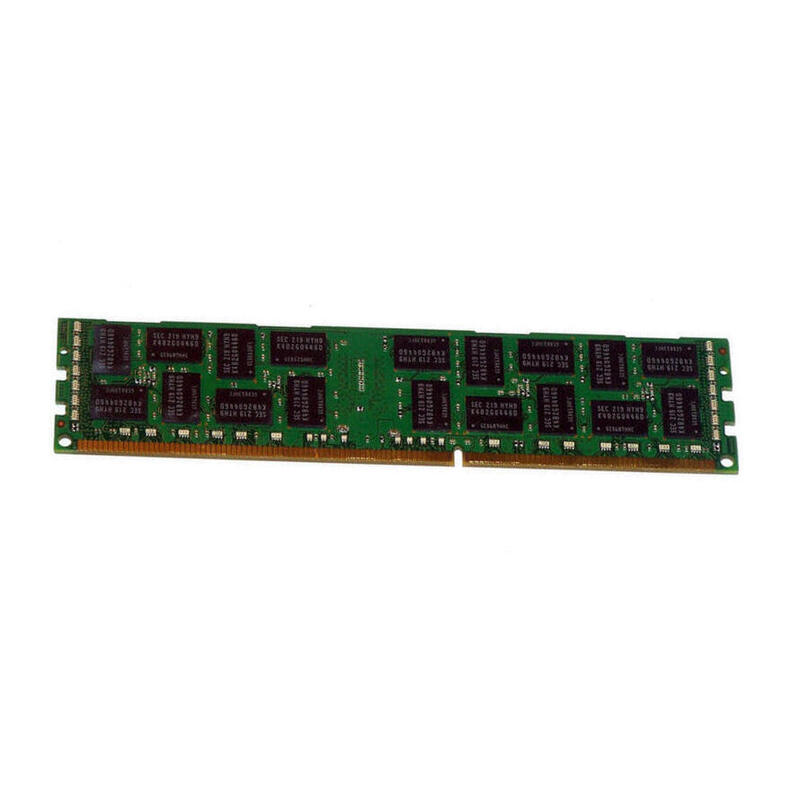
Samsung M393B1K73CHD-YF8 8GB 1066mhz PC3-8500 DDR3 SDRAM ECC Reg RAM. New (System) Pull with 1 year replacement warranty
Discover a dependable server-grade DIMM designed for stability, speed, and data accuracy. The Samsung M393B1K73CHD-YF8 delivers quad-rank performance, error-correcting capabilities, and efficient 1.35V operation—ideal for enterprise workloads, virtualization, and high-uptime environments.
The enterprise DDR3 registered memory category is designed to meet the demanding requirements of mission-critical server and workstation environments where stability, data integrity, and long-term reliability are essential. Products within this category are engineered for compatibility with enterprise-grade platforms, offering features such as error correction, registered buffering, and strict adherence to industry standards. The Samsung M393B1K73CHD-YF8 8GB DDR3 RDIMM exemplifies this category by combining robust architecture with consistent performance characteristics suitable for legacy and transitional server infrastructures.
Samsung’s approach to DDR3 registered memory emphasizes electrical stability and predictable behavior under sustained workloads. The registered design incorporates a register chip that buffers address and command signals before they reach the memory chips. This architecture reduces electrical load on the memory controller, allowing servers to support higher memory capacities and more populated DIMM configurations without compromising signal integrity. In environments where uptime and consistency are non-negotiable, this design philosophy remains highly relevant.
Registered DIMMs, often abbreviated as RDIMMs, differ from unbuffered memory by introducing an intermediary register between the memory controller and the DRAM modules. This register re-drives signals, minimizing timing skew and improving overall system stability. For enterprise servers that operate continuously under load, this buffering mechanism is critical in preventing data errors and ensuring smooth operation across multiple memory channels.
Error Correction Code, commonly known as ECC, is a foundational element of enterprise memory modules. The Samsung M393B1K73CHD-YF8 integrates ECC technology that can detect and correct single-bit memory errors while identifying multi-bit errors. This capability significantly reduces the risk of data corruption, application crashes, and system downtime, making ECC registered memory an essential choice for database servers, virtualization hosts, and enterprise applications.
An 8GB capacity strikes a balance between affordability and scalability in enterprise environments. This capacity allows system administrators to populate multiple slots efficiently, achieving optimal memory interleaving and bandwidth utilization. When deployed across several DIMM slots, 8GB modules enable flexible memory configurations that can be tailored to workload requirements without excessive cost.
The quad rank design of this DDR3 module refers to the organization of memory chips into four logical ranks. Quad rank memory can provide higher density per module, allowing servers to reach greater total memory capacities with fewer DIMMs. This is particularly advantageous in systems with limited memory slots, where maximizing capacity per slot is a priority. The quad rank structure also aligns well with enterprise server memory controllers designed to handle complex memory topologies.
X8 chip organization indicates that each memory chip has an eight-bit data width. This configuration works in conjunction with ECC to provide robust error detection and correction capabilities. X8-based ECC memory is widely supported across enterprise platforms and is often preferred for its balance of performance, compatibility, and reliability in server-grade systems.
DDR3 SDRAM technology represents a mature and widely deployed memory standard in enterprise computing. While newer generations exist, DDR3 remains relevant in many production environments due to its proven stability, extensive platform support, and predictable performance characteristics. The Samsung M393B1K73CHD-YF8 is optimized to operate within these established ecosystems, ensuring seamless integration with compatible servers.
PC3-8500 memory operates at an effective data rate of 1066MHz, delivering sufficient bandwidth for a wide range of enterprise workloads. This speed grade is particularly well-suited for legacy and transitional server platforms that prioritize reliability over peak throughput. In such systems, consistent latency and error-free operation often outweigh raw speed metrics.
CAS latency, commonly abbreviated as CL, measures the delay between a memory controller request and the availability of data. A CL7 rating reflects a balanced latency profile for DDR3-1066 memory. In enterprise contexts, predictable latency contributes to stable application performance, especially for workloads such as transactional databases and virtualization environments where memory access patterns are consistent.
Operating at 1.35 volts, this DDR3 RDIMM offers improved power efficiency compared to traditional 1.5-volt modules. Lower operating voltage reduces overall power consumption and heat generation, which is particularly beneficial in densely populated server racks. Improved thermal characteristics contribute to longer component lifespan and reduced cooling requirements within data center environments.
Low voltage DDR3 memory supports energy-efficient data center strategies by lowering per-module power draw. When multiplied across dozens or hundreds of servers, these savings become significant. Reduced heat output also eases the burden on cooling infrastructure, enabling more efficient airflow management and potentially lowering operational costs.
Enterprise memory modules are designed to operate continuously under sustained workloads. Samsung’s manufacturing standards and quality control processes ensure that modules like the M393B1K73CHD-YF8 maintain stable performance even in environments with constant memory utilization. This reliability is essential for applications that cannot tolerate unexpected downtime or performance degradation.
The 240-pin RDIMM form factor is a standard specification for DDR3 registered memory modules used in enterprise servers. This physical design ensures compatibility with a wide range of server motherboards that support DDR3 RDIMM configurations. Proper pin alignment and module height are engineered to meet industry standards, simplifying installation and maintenance.
This memory module is designed for compatibility with enterprise-grade server platforms from major OEMs that support DDR3 RDIMM specifications. Compatibility extends to systems utilizing Intel Xeon and AMD Opteron processors of the DDR3 era, ensuring broad applicability across legacy infrastructures still in active service.
Integrating additional DDR3 RDIMM modules into an existing system requires attention to matching specifications such as speed, voltage, and rank structure. The Samsung M393B1K73CHD-YF8 aligns with common enterprise standards, making it suitable for system expansions, replacements, or upgrades within supported platforms.
Enterprise DDR3 registered memory is commonly deployed in environments where data integrity and uptime are critical. Typical use cases include file servers, application servers, virtualization hosts, and enterprise resource planning systems. The stability and ECC protection provided by registered memory make it a reliable foundation for these workloads.
In virtualization environments, memory reliability is paramount because multiple virtual machines share the same physical resources. ECC registered memory helps prevent memory-related faults that could impact multiple workloads simultaneously. The quad rank design further supports higher memory density, enabling more virtual machines per host.
Database servers benefit from the predictable latency and error correction capabilities of DDR3 RDIMM modules. Transactional workloads rely on consistent memory access patterns, and any data corruption could have severe consequences. ECC registered memory mitigates these risks, supporting stable and reliable database operations.
While newer memory technologies continue to emerge, DDR3 RDIMM remains a critical component in many legacy and transitional infrastructures. Organizations with established server fleets often prioritize maintaining existing systems rather than undertaking costly upgrades. In such cases, high-quality DDR3 registered memory ensures continued reliability and performance.
DDR3 RDIMM modules offer a favorable balance between cost and performance for organizations managing mature infrastructures. By extending the lifespan of existing servers, businesses can allocate resources more efficiently while still meeting operational requirements.
Long-term deployments benefit from the proven stability of DDR3 technology. The Samsung M393B1K73CHD-YF8 is designed to deliver consistent performance over extended periods, supporting workloads that demand uninterrupted operation and predictable behavior.
The combination of 8GB capacity, 1066MHz speed, PC3-8500 bandwidth rating, CL7 latency, quad rank configuration, X8 chip organization, ECC support, registered buffering, and 1.35V operating voltage defines this module’s position within the enterprise memory category. Each specification contributes to a holistic design focused on reliability, compatibility, and efficiency.
Enterprise memory selection involves balancing multiple factors, including speed, capacity, and reliability. While higher speeds may offer marginal performance gains, stability and error correction often take precedence in server environments. This DDR3 RDIMM exemplifies that balance by delivering adequate bandwidth alongside robust reliability features.
Ensuring that memory specifications align with server requirements is essential for optimal operation. Matching speed grades, voltage levels, and rank configurations helps prevent compatibility issues and ensures that systems operate within validated parameters.
For IT administrators, deploying reliable DDR3 RDIMM modules simplifies system management and reduces the risk of memory-related incidents. ECC protection, registered buffering, and low voltage operation collectively contribute to a stable computing environment that requires minimal intervention.
Memory-related errors can lead to system crashes and unplanned downtime. ECC registered memory minimizes these risks, supporting continuous operation and reducing the need for frequent maintenance or troubleshooting.
Enterprise applications often rely on consistent performance rather than peak benchmarks. The predictable latency and stable operation of DDR3 RDIMM modules ensure that applications perform reliably under varying workloads.


 Contact Us
 Information
 Catalog
 Solid State Drives (SSD)
 Network Switches
 Hard Disk Drives
 HBA & Controllers
 PC & Servers
 PC & Server Memory
 CPU & Processors
 Network Routers
 Power Supplies
 Tape Drives & Libraries
 Network Devices
 Computer & Network Cables