(7% discount is applied at checkout)
Cart is empty
Your go-to destination for cutting-edge server products
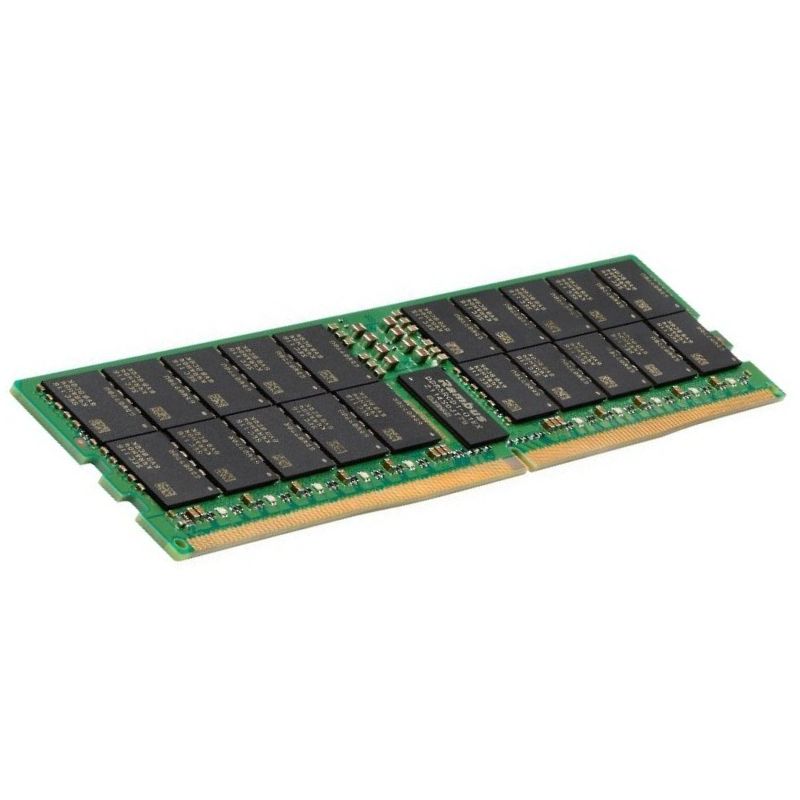


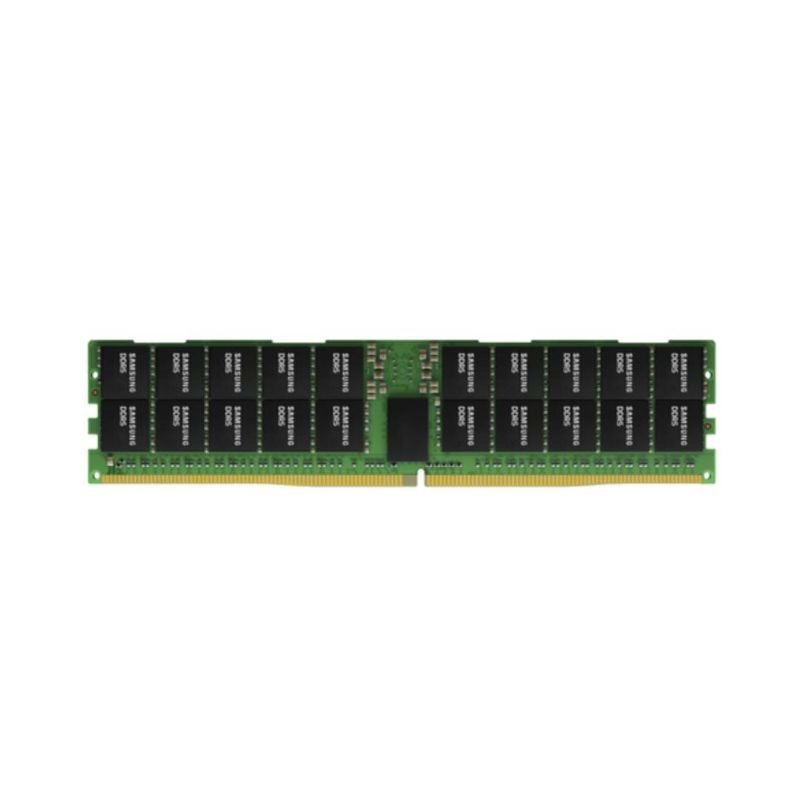
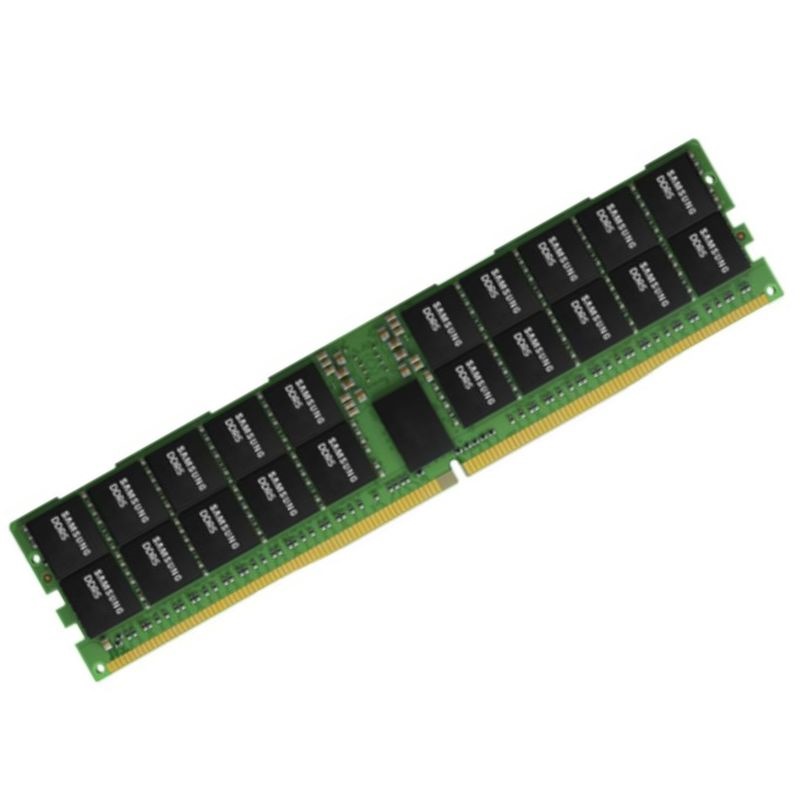
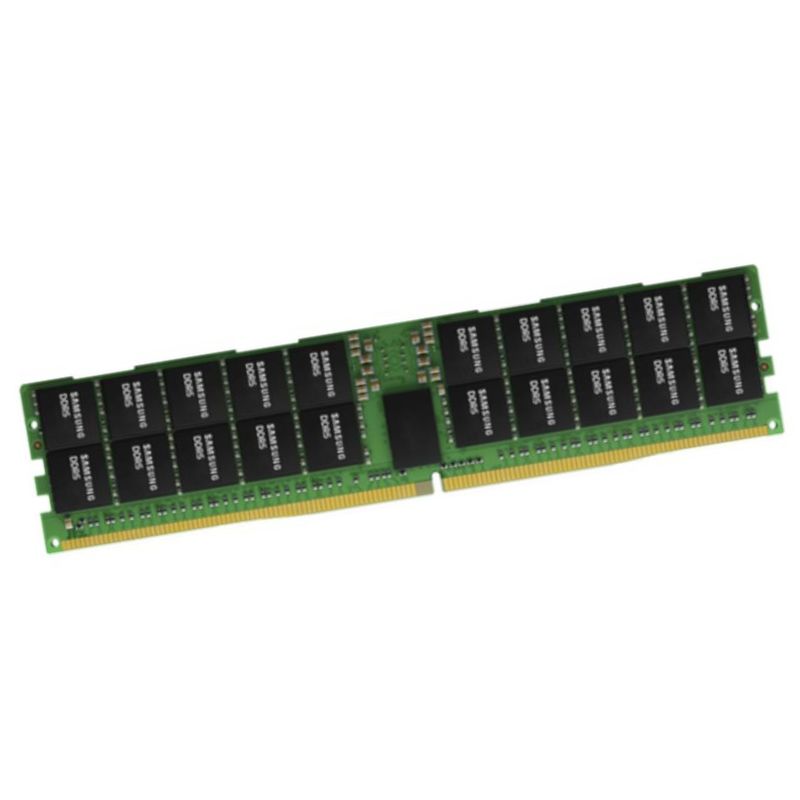
Samsung M321R2GA3BB0-CQKOL 16GB PC5-38400 RDIMM DDR5 Memory Module. New (System) Pull with 1 year replacement warranty
The Samsung M321R2GA3BB0-CQKOL 16GB PC5-38400 RDIMM ECC Registered DDR5 RAM is engineered for superior performance, reliability, and efficiency. This advanced memory module is designed to meet the demands of modern computing environments.
The category of Samsung DDR5 Registered ECC RDIMM server memory represents a significant advancement in modern data center infrastructure, delivering exceptional performance, stability, and power efficiency for next-generation enterprise systems. Within this category, the Samsung M321R2GA3BB0-CQKOL 16GB DDR5 4800Mbps PC5-38400 1Rx8 ECC Registered 1.1V CL40 SDRAM 288-Pin RDIMM Memory Module stands as an advanced solution engineered specifically for high-performance servers, virtualized platforms, scalable cloud environments, and mission-critical computing tasks. This class of server memory is built to address the increasing demands for greater bandwidth, improved latency management, enhanced reliability, and lower operational energy consumption across a diverse range of enterprise workloads.
As organizations adopt more data-intensive applications, AI computing frameworks, real-time analytics, machine learning pipelines, and virtualization workloads, the importance of dependable and high-capacity memory modules grows considerably. Samsung DDR5 Registered ECC modules are engineered to deliver exceptional throughput and improved power regulation, enabling businesses to streamline operations while achieving greater levels of operational consistency. Unlike standard unbuffered modules, RDIMM server memory incorporates a dedicated register that assists in stabilizing the electrical load, ensuring consistently reliable performance even when multiple modules are populated across server channels.
The Samsung M321R2GA3BB0-CQKOL module demonstrates the type of dependable engineering that characterizes the entire DDR5 server memory category. Its 4800Mbps speed rating and PC5-38400 bandwidth classification provide significantly faster data transfer capabilities compared to earlier DDR generations, thereby supporting modern enterprise architectures with improved efficiency and shorter processing delays. Its 1Rx8 configuration further enhances operational stability, making it ideal for intensive multi-task workloads that require precise data transfer and advanced error-correction capabilities.
The emergence of DDR5 SDRAM technology marks a turning point in server memory evolution. While previous DDR generations delivered incremental improvements, DDR5 introduces a variety of hardware-level and firmware-level innovations that substantially increase performance metrics. Samsung’s DDR5 Registered ECC modules capitalize on these enhancements to deliver higher bandwidth, improved channel efficiency, and reduced power consumption.
DDR5 memory integrates improved power-management functions by relocating voltage regulation from the motherboard to the module itself. This innovation results in cleaner power delivery, reduced electrical noise, and optimized control of power-related processes. For enterprise servers that remain in operation around the clock, these improvements translate to greater long-term reliability, improved thermal stability, and more predictable performance patterns. With DDR5, organizations benefit from higher speed thresholds that support cloud computing clusters, virtualization nodes, large transactional databases, and extensive distributed computing frameworks.
Another defining characteristic of DDR5 memory modules is the internal dual-channel architecture. Instead of a single 64-bit channel, DDR5 introduces two independent 32-bit channels per module. This structural modification allows for more efficient data allocation as tasks are distributed across smaller, optimized channels. It increases memory concurrency, reduces latency under heavy workloads, and improves overall operational sustainability when multiple CPU cores request simultaneous access to memory.
The Samsung M321R2GA3BB0-CQKOL memory module benefits directly from this optimized structure, enabling faster transaction processing, smoother data flow, and better memory bandwidth utilization. In practical server scenarios, these performance advantages support more efficient hypervisor operations, faster container deployment, scalable cloud-native application execution, and improved machine learning throughput.
Registered ECC RDIMM modules are particularly valued in enterprise-class hardware due to their advanced error-correction capabilities. ECC memory continuously monitors data integrity, identifying and correcting minor issues before they result in critical failures. As servers execute billions of operations each second, even the most minor data inconsistencies can lead to application interruptions, corrupted data sets, or system failures. ECC technology mitigates these risks by providing real-time protection against common data corruption events.
Samsung’s implementation of ECC is especially refined, designed to preserve the integrity of complex computing environments. By combining ECC error correction with RDIMM signal buffering, the M321R2GA3BB0-CQKOL module ensures uninterrupted performance within multi-socket servers, mission-critical data centers, and highly parallelized computing environments.
The Samsung M321R2GA3BB0-CQKOL is engineered as a high-reliability 16GB DDR5 RDIMM solution built for servers that require exceptional data throughput and dependable uptime. With a speed rating of 4800Mbps and a PC5-38400 bandwidth classification, this module enhances sustained server performance across high-pressure computing workloads.
The 1Rx8 architecture increases signal integrity and improves compatibility across a wide range of server platforms. Operating at a low voltage of 1.1V, the module also supports energy-efficient computing operations, reducing electricity usage and minimizing heat output within densely populated server racks. The CL40 latency rating is optimized for smooth data retrieval and stable operations during continuous multitasking, data processing, virtualization, and AI computation.
High-speed bandwidth is essential for server environments that must quickly access large datasets, execute parallel processes, and manage numerous simultaneous data requests. The Samsung M321R2GA3BB0-CQKOL module’s 4800Mbps specification ensures improved processing speed and greater responsiveness for data-heavy computing. As enterprises deploy increasingly complex platforms such as machine learning engines, virtual servers, high-volume transactional systems, and multi-tiered cloud infrastructures, memory bandwidth becomes a decisive factor in determining performance.
The PC5-38400 throughput capacity offered by this DDR5 module represents a substantial leap over predecessor DDR4 technologies. It ensures that servers can handle larger data pipelines with reduced wait times and minimal system latencies, supporting modern workloads with heightened efficiency and long-term consistency.
Memory latency directly affects how quickly a server retrieves data when executing critical tasks. The CL40 timing of the M321R2GA3BB0-CQKOL module is optimized to balance high-speed operation with dependable system stability. While DDR5 introduces higher CAS timings than previous generations due to architectural changes, the significant increase in bandwidth, concurrency, and memory channel optimization results in overall improved system responsiveness.
When paired with multi-core server processors, this memory module ensures lower queuing delays, faster processing cycles, and smoother multitasking. It is particularly suited for enterprise tasks requiring low-latency response, such as distributed computing frameworks, cloud automation systems, virtualization managers, and high-speed enterprise storage arrays.
Power efficiency plays a crucial role in modern server architecture. As organizations build larger data centers and deploy more compute-intensive workloads, the ability of components to operate efficiently becomes vital in controlling energy costs and maintaining temperature stability. DDR5 modules incorporate an onboard Power Management IC that contributes to stable, efficient power distribution.
The Samsung M321R2GA3BB0-CQKOL module leverages this design to maintain low power consumption at just 1.1V, reducing strain on server power supplies and lowering heat production. Efficient memory modules allow servers to run cooler, enabling higher density configurations and ensuring stable operations in demanding environments with extended uptime.
Samsung DDR5 Registered ECC memory modules are widely utilized across enterprise computing landscapes where performance, reliability, and scalability are essential. The M321R2GA3BB0-CQKOL module is particularly well-suited for next-generation servers designed to handle complex data interactions with speed and precision.
Virtualized environments require memory modules capable of supporting a large number of simultaneous virtual machines and containers. The Samsung DDR5 RDIMM memory category excels in this area by providing substantial bandwidth, stable power delivery, and optimized architecture for multi-threaded operations. With the enhanced memory concurrency offered by DDR5, hypervisors can allocate memory resources more efficiently, resulting in improved performance for containerized workloads, orchestration systems, and distributed microservices.
AI and ML systems rely heavily on memory bandwidth and low-latency access to large datasets. The M321R2GA3BB0-CQKOL module meets these requirements by delivering high throughput and near-constant performance consistency. Complex neural network training, deep-learning computations, and algorithm modeling benefit greatly from high-speed DDR5 memory that ensures smooth data handling and improved model accuracy during computation cycles.
Transaction-intensive applications, including enterprise databases, financial systems, and e-commerce platforms, depend on rapid memory access to process large volumes of structured data. The speed of DDR5 memory dramatically accelerates database operations, reducing bottlenecks and enabling faster response times for user transactions. With ECC technology maintaining data integrity, businesses can rely on highly stable and failure-resistant infrastructure.
High-Performance Computing environments require memory modules that can sustain continuous processing loads with absolute reliability. The Samsung DDR5 RDIMM category is widely used in HPC clusters executing tasks such as molecular modeling, scientific simulations, climate analysis, or predictive analytics. The enhanced speed, stability, and signal integrity provided by RDIMM ECC modules ensure that HPC systems can function at peak performance.
The Samsung M321R2GA3BB0-CQKOL module is designed with broad server compatibility in mind. It is engineered to function seamlessly with modern server motherboards that support DDR5 RDIMM memory and take advantage of enhanced power regulation and multi-channel architectures. Whether used in enterprise-grade rack servers, cloud-optimized towers, or multi-socket high-density systems, this module provides the level of stability required for mission-critical deployments.
RDIMM memory allows servers to populate a greater number of memory modules without compromising stability. With DDR5, scalability expands further due to improved efficiency and enhanced structural design. Enterprises can scale their memory configurations to meet future demands in workload expansion, virtualization density, AI computation growth, or database scaling.
Maintaining efficient cooling is essential when deploying large quantities of memory modules. DDR5 technology helps reduce thermal stress by operating at lower voltages. The Samsung M321R2GA3BB0-CQKOL module contributes to improved thermal balance, enabling operators to maintain controlled temperatures within multi-node server racks.
Samsung’s advanced build quality ensures long-term durability even under continuous high-load operation. Enterprises rely on this level of reliability to protect hardware investments and reduce maintenance requirements. With ECC functionality reducing the risk of data corruption and RDIMM architecture strengthening signal management, this module supports uninterrupted performance for extended operational lifecycles.


 Contact Us
 Information
 Catalog
 Solid State Drives (SSD)
 Network Switches
 Hard Disk Drives
 HBA & Controllers
 PC & Servers
 PC & Server Memory
 CPU & Processors
 Network Routers
 Power Supplies
 Tape Drives & Libraries
 Network Devices
 Computer & Network Cables