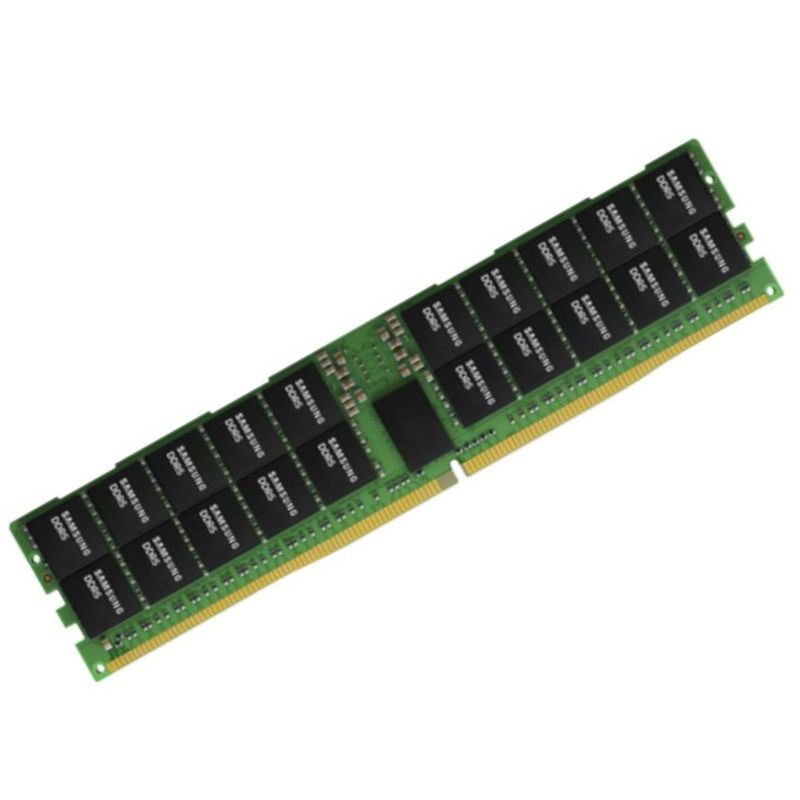
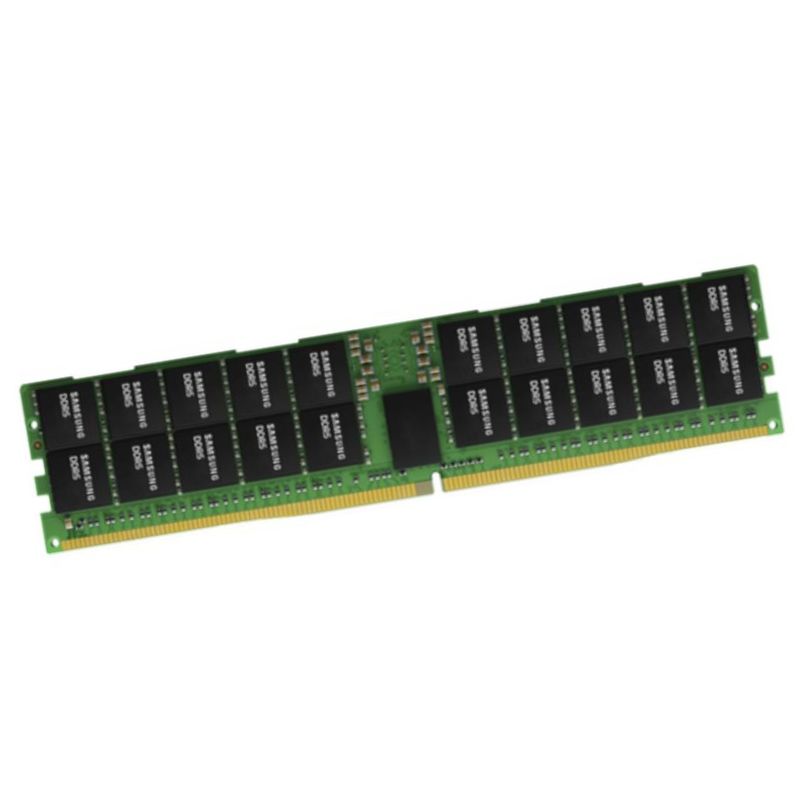
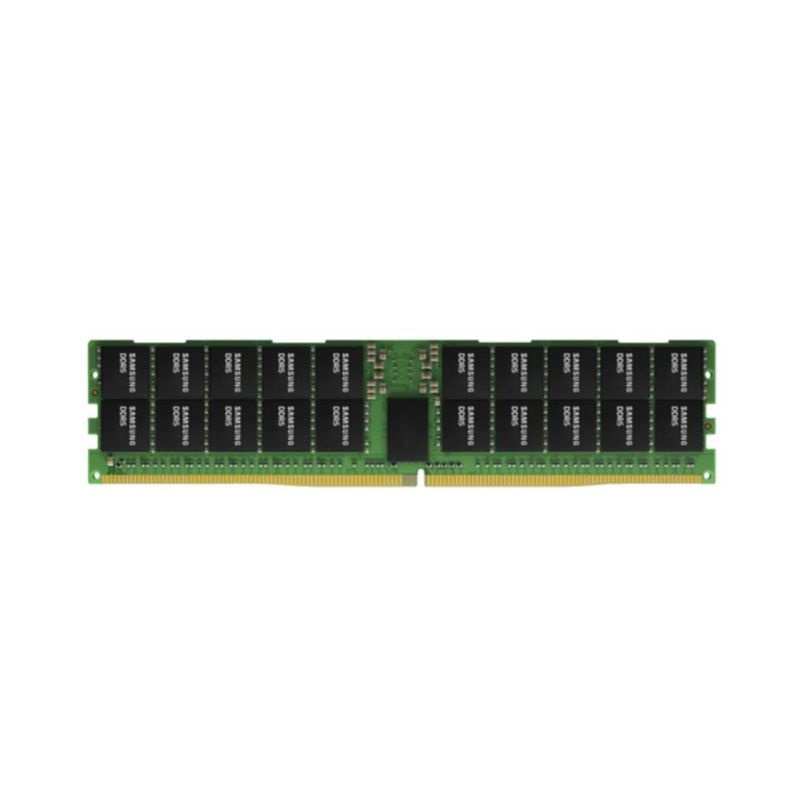
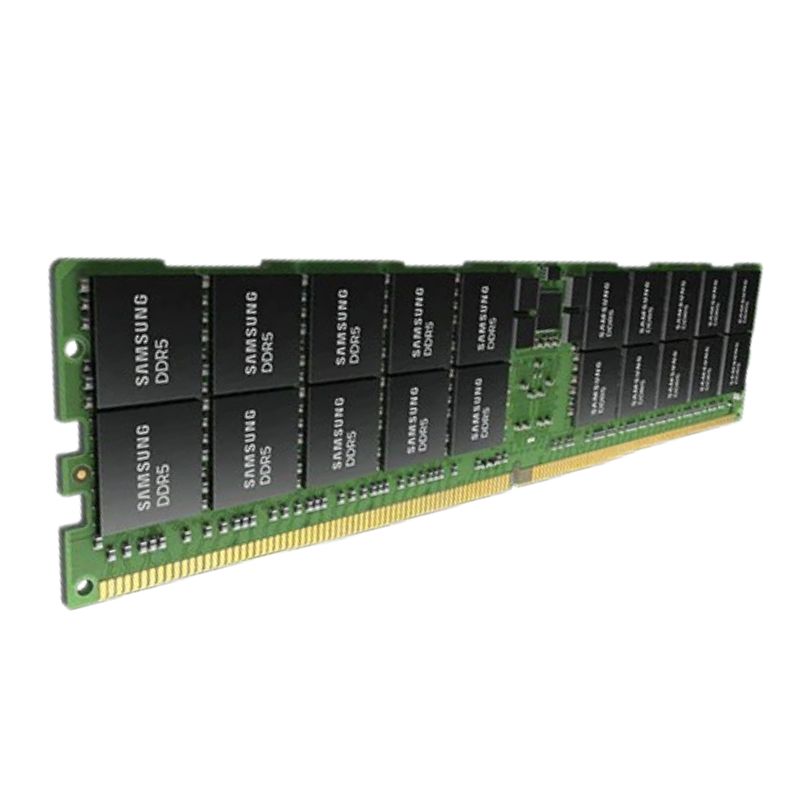
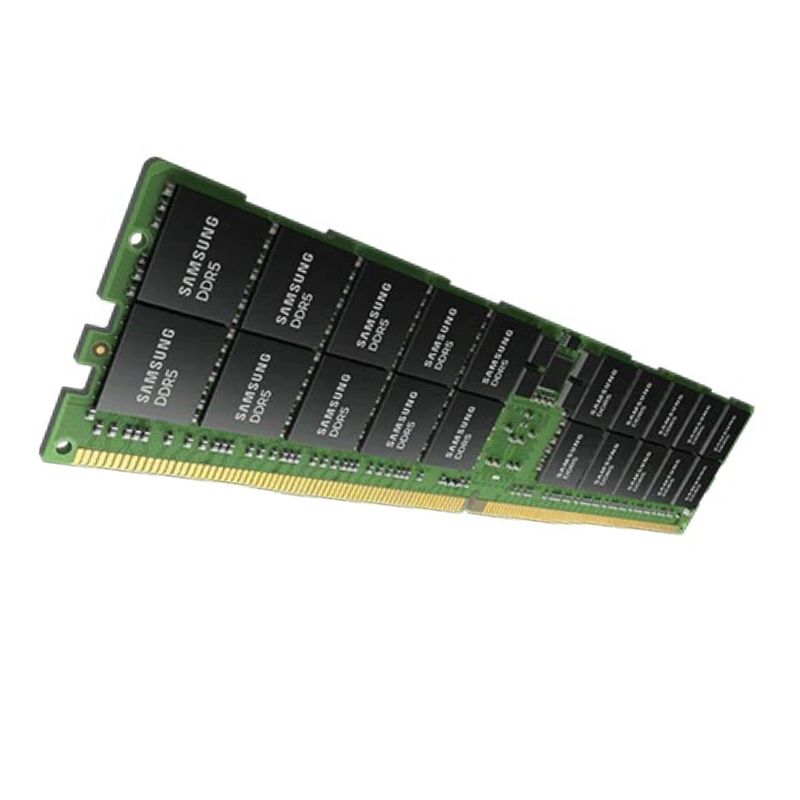
Samsung M321R2GA3BB0-CWM 16GB 288-pin RDIMM PC5-44800 DDR5 RAM
- — Free Ground Shipping
- — Min. 6-month Replacement Warranty
- — Genuine/Authentic Products
- — Easy Return and Exchange
- — Different Payment Methods
- — Best Price
- — We Guarantee Price Matching
- — Tax-Exempt Facilities
- — 24/7 Live Chat, Phone Support
- — Visa, MasterCard, Discover, and Amex
- — JCB, Diners Club, UnionPay
- — PayPal, ACH/Bank Transfer (11% Off)
- — Apple Pay, Amazon Pay, Google Pay
- — Buy Now, Pay Later - Affirm, Afterpay
- — GOV/EDU/Institutions PO's Accepted
- — Invoices
- — Deliver Anywhere
- — Express Delivery in the USA and Worldwide
- — Ship to -APO -FPO
- — For USA - Free Ground Shipping
- — Worldwide - from $30
Samsung M321R2GA3BB0-CWM DDR5 16GB RDIMM Memory Module
The Samsung M321R2GA3BB0-CWM 16GB DDR5 RDIMM is a high-performance server memory solution engineered for next-generation enterprise systems. Designed with advanced DDR5 SDRAM technology, this module delivers exceptional bandwidth, improved efficiency, and rock-solid stability, making it a preferred choice for professionals seeking dependable server upgrades.
Main Specification
- Manufacturer: Samsung
- Part Number: M321R2GA3BB0-CWM
- Product Type: 16GB DDR5 Memory
Main Highlights
- 16GB storage capacity with single-module configuration (1x16GB)
- DDR5 SDRAM for faster data throughput and reduced latency
- Bus speed of 5600 MT/s (PC5-44800) ensuring maximum performance
- Error-Correcting Code (ECC) for enhanced data integrity
- Registered design (RDIMM) for optimized signal processing in server environments
- 288-pin form factor for compatibility with modern server motherboards
General Information
Manufactured by Samsung, one of the most trusted names in memory technology, this module is built to meet demanding workloads with high levels of efficiency. Its manufacturer part number is M321R2GA3BB0-CWM, and the product is recognized as a top-tier DDR5 SDRAM memory module for enterprise applications.
Technical Specifications
Storage and Speed
Offering 16GB storage capacity in a single module, this RDIMM is designed for seamless expansion of server memory. With a bus speed of 5600 Mbps, also referenced as PC5-44800, the module guarantees efficient data transfer, smoother multitasking, and quicker system responsiveness.
Memory Technology and Integrity
Built on advanced DDR5 SDRAM technology, this module ensures superior reliability and long-term performance. The integrated Error-Correcting Code (ECC) functionality automatically detects and corrects common memory errors, safeguarding critical workloads against corruption or system crashes.
Latency and Rank Features
The CAS Latency (CL46) enhances system stability by reducing access delays, while the 1Rx8 rank feature ensures balanced memory distribution, improving performance under demanding workloads.
Physical Attributes
Form Factor
The module comes in a 288-pin RDIMM format, which ensures a secure and stable connection to compatible server motherboards. This form factor is widely used in enterprise-class systems and provides efficient signal routing.
Dimensions and Compatibility
With compact shipping dimensions of 1.00" height x 6.75" depth, this memory stick is easy to handle and install. Its design ensures seamless integration with a wide variety of server platforms supporting DDR5 technology.
Samsung DDR5 RDIMM
- Trusted brand with proven reliability in enterprise memory solutions
- High-speed DDR5 architecture optimized for modern data centers
- ECC and registered processing for superior stability under heavy workloads
- Energy-efficient performance with lower power consumption at 1.1V
- Perfect upgrade for servers requiring high-capacity and high-speed modules
Advanced Features
Registered Design (RDIMM)
The registered (buffered) design ensures improved signal integrity, making it ideal for multi-module setups in enterprise servers. It allows servers to handle larger amounts of memory without compromising stability or performance.
Low Voltage Operation
Operating at just 1.1V, this DDR5 memory module reduces power consumption, making it an energy-efficient option for data centers and enterprise environments seeking lower operational costs without sacrificing performance.
Server Application Benefits
- Boosts server performance in data-intensive environments
- Ensures stability for virtualization, cloud computing, and big data tasks
- Improves multitasking efficiency and processing speed
- Supports scalability in enterprise infrastructures
Compatibility and Reliability
The Samsung M321R2GA3BB0-CWM module is optimized for compatibility with a wide array of enterprise-grade motherboards. Backed by Samsung's rigorous testing standards, it provides unmatched reliability, ensuring servers run smoothly even under 24/7 workloads.
Key Features Recap
- 16GB DDR5 SDRAM module (1x16GB)
- Bus speed: 5600 Mbps / PC5-44800
- ECC Registered for error correction and improved signal processing
- CAS Latency: CL46
- Rank: 1Rx8
- Form Factor: 288-pin RDIMM
- Operating Voltage: 1.1V
- Dimensions: 1.00" x 6.75"
Ideal Use Cases
Data Centers
Perfect for data centers requiring memory solutions capable of handling large workloads with consistent uptime and minimal downtime risks.
Enterprise Servers
Designed for enterprise-class applications including virtualization, database management, and advanced computational tasks.
High-Performance Computing
Supports scientific research, AI workloads, and other high-performance computing needs with its high bandwidth and stability.
Performance Advantages
- Reduced latency with CL46 timing
- Stable multi-module operation due to registered design
- Superior bandwidth with DDR5 technology
- Enhanced reliability through ECC error correction
- Energy-efficient architecture reducing heat and power costs
Overview of Samsung M321R2GA3BB0-CWM 16GB 288-Pin RDIMM PC5-44800 DDR5 RAM
The Samsung M321R2GA3BB0-CWM is a 16GB DDR5 RDIMM built for modern servers and workstations that require high bandwidth, robust error correction, and predictable uptime. As a Registered DIMM (RDIMM) with ECC and 288 pins, it aligns with JEDEC DDR5 standards to deliver PC5-44800 throughput—commonly referenced as DDR5-5600 MT/s—while maintaining signal integrity through an onboard register/buffer. This module fits motherboards that explicitly support DDR5 RDIMM (not UDIMM), making it a strong option for IT teams standardizing on scalable memory configurations across virtualization hosts, database engines, rendering nodes, and edge compute appliances.
Designed by a top-tier DRAM manufacturer, the M321R2GA3BB0-CWM pairs Samsung ICs with server-grade PCB layout, on-module PMIC (power management IC), and features that reduce latency jitter and enhance stability under mixed workloads. The 16GB capacity is especially useful for populating many slots to maximize channel utilization and interleaving efficiency, forming balanced sets that improve real-world throughput even against heavier modules in lightly populated systems.
Key Specifications at a Glance
- Capacity: 16GB per module
- Type: DDR5 RDIMM with ECC (Registered DIMM)
- Speed Grade: PC5-44800 (DDR5-5600 MT/s)
- Pins: 288-pin server memory form factor
- Error Correction: Full ECC support with on-die ECC (DDR5 feature) plus system-level ECC
- Power Architecture: On-module PMIC for stable voltage regulation
- Intended Platforms: Server and workstation motherboards that support DDR5 RDIMM
- Thermal Design: Server-class PCB with heat-spreading label; airflow recommended in dense chassis
- Typical Use Cases: Virtualization (VMware/Proxmox/Hyper-V), databases, analytics, HPC, CAD/CAE, rendering, AI inference, and edge compute
Registered DIMM (RDIMM) Architecture
Unlike unbuffered desktop modules (UDIMM), RDIMMs incorporate a register/buffer on the module to re-drive command and address signals. This reduces electrical loading on the memory controller, allowing more modules per channel and higher densities with better stability. In rack servers with 8, 12, or more DIMM slots per CPU, that signal buffering is essential for reliable operation, especially at higher speeds like DDR5-5600. The Samsung RDIMM design follows standard server best practices, with trace routing and layer stackups optimized to control crosstalk, skew, and impedance.
ECC for Data Integrity
Servers demand error-correcting code (ECC) to detect and correct single-bit errors and detect multi-bit errors that could otherwise corrupt transactions or crash processes. DDR5 adds on-die ECC at the DRAM chip level to mitigate cell-level faults before data reaches the module’s ECC logic, complementing traditional system-level ECC. This layered approach helps preserve correctness in long-running services, container orchestration platforms, and applications that hold memory open for days, weeks, or months.
Compatibility and Platform Considerations
The M321R2GA3BB0-CWM is purpose-built for platforms that explicitly require DDR5 RDIMM. It is not interchangeable with DDR5 UDIMM (desktop) or SO-DIMM (laptop) memory. When planning a build or an upgrade, confirm that the motherboard or server backplane lists DDR5 RDIMM support at the desired speed grade. It is also prudent to check the vendor’s qualified vendor list (QVL) when available, while remembering that non-listed server-class modules from leading DRAM makers often operate within JEDEC-compliant parameters.
Server Families and Use Cases
- Single-socket servers: Ideal for compact virtualization hosts or edge appliances where many DIMM slots can be populated with 16GB modules to reach balanced capacities while preserving high memory frequency.
- Dual-socket servers: Common in data centers; consistent RDIMM populations per CPU yield symmetrical NUMA domains and predictable performance across memory-intensive workloads.
- Workstations: Select professional workstations support DDR5 RDIMM for ECC reliability in CAD, CAM, simulation, and content creation pipelines.
Mixing Rules and Best Practices
While DDR5 is more robust than previous generations, you will achieve the best results by standardizing on identical modules. If mixing capacities or speeds is unavoidable, the memory subsystem will typically downshift to the slowest common denominator. Keep ranks, organizations, and speeds consistent within a channel when possible. Avoid combining RDIMM with LRDIMM in the same system—most platforms do not allow it. For peak stability, match part numbers across all slots.
Population Guidelines by Channel
- Populate memory symmetrically across CPU sockets and memory channels to preserve interleaving and bandwidth.
- Fill recommended priority slots first (often color-coded), then add secondaries.
- For 16GB modules, high slot counts can maximize concurrency; don’t underestimate benefits of more modules at high frequency.
- Consult your board manual for maximum DIMMs per channel at DDR5-5600; heavier population may reduce attainable speed.
In-Depth Look at DDR5 Innovations
Dual 32-Bit Sub-Channels
Each DDR5 RDIMM exposes two 32-bit sub-channels (plus ECC) rather than a single 64-bit channel. This design helps the memory controller schedule smaller transactions independently, reducing command contention and improving effective throughput, especially in multi-threaded workloads with varied access patterns.
On-Module PMIC (Power Management IC)
Where DDR4 relied more heavily on the motherboard’s power delivery, DDR5 moves key regulation onto the DIMM via a PMIC. This localizes voltage conversion and allows tighter control of voltage transients, contributing to signal quality and reducing noise at higher data rates like 5600 MT/s. The Samsung M321R2GA3BB0-CWM leverages this DDR5 norm to achieve stable operation in dense server configurations.
Higher Bank Count and Burst Length
DDR5 increases bank groups and supports longer burst lengths, helping maintain bus efficiency. For databases, scientific computing, and analytics frameworks that stride across large arrays, these changes reduce penalties from bank conflicts and increase sustained bandwidth, particularly useful when channels are fully populated with 16GB RDIMMs operating at PC5-44800.
Performance Planning with 16GB RDIMMs
Choosing 16GB RDIMMs provides strategic flexibility. They are small enough to populate many slots for wide interleaving and large enough to reach common targets (256GB, 384GB, 512GB) without relying on the highest-density parts. With DDR5, fully using channels and ranks often yields more performance per dollar than running a smaller number of oversized modules at the same total capacity.
Example Capacity Configurations
- 128GB: 8 × 16GB across 8 channels (single-socket) for balanced throughput in compact servers.
- 256GB: 16 × 16GB across dual-socket platforms with one DIMM per channel to keep high frequency.
- 384GB: 24 × 16GB in systems that support 12 channels across two CPUs, still favoring single-DPC (DIMM per channel) where possible.
- 512GB+: Scale with two DIMMs per channel if supported; understand that max population can step down memory clocks per platform guidance.
Latency and Bandwidth Considerations
Raw frequency (5600 MT/s) increases peak bandwidth. Latency figures (often captured as CAS timings) will depend on platform firmware and SPD profiles. In real workloads, dual sub-channels and better parallelism offset nominal timing numbers, so end-to-end responsiveness typically improves compared with prior DDR generations at similar or slightly higher CAS values.
Reliability, Availability, and Serviceability (RAS)
ECC, parity checks on command/address, and registered buffering form the foundation of RAS for memory. The M321R2GA3BB0-CWM supports features that minimize unplanned downtime, such as single-bit error correction, multi-bit error detection, and patrol scrubbing enabled by the system BIOS/UEFI. Servers can log corrected errors (CE) and uncorrectable errors (UE) so administrators can identify failing components before data is at risk.
Thermal and Power Characteristics
DDR5’s PMIC improves local regulation, but the module still dissipates heat, particularly under sustained bandwidth or two-DPC scenarios. Maintain directed airflow and respect ambient specifications for your chassis. If you add many 16GB RDIMMs to reach higher capacities, consider fan curves tuned for memory zones. Lower inlet temperatures and even pressure across the memory aisle can reduce corrected error rates over time.
Optimizing for Dense Populations
- Use blanking panels in unused bays to prevent recirculation.
- Balance fan groups to cover CPU and memory banks evenly.
- Check vendor IPMI sensors for DIMM temperature telemetry where available.
RDIMM vs. UDIMM vs. LRDIMM
RDIMM Advantages
RDIMM strikes a balance between signal integrity, capacity, and cost. Compared with UDIMM (unbuffered), it supports more modules per channel and higher speeds in servers. Compared with LRDIMM (load-reduced), RDIMM is generally more cost-effective at lower capacities; LRDIMM becomes attractive when pushing extreme densities, though platform support and speed bins may differ.
16GB RDIMM Excels
- Balanced builds emphasizing channel count over per-DIMM capacity.
- Virtualization hosts targeting many mid-sized VMs with high memory frequency.
- Analytics nodes where parallelism across sub-channels outweighs peak per-DIMM density.
SPD and Firmware Coordination
The module’s SPD (Serial Presence Detect) stores timing parameters used by the BIOS/UEFI during memory training. Keeping server firmware up to date ensures compatibility with the latest SPD profiles, helps attain the target data rate, and can improve cold-boot reliability after power events or maintenance windows.
Workload-Focused Benefits
Virtualization and Cloud-Native Hosts
Hypervisors thrive on consistent memory latency and bandwidth. With DDR5-5600 RDIMMs, VM consolidation improves, and noisy-neighbor effects diminish as the memory controller can keep more independent transactions in flight. The 16GB capacity ensures efficient slot use while permitting granular scaling as host density grows.
Databases and In-Memory Analytics
Row stores, column stores, and caching layers benefit from higher throughput and sub-channel concurrency. Query execution, hash joins, and index traversals become more efficient when working sets fit comfortably in RAM. Scaling with 16GB increments allows DBAs to align memory growth with hot-set measurements.
Rendering, CAD/CAE, and Media
Content creation pipelines mix bursts of memory bandwidth with sustained streaming. DDR5-5600 RDIMMs reduce stalls in geometry processing and large texture workflows. In engineering simulation, larger RAM footprints reduce paging during meshing and solver phases, cutting iteration times.
Planning an Upgrade Path
For teams migrating from DDR4 to DDR5 platforms, 16GB RDIMMs provide a cost-effective entry to leverage DDR5’s architectural improvements. Start with one DIMM per channel to hit the highest supported frequency; expand to two DIMMs per channel as capacity needs grow, mindful of any platform-specific frequency step-downs. Keep documentation on each node’s population so future technicians can replicate known-good configurations.
Scaling Strategies
- Horizontal scaling: Many nodes populated uniformly with 16GB RDIMMs simplify orchestration and failover.
- Vertical scaling: Add modules per channel to increase capacity; test thoroughly if crossing into two-DPC territory.
- Hybrid strategies: Mix node types across clusters but keep memory populations homogeneous within each node type to simplify support.
Physical and Electrical Characteristics
As a 288-pin server module, the RDIMM follows the standard DDR5 notch position and keying to prevent insertion into incompatible slots. The gold-plated edge connector provides reliable contact cycles for maintenance and redeployment. The PCB uses multiple layers to control impedance and maintain differential pair integrity for high-speed signaling. The onboard register isolates command/address lines from excessive loading, while the PMIC converts incoming 12V/5V rails (as applicable per board design) to the precise voltages the DRAM arrays and I/O require.
Signal Integrity Considerations
- Trace length matching and tight skew budgets preserve eye openings at 5600 MT/s.
- Power planes and decoupling networks reduce simultaneous switching noise.
- Conformal labeling behaves as a passive heat spreader and identification tag.
Data Center Deployment Tips
Inventory and Spares Management
- Label nodes with installed memory type and capacity.
- Keep a spare pool of identical M321R2GA3BB0-CWM modules for rapid swap.
- Use barcodes/QR codes on anti-static sleeves to link to asset systems.
Change Control
- Document BIOS settings and firmware versions before and after memory changes.
- Stage upgrades in a canary node to validate speed and stability with production workloads.
- Roll out fleet updates during planned maintenance windows with monitoring heightened for 24–48 hours.
Cost and Value Perspective
Where very large DIMMs command premiums, 16GB RDIMMs often hit the sweet spot: excellent bandwidth per slot, fine-grained capacity scaling, and broad compatibility. In clusters where you need dozens or hundreds of identical nodes, standardizing on modules like the M321R2GA3BB0-CWM reduces variance and accelerates provisioning. Over time, consistent parts simplify troubleshooting and lower total cost of ownership through reduced training time and faster mean-time-to-repair (MTTR).
Best Practices for Documentation
- Record DIMM slot IDs, part numbers, and serials during installation.
- Capture screenshots of BIOS memory pages showing speed and ECC enabled.
- Store purchase records and warranty terms keyed to asset tags for quick RMA if ever required.
Edge and Remote Deployment Considerations
In remote or ruggedized enclosures, consistency is paramount. The M321R2GA3BB0-CWM’s DDR5 features and RDIMM buffering help resist marginal signal environments that can arise from temperature swings or constrained airflow. Pair the modules with robust remote monitoring for ECC events so field visits are minimized.
Interoperability with Operating Systems and Hypervisors
Modern operating systems and hypervisors automatically recognize DDR5 RDIMMs and ECC capability. After installation, validate that the OS reports ECC as active and logs corrected/uncorrected errors. In Linux, for example, edac frameworks can expose counters; in enterprise hypervisors, vendor dashboards and APIs present memory health metrics suitable for alerts.
Memory Training and Cold-Start Behavior
At higher data rates, platforms perform more involved training sequences during cold boot to dial in timing and voltage parameters. This is normal for DDR5 and helps guarantee stable operation at 5600 MT/s. If the system adjusts down to a lower speed, check for full slot populations that exceed the top bin for your motherboard revision and explore firmware updates that may enable higher clocks with your chosen population.
Serviceability in Production
When replacing or adding RDIMMs in production servers, maintain strict change control. Replace modules in matched pairs across channels when required, and rerun validation workloads after any modification. Keep anti-static protocols and ensure technicians are trained to differentiate RDIMM from UDIMM packing to prevent inventory mix-ups.
Implementation Examples
Balanced Virtualization Host
Populate one DIMM per channel with 16GB RDIMMs to maximize memory clocks while reaching target capacity, then scale horizontally with identical nodes. This approach offers predictable performance for mixed VM sizes and simplifies resource scheduling across clusters.
Database Appliance
Start with a configuration that keeps the working set in RAM. Add more 16GB modules in pairs across channels as index sizes grow. This preserves ECC reliability and minimizes I/O thrashing, leading to better transaction latency and throughput.
Render Farm Node
A render node benefits from high memory frequency when processing multiple frames or scenes in parallel. Widespread use of 16GB RDIMMs allows many nodes to be provisioned identically, reducing variance in render times and simplifying farm management.