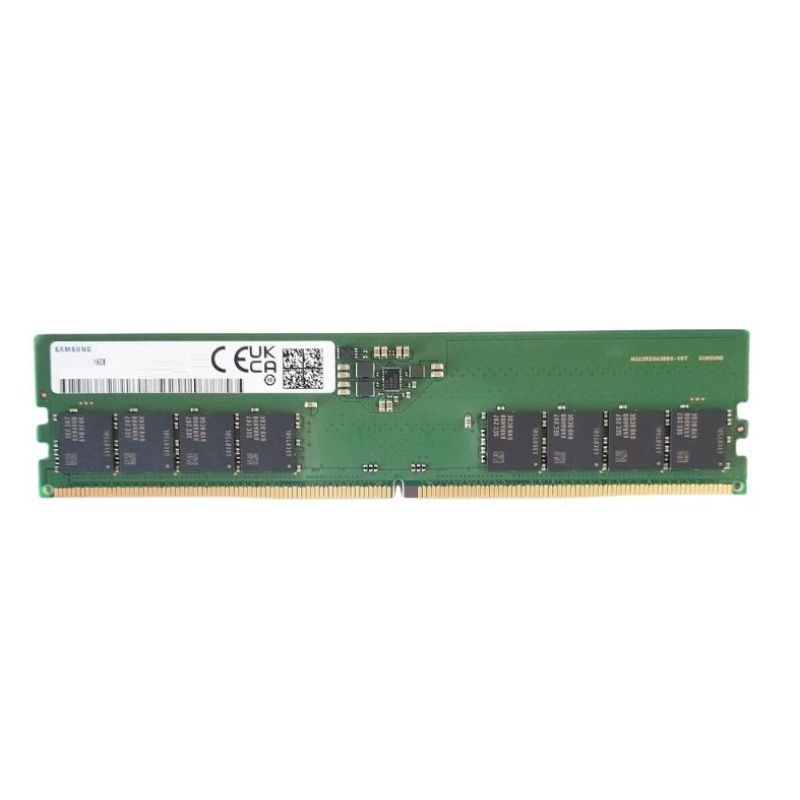
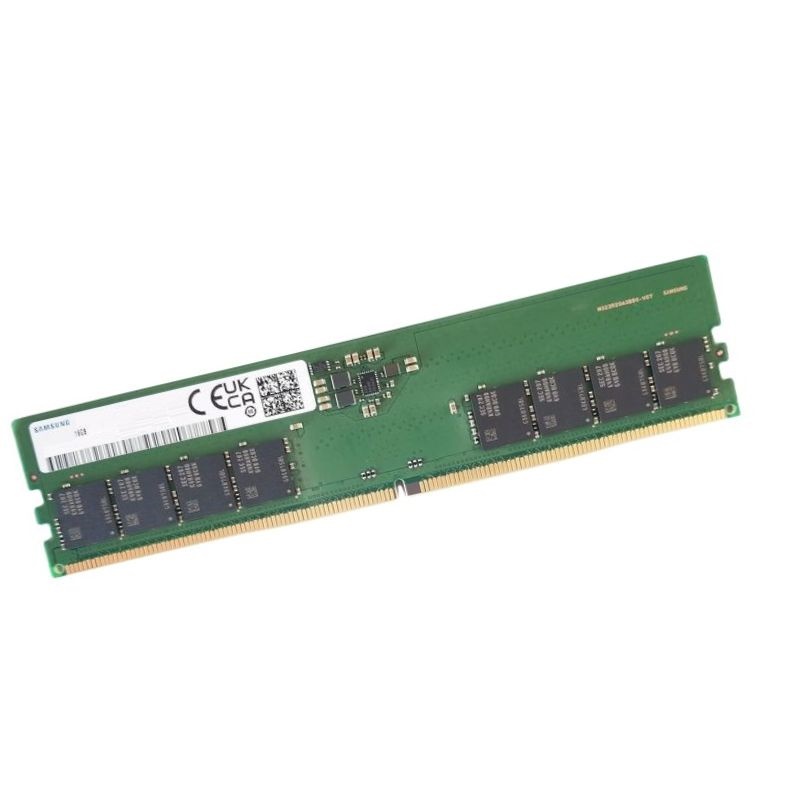
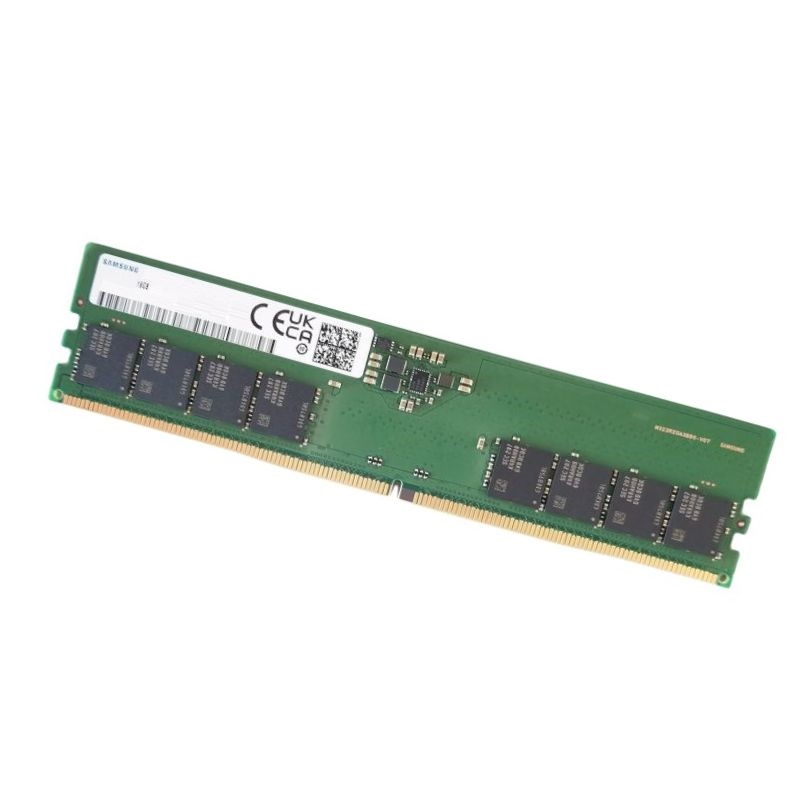
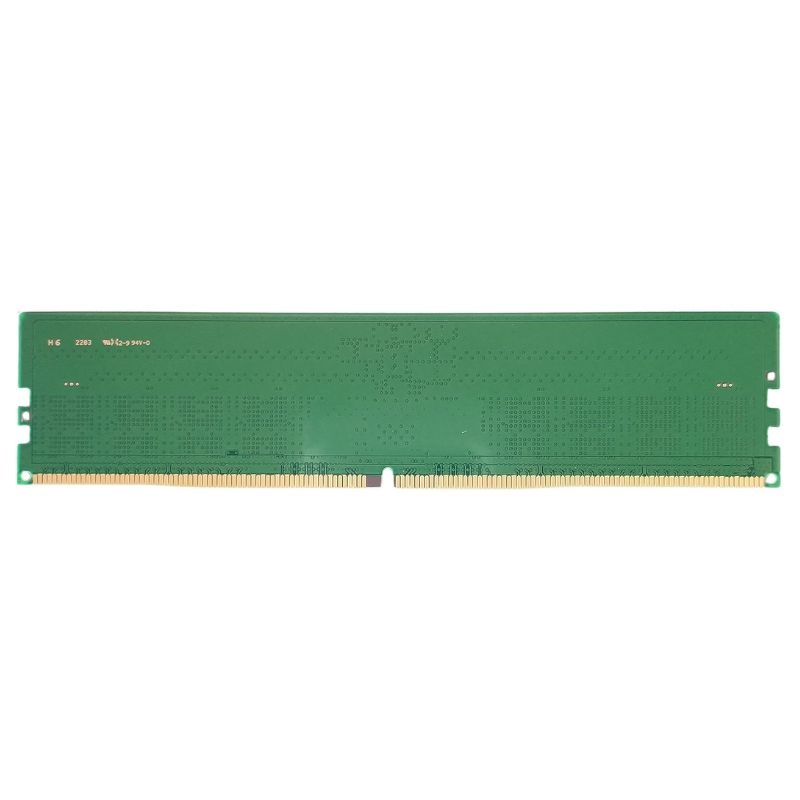
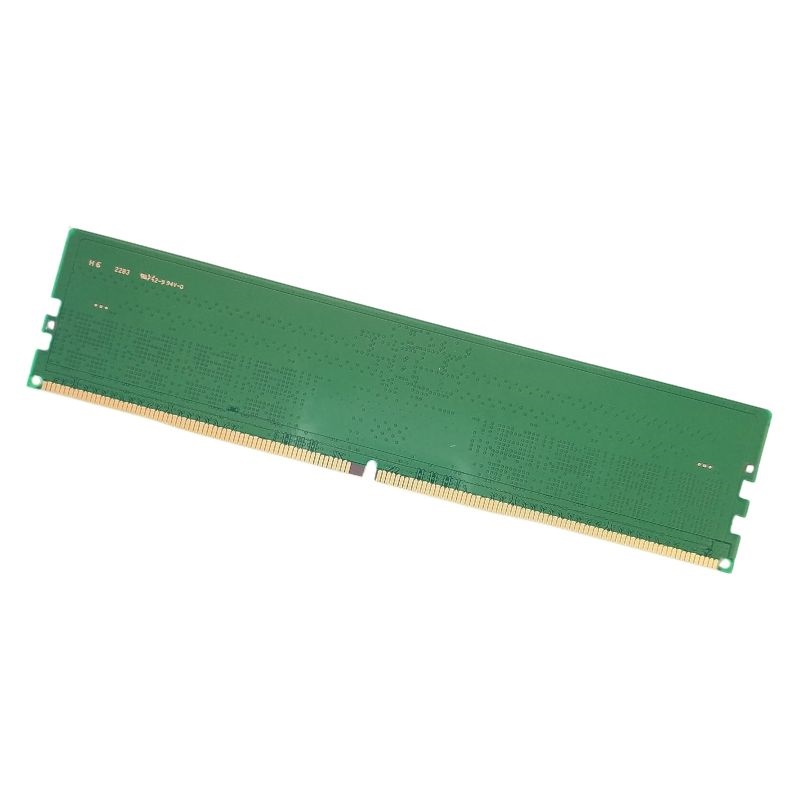
Samsung M321R2GA3BB0-CWMXH 16GB PC5-44800 5600MHz SDRAM ECC Registered RDIMM DDR5 RAM
- — Free Ground Shipping
- — Min. 6-month Replacement Warranty
- — Genuine/Authentic Products
- — Easy Return and Exchange
- — Different Payment Methods
- — Best Price
- — We Guarantee Price Matching
- — Tax-Exempt Facilities
- — 24/7 Live Chat, Phone Support
- — Visa, MasterCard, Discover, and Amex
- — JCB, Diners Club, UnionPay
- — PayPal, ACH/Bank Transfer (11% Off)
- — Apple Pay, Amazon Pay, Google Pay
- — Buy Now, Pay Later - Affirm, Afterpay
- — GOV/EDU/Institutions PO's Accepted
- — Invoices
- — Deliver Anywhere
- — Express Delivery in the USA and Worldwide
- — Ship to -APO -FPO
- — For USA - Free Ground Shipping
- — Worldwide - from $30
Samsung M321R2GA3BB0-CWMXH 16GB DDR5 ECC Registered Memory Module
The Samsung M321R2GA3BB0-CWMXH is a high-performance 16GB DDR5 ECC Registered RDIMM designed for modern servers and enterprise-class systems. With cutting-edge technology, exceptional data integrity, and blazing-fast speeds, this memory module ensures stable performance and long-term reliability for demanding workloads.
General Specifications of Samsung 16GB DDR5 RDIMM
- Manufacturer: Samsung
- Part Number: M321R2GA3BB0-CWMXH
- Product Type: ECC Registered DDR5 SDRAM Module
- Capacity: 16GB (1 x 16GB)
Technical Highlights for Enterprise Performance
Memory Technology
Built with advanced DDR5 SDRAM technology, this module delivers higher bandwidth and lower power consumption compared to DDR4, making it ideal for next-generation data centers and mission-critical applications.
Bus Speed and Bandwidth
With a transfer rate of 5600 MT/s (DDR5-5600/PC5-44800), the module ensures faster data throughput, reducing bottlenecks in high-demand computing environments. This level of speed supports data-heavy tasks such as virtualization, AI processing, and database operations.
ECC and Registered Design
Featuring ECC (Error-Correcting Code) functionality, the Samsung M321R2GA3BB0-CWMXH detects and corrects single-bit memory errors, safeguarding system uptime and preventing data corruption. The registered (buffered) design improves signal integrity, making it perfect for systems requiring stability and scalability.
Performance-Oriented Features
- CAS Latency: CL46 for optimized command execution
- Rank Configuration: 1Rx8, enhancing system compatibility
- Voltage: Operates efficiently at 1.1V for reduced power draw
- Form Factor: Standard 288-pin RDIMM for easy server installation
Physical Characteristics and Dimensions
The memory module follows the 288-pin RDIMM standard, ensuring broad compatibility across a wide range of server motherboards and enterprise-class platforms. Its compact size, with shipping dimensions of 1.00" height x 6.75" depth, provides a balance of performance and practicality.
Advantage of Samsung DDR5 Server Memory
Enhanced Reliability
Samsung has a long-standing reputation for producing reliable, durable, and high-performing memory solutions. This DDR5 ECC Registered module continues that tradition, ensuring uninterrupted service even under heavy workloads.
Future-Ready Technology
With DDR5 architecture, users gain faster speeds, improved energy efficiency, and better handling of high-core-count processors. This makes the Samsung M321R2GA3BB0-CWMXH an investment for both current and upcoming generations of enterprise computing.
Optimized for Servers and Workstations
- Supports mission-critical workloads like databases and cloud environments
- Improves virtualization performance and efficiency
- Ensures stability for scientific, engineering, and financial computing
Key Benefits of Samsung M321R2GA3BB0-CWMXH DDR5 RDIMM
- High-speed 5600 MT/s bandwidth for faster data handling
- ECC protection against memory errors and corruption
- Low-voltage design with 1.1V power efficiency
- Registered architecture for enhanced system scalability
- Durable, long-lasting server-grade memory built by Samsung
Applications and Use Cases
Enterprise Data Centers
Power servers running 24/7 operations with stable, reliable DDR5 performance that handles massive data streams and intensive applications without compromise.
Virtualization and Cloud Computing
Deliver smooth virtualization experiences by allocating more memory to virtual machines without performance drops, crucial for cloud hosting and multi-tenant systems.
Financial and Scientific Computing
Ideal for environments where data accuracy is critical, the ECC feature ensures computational reliability during simulations, modeling, and transactional workloads.
Detailed Breakdown of Technical Attributes
Capacity and Module Structure
- Single module configuration: 1 x 16GB
- Rank type: 1Rx8 for optimal compatibility
Performance Metrics
- Memory clock: DDR5-5600
- Data transfer rate: 5600 MT/s
- Latency: CL46
Compatibility and Form Factor
- Standard 288-pin RDIMM design
- Plug-and-play installation in compatible servers
- Optimized for DDR5-enabled enterprise platforms
Power Efficiency
Operating at 1.1V, this Samsung memory module delivers enhanced power efficiency compared to older DDR generations, reducing overall energy consumption in large-scale deployments.
Technical Deep Dive of Samsung M321R2GA3BB0-CWMXH 16GB DDR5 PC5-44800 Memory Module
The Samsung M321R2GA3BB0-CWMXH is a 16 GB DDR5 ECC Registered DIMM (RDIMM) designed for professional servers and high-end workstations that require continuous uptime, predictable latency, and validated error protection. As part of the DDR5 generation, it benefits from a redesigned memory architecture featuring an on-module power management IC, dual 32-bit sub-channels, and increased bank counts to improve parallelism. This category overview explores where this module fits, how it performs, what it is compatible with, and why enterprises standardize on ECC Registered memory when data integrity and service-level commitments matter.
DDR5 PC5-44800 RDIMMs Apart in Enterprise Deployments
Compared with previous generations, DDR5 raises the baseline transfer rate while optimizing efficiency and scaling. The PC5-44800 rating corresponds to an effective transfer speed of 5,600 MT/s, which translates to a peak theoretical bandwidth of 44.8 GB/s per module. In real workloads, the combination of higher data rates, two independent 32-bit channels per DIMM (plus ECC), and improved command/address handling enhances both throughput and tail-latency behavior under heavy queue depths. The Samsung M321R2GA3BB0-CWMXH leverages these enhancements in a form factor and electrical design validated for multi-socket platforms.
Core Identity & Category Positioning
- Form factor: 288-pin DDR5 RDIMM (Registered DIMM) with keyed notch specific to DDR5.
- Capacity class: 16 GB single-rank or dual-rank organization (rank configuration dependent on component density; typical 16 GB RDIMMs are 1Rx8 or 2Rx8).
- Speed grade: DDR5-5600 (PC5-44800 theoretical bandwidth).
- Error management: Module-level ECC (x72 data path) in addition to DDR5 on-die ECC on each DRAM component.
- Register/buffer: RCD (Registering Clock Driver) for stable signaling on multi-DIMM per channel configurations.
- Power design: On-DIMM PMIC, typical VDD ~1.1 V with improved power distribution granularity.
- Target systems: Intel® Xeon® and AMD EPYC™ server platforms, as well as ECC-capable workstation boards that require RDIMM support.
Matters of Samsung DDR5 RDIMM
Registered modules introduce an intermediate register between the memory controller and the DRAM chips for command and address signals. This reduces electrical load and skew, enabling higher population density per memory channel with predictable stability. Together with ECC, RDIMMs are foundational for virtualized hosts, storage appliances, and mission-critical databases where silent data corruption or random machine checks would be unacceptable.
Detailed Specifications and Interoperability Considerations
While every deployment should reference the server vendor’s QVL (Qualified Vendor List) and the motherboard manual, a baseline set of characteristics help frame expectations for the M321R2GA3BB0-CWMXH.
Rank and Organization
In the 16 GB class, many RDIMMs are 1Rx8, using x8-wide DRAM components organized into a single rank. Some variants may appear as 2Rx8 depending on chip density and die stacking. Rank count affects maximum populated speeds and interleaving behavior; single-rank modules can sometimes sustain higher configured data rates per channel, while dual-rank modules may improve bank-level parallelism. Always validate with the CPU memory controller’s supported rank population tables.
SPD and JEDEC Profiles
Server-grade DIMMs rely on JEDEC standard SPD profiles rather than consumer overclocking profiles. The module advertises one or more JEDEC-compliant speed bins in its SPD EEPROM for plug-and-play configuration at validated timings. BIOS/UEFI reads SPD to set safe defaults; advanced server BIOS menus allow administrators to tune frequency, timing, and power policies within the supported envelope.
ECC Registered Memory vs. Unbuffered UDIMM: Choosing the Right Subcategory
Understanding the distinction between RDIMM and UDIMM is crucial when designing a reliable system. Unbuffered ECC UDIMMs present the memory controller with a higher electrical load as modules are added, which can limit channel population and sustainable data rates. RDIMMs place a register in the command/address path to mitigate loading, stabilize signal integrity, and enable more DIMMs per channel at enterprise-class frequencies.
Benefits of RDIMMs in Modern Servers
- Higher channel density: Populate more memory per channel without dropping to very low speeds.
- Improved stability: RCD isolates the controller from pin-to-pin skew, especially valuable in multi-socket motherboards with longer trace lengths.
- Predictable scaling: Easier to meet timing at high MT/s across diverse thermal and electrical conditions.
- ECC data integrity: Corrects single-bit errors and detects many multi-bit errors to reduce crash risk and silent corruption.
Compatibility Reminder
Motherboards and CPUs are usually locked to one class (UDIMM or RDIMM). They are not cross-compatible. If your platform’s manual states RDIMM support, the Samsung M321R2GA3BB0-CWMXH belongs to the correct subcategory for that system class.
Performance Architecture
DDR5’s redesign emphasizes parallelism and efficiency. Two independent 32-bit sub-channels allow the controller to issue concurrent transactions to different banks with finer granularity. Increased bank counts and bank groups reduce conflicts, and decision-point timing has been optimized for higher command rates. The net impact is better utilization of theoretical bandwidth across mixed read/write workloads common in virtualization, microservices, and analytic queries.
Bandwidth and Latency in Real Workloads
While the marketing headline is 44.8 GB/s per module, real application performance depends on locality, access patterns, and QoS policies. Database engines that leverage large buffer caches benefit from higher sustained read bandwidth, while hypervisors gain from increased headroom to service multiple VMs without memory throttling. Latency remains a function of timing parameters and queue depth; DDR5 often offsets raw cycle latency increases with higher concurrency and better prefetch behavior.
NUMA, Sockets, and Interleaving
On dual- and quad-socket platforms, memory is grouped into NUMA nodes per CPU. Populate identical Samsung M321R2GA3BB0-CWMXH modules symmetrically across sockets and channels to enable interleaving. Balanced population minimizes cross-socket memory traffic, preserving locality and lowering average access time for thread pools pinned to a node.
Population Rules That Influence Speed
- Maximum DIMMs per channel at 5600 MT/s varies by CPU generation and BIOS. Heavier population may step down to the next JEDEC bin (e.g., 5200 or 4800 MT/s).
- Mixing ranks and capacities can alter achievable speed; standardize module type per channel for predictable results.
- Thermal headroom affects error rates and throttling; maintain recommended front-to-back airflow.
Reliability, Availability, and Serviceability (RAS) Features
ECC RDIMMs reinforce system reliability beyond simple parity checks. DDR5 introduces on-die ECC that corrects cell-level faults within each DRAM chip, and the module’s dedicated ECC path extends protection to the full data word as it traverses the bus. Many server platforms integrate patrol scrubbing, demand scrubbing, and predictive failure analysis to preempt outages.
ECC Mechanisms at a Glance
- On-die ECC: Internal to each chip, invisible to the memory controller, improving yield and long-term stability.
- Module-level ECC: Uses extra bits (x72 width) to correct single-bit errors and detect numerous multi-bit patterns.
- Data scrubbing: Background reads and rewrites to detect and correct latent errors.
- Machine Check Architecture: Reports correctable/uncorrectable events for proactive service actions.
Thermals and PMIC Behavior
DDR5’s on-module PMIC refines power delivery, reducing voltage droop and noise. However, the PMIC and RCD both generate heat. Servers rely on directed airflow to keep DIMM temperatures within spec. In dense configurations, ensure blanking panels are installed where required and fans are set to profiles that sustain adequate CFM across memory banks.
Firmware, BIOS, and Microcode Alignment
For the best experience, keep BIOS/UEFI, BMC, and microcode at vendor-recommended levels. Memory training algorithms evolve; updated firmware can improve stability at higher MT/s, especially with channels fully populated by 16 GB RDIMMs.
Use Cases That Benefit from Samsung 16 GB DDR5 ECC Registered Modules
Although 64 GB and 128 GB modules dominate maximum density builds, 16 GB RDIMMs remain strategic in configurations prioritizing high channel count with cost efficiency. Their lower heat load per DIMM and attractive price-per-GB make them ideal for horizontally scaled nodes.
Virtualization and Container Hosts
Hypervisors such as VMware ESXi, Microsoft Hyper-V, Proxmox VE, and KVM thrive on balanced memory bandwidth. Equipping each channel with identical 16 GB RDIMMs maximizes concurrency and avoids bottlenecks when many VMs or containers compete for resources. Memory overcommit strategies (ballooning, TPS, KSM) benefit from fast backing pages and low error rates.
Databases and In-Memory Analytics
Transactional systems (PostgreSQL, MySQL, SQL Server) and in-memory engines (Redis, Memcached, Spark caches) reward consistent latency and ECC protection. A tier of 16 GB RDIMMs per channel provides predictable scaling for buffer pools, page caches, and shuffle memory, reducing the risk of node failure during peak business windows.
Edge Compute and Content Delivery
Edge servers, CDN points of presence, and micro-datacenters prioritize compact chassis with constrained thermal budgets. 16 GB modules deliver the needed capacity while keeping power draw modest and airflow manageable, all with enterprise-grade ECC assurance.
Compatibility Guidance for Platform Architects
Selecting the correct memory category involves harmonizing CPU memory controller capabilities, motherboard routing, and intended workload. The Samsung M321R2GA3BB0-CWMXH falls into the DDR5 RDIMM category and should be matched with platforms that explicitly list DDR5 Registered support.
Intel Xeon and AMD EPYC Ecosystems
- Intel Xeon families: Recent Xeon Scalable generations utilize DDR5 RDIMM across multiple memory channels per socket. Check OEM memory population guides for the supported 5600 MT/s bins with 1 DPC (DIMM per channel) vs. 2 DPC.
- AMD EPYC families: EPYC platforms with DDR5 memory controllers also standardize on RDIMM for capacity scaling. Refer to the platform QVL to confirm 16 GB module organization and valid speed steps.
- Workstation boards: Some professional workstation motherboards support RDIMM with ECC; verify that the board is not limited to ECC UDIMM only.
Mixing Modules: Best Practices
When expanding memory, maintain homogeneity: same capacity, speed, and preferably the same manufacturer and part number. Mixed speed populations will down-clock to the slowest common denominator. Mixing RDIMM with LRDIMM or 3DS RDIMM is typically unsupported; stay within a single DIMM class.
Qualified Vendor Lists and Field Provenance
QVL entries document modules that passed thermal and stability validation across all operating modes. Even when pin-compatible, subtle differences in register/PMIC revisions can influence timing margins. For mission-critical systems, prioritize part numbers explicitly listed or known equivalents with matching revision codes.
Thermal Layout and Airflow
Place higher-TDP components (CPUs, accelerator cards) to preserve a clear intake path over the DIMM banks. If drive cages or cable harnesses impede flow, insert cable combs or routing brackets. Maintain firmware fan curves appropriate for populated memory banks; under-speeding fans can elevate DIMM case temperature, reducing margin at high MT/s.
Operational Monitoring
Use the BMC or OS tooling to monitor DIMM temperature sensors, correctable error counts, and throttling events. Alert thresholds allow administrators to service fans or replace marginal modules proactively, avoiding escalations to uncorrectable errors.
Capacity Planning with 16 GB DDR5 RDIMMs
Right-sizing capacity is as important as raw speed. The 16 GB tier integrates neatly into configurations requiring balanced per-core memory ratios.
Per-Core Memory Ratios
For virtualization or microservice clusters, a common planning heuristic allocates 2–6 GB per physical core depending on workload mix. A dual-socket server with 32 cores per socket and eight channels per socket can use sixteen 16 GB RDIMMs to reach 256 GB total, delivering 4 GB per core with strong channel distribution.
NUMA-Aware Application Sizing
Pin memory-intensive processes to NUMA nodes aligned with the channels hosting their data. With 16 GB modules, it’s straightforward to mirror capacity across nodes for clean partitioning of services such as database shards or cache tiers.
Scaling Strategies
- Horizontal scale: Keep nodes modest in capacity with 16 GB RDIMMs, and add more servers as demand grows. This improves fault domains and maintenance flexibility.
- Vertical scale: Where socket count is fixed, fill additional slots with the same 16 GB part number to increment capacity in predictable steps without changing thermal profiles significantly.
Security and Data Integrity in Memory Subsystems
Memory is an attack surface and an integrity domain. ECC, when paired with platform features, contributes to defense-in-depth.
Memory Encryption and ECC
Some platforms offer transparent memory encryption. ECC and encryption are complementary: ECC guards against random bit flips, while encryption addresses data confidentiality. The Samsung 16 GB RDIMM operates under such frameworks without special configuration—compatibility is managed by the memory controller.
Firmware Signing and Supply Chain Assurance
Choose reputable distributors for genuine Samsung modules. Avoid gray-market parts where relabeling or mixed-die refurbishing can compromise reliability. For regulated environments, maintain lot traceability and retain test certificates where required.
Error Telemetry for Compliance
Log correctable error rates over time. Sudden spikes can indicate thermal issues, marginal seating, or environmental changes. Compliance frameworks often require documentation of corrective actions when thresholds are exceeded.
Workload-Focused Tuning Tips
Beyond basic install and verify, administrators can tune platform settings to extract consistent performance from DDR5 RDIMMs.
BIOS Parameters That Commonly Matter
- Memory interleaving: Ensure channel interleaving is enabled for bandwidth-bound workloads.
- Power/performance profiles: Favor “balanced performance” or “maximum performance” when latency sensitivity outweighs energy savings.
- Patrol scrubbing interval: Set according to uptime windows; aggressive scrubbing can marginally impact throughput but increases data hygiene.
- cTDP and boost policies: Coordinate CPU power budgets with memory thermal margins to avoid fan oscillation and thermal throttling.
OS-Level Considerations
Enable NUMA balancing features where appropriate, but pin critical services to nodes with local memory. For JVM-based services or databases, size heaps and buffer pools to fit within local node memory, leaving overhead for the OS page cache and background tasks.
Hypervisor Memory Management
Use memory reservations for performance-critical VMs to prevent ballooning under contention. Align vNUMA topology to the physical sockets and channels. The regular granularity of 16 GB modules makes it straightforward to plan VM resource tiers that map cleanly to physical resources.
Comparison Within the DDR5 Server Memory Category
Server memory spans several subcategories beyond standard RDIMM. Understanding the trade-offs helps ensure the Samsung 16 GB RDIMM is matched to your budget and performance targets.
RDIMM vs. LRDIMM
LRDIMM (Load-Reduced DIMM) introduces an isolation buffer for data lines as well, enabling very high capacities and heavy channel population at the cost of slightly higher latency. For 16 GB capacity points, RDIMM offers simpler design, lower cost, and plenty of speed for mainstream enterprise applications.
3DS (3-Dimensional Stacked) RDIMMs
3DS modules stack dies to reach very high capacities (e.g., 256 GB). They target memory-bound HPC or in-memory DB workloads requiring massive per-socket capacity. The 16 GB RDIMM caters to balanced, cost-efficient builds, particularly in horizontally scaled clusters.
ECC UDIMM and SO-DIMM Context
ECC UDIMMs fit entry servers and some workstations, while ECC SO-DIMMs serve compact platforms. RDIMMs like the M321R2GA3BB0-CWMXH occupy the mainstream enterprise rackmount space with multi-DIMM per channel needs and stringent RAS requirements.
Procurement and Asset Management Best Practices
Beyond technical fit, lifecycle economics influence total cost of ownership. Standardizing on a single part number per cluster simplifies spares, reduces mean-time-to-repair, and eases automated inventory tracking.
Part Number Hygiene
Record full part numbers including revision suffixes. Minor revisions sometimes change the register or PMIC vendor. Keeping like-for-like simplifies future troubleshooting and keeps timing characteristics aligned across nodes.
Labeling and Tracking
Apply asset labels to antistatic sleeves rather than the DIMM heat spreader. Integrate receiving logs with CMDB entries to associate every installed module to a chassis serial and slot ID.
Return Merchandise Authorization (RMA) Preparedness
Maintain proof of purchase, test logs, and error telemetry snapshots. When a DIMM is replaced, perform a full channel retest and preserve the chain of custody for auditability.
Selecting the Right Quantity for Channel Architecture
Memory channel count varies by CPU family. Align DIMM count to channels for best results.
One-DIMM-Per-Channel (1DPC) Strategy
Populate one Samsung 16 GB RDIMM in each channel first to achieve the highest validated JEDEC speed. If capacity demands grow, add a second DIMM per channel with awareness of the likely speed step-down.
Even Distribution Across Sockets
Keep socket memory mirrored to preserve balanced NUMA bandwidth. Asymmetric population tends to degrade multi-socket scaling and increases cross-node traffic.
Channel Interleaving Granularity
Most server BIOS expose interleaving controls at channel, rank, and bank levels. With consistent 16 GB modules, channel interleaving is usually the key lever for aggregate throughput gains.
Glossary of Terms for the DDR5 RDIMM Category
Memory terminology can be subtle. This quick glossary anchors key concepts referenced in this category description.
ECC
Error-Correcting Code; adds redundant bits to detect and correct memory errors in flight.
RDIMM
Registered DIMM; includes a Registering Clock Driver for command/address buffering, enabling higher capacity per channel and improved stability.
PMIC
Power Management Integrated Circuit; in DDR5 located on the DIMM for localized regulation.
On-Die ECC
Internal correction within the DRAM chip that is transparent to the host, improving reliability and manufacturing yield.
Rank
A group of DRAM chips that can be accessed simultaneously; influences interleaving and timing.
PC5-44800
JEDEC bandwidth rating for DDR5-5600. Calculated as 5600 MT/s × 8 bytes per transfer.
Standardize on Samsung for 16 GB DDR5 RDIMM
Samsung’s server memory portfolio is widely adopted across OEM systems due to strong process control, tight adherence to JEDEC standards, and broad validation coverage. For organizations rolling out scale-out clusters, using a consistent vendor reduces variability and simplifies support workflows.
Manufacturing Consistency
Tight binning and component sourcing policies reduce lot-to-lot variance. For operators, this consistency translates to predictable training times during POST and fewer edge-case timing quirks in the field.
Global Availability
When fleets span regions, availability and predictable lead times matter. Mainline 16 GB RDIMMs are commonly stocked, making it easier to keep spares on hand in multiple data centers.
Cost-Effectiveness at Scale
Although larger capacities reduce slot count, 16 GB DIMMs deliver compelling price-per-GB and enable fine-grained scaling. They support incremental growth without committing to large step-changes in capacity per node.