Your go-to destination for cutting-edge server products
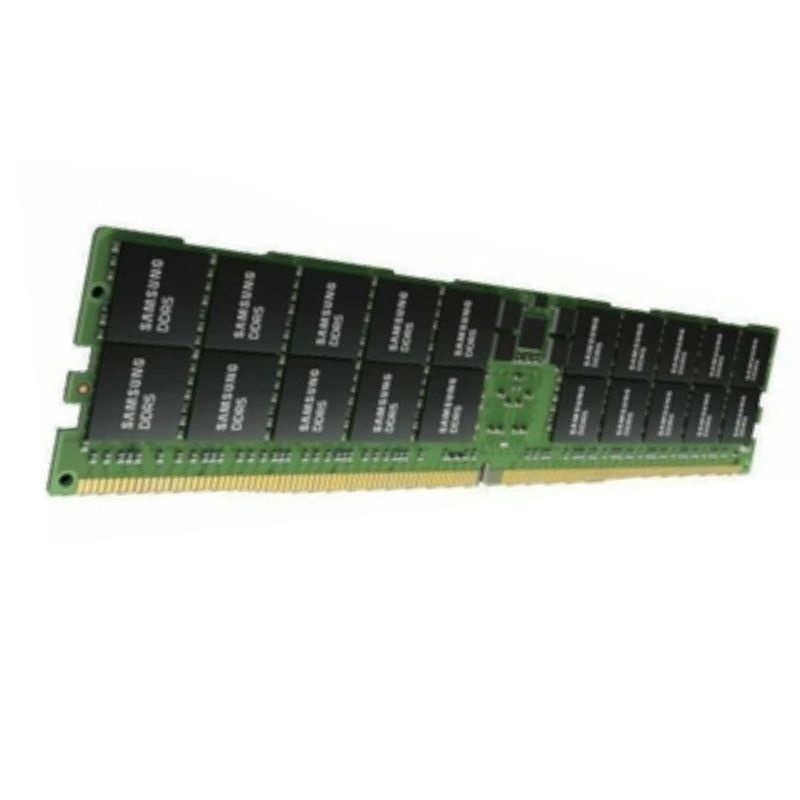
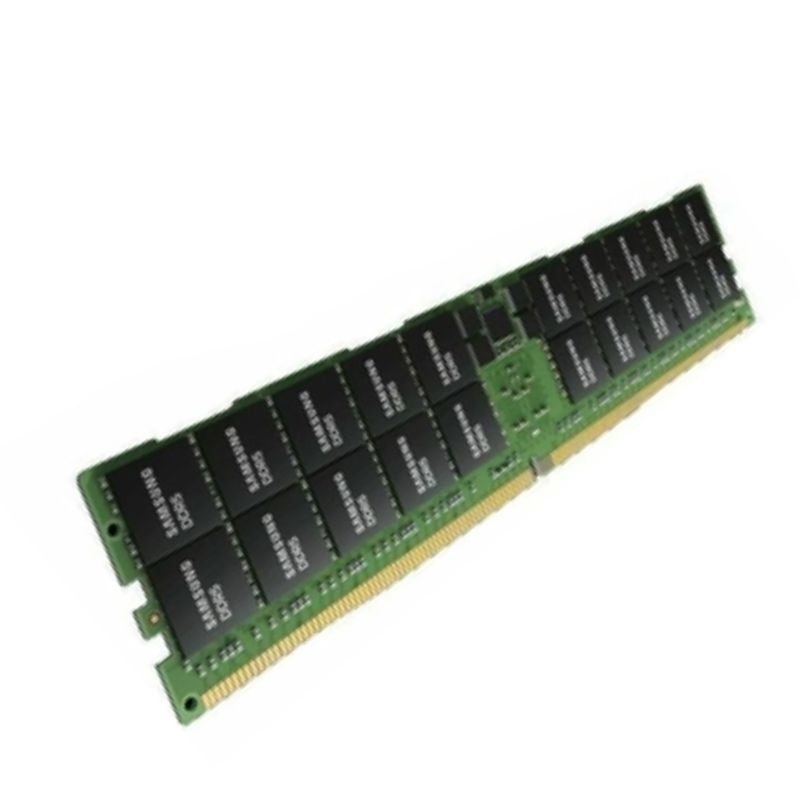
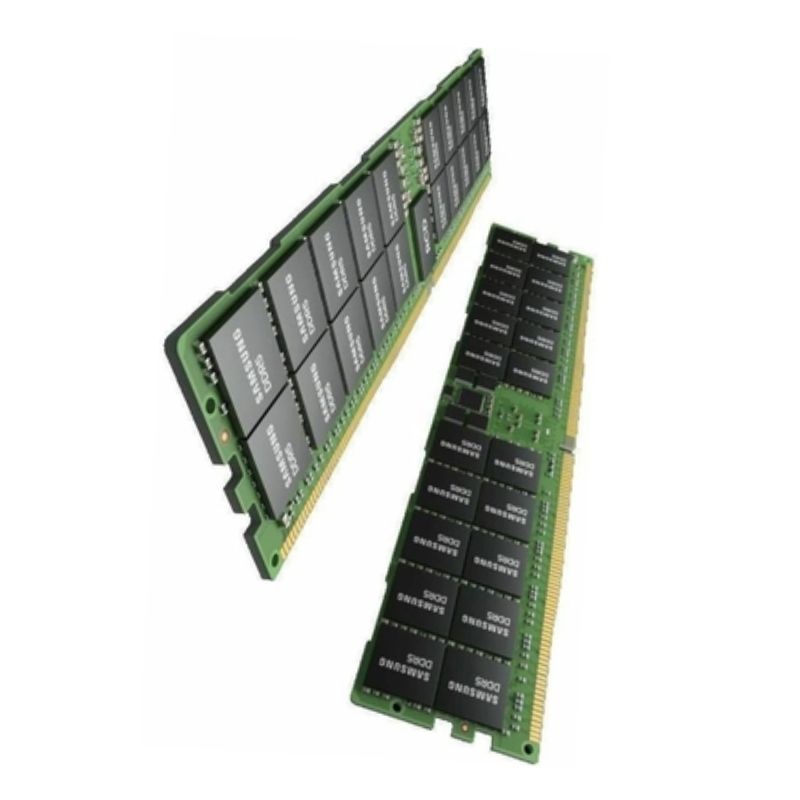
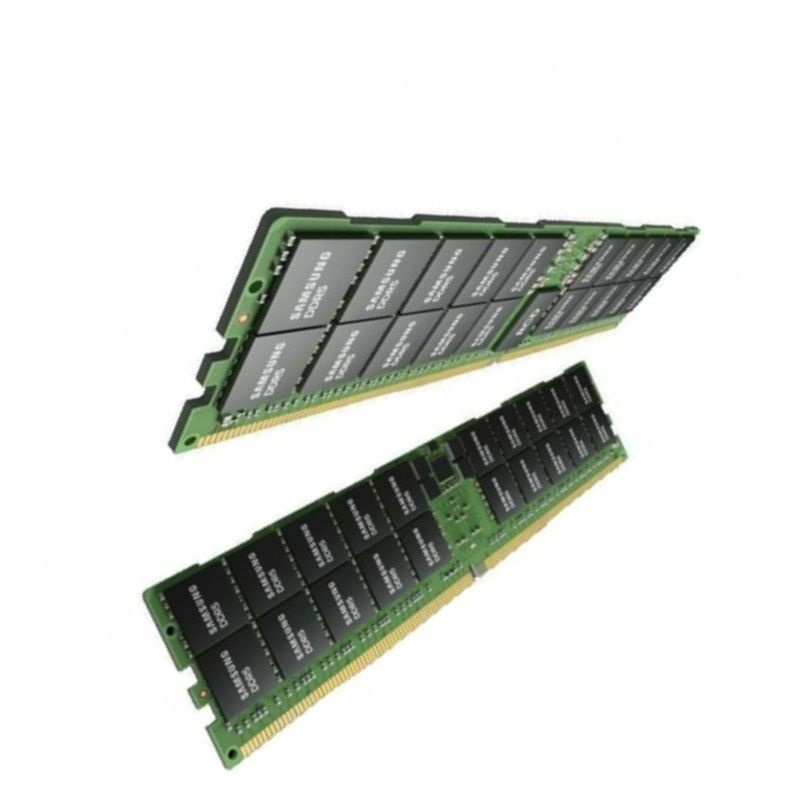
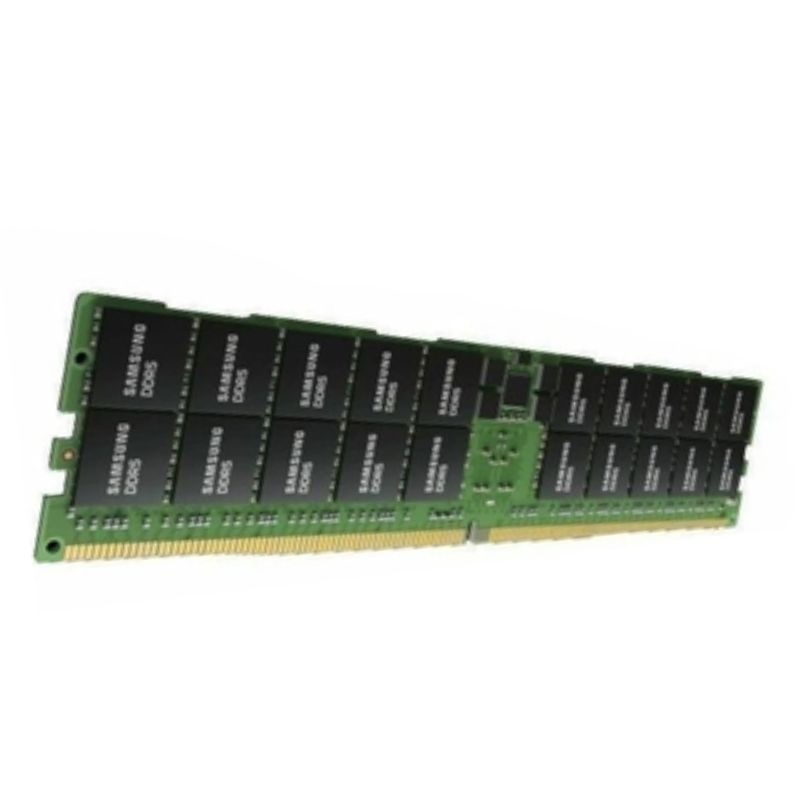
Samsung M321R2GA3EB0-CWM 16GB SDRAM PC5-44800 5600MHz ECC REG 288P RDIMM DDR5 RAM

M321R2GA3EB0-CWM
* Product may have slight variations vs. image
Hover on image to enlarge

Brief Overview of M321R2GA3EB0-CWM

Samsung M321R2GA3EB0-CWM 16GB SDRAM ECC REG 288P RDIMM DDR5 PC5-44800 Memory Module. New Sealed in Box (NIB) with 3 Years Warranty

$415.80
$308.00
You save: $107.80 (26%)
Ask a question
Price in points: 308 points
+
Quote

Additional 7% discount at checkout

SKU/MPNM321R2GA3EB0-CWMAvailability✅ In StockProcessing TimeUsually ships same day ManufacturerSamsung Manufacturer WarrantyNone Product/Item ConditionNew Sealed in Box (NIB) ServerOrbit Replacement Warranty1 Year Warranty
Google Top Quality Store Customer Reviews
Our Advantages
Payment Options
  • — Visa, MasterCard, Discover, and Amex
  • — JCB, Diners Club, UnionPay
  • — PayPal, ACH/Bank Transfer (11% Off)
  • — Apple Pay, Amazon Pay, Google Pay
  • — Buy Now, Pay Later - Affirm, Afterpay
  • — GOV/EDU/Institutions PO's Accepted 
  • — Invoices
Delivery
  • — Deliver Anywhere
  • — Express Delivery in the USA and Worldwide
  • — Ship to -APO -FPO
  • For USA - Free Ground Shipping
  • — Worldwide - from $30
Description

Product Highlights of Samsung M321R2GA3EB0-CWM DDR5 Memory

The Samsung M321R2GA3EB0-CWM 16GB DDR5 SDRAM offers cutting-edge memory technology with improved performance, reliability, and efficiency for servers and enterprise-class systems. Designed with ECC Registered architecture, this RDIMM is tailored for stability in demanding workloads.

General Information

  • Manufacturer: Samsung
  • Part Number: M321R2GA3EB0-CWM
  • Product Name: 16GB DDR5 SDRAM Memory Module
  • Category: ECC Registered Server Memory

Technical Specifications

Capacity and Configuration

This module delivers 16GB single-module memory, ideal for server upgrades requiring dependable and scalable performance.

  • Memory Size: 16GB
  • Configuration: 1 x 16GB
  • Rank: 1Rx8 architecture for optimized performance

Performance and Speed

With a transfer rate of 5600 Mbps (DDR5-5600 / PC5-44800), this RAM ensures faster data handling for virtualization, cloud computing, and enterprise-level tasks.

  • Bus Speed: 5600 MT/s
  • Memory Technology: DDR5 SDRAM
  • CAS Latency: CL46 for balanced efficiency

Reliability and Stability

Built with ECC (Error Correction Code) support and registered signal processing, this memory module helps reduce data corruption and increases system uptime.

  • Error Checking: ECC support
  • Signal Type: Registered (Buffered)
  • Operating Voltage: 1.1V for energy efficiency

Physical Characteristics

The 288-pin RDIMM design ensures compatibility with a wide range of enterprise-grade motherboards and servers.

  • Form Factor: 288-pin RDIMM
  • Dimensions: Height – 1.00” | Depth – 6.75”
  • Compact and robust design optimized for rack-mounted systems

Key Advantages of Samsung DDR5 5600MHz ECC Registered Memory

Enhanced Performance

DDR5 technology doubles bandwidth compared to DDR4, allowing higher workload capacity, smoother data handling, and improved multitasking in data-intensive environments.

Improved Power Efficiency

Operating at 1.1V, this module consumes less energy, reducing heat generation and contributing to lower power costs in large-scale deployments.

Enterprise Reliability

With ECC error correction and registered buffering, this Samsung RDIMM minimizes downtime and ensures mission-critical systems run with optimal stability.

Use Cases and Applications

This Memory Module Excels

  • Data centers requiring stability under heavy workloads
  • Virtualization and cloud platforms demanding speed and reliability
  • High-performance computing clusters
  • Enterprise servers and mission-critical systems

Industries Benefiting from DDR5 ECC Registered RAM

  • Financial institutions needing secure and error-free data processing
  • Healthcare IT infrastructures with sensitive databases
  • Telecommunications and cloud services
  • Artificial intelligence and machine learning platforms

Reason of Choose Samsung M321R2GA3EB0-CWM DDR5 ECC RDIMM

Trusted Brand

Samsung has a long-standing reputation for delivering server-grade memory solutions trusted by enterprises worldwide.

Future-Ready Technology

Built on DDR5 architecture, this memory is optimized for next-generation servers and workstations, making it a future-proof investment.

Core Benefits at a Glance
  • High bandwidth of 5600 MT/s for accelerated workloads
  • ECC error correction for data integrity
  • Registered signal processing for consistent system stability
  • Compact RDIMM design for easy server integration
  • Lower operating voltage for energy efficiency

Additional Technical Notes

  • Memory Rank: 1Rx8 ensures efficient data handling
  • Latency: CL46 balances speed and stability
  • Compatibility: Designed for DDR5-supported motherboards
  • Form Factor: RDIMM ideal for enterprise rack servers

Outline of Samsung M321R2GA3EB0-CWM 16GB  DDR5  Memory Module

The Samsung M321R2GA3EB0-CWM 16GB DDR5 Registered DIMM represents a professional-grade server memory option engineered for high bandwidth, reliability, and power efficiency. Built to PC5-44800 data-rate specifications, this RDIMM delivers a 5600 MT/s transfer rate that helps modern multi-core CPUs keep pace with data-intensive workloads. The module features ECC (Error-Correcting Code) for silent data integrity protection and a registered/buffered design to stabilize signaling in multi-DIMM server topologies. With a 288-pin layout and DDR5 innovations like on-DIMM PMIC power management and on-die ECC, the M321R2GA3EB0-CWM is optimized for 24/7 operation in servers and workstations that demand predictable performance.

This category page explores the defining capabilities of the Samsung M321R2GA3EB0-CWM module and closely related DDR5 ECC Registered memory options. You will find details on supported platforms, performance characteristics, latency considerations, best-practice installation guidelines, data center deployment tips, and purchasing insights. Whether you are scaling a virtualization cluster, accelerating in-memory databases, or refreshing a compute node to DDR5, the information below provides a practical reference for decision-makers and system integrators.

Key Attributes at a Glance

  • Capacity: 16 GB per module, ideal for flexible population across many memory channels.
  • Type: DDR5 ECC Registered (RDIMM) with 288 pins for server/workstation motherboards.
  • Speed Grade: PC5-44800, delivering up to 5600 MT/s data rate for high throughput.
  • Error Protection: ECC with robust parity and error-correction algorithms that reduce soft-error risks.
  • Signal Integrity: Registered design (buffered) lowers electrical loading and improves stability in multi-DIMM configurations.
  • Power Management: On-DIMM PMIC supports more granular, efficient power distribution.
  • Use Cases: Virtualization, cloud compute, HPC nodes, content creation workstations, analytics, and transactional workloads.

Understanding the PC5-44800 / 5600 MT/s Performance Tier

In DDR5 nomenclature, PC5-44800 corresponds to a peak theoretical bandwidth of roughly 44.8 GB/s per module under ideal conditions. The effective rate of 5600 MT/s means the memory cells transfer data 5.6 billion times per second across the double data rate interface. DDR5 architecture further divides each DIMM into two independent 32-bit sub-channels (plus ECC lanes), enabling improved concurrency and higher effective utilization in real-world server tasks. For memory-bound applications—such as in-memory caching layers, columnar analytics, and scientific simulations—the jump to a 5600-class RDIMM mitigates stalls and sustains higher instructions-per-cycle on today’s compute platforms.

Latency remains a vital component of perceived performance. Many administrators evaluate clock speed together with CAS latency (CL) and tRCD/tRP/tRAS timings. While precise timing bins can vary by production lot and motherboard microcode, the M321R2GA3EB0-CWM is binned to maintain low, stable latency at the 5600 MT/s tier—crucial when servicing high volumes of random memory requests typical of hypervisor hosts and database engines. In practice, system firmware, CPU memory controller limits, and DIMM population density will determine the achievable sustained speed. Even when platforms step down a bin for mixed populations, DDR5’s architectural gains and dual-sub-channel design continue to provide smoother throughput than many DDR4 equivalents.

16 GB Modules Still Matter in DDR5 Server Builds

Although 32 GB, 48 GB, and 64 GB RDIMMs are popular for high-capacity hosts, 16 GB modules remain extremely useful. They allow:

  • Fine-grained scaling: Populate exactly the number of slots needed to reach a target capacity.
  • Balanced channel utilization: Fill every channel to maximize bandwidth without overshooting capacity budgets.
  • Cost optimization: 16 GB sticks often deliver strong price-per-GB value and make phased upgrades simpler.
  • Thermal efficiency: Lower-density modules can run cooler in dense chassis, aiding overall airflow strategies.

For virtualization clusters where memory is the constraining resource, employing multiple 16 GB RDIMMs can unlock more channels and banks in parallel, often improving real-world responsiveness compared with fewer high-density modules—especially under mixed VM workloads.

ECC Registered (RDIMM) Advantage for Uptime and Data Integrity

The Samsung M321R2GA3EB0-CWM includes full ECC protection. ECC detects and corrects single-bit memory errors and detects multi-bit faults, significantly reducing the risk of data corruption that could destabilize services. The registered (buffered) design adds a register between the memory controller and the DRAM chips, cleaning up signals and enabling reliable operation when many DIMMs populate a system.

In data centers, soft errors may arise from cosmic radiation, electrical noise, or marginal signal conditions—issues that grow with memory density and speed. ECC RDIMMs help maintain service continuity, reduce crash loops, and prevent silent data corruption. The net result is higher mean time between incidents and lower operational overhead for administrators.

On-Die ECC vs. System ECC: What’s the Difference?

DDR5 devices integrate on-die ECC, primarily intended to improve internal yield and reliability of the DRAM chips themselves. System-level ECC (as found in this RDIMM) operates at the module/channel level and is essential for end-to-end data integrity. Together, on-die ECC and system ECC provide layered protection: on-die ECC corrects internal cell-level inconsistencies, while system ECC addresses transmission-level errors across the memory channel and DIMM logic.

Physical Format and Interface

The module conforms to the 288-pin RDIMM standard for DDR5 servers and workstations. The board layout is carefully tuned for signal integrity at high speeds, leveraging registered buffering to reduce loading on the CPU memory controller. It typically operates at DDR5’s lower nominal voltage compared to DDR4 generations, contributing to better performance-per-watt, and the on-DIMM PMIC enables more precise local power delivery.

Mechanical and Environmental Considerations

  • Form Factor: Standard height RDIMM for 1U–4U servers and workstation towers.
  • Operating Conditions: Designed for continuous 24/7 enterprise duty within vendor-specified ambient ranges.
  • Airflow: As speeds increase, balanced front-to-back airflow becomes more critical; plan for unobstructed intake and exhaust paths.
  • Serviceability: Labeled for quick identification; consider slot mapping and barcoding for inventory control.

Compatibility and Platform Alignment

The M321R2GA3EB0-CWM is a DDR5 ECC Registered DIMM. It is not compatible with DDR4-only systems, unbuffered DIMM (UDIMM) sockets, or non-ECC consumer motherboards. Always confirm that your target server or workstation supports DDR5 RDIMM at 5600 MT/s and that the latest BIOS/UEFI firmware is installed to enable optimal memory training and timing negotiation.

Server and Workstation Use Cases

  • Virtualization Hosts: Balanced channel population yields lower VM contention and steadier latency.
  • Content Creation Workstations: Video editing, 3D rendering, and compositing benefit from higher bandwidth and ECC reliability.
  • High-Performance Computing Nodes: Scientific workloads and parallel code leverage the dual-sub-channel architecture.
  • Databases and Analytics: In-memory tables and caching tiers thrive with higher throughput and tighter timing consistency.
  • Edge and Micro-Data Centers: Energy-aware PMIC and DDR5 efficiencies improve performance per watt at the edge.

Mixing with Other DDR5 RDIMMs

While many platforms permit mixing capacities and speed bins, homogenous populations are recommended for consistent performance. When mixing:

  • The system generally trains to the slowest common speed and most conservative timings.
  • Keep ranks per channel balanced to avoid uneven bandwidth across channels.
  • Use identical module counts per channel for symmetric interleaving and predictable NUMA behavior.

Performance Deep Dive

DDR5 delivers significant architectural upgrades over DDR4, and the M321R2GA3EB0-CWM capitalizes on these improvements at the 5600 MT/s tier. The two independent 32-bit sub-channels per DIMM allow the memory controller to schedule operations more granularly, reducing bus contention and improving effective parallelism. Command/address mirroring and improved bank refresh schemes help keep more banks available for access at any time, enhancing throughput on mixed read/write workloads typical of hypervisors and web application servers.

For multi-socket platforms, cross-socket memory access remains sensitive to interconnect topology. Administrators should enable NUMA awareness in operating systems and hypervisors, pin latency-critical services to local memory domains, and spread less sensitive background tasks across nodes. This preserves the low-latency path between CPU cores and their nearest memory channels, making the most of the 5600-class bandwidth the M321R2GA3EB0-CWM provides.

Latency, Timings, and Real-World Results

While peak bandwidth numbers attract attention, many enterprise applications are latency-constrained. The practical experience of system builders shows that filling all channels with moderate-density modules—such as 16 GB RDIMMs—often outperforms sparse populations of ultra-dense DIMMs for mixed request patterns. Shorter traces, balanced ranks, and consistent DIMM training contribute to steadier tail-latency, which matters for transactional systems and user-facing services. Tuning BIOS settings (e.g., memory interleaving, power policy, and refresh parameters) can also yield measurable gains.

Interleaving and Channel Balance

  • Populate channels evenly to enable interleaving and maximize aggregate bandwidth.
  • Avoid leaving channels empty on CPUs that rely on parallel channels for peak throughput.
  • Consult platform memory population guides to respect slot priority and rank balancing.

Reliability, Availability, and Serviceability (RAS)

Enterprise deployments prioritize RAS features that minimize service disruption. The Samsung 16 GB DDR5 RDIMM supports ECC and an RDIMM register for improved electrical characteristics. Many server boards pair these modules with advanced RAS features such as patrol scrubbing, demand scrubbing, memory mirroring, and page retirement. When enabled, these mechanisms proactively detect and correct single-bit errors, quarantine weak pages, and in some cases allow continued uptime even under certain fault conditions.

Error Handling Best Practices

  • Enable patrol and demand scrubbing to clean up bit-flips before they propagate.
  • Monitor system event logs (SEL) and OS telemetry for corrected and uncorrected ECC events.
  • Set alerting thresholds that trigger maintenance well before error rates approach instability.
  • Stage firmware updates during scheduled windows to incorporate memory training improvements.

Power Efficiency and Thermal Behavior

DDR5 introduces on-DIMM PMICs that localize power regulation and reduce noise. This, combined with lower core operating voltages compared to prior generations, improves energy efficiency per unit of bandwidth. In dense configurations, airflow design remains important. The 16 GB density strikes a pragmatic balance: high speed with manageable thermal output, facilitating consistent performance in 1U and 2U chassis where fan curves are tuned aggressively.

Cooling and Airflow Tips

  • Ensure a clear front-to-back path; avoid cable obstructions around memory banks.
  • Use blanking panels to prevent recirculation in partially filled racks.
  • Leverage motherboard thermal sensors to validate that DIMM temperatures stay within vendor spec under peak load.
  • Consider staggered stress testing to observe thermal equilibrium before production rollout.

Capacity Planning and Scaling Strategies

Choosing 16 GB RDIMMs is often about channel saturation and workload agility. For virtualization, populate all memory channels with 16 GB sticks to reach balanced capacities (e.g., 128 GB or 256 GB per socket) while preserving upgrade headroom. For database servers, plan capacity around buffer pool requirements, OS overhead, and replication needs. The 5600 MT/s bandwidth helps reduce page faults and accelerates query plans that leverage memory-resident datasets.

NUMA-Aware Deployment

  • Distribute modules evenly across CPU sockets to maintain symmetrical bandwidth.
  • Pin memory-heavy services to local nodes when supported by the OS or hypervisor.
  • Monitor remote memory access ratios; adjust VM placement or process affinity accordingly.

Workload-Specific Guidance

Different workloads respond uniquely to memory speed, latency, and capacity distribution. Below are category-level recommendations for maximizing the benefits of the Samsung 16 GB DDR5 5600 MT/s RDIMM.

Virtualization and VDI

  • Prioritize uniform channel population to keep per-VM latency consistent during peak contention.
  • Use 16 GB modules to fine-tune VM density without overcommitting memory.
  • Enable memory ballooning cautiously; rely on fast DDR5 bandwidth for responsive swapping strategies.

Databases and In-Memory Analytics

  • Allocate sufficient headroom above the working set to limit disk I/O on hot paths.
  • Leverage higher bandwidth to accelerate column scans, joins, and real-time dashboards.
  • Combine with fast storage tiers for spillover; DDR5 reduces the frequency of page faults.

Media, CAD, and Scientific Visualization

  • Use the 5600 MT/s module to feed multi-threaded renderers and GPU-accelerated pipelines.
  • ECC reduces crash risk during long renders, protecting project timelines.
  • Pick 16 GB sticks in pairs or quads to hit target capacities while keeping thermals in check.

Optimization Tips for Peak Throughput

To realize the full potential of 5600 MT/s memory, pair the M321R2GA3EB0-CWM with CPUs that can sustain the speed at your desired population density. Keep BIOS updated and enable memory interleaving across channels. Where supported, activate performance-oriented power policies that prevent overly aggressive down-clocking under bursty loads. Validate with real application benchmarks, not just synthetic tests, because the nuanced access patterns of your software will reveal the best settings.

Firmware and Microcode Considerations

  • BIOS/UEFI releases frequently refine DDR5 training and timing margins.
  • BMC updates can improve sensor accuracy and fan response to DIMM thermals.
  • Memory reference code (MRC) updates may unlock better stability with full channel populations.

Security and Data Protection

While memory modules themselves are not encryption devices, the reliability enhancements of ECC and DDR5’s robust signaling indirectly support security by minimizing crash-induced data loss and corruption. For platforms with memory encryption (e.g., OS-level or CPU-assisted), higher bandwidth reduces the overhead of cryptographic operations that touch RAM heavily. Combine the Samsung 16 GB DDR5 RDIMM with secure boot, firmware attestation, and up-to-date OS patches for a hardened compute posture.

Operational Hygiene

  • Track part numbers and serials for audit trails and consistent node configuration.
  • Document maintenance windows for firmware updates that affect memory training.
  • Retire modules methodically and erase system logs before decommissioning hardware.

Best Practices for Cluster-Wide Rollouts

When deploying the Samsung M321R2GA3EB0-CWM across multiple nodes, standardize memory layouts to simplify automation and troubleshooting. Use configuration management to enforce uniform channel population, check reported speeds, and monitor ECC counters. Run A/B tests between proposed memory layouts to confirm that the selected population strategy delivers the best balance of throughput, latency, and thermals for your workloads.

Automation and Monitoring Checklist

  • Inventory script to record DIMM part numbers, slot IDs, and training speeds.
  • Telemetry collection for DIMM temperatures and corrected ECC events.
  • Alert thresholds that escalate on trending error rates or thermal excursions.
  • Periodic firmware baselining to keep BIOS and BMC aligned cluster-wide.

Comparing DDR5 RDIMM Categories for Capacity Planning

Within the DDR5 RDIMM family, 16 GB modules sit at an efficiency sweet spot, while 32 GB and 64 GB modules offer higher capacity per slot. The decision comes down to channel utilization and growth roadmap. If your target is 128–256 GB per socket with strong bandwidth, 16 GB modules across all channels deliver excellent value. For very large memory footprints (e.g., massive in-memory databases), larger densities might be warranted, but ensure your chassis and CPUs sustain the desired speed when multiple ranks populate each channel.

Bandwidth Beats Raw Capacity

  • Latency-sensitive microservices and API gateways favor full channel populations.
  • VM farms with moderate per-VM memory use benefit from more modules at slightly lower density.
  • Edge appliances with tight thermal envelopes prefer the efficiency of 16 GB modules at 5600 MT/s.

Inventory and SKU Management Pointers

Use consistent labeling in asset systems to track M321R2GA3EB0-CWM modules by slot and chassis. Note firmware versions at installation time to correlate with any training changes later. Keep small lots of identical spares to avoid mixed-bin populations. When repurposing nodes, re-validate memory speeds after any CPU or motherboard swap.

Documentation to Keep On Hand

  • Platform memory population guide and speed tables.
  • Latest BIOS/UEFI and BMC release notes.
  • Thermal profile charts for your chassis with memory-heavy loads.
  • Change management records of memory additions and removals.

Migration from DDR4 to DDR5: What to Expect

Upgrading from DDR4 to DDR5 involves platform replacement—DDR5 modules are not backward-compatible. The payoff includes higher bandwidth per DIMM, dual-sub-channel operation, improved power efficiency, and better scaling with many cores. Plan migration windows for firmware alignment, memory validation, and performance baselining. In mixed environments, isolate DDR4 and DDR5 nodes to maintain consistent behavior within clusters.

Benchmarking Methodology Suggestions

  • Measure application-level KPIs (query throughput, frame render time, VM density) rather than synthetic memory tests alone.
  • Profile tail-latency (p95/p99) to capture user-perceived responsiveness improvements.
  • Evaluate with full channel populations; sparse layouts can underrepresent DDR5 advantages.

Practical Examples of Balanced Builds

Consider a single-socket workstation with four memory channels: populating each channel with a 16 GB M321R2GA3EB0-CWM RDIMM yields 64 GB of ECC memory at 5600 MT/s, ideal for content creation where both CPU and memory bandwidth matter. In a dual-socket server with eight channels total, populating one 16 GB RDIMM per channel provides 128 GB with symmetrical interleaving, a solid baseline for virtualization and microservice clusters. Scaling to 256 GB simply entails doubling to two DIMMs per channel where supported, with awareness that some platforms may train to a slightly lower speed at higher loading.

Edge Node Example

An edge compute node with strict thermal limits can employ four or eight 16 GB RDIMMs to achieve 64–128 GB capacity while maintaining excellent performance-per-watt. The on-DIMM PMIC ensures stable power delivery despite fluctuating loads from real-time inference or telemetry aggregation.

Quality Assurance and Burn-In

Before production deployment, perform a staged burn-in: start with memory-intensive diagnostics for several hours, then switch to your actual workload under synthetic peak traffic. Monitor ECC correction counters, DIMM temperatures, and training stability across reboots. Document baseline metrics so future anomalies are easier to catch.

Field Replaceable Unit (FRU) Handling

  • Store modules in anti-static sleeves with humidity control when spares are shelved.
  • Transport in protective carriers to avoid mechanical stress on the PCB and components.
  • Label shelves and bins with part numbers for rapid dispatch during maintenance windows.

Interoperability with Other Components

Memory performance interplays with CPU frequency, cache hierarchy, and I/O bandwidth. For balanced systems, pair the M321R2GA3EB0-CWM with CPUs that provide ample PCIe lanes for storage and networking, and ensure your cooling profile can accommodate sustained turbo frequencies. Storage subsystems benefit as faster RAM reduces cache misses and improves prefetch efficiency, aiding both read-heavy and write-heavy scenarios.

Workstation Graphics and DDR5 RDIMM

In professional workstations, ECC DDR5 complements GPUs used for rendering or compute by stabilizing the host memory environment feeding assets and datasets. Although GPU VRAM handles most on-card operations, a fast, reliable system memory pool reduces stalls and accelerates data preparation stages.

Features
Manufacturer Warranty:
None
Product/Item Condition:
New Sealed in Box (NIB)
ServerOrbit Replacement Warranty:
1 Year Warranty