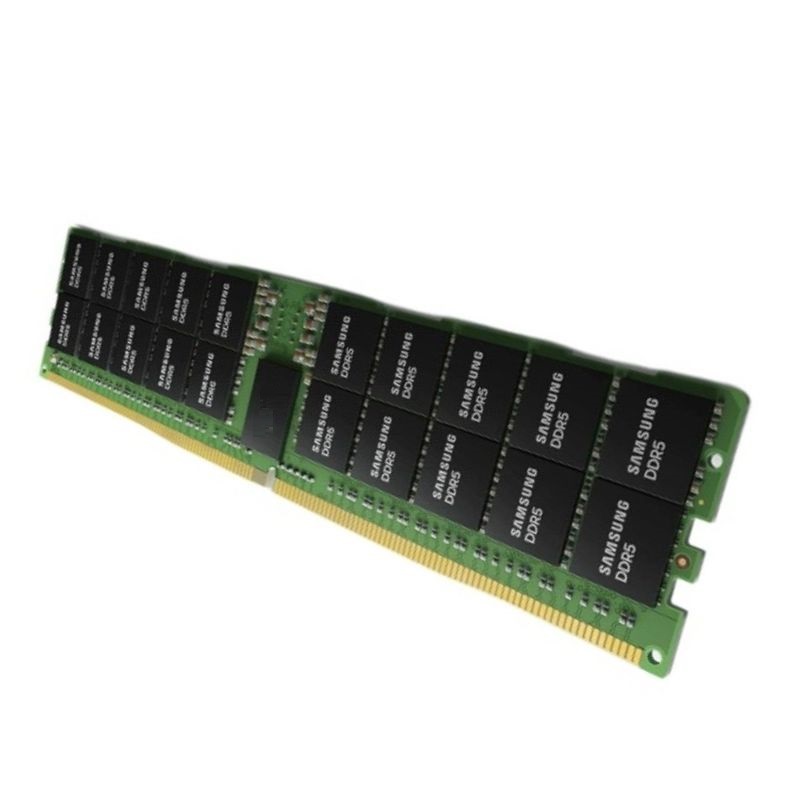
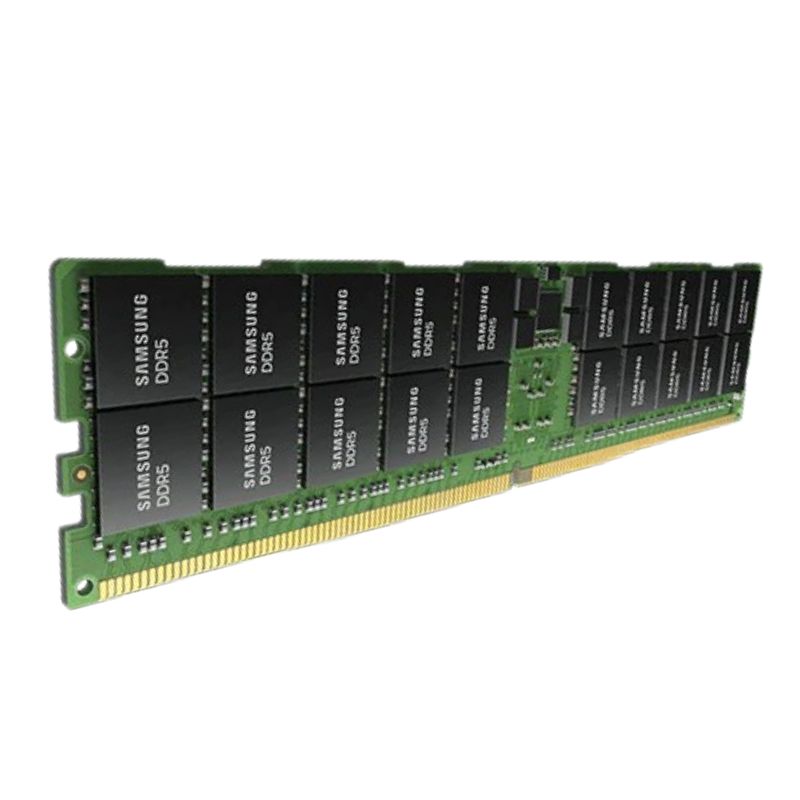
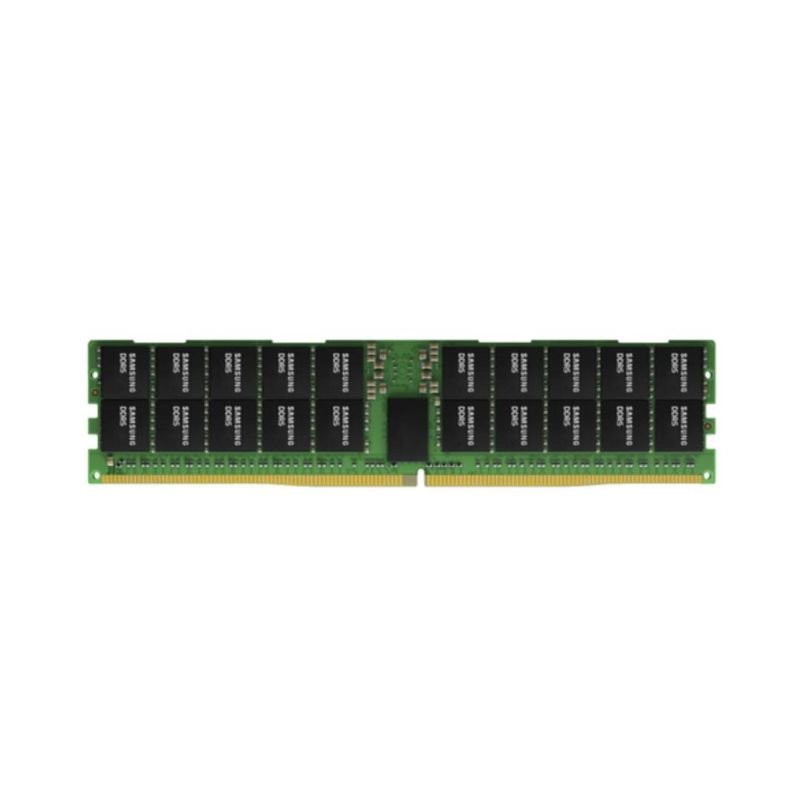
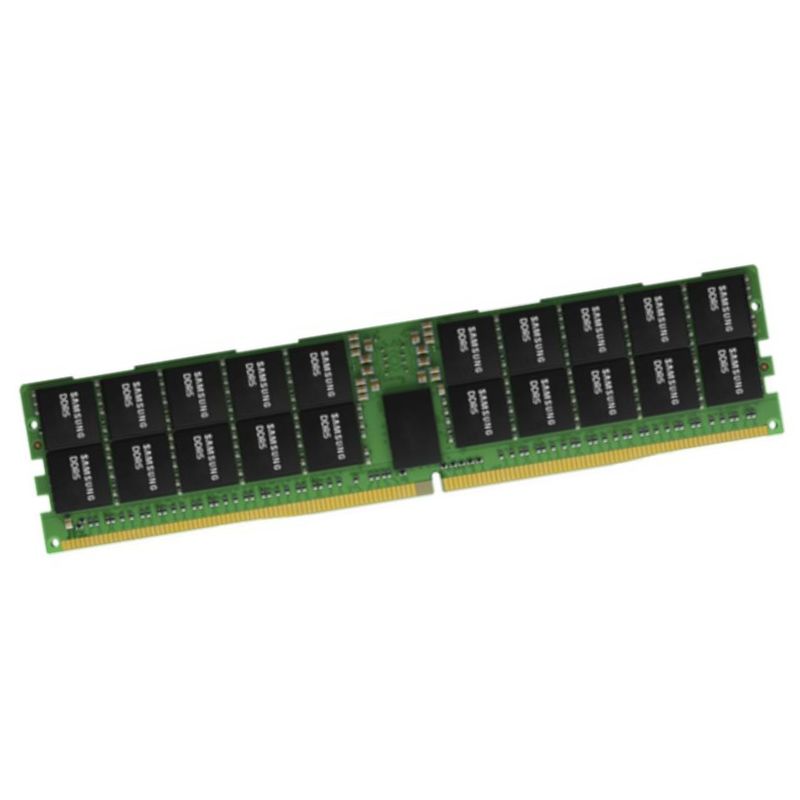
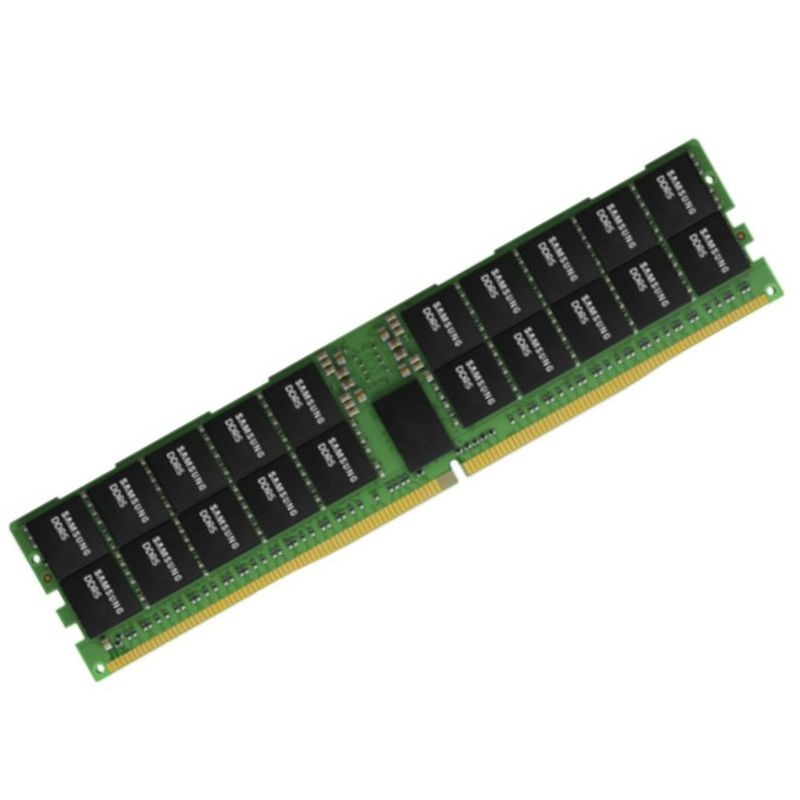
Samsung M321R2GA3EB2-CWMJJ 16GB PC5-44800 5600MHz ECC REG 288P 1RX8 RDIMM DDR5 Memory
- — Free Ground Shipping
- — Min. 6-month Replacement Warranty
- — Genuine/Authentic Products
- — Easy Return and Exchange
- — Different Payment Methods
- — Best Price
- — We Guarantee Price Matching
- — Tax-Exempt Facilities
- — 24/7 Live Chat, Phone Support
- — Visa, MasterCard, Discover, and Amex
- — JCB, Diners Club, UnionPay
- — PayPal, ACH/Bank Transfer (11% Off)
- — Apple Pay, Amazon Pay, Google Pay
- — Buy Now, Pay Later - Affirm, Afterpay
- — GOV/EDU/Institutions PO's Accepted
- — Invoices
- — Deliver Anywhere
- — Express Delivery in the USA and Worldwide
- — Ship to -APO -FPO
- — For USA - Free Ground Shipping
- — Worldwide - from $30
Overview of Samsung M321R2GA3EB2-CWMJJ DDR5 Memory Module
The Samsung M321R2GA3EB2-CWMJJ 16GB DDR5 SDRAM RDIMM is a next-generation memory upgrade designed for enterprise servers and advanced computing systems. With its PC5-44800 speed rating and 5600MHz data transfer capability, this high-performance module delivers rapid data throughput, reliable performance, and efficient multi-tasking support for mission-critical workloads.
Main Highlights of the Samsung 16GB DDR5 ECC Registered Module
- High bandwidth performance at 5600Mbps for data-intensive applications.
- Integrated ECC (Error-Correcting Code) for enhanced data integrity.
- Registered DIMM (RDIMM) design for stable operation in server environments.
- Optimized for enterprise-grade servers and workstations.
- Efficient 1.1V power consumption for reduced energy usage.
- Built with Samsung’s proven reliability and advanced DDR5 technology.
Technical Specifications
General Information
- Brand: Samsung
- Part Number: M321R2GA3EB2-CWMJJ
- Product Type: 16GB DDR5 SDRAM Server Memory
Memory Performance
- Capacity: 16GB per module
- Technology: DDR5 SDRAM
- Speed Rating: 5600Mbps / PC5-44800
- Module Configuration: 1Rx8
- CAS Latency: CL46
- Error Correction: ECC enabled
- Signal Type: Registered
Physical Design
- Form Factor: 288-pin RDIMM
- Voltage: 1.1V
- Dimensions: Height 1.00" x Depth 6.75"
Reason of Choose Samsung DDR5 ECC RDIMM
Samsung’s DDR5 modules are specifically engineered to meet the requirements of data centers, cloud infrastructure, and enterprise-grade computing. This 16GB ECC Registered module ensures minimized downtime with automatic error correction, making it a top choice for businesses needing stability and reliability. With improved bandwidth and energy efficiency, it provides an optimal balance of performance and cost-effectiveness.
Key Advantages
- Improved memory bandwidth compared to DDR4 generations.
- Reduced power consumption with 1.1V operating voltage.
- Enhanced stability with registered buffer design.
- ECC capability to prevent data corruption.
- Backed by Samsung’s long-standing reputation in memory innovation.
Use Cases for Samsung DDR5 16GB RDIMM
Ideal Deployment Environments
- Enterprise-level servers managing virtualization and databases.
- Cloud-based systems requiring high reliability and fast data processing.
- Workstations handling CAD, 3D rendering, and scientific simulations.
- AI, machine learning, and big data analytics platforms.
Performance-Oriented Benefits
- Handles multi-threaded workloads efficiently.
- Supports intensive computing with sustained speed.
- Minimizes latency for faster application response times.
- Maintains system reliability during heavy loads.
Compatibility and Reliability
The Samsung M321R2GA3EB2-CWMJJ DDR5 RDIMM is designed to integrate seamlessly with the latest server motherboards supporting DDR5 memory standards. Its ECC and registered features ensure system protection against data corruption while providing long-term dependability in 24/7 operations. Built to JEDEC standards, this module guarantees broad compatibility across enterprise-class server platforms.
Reliability Features
- ECC error correction for mission-critical workloads.
- Registered buffering for increased stability in large memory systems.
- JEDEC-compliant design for universal compatibility.
- Samsung’s strict quality assurance and durability testing.
Physical Characteristics and Design Details
Module Build Quality
With a compact 288-pin RDIMM layout, this module is engineered for high-density servers without compromising space. The low voltage design reduces energy draw, making it environmentally friendly while delivering cutting-edge performance.
Dimension and Fit
- Height: 1.00 inch
- Depth: 6.75 inches
- Standard 288-pin RDIMM profile for easy installation
Energy Efficiency
Operating at just 1.1 volts, this DDR5 RDIMM is designed for reduced power consumption, which translates to lower operational costs for businesses running large-scale data centers.
Category Outline of Samsung M321R2GA3EB2-CWMJJ Memory Module
The Samsung M321R2GA3EB2-CWMJJ belongs to the professional-grade subcategory of DDR5 ECC Registered (RDIMM) server and workstation memory. This 16GB module combines the bandwidth advantages of DDR5-5600 (PC5-44800) with on-module power management, robust error correction, and a registered (buffered) architecture designed for stability under heavy, memory-intensive workloads. Built around a 288-pin RDIMM form factor and a 1Rx8 layout, it aligns with modern multi-channel server platforms that demand predictable throughput, high reliability, and efficient scaling across many DIMM slots. Whether deployed in a rackmount server, a high-end workstation, or a virtualization node, this module targets environments where data integrity and consistent performance matter as much as raw speed.
In this category description you’ll find a deep dive into the architecture, part-number decoding, platform compatibility, performance behavior, capacity planning, installation guidance, and best-practice recommendations specific to DDR5 ECC Registered memory. The goal is to help buyers, system builders, and IT admins understand how the Samsung M321R2GA3EB2-CWMJJ fits into broader memory strategies, which workloads benefit most, and how to deploy it for maximum reliability and value.
Decoding the Designation and What It Means
The model designation and standardized labels communicate a lot about capabilities and intended use:
- Manufacturer: Samsung — a leading DRAM manufacturer known for consistent quality, tight binning, and expansive server memory portfolios.
- Capacity: 16GB per module — a versatile building block for multi-DIMM layouts, enabling both modest and dense configurations.
- Technology: DDR5 SDRAM — next-generation DRAM featuring higher effective bandwidth, on-module power management (PMIC), and architectural enhancements versus DDR4.
- Speed Grade: 5600MT/s (marketed as 5600MHz) — JEDEC-compliant data rate delivering a theoretical peak bandwidth of 44.8GB/s per module (PC5-44800).
- Form Factor: 288-pin RDIMM — mechanically similar footprint to DDR4 but electrically and key-notch-wise different; not cross-compatible with DDR4 slots.
- Error Handling: ECC Registered — supports error-correcting code (typically 72-bit wide: 64-bit data + 8-bit ECC) and includes a Register Clock Driver (RCD) to buffer command/address signals.
- Rank & Organization: 1Rx8 — single rank using x8 DRAM devices, a common and efficient layout for consistent timing and compatibility.
“PC5-44800” and “5600MT/s” Matter
“PC5-44800” is the bandwidth class associated with DDR5-5600. Multiply the 5600 mega-transfers per second by 8 bytes per transfer and you get 44.8GB/s of theoretical peak bandwidth for each module. Real-world throughput depends on memory controllers, channel counts, and workload characteristics, but the higher JEDEC speed helps server CPUs keep data pipelines fed under parallel, multi-threaded tasks. For bandwidth-sensitive applications—like in-memory databases, scientific simulations, or highly parallel rendering—the extra headroom can translate into measurable performance gains.
This Category Fits in the Memory Landscape
DDR5 ECC Registered memory occupies a distinct role compared to consumer desktop DIMMs. RDIMMs are engineered for:
- Platform Scale: Servers and workstations with many DIMM slots per CPU socket, often arranged in multi-channel and multi-socket topologies.
- Signal Integrity: The Register Clock Driver buffers address/command signals, improving electrical stability across heavily populated memory channels.
- Reliability: ECC detects and corrects common single-bit errors, lowering the risk of silent data corruption and improving system uptime.
- Consistency: JEDEC-compliant profiles emphasize sustained operation and broad interoperability with enterprise chipsets and BIOS/UEFI firmware.
If you are configuring a server based on modern workstation/server CPUs, this Samsung module aligns with that mission: maximizing predictable performance, reducing error rates, and enabling dense memory topologies without compromising stability.
Architecture and Technology Details
Understanding the underlying technologies helps you align the Samsung M321R2GA3EB2-CWMJJ with your performance and reliability goals.
DDR5 Advantages over DDR4
- Higher Data Rates: DDR5 starts where DDR4 peaked and continues upward, enabling more bandwidth per module.
- On-Die ECC (ODECC): Internal to each DRAM chip, improving cell-level reliability; separate from system-visible ECC on the module.
- On-Module PMIC: Power Management IC on the DIMM improves voltage regulation granularity, reducing motherboard complexity and helping signal/power integrity.
- Dual 32-bit Sub-Channels: A single DDR5 DIMM presents two 32-bit sub-channels (plus ECC), enhancing concurrency and efficiency for certain access patterns.
ECC and Registered (Buffered) Signaling
ECC RDIMMs combine two layers of protection and stability:
- ECC: Adds parity bits to detect and correct single-bit errors and detect many multi-bit errors. This is crucial in long-running servers, mission-critical apps, and data-sensitive workloads.
- Registered Architecture: The RCD sits between the memory controller and the DRAM chips, buffering command/address signals. This reduces electrical load on the controller, allowing more modules per channel and more consistent timing at scale.
1Rx8 Topology
“1Rx8” indicates a single rank, where each DRAM device has an x8 data width. Single-rank RDIMMs often offer predictable latencies and compatibility, and they simplify population rules compared to dual-rank or quad-rank modules. In multi-DIMM scenarios, single-rank modules can help achieve higher stable speeds, depending on your motherboard and CPU memory controller.
Power Management: PMIC and SPD Hub
DDR5 migrates much of the power regulation to the DIMM via an integrated PMIC. The PMIC manages local voltage rails, improving response to transient loads. Separately, the SPD (Serial Presence Detect) hub stores module configuration (timings, speed bins, temperature sensor access), allowing the system firmware to automatically negotiate stable JEDEC-compliant settings at boot. Together, PMIC and SPD hub improve reliability and simplify board design.
Thermal Management and TS Sensors
Many DDR5 RDIMMs include thermal sensors accessible to the system for monitoring. Accurate DIMM temperature readings help firmware manage fan curves, throttle policies, and reliability safeguards, especially in dense racks or compact workstations with high ambient temperatures.
Still Matter 16GB RDIMMs
Although higher-capacity modules (32GB, 48GB, 64GB, 128GB, and beyond) exist, 16GB RDIMMs remain a cost-effective way to populate channels broadly and exploit multi-channel concurrency. For workloads that favor bandwidth and channel count over raw per-slot capacity, 16GB modules can deliver excellent price-to-performance, especially when you need many identical DIMMs for symmetrical population.
Compatibility and Platform Fit
ECC Registered DDR5 memory is designed for systems that explicitly support RDIMMs. Always verify with your server or workstation motherboard’s Qualified Vendor List (QVL) or memory support page. The following guidelines help frame the fit:
- Server-Class CPUs: Modern server/workstation processors typically support DDR5 RDIMMs across multiple channels per socket. Check maximum supported speeds per population density; higher DIMM counts may downshift data rate per channel.
- Workstation Boards: Some workstation-grade motherboards support RDIMMs while typical consumer desktop boards do not. Ensure the board specifies RDIMM support, not just DDR5 UDIMM.
- Mixed Memory Types: Avoid mixing RDIMMs with UDIMMs or SO-DIMMs. Use matched modules with identical specs for best stability and performance.
- Firmware: Keep BIOS/UEFI updated. Microcode and memory training improvements frequently enhance compatibility and achievable speeds for new DRAM bins.
Channel Population Strategy
Server platforms often provide 4, 6, or 8 channels per CPU (and sometimes more in advanced architectures). Optimal population usually means:
- Populate each channel with at least one DIMM to activate all available channels.
- Use identical modules per channel and across sockets for symmetry.
- Respect the vendor’s rules about DIMMs per channel (DPC). Adding more DIMMs per channel may lower the maximum supported data rate but increase total capacity.
NUMA Awareness
In multi-socket systems, each CPU has its own memory controllers and channels. Binding workloads to the memory local to the CPU that executes them (NUMA locality) reduces cross-socket traffic and improves latency. Pairing balanced RDIMM populations with NUMA-aware scheduling yields stable, predictable throughput.
Performance Characteristics
With DDR5-5600 bandwidth, the Samsung M321R2GA3EB2-CWMJJ is geared for highly parallel workloads. Consider the following behavior across common scenarios:
Bandwidth-Bound Workloads
- In-Memory Databases & Analytics: Query acceleration and large table scans benefit from high stream bandwidth.
- Scientific/Engineering Codes: Finite element analysis, CFD, and HPC kernels often saturate memory bandwidth; populating more channels with 16GB RDIMMs can scale aggregate throughput.
- Media & Rendering: Multi-threaded encoders, NLE scrubbing with large caches, and 3D scene handling leverage rapid data movement between cores and memory.
Latency Considerations
While DDR5 raises transfer rates, absolute latency depends on JEDEC timing sets and platform training. Single-rank (1R) modules can help mitigate latency inflation under certain population circumstances. Real-world performance balances bandwidth with timings, memory controller topology, and the number of DIMMs per channel.
Scaling with Additional Modules
Adding more identical 16GB RDIMMs across channels increases total memory capacity and aggregate bandwidth. However, many platforms reduce the maximum data rate when 2DPC or 3DPC configurations are used. Check your board’s memory table to plan the optimal density versus speed tradeoff.
PC5-44800 in Practice
PC5-44800 corresponds to 44.8GB/s of theoretical peak bandwidth per module. For a dual-socket platform with 8 channels per socket fully populated, the cumulative bandwidth is immense, provided the CPU and OS can utilize it. Applications that prefetch efficiently and process data in parallel typically extract the largest gains.
Reliability, Uptime, and Data Integrity
In enterprise and professional contexts, silent data corruption is unacceptable. ECC Registered DDR5 significantly reduces risk compared to non-ECC consumer memory.
How ECC Protects
- Single-Bit Error Correction: ECC logic detects and corrects single-bit flips on the fly, preventing crashes and silent corruption.
- Multi-Bit Error Detection: While not always correctable, multi-bit anomalies are detected and reported so administrators can replace modules proactively.
- Error Logging: Platform firmware and OS tools can log ECC events, aiding root-cause analysis and predictive maintenance.
Registered Stability
The Register Clock Driver eases electrical stress on the memory controller, especially when many DIMM slots are populated. This improves timing margins and reduces training failures at boot, which is crucial for high-availability systems that must power-cycle cleanly after maintenance windows or power events.
Thermal, Power, and Environmental Considerations
- PMIC Efficiency: On-module power regulation stabilizes the rails that DRAM depends on, aiding signal integrity and long-term reliability.
- Thermal Headroom: Proper front-to-back airflow in servers keeps DIMM temperatures within specification. The thermal sensor feedback loop helps firmware manage fans and protect components.
- Datacenter Best Practice: Maintain clean air paths, replace clogged filters, and ensure even pressure across racks to avoid hot spots near populated DIMM banks.
Use Cases and Subcategory Applications
This 16GB DDR5-5600 ECC RDIMM lands in a sweet spot for both capacity and speed. Below are representative deployments where it excels:
Virtualization Hosts and Hyperconverged Nodes
- VM Density: Pairing numerous 16GB RDIMMs across all channels enables balanced resource pools for hypervisors.
- Consistency: ECC correctness and RDIMM stability translate to fewer memory-related VM crashes or live-migration hiccups.
- Predictability: Uniform DIMM sizes simplify NUMA alignment and VM placement policies.
Databases and Analytics
- In-Memory Caches: Key-value stores and columnar analytics benefit from raw bandwidth and error-free persistence.
- OLAP Workloads: Complex aggregations leverage multi-channel throughput and benefit from ECC’s data protection.
- Stream Processing: Real-time analytics pipelines see improved throughput with high MT/s modules across all channels.
Content Creation and CAD/CAE
- 3D Rendering: Large scene files and texture maps stream faster across the memory bus.
- Video Editing: Smooth timeline scrubbing and faster proxy generation with multi-threaded codecs that thrive on bandwidth.
- Simulation: Engineering solvers and simulations benefit from both ECC integrity and predictable scaling across many DIMMs.
Capacity Planning and Scaling Strategies
With 16GB per module, planning revolves around channel utilization and future expansion. Consider:
- Per-Socket Channel Count: Populate at least one DIMM per channel to unlock maximum parallelism.
- Symmetry Across Sockets: Balance DIMMs evenly between CPU sockets to avoid NUMA imbalance.
- Growth Path: Start with 1DPC across all channels for peak speeds; add a second DIMM per channel later if capacity pressure rises, accepting a potential step-down in data rate.
Higher-Capacity RDIMMs
If your working set consistently exceeds available memory and you face swapping or paging, consider stepping up to 32GB/64GB/128GB RDIMMs. However, for many mixed workloads, a wider set of 16GB modules across more channels can outperform smaller counts of higher-capacity DIMMs due to greater aggregate bandwidth and better parallelism.
Comparisons Within the Memory Category
RDIMM vs UDIMM
- Target Platforms: RDIMMs are for servers/workstations; UDIMMs are for consumer desktops.
- Stability at Scale: RCD buffering allows more DIMMs per channel on RDIMM platforms without overwhelming the memory controller.
- ECC Availability: ECC is standard on RDIMMs; some UDIMMs may support ECC, but platform support is limited.
RDIMM vs LRDIMM
- Load Reduction: LRDIMMs include additional buffering to reduce electrical load further, enabling very high capacities per slot.
- Latency/Cost Tradeoffs: LRDIMMs may introduce slightly different latency characteristics and often command a price premium; choose them when ultra-high capacity per channel is the goal.
RDIMM vs SO-DIMM
- Form Factor: SO-DIMMs target laptops and compact systems; RDIMMs target servers/workstations.
- Electrical Design: SO-DIMMs lack the registered buffer architecture; they focus on space savings rather than heavy multi-DIMM stability.
Workload-Driven Guidance
Virtualization and Cloud Edge
In hypervisor environments (KVM, VMware, Hyper-V, Proxmox), the Samsung 16GB DDR5-5600 RDIMM supports high VM density with reliable ECC. Distribute many identical RDIMMs across all channels to maximize host fairness and improve live-migration reliability. NUMA alignment and memory reservations become simpler with uniform module sizes.
DevOps, CI/CD, and Containers
Compilation, automated testing, and container orchestration can be memory-intensive. When many parallel jobs run concurrently, memory bandwidth sustains build throughput and reduces contention. ECC correctness catches transient errors that could otherwise crash a critical pipeline node or, worse, introduce subtle artifact corruption.
Media, VFX, and Broadcast
Content creation pipelines thrive on fast, dependable memory. Large frame buffers, compositing, color grading, and high-bit-depth encodes benefit from the DDR5-5600 data rate. With ECC, long renders and overnight jobs are less likely to fail due to memory faults, improving delivery timelines.
AI/ML Pre- and Post-Processing
Although GPU memory dominates training, system memory still matters for data ingestion, pre-processing, feature engineering, and large batch staging. High-bandwidth RDIMMs keep CPUs fed while GPUs accelerate core kernels, and ECC helps protect long-running jobs from memory-induced anomalies.
Best Practices for Deployment
- Uniformity: Use identical 16GB Samsung RDIMMs across channels to simplify training and ensure balanced bandwidth.
- Airflow: Maintain unobstructed front-to-back airflow; monitor DIMM temperatures regularly.
- Firmware Currency: Update BIOS/UEFI and BMC/IPMI firmware before large memory upgrades.
- Staged Rollouts: In production clusters, introduce new memory in phases and run stress tests before putting nodes back under full load.
- Documentation: Keep records of slot population, serial numbers, and error logs for quick RMA and audit readiness.
Security and Memory
While memory itself is not a security feature, reliable ECC reduces unexplained crashes that can mask intrusion symptoms. Accurate logging of ECC events also contributes to full-chain observability, helping differentiate hardware issues from software faults during incident response.
Technical Deep Dive
Sub-Channel Architecture
DDR5’s split into dual 32-bit sub-channels per DIMM allows finer-grained parallelism in command scheduling. This can reduce contention and increase efficiency for interleaved access patterns. Combined with high data rates, it helps maintain elevated throughput under many concurrent threads.
RCD (Register Clock Driver) Role
The RCD buffers and re-drives command and address lines, reducing the capacitive load on the CPU memory controller. In configurations with multiple DIMMs per channel, this is crucial for signal integrity and reliable training. Without buffering, high slot counts would compromise timing margins and limit feasible speeds.
Timing and JEDEC Profiles
While JEDEC defines standard timing sets for 5600MT/s, actual values can vary based on DRAM binning and platform choices. Enterprise boards focus on stability and ECC correctness, selecting conservative timings when population is dense. This is why real-world validation with your exact motherboard and BIOS is essential.
Choosing the Samsung M321R2GA3EB2-CWMJJ for Your Build
This Samsung 16GB DDR5-5600 ECC RDIMM fits scenarios where:
- You need server-grade reliability with ECC and registered buffering.
- You want high bandwidth per DIMM to feed many cores.
- You plan to populate many channels evenly for balanced, scalable performance.
- You value a cost-effective building block that keeps options open for future expansion.
Inventory Cohesion
Standardizing on one 16GB RDIMM model simplifies spares management, accelerates troubleshooting, and ensures consistent behavior across a fleet. When every node in a cluster uses the same modules, firmware settings, and population maps, your operations team spends less time tracking idiosyncrasies and more time optimizing workloads.
Practical Tips for Ongoing Operations
- Monitor ECC Events: Occasional corrected errors can be normal; rising counts on a specific module suggest proactive replacement.
- Document Slot Maps: Keep a diagram tying slot labels to serial numbers so you can target the exact DIMM when replacing.
- Schedule Burn-In: After large upgrades, run memory tests to catch infant mortality before production resumes.
- Balance Channels: Revisit population when you add more modules to maintain symmetry and bandwidth.
Sustainability Considerations
DDR5’s on-module power regulation and improved efficiency per bandwidth unit help datacenters extract more work per watt. Coupled with careful airflow planning and right-sizing capacity (avoiding over-provisioning), you can reduce energy costs and environmental impact without sacrificing performance.
Glossary for Quick Clarity
- ECC: Error-Correcting Code, adds redundancy to correct single-bit errors and detect many multi-bit errors.
- RDIMM: Registered DIMM; includes an RCD to buffer commands/addresses for stability in high-slot-count systems.
- LRDIMM: Load-Reduced DIMM; further reduces electrical load for very high capacities.
- UDIMM: Unbuffered DIMM; typical of consumer desktops, not used in servers that require RDIMMs.
- PMIC: Power Management IC on the DIMM, improves voltage regulation.
- SPD: Serial Presence Detect; stores module configuration and sensor data for firmware.
- 1Rx8: Single-rank module using x8 devices.
- PC5-44800: Bandwidth rating indicating 44.8GB/s theoretical peak at DDR5-5600.
- MT/s: Mega-transfers per second; the standard way of expressing DDR data rate.
Checklist for Selecting and Deploying This Module
- Confirm your motherboard and CPU explicitly support DDR5 RDIMMs.
- Update to the latest BIOS/UEFI and memory compatibility lists.
- Plan channel-first population: prioritize one DIMM per channel before filling second slots.
- Use identical 16GB modules for symmetry and simplified management.
- Validate with extended memory tests before rejoining production clusters.
- Enable ECC monitoring and alerting via BMC/OS tooling.
- Maintain airflow and track DIMM thermals during peak loads.
This Specific Samsung Model
Samsung’s M321R2GA3EB2-CWMJJ delivers a practical blend of capacity, speed, and enterprise-grade features. The 1Rx8 organization aids compatibility across a broad range of server/workstation boards, while DDR5-5600 maximizes bandwidth in lightly populated (1DPC) configurations. It is an ideal “standard issue” module for IT teams that value repeatable behavior, easy scaling, and a straightforward upgrade path. For small businesses building their first on-prem virtualization host or for enterprises adding nodes to a cluster, standardizing on a widely supported 16GB RDIMM helps contain costs without compromising reliability.
Scenarios Where It Shines
- Balanced Hosts: Systems that need both performance and predictable ECC-backed stability.
- Scale-Out Nodes: Environments that prefer many mid-capacity DIMMs across many channels rather than a few very large modules.
- Workstations with ECC Needs: Content creation or engineering workstations where project integrity and uptime are paramount.
Population Examples for Planning
Below are illustrative examples to conceptualize how 16GB RDIMMs can be deployed. Always consult the motherboard manual for exact slot naming and rules.
Single-Socket, 8-Channel Workstation
- Baseline: 8 × 16GB = 128GB (1DPC for peak speed)
- Expansion: Add another 8 × 16GB = 256GB total (2DPC; speed may step down per vendor table)
Dual-Socket, 8-Channels per Socket Server
- Baseline: 16 × 16GB = 256GB, evenly split across both sockets
- Expansion: 32 × 16GB = 512GB (if board supports 2DPC), understanding potential data-rate adjustment
Memory Interleaving
Enable channel interleaving for better throughput; some platforms also offer socket interleaving, though that can blur NUMA boundaries. Test workload performance to choose the best mode.
Key Takeaways
- The Samsung M321R2GA3EB2-CWMJJ is a DDR5-5600 (PC5-44800) ECC Registered 16GB RDIMM built for servers and workstations.
- Its 1Rx8 organization, PMIC-based power regulation, and ECC + RCD design deliver bandwidth and stability suitable for heavy, always-on workloads.
- Use it in platforms that explicitly support DDR5 RDIMMs; avoid mixing with UDIMMs or non-ECC memory.
- Populate all channels evenly for the best aggregate performance; monitor thermals and ECC logs over time.