(7% discount is applied at checkout)
Cart is empty
Your go-to destination for cutting-edge server products
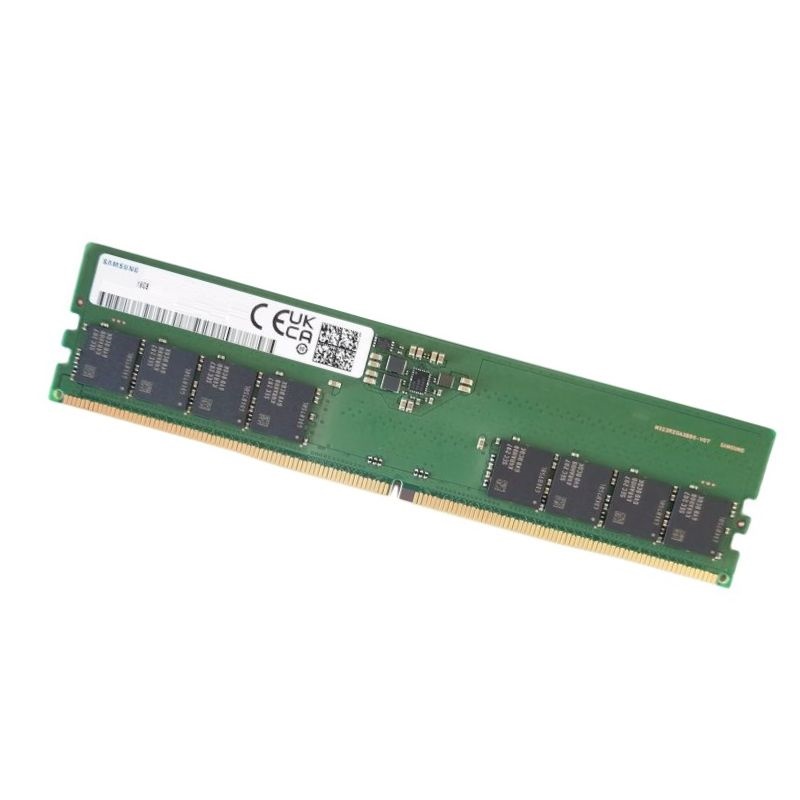


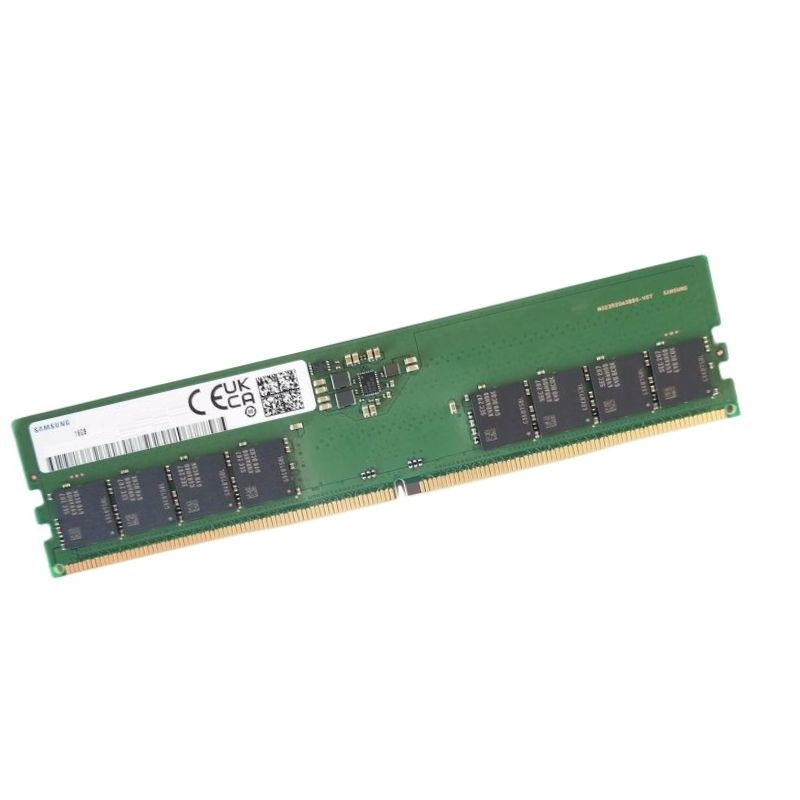
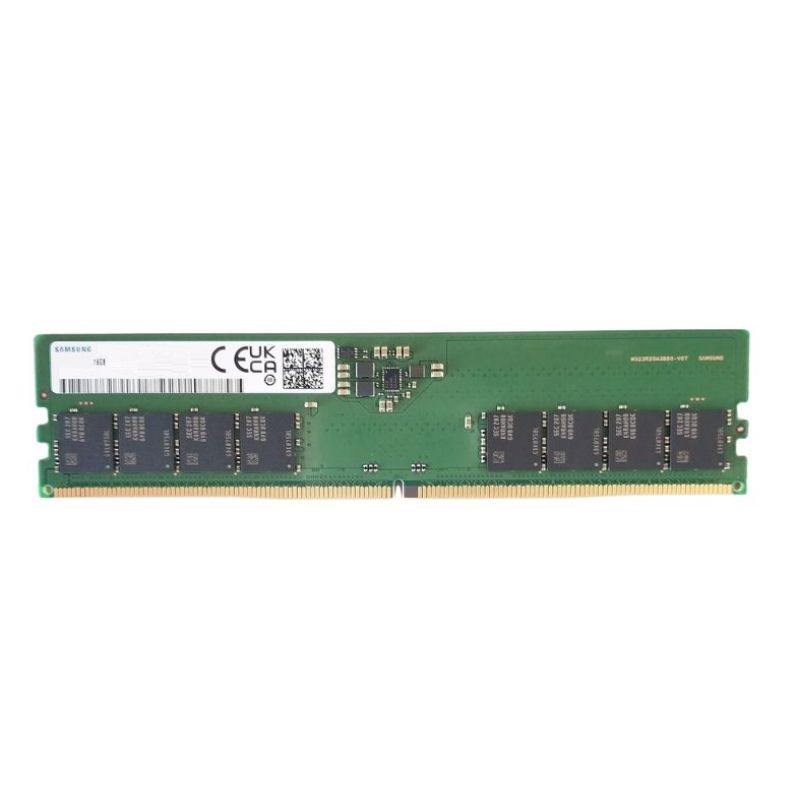
Samsung M321R2GA3PB2-CCP 16GB PC5-51200 DDR5-6400MHz 288P RDIMM 1RX8 ECC RCG Memory Module. New (System) Pull with 1 year replacement warranty
The Samsung M321R2GA3PB2-CCP represents a pivotal advancement in server memory technology, engineered for next-generation data centers, high-performance computing (HPC), and enterprise servers. This 16GB DDR5 RDIMM module operates at a blistering speed of 6400MT/s (marketed as PC5-51200), delivering significant bandwidth improvements over previous DDR4 generations. Built on Samsung's cutting-edge semiconductor process, this module is not merely an incremental upgrade but a foundational component for systems demanding unparalleled data throughput, reliability, and power efficiency.
The evolution of server memory is pivotal for modern data centers, cloud infrastructure, and high-performance computing. The transition to DDR5 technology marks a significant leap forward, delivering profound improvements in bandwidth, power efficiency, and reliability. At the core of this evolution are modules like the Samsung M321R2GA3PB2-CCP, a 16GB DDR5-6400 RDIMM engineered for next-generation servers. This category of memory is not a simple upgrade but a foundational component that enables CPUs with advanced memory controllers to achieve unprecedented levels of data throughput and system responsiveness.
DDR5 memory introduces architectural changes that fundamentally benefit enterprise workloads. Compared to DDR4, DDR5 operates at a lower voltage (1.1V) while significantly increasing data rates. The key innovation is the separation of the 64-bit data channel into two independent 32-bit sub-channels. This allows for more efficient data handling and reduces latency for concurrent operations. For servers, this means faster data access for virtualization, large-scale databases, real-time analytics, and AI inference tasks, directly impacting processing efficiency and reducing bottlenecks.
Registered Dual In-Line Memory Modules (RDIMMs) incorporate a register (or buffer) on the module itself. This register sits between the server's memory controller and the DRAM chips, buffering the command and address signals. This crucial design reduces the electrical load on the memory controller, allowing for greater memory capacities per channel and more modules to be installed per system without signal degradation. RDIMMs are the unequivocal choice for mission-critical servers where stability, data integrity, and maximum capacity are non-negotiable.
Samsung's part numbering system conveys critical specifications. "M3" denotes a DDR5 module. "21" indicates a 16GB density. "R2" confirms it is an RDIMM (Registered, 2 Rank). "GA" refers to the component revision and organization. The "6400" speed grade is embedded in the suffix "CCP," which aligns with the industry-standard PC5-51200 designation. Understanding this nomenclature ensures precise compatibility and ordering accuracy for IT procurement specialists.
This specific module embodies Samsung's leadership in memory semiconductor technology. It is a meticulously engineered component built to meet the rigorous demands of 24/7 server operation. Its specifications are not merely a list of numbers but a blueprint for enhanced system performance and stability.
The module's primary performance metrics define its capabilities within a server memory subsystem. Operating at a data rate of 6400 Megatransfers per second (MT/s), it provides a peak theoretical bandwidth of approximately 51.2 GB/s per module. This is calculated as (6400 MT/s * 64 bits / 8 bits per byte). In a typical dual-channel or multi-channel server configuration, this bandwidth aggregates, enabling massive data flows to and from the CPU.
The "DDR5-6400" designation specifies the module's data transfer rate. The related "PC5-51200" label refers to the peak bandwidth in MB/s (6400 MT/s * 8 bytes = 51,200 MB/s). Latency, measured in clock cycles (such as CL-46 or similar), is another critical factor. DDR5 modules may have higher cycle latencies than DDR4 due to their much higher clock speeds, but the actual time in nanoseconds (ns) is often comparable or better. Advanced timing schemes and on-die ECC contribute to efficient operation at these high frequencies.
The 16GB capacity is a versatile density for a wide range of server applications, from entry-level virtualization hosts to nodes in a large-scale clustered environment. The "1Rx8" organization indicates a single rank of memory with an x8 DRAM device data width. A rank is an independently addressable set of DRAM chips. The x8 configuration refers to the number of bits per chip I/O. This organization offers an optimal balance of performance, power, and compatibility across various server platforms.
Server memory must guarantee data integrity above all else. This module integrates multiple, overlapping technologies to detect and correct errors that could lead to system crashes or data corruption.
ECC is a non-negotiable feature for enterprise memory. It goes beyond simple parity checking. By adding extra bits (e.g., 8 bits for every 64 bits of data), the memory controller can detect single-bit and multi-bit errors and automatically correct single-bit errors on the fly. This prevents soft errors caused by cosmic rays or electrical interference from affecting system stability, ensuring data remains pristine in memory.
DDR5 introduces a second layer of ECC: On-Die ECC. Each individual DRAM chip on the module has its own internal ECC engine. This corrects bit errors within the chip itself before the data is even sent to the module's buffer. This proactive correction improves the raw reliability of the memory chips, reduces the burden on the system-level ECC, and contributes to the overall robustness of the memory subsystem.
This module supports the full spectrum of server RAS features. These include demand and patrol scrubbing (proactively searching for and correcting errors), memory mirroring (creating a redundant copy of data in a separate channel), and single device data correction (SDDC), which can survive the failure of an entire DRAM chip within a rank. These features are managed by the server's BIOS/UEFI and are essential for high-availability systems in financial, healthcare, and cloud services.
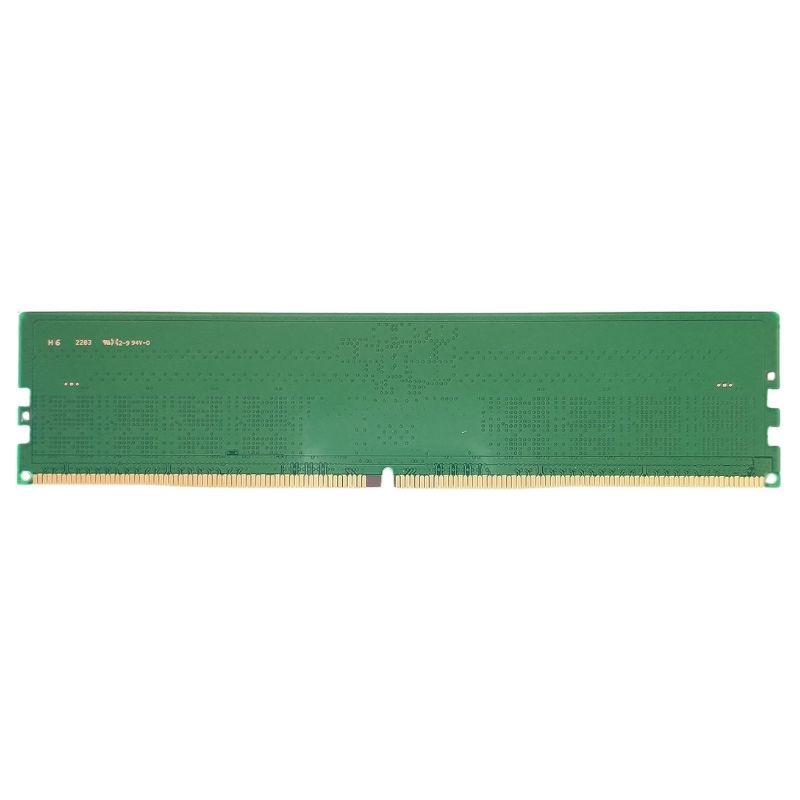
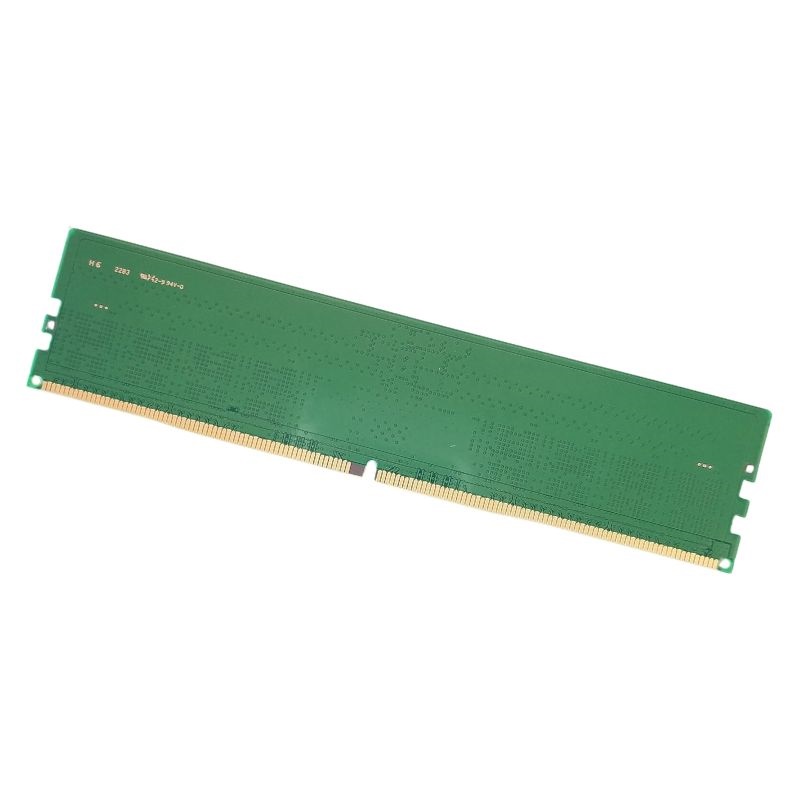
The module's physical construction is tailored for the server environment. The 288-pin edge connector design is specific to DDR5 and is not compatible with DDR4 slots. The printed circuit board (PCB) is a high-quality, multi-layer board with optimized trace layouts to maintain signal integrity at 6400 MT/s. The inclusion of a Power Management IC (PMIC) on the module is a hallmark of DDR5 design.
In DDR4 and earlier generations, voltage regulation was handled on the system motherboard. DDR5 moves this function to a PMIC located on each memory module. This allows for more granular and stable power delivery, reducing noise and improving signal fidelity. It also enables better power efficiency, as voltage can be more precisely tuned to the module's specific needs. The PMIC is a key enabler for achieving higher data rates reliably.
The module conforms to the JEDEC standard 288-pin RDIMM form factor with a height suitable for 1U and larger servers. The notch position on the connector is different from DDR4, providing a foolproof physical keying mechanism to prevent incorrect installation. Proper handling via ESD (Electrostatic Discharge) precautions is always required during installation.
The Samsung M321R2GA3PB2-CCP is designed for modern servers powered by Intel Xeon Scalable Processors (4th Gen Sapphire Rapids and newer) and AMD EPYC 9004 Series (Genoa) and newer platforms. These CPUs feature integrated memory controllers explicitly designed for DDR5's sub-channel architecture and speed tiers. Always consult the server manufacturer's qualified vendor list (QVL) to ensure validated compatibility for specific system models.
This memory module excels in a multitude of server-based workloads. Its high bandwidth and low latency make it ideal for in-memory databases (e.g., SAP HANA, Redis), which rely on rapid data access. For virtualization hypervisors (VMware vSphere, Microsoft Hyper-V), it allows for higher virtual machine density and smoother performance. In high-performance computing (HPC) and AI/ML training scenarios, fast memory is critical to feed data to powerful GPUs and CPUs, minimizing idle compute time.
For enterprise resource planning (ERP), customer relationship management (CRM), and large-scale transactional databases, system responsiveness directly impacts business operations and user productivity. Deploying servers with high-bandwidth, reliable memory like this 16GB DDR5-6400 module ensures that these critical applications run smoothly, even under heavy concurrent user loads.
Understanding where this module fits in the broader memory hierarchy is important for informed decision-making.
Compared to a DDR4-3200 RDIMM, the Samsung DDR5-6400 module offers double the data rate and a significant increase in bandwidth. While nominal latency in cycles is higher, the reduced time per cycle means actual access times are competitive. The addition of on-die ECC, a module-based PMIC, and improved channel efficiency make DDR5 a superior architecture for all new server deployments.
It is crucial to distinguish RDIMMs from Unbuffered DIMMs (UDIMMs) and Load-Reduced DIMMs (LRDIMMs). UDIMMs lack a register and are primarily for desktops, not servers. LRDIMMs use a buffer for data lines as well, enabling even higher capacities but with slightly higher latency. The 16GB 1Rx8 RDIMM represents the performance and capacity sweet spot for most mainstream two-socket and single-socket servers.
The "1R" (single rank) design of this module means the memory controller can access the entire rank in one operation. In a multi-slot system, using single-rank modules can sometimes allow for higher achievable data rates compared to populating all slots with dual-rank (2R) modules, as the electrical load is lower. This makes 1Rx8 modules like the M321R2GA3PB2-CCP excellent for performance-optimized configurations.


 Contact Us
 Information
 Catalog
 Solid State Drives (SSD)
 Network Switches
 Hard Disk Drives
 HBA & Controllers
 PC & Servers
 PC & Server Memory
 CPU & Processors
 Network Routers
 Power Supplies
 Tape Drives & Libraries
 Network Devices
 Computer & Network Cables