(7% discount is applied at checkout)
Cart is empty
Your go-to destination for cutting-edge server products
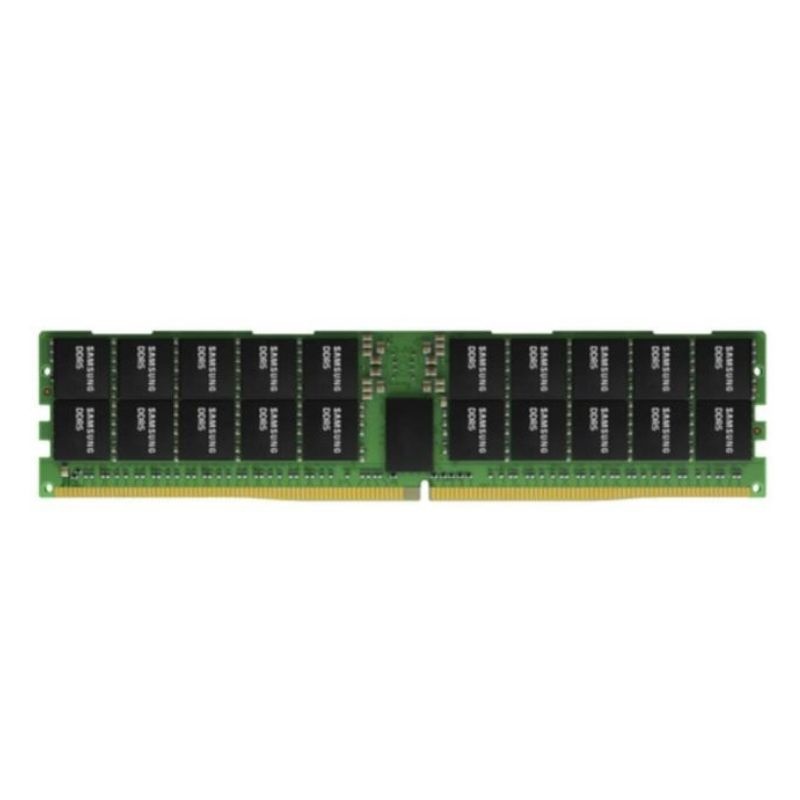


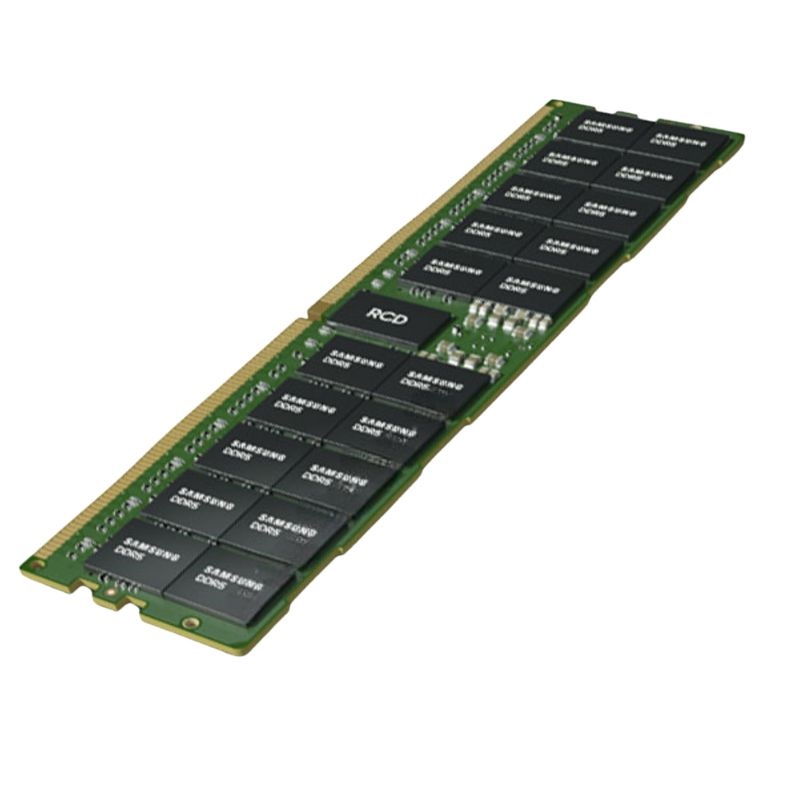
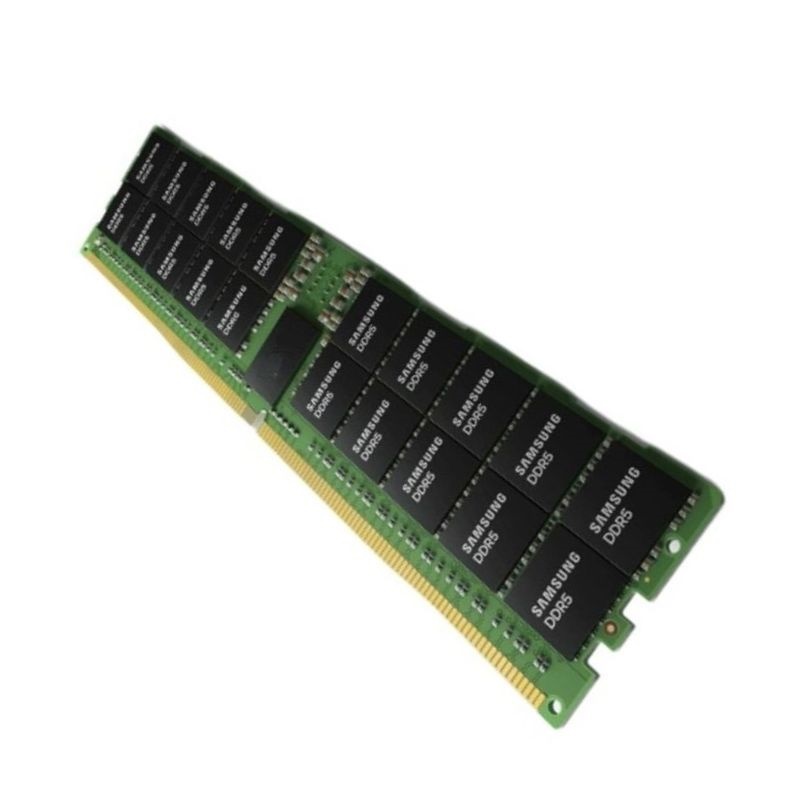
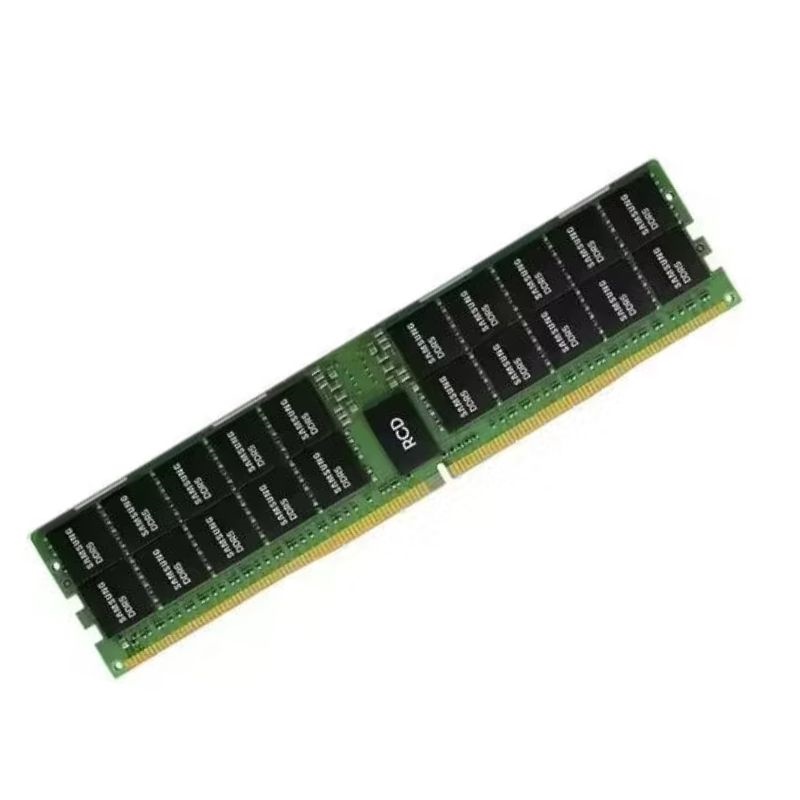
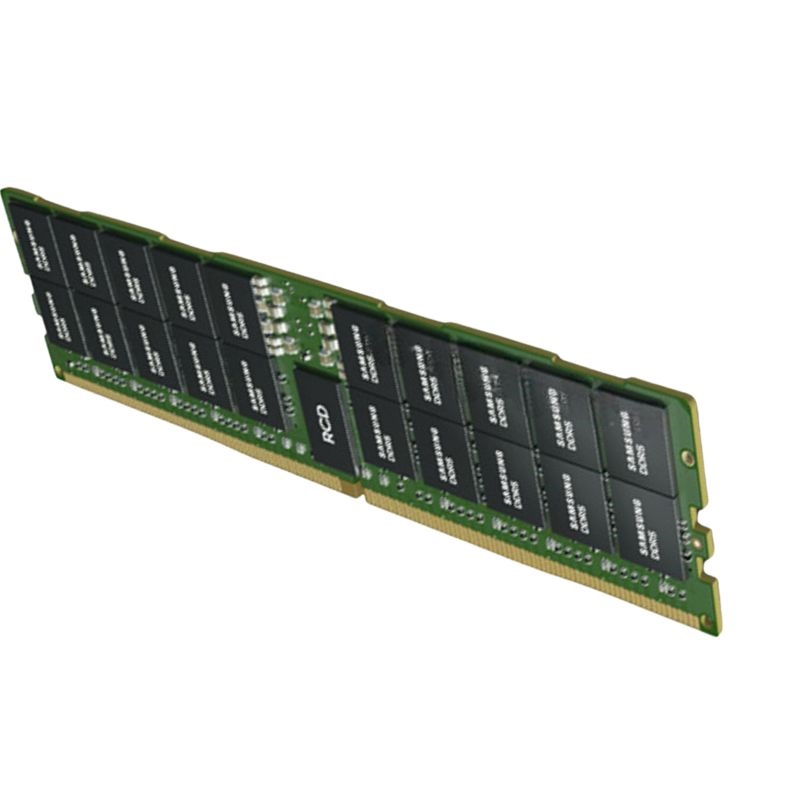
Samsung M321R4GA3EB0-CWM 32GB PC5-44800 2RX8 288P RDIMM ECC REG DDR5-5600MHz Memory Module. New (System) Pull with 1 Year Replacement Warranty
| SKU/MPN | Warranty | Price | Condition | You save |
|---|---|---|---|---|
| M321R4GA3EB0-CWM | 1 Year Warranty | $1,286.00 | New (System) Pull | You save: $450.10 (26%) |
| M321R4GA3EB0-CWM | 1 Year Warranty | $1,603.00 | New Sealed in Box (NIB) | You save: $561.05 (26%) |
The Samsung M321R4GA3EB0-CWM 32GB PC5-44800 RDIMM ECC Registered DDR5-5600MHz memory module is designed for enterprise-grade performance. With advanced error correction, registered architecture, and high bandwidth speeds, this module ensures reliable operation in data centers, workstations, and professional computing environments.
At the heart of modern data center performance and reliability lies server-grade memory. The Samsung M321R4GA3EB0-CWM represents a pinnacle of DDR5 technology engineered specifically for enterprise-grade servers and high-performance computing (HPC) environments. This 32GB DDR5 ECC Registered RDIMM module is not merely an upgrade; it is a foundational component designed to deliver unparalleled data integrity, speed, and efficiency for mission-critical workloads. Engineered with Samsung's cutting-edge semiconductor expertise, this module translates the theoretical advantages of the DDR5 standard into tangible benefits for system stability and throughput.
This memory module is a single 32GB stick, configured as 1x32GB, operating at a swift 5600 megabits per second (Mbps), classified under the PC5-44800 designation. Its architecture, a 2Rx8 (2 Rank by 8) ECC Registered RDIMM, is meticulously crafted for servers where error correction, signal integrity, and capacity scaling are non-negotiable. Operating at a low 1.1V with CAS Latency 46, it balances high-speed performance with improved power efficiency compared to previous DDR4 generations.
The transition from DDR4 to DDR5 is a significant leap in memory architecture, and the Samsung M321R4GA3EB0-CWM fully embodies this evolution. DDR5 introduces foundational changes that directly address the bottlenecks of modern data-intensive applications, from AI and machine learning to large-scale virtualization and real-time analytics.
DDR5 memory fundamentally restructures how data is handled and accessed. The Samsung module leverages these innovations to provide a robust platform for server advancement.
Unlike DDR4, which features a 72-bit channel (64 data + 8 ECC), DDR5 splits the module's data width into two independent 32-bit (40-bit with ECC) sub-channels. This Samsung 2Rx8 RDIMM utilizes this architecture to allow the memory controller to issue two separate 32-bit data accesses per channel simultaneously. This significantly improves concurrency and efficiency, reducing latency for certain operations and improving overall memory access patterns in multi-threaded server applications.
A cornerstone of DDR5 reliability is the inclusion of On-Die ECC. Within the Samsung memory chips themselves, a dedicated ECC engine corrects bit errors before they leave the die. This proactive correction handles minor internal errors caused by factors like electrical noise or cell leakage, maintaining data integrity at the very source. This is a complementary layer of protection working in concert with the module's primary ECC functionality.
A critical differentiator in DDR5 modules like the Samsung M321R4GA3EB0-CWM is the relocation of the power management integrated circuit (PMIC) from the motherboard to the memory module itself. This server-grade PMIC provides superior voltage regulation and power delivery directly to the DRAM components.
This design leads to cleaner, more stable power signals, which is crucial for maintaining signal integrity at high data rates of 5600 Mbps. It reduces electrical noise and improves the module's tolerance to voltage fluctuations, enhancing overall system stability. Furthermore, it simplifies motherboard design and allows for more granular power monitoring and management, contributing to better energy efficiency across the server rack.
The part number M321R4GA3EB0-CWM is a detailed blueprint of the module's capabilities. Understanding each segment provides insight into its exact role and compatibility within a server ecosystem.
M3: Denotes a DDR5 SDRAM module. 21: Indicates the module's density of 32GB (specific to Samsung coding). R4: Signifies the data width and type – in this case, a 72-bit wide, ECC Registered RDIMM. GA: Represents the component density and revision. 3: Indicates 8 banks per the DDR5 bank group architecture. EB0: Refers to the module's specific configuration and characteristics (voltage, organization). CWM: This is the speed bin and timing code, explicitly defining the 5600 Mbps speed at CL46 and other subtimings.
The module operates at a data rate of 5600 Megatransfers per second (MT/s), often referred to as 5600 Mbps. This translates to a peak bandwidth of approximately 44.8 GB/s per module (5600 MT/s * 64-bit / 8). The industry designation for this bandwidth is PC5-44800, where "PC5" indicates DDR5 and "44800" denotes the approximate bandwidth in MB/s. This high bandwidth is essential for feeding data-hungry CPUs in modern servers, reducing processing bottlenecks.
With a substantial 32GB capacity per module, servers can achieve high total memory capacities with fewer DIMM slots, aiding in cost-effective scalability. The "2Rx8" organization means the module is built with two ranks of memory, each rank being 8 bits wide per data line (using x8 DRAM chips). This 2-rank design offers a good balance of performance, capacity, and electrical loading on the memory channel, often enabling optimal speed and compatibility in multi-DIMM-per-channel configurations.
CAS Latency (CL) 46 denotes the number of clock cycles between a read command and the moment data is available. While higher than typical DDR4 CAS latencies in absolute terms, it is evaluated relative to the much faster clock speed of DDR5. The effective latency (in nanoseconds) is competitive and optimized for server workloads that benefit more from massive bandwidth and unwavering stability than from ultra-low absolute latency. The low operating voltage of 1.1V underscores DDR5's improved power efficiency, reducing the total power consumption of the server memory subsystem.
The "ECC Registered" in the module's description highlights its two most critical enterprise-oriented features, which are paramount for data center integrity.
ECC is a non-negotiable feature for server memory. It detects and corrects the most common types of data corruption, specifically single-bit errors, and detects double-bit errors. This happens in real-time, transparent to the operating system and applications, preventing silent data corruption that could lead to application crashes, computational errors, or system instability.
The Samsung module adds 8 extra bits for every 64-bit word (creating a 72-bit bus), which are used to store an error-correcting code. When data is written, a checksum is calculated and stored. Upon reading, the checksum is recalculated and compared. Any discrepancy triggers an automatic correction for a single-bit flip. This is essential for servers running 24/7 under heavy load, where even cosmic rays can induce memory errors.
The "Registered" or "RDIMM" (Registered Dual In-Line Memory Module) designation is crucial for capacity and stability. A registered module includes a register (or buffer) on the DIMM itself, placed between the memory controller and the DRAM chips.
By isolating the DRAM chips from the direct electrical load of the memory bus, Registered DIMMs provide superior signal stability, especially at higher speeds like 5600 Mbps. This makes the Samsung M321R4GA3EB0-CWM exceptionally reliable in fully populated memory configurations, ensuring consistent performance and system uptime even under maximum load.
The specific characteristics of the Samsung M321R4GA3EB0-CWM make it ideally suited for a range of demanding server applications where data accuracy and high throughput are critical.
Hypervisors running dozens of virtual machines require large pools of reliable, high-bandwidth memory. The 32GB capacity per module allows for dense VM consolidation, while ECC ensures the integrity of data across all guest operating systems. The Registered design guarantees stability in servers fully populated with memory, which is standard in cloud and virtualization hosts.
Platforms like SAP HANA, Oracle Database In-Memory, or real-time analytics engines store massive datasets in RAM for instant access. The high bandwidth (44.8 GB/s per module) of this Samsung DDR5 memory dramatically accelerates data fetching and processing, reducing query times. ECC is absolutely vital here, as a single uncorrected memory error could corrupt a database index or analytical calculation, leading to severely flawed business insights.
Scientific simulations, financial modeling, and machine learning training involve massive, parallel computations. These workloads are often memory-bandwidth-bound. The DDR5 architecture, with its dual sub-channels and high data rate, feeds data to server CPUs (like Intel Xeon Scalable or AMD EPYC processors) more efficiently, reducing idle compute cycles. The large capacity per module also enables researchers to work with larger datasets entirely within system memory.
Enterprise Resource Planning (ERP) systems and online transaction processing (OLTP) databases form the operational backbone of large corporations. These applications demand 24/7 uptime and flawless data integrity. The combination of ECC for error-free operation and the Registered RDIMM design for rock-solid stability makes this memory module a trusted component for such environments, ensuring business continuity and transactional accuracy.
Implementing the Samsung M321R4GA3EB0-CWM requires careful attention to system compatibility to harness its full potential.
This DDR5 ECC Registered RDIMM is designed for servers based on Intel Xeon Scalable Processors (Sapphire Rapids, Emerald Rapids, and later generations) and AMD EPYC 9004 Series (Genoa) and 8004 Series (Siena) platforms, and their successors. These server platforms explicitly support DDR5 memory with ECC and Registered features. It is not compatible with consumer desktops (which use Unbuffered DIMMs) or older DDR4-based servers.


 Contact Us
 Information
 Catalog
 Solid State Drives (SSD)
 Network Switches
 Hard Disk Drives
 HBA & Controllers
 PC & Servers
 PC & Server Memory
 CPU & Processors
 Network Routers
 Power Supplies
 Tape Drives & Libraries
 Network Devices
 Computer & Network Cables