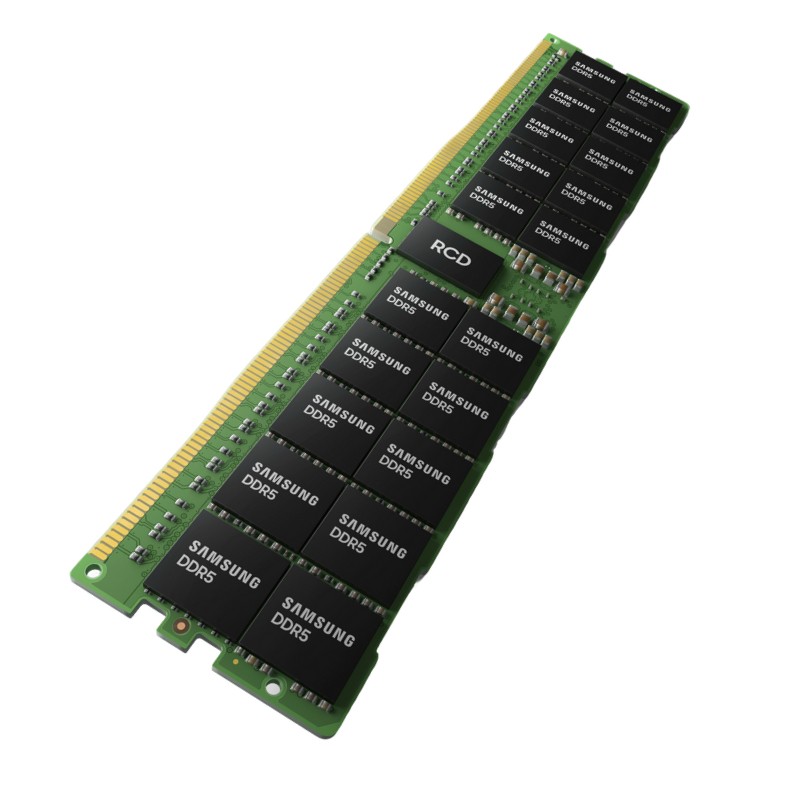
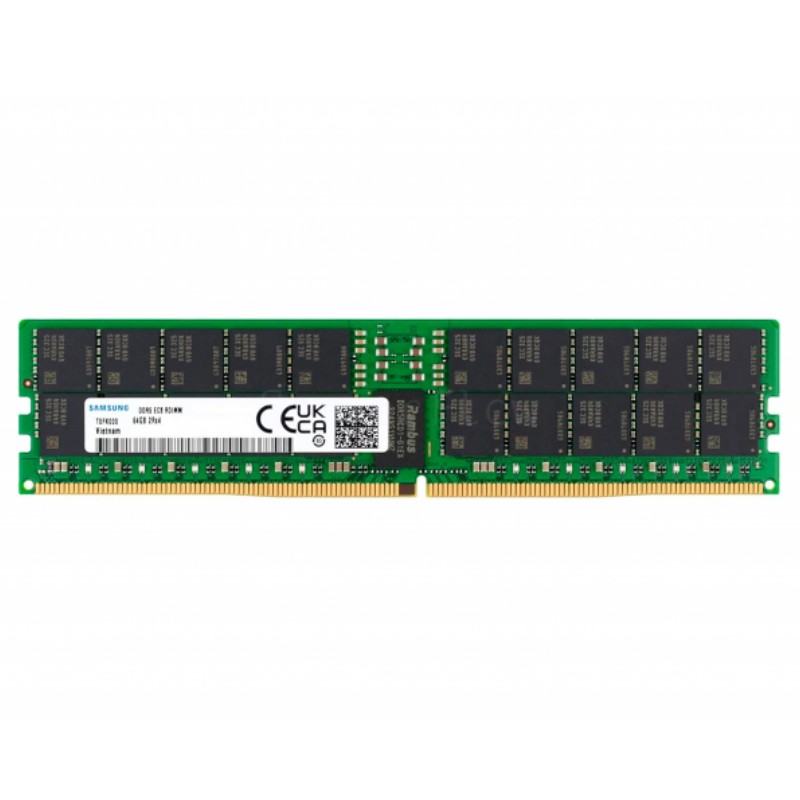
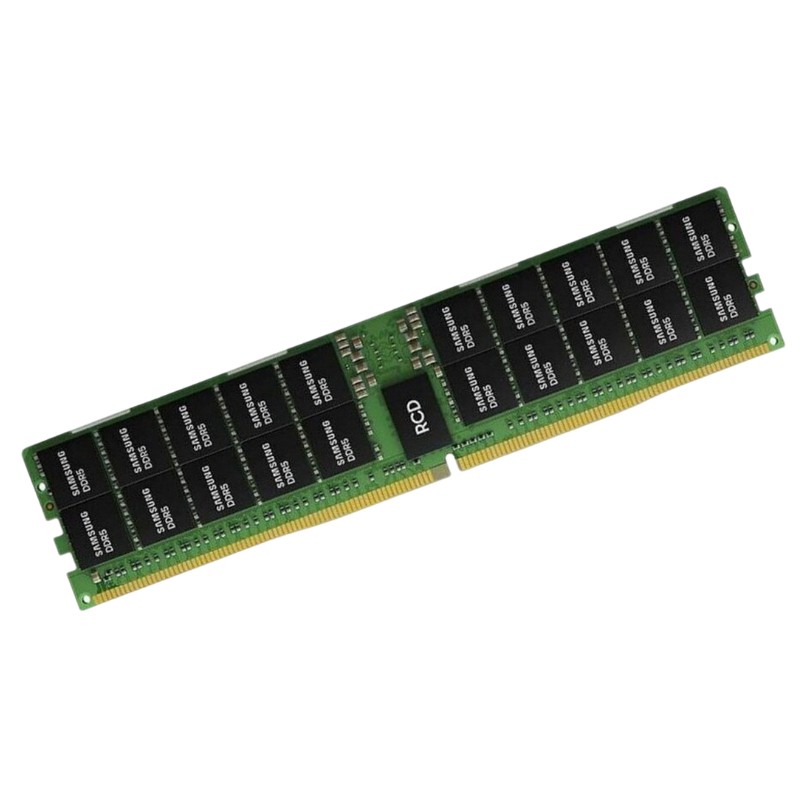
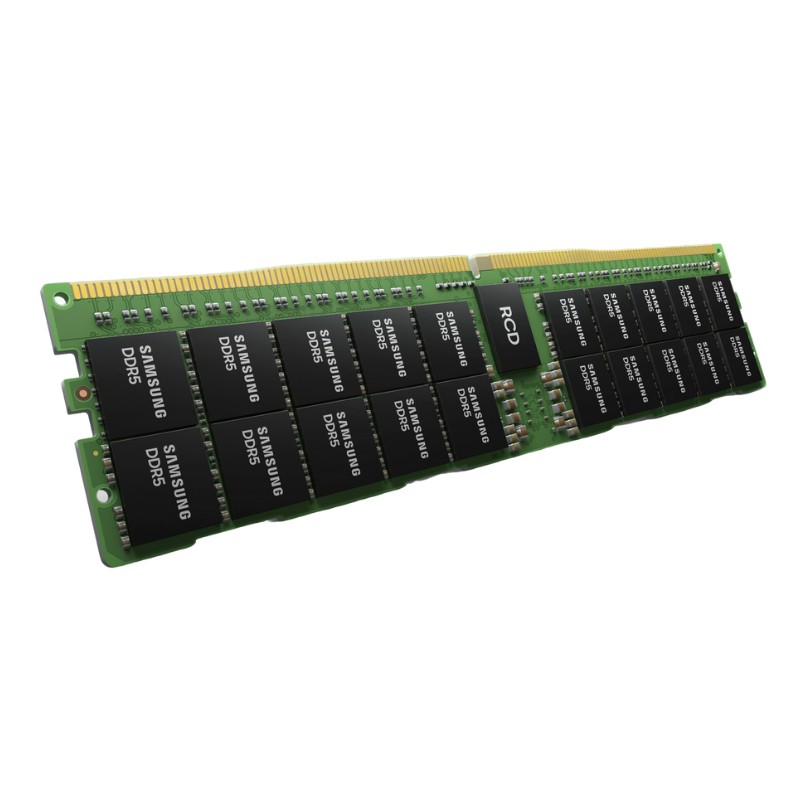
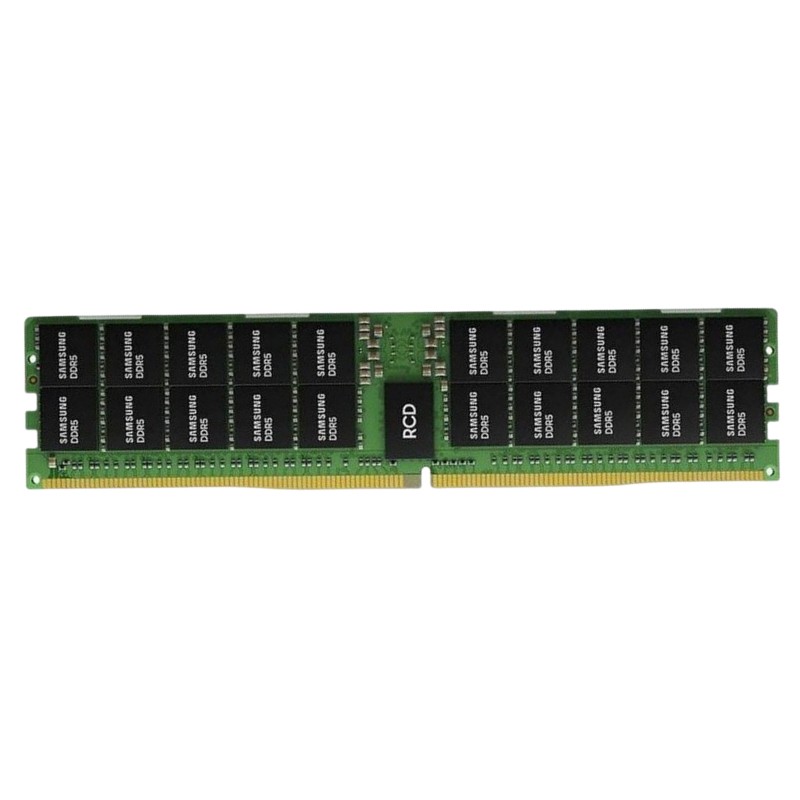
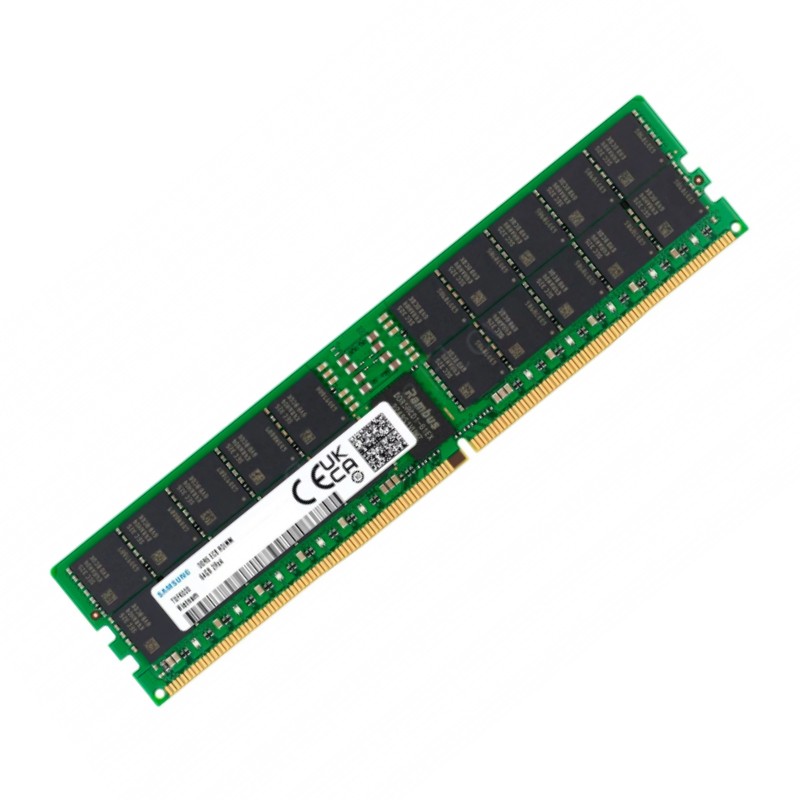
Samsung M321R8GA0EB2-CCPWF DDR5 6400MBPS Pc5-51200 288-pin RDIMM 64GB RAM
- — Free Ground Shipping
- — Min. 6-month Replacement Warranty
- — Genuine/Authentic Products
- — Easy Return and Exchange
- — Different Payment Methods
- — Best Price
- — We Guarantee Price Matching
- — Tax-Exempt Facilities
- — 24/7 Live Chat, Phone Support
- — Visa, MasterCard, Discover, and Amex
- — JCB, Diners Club, UnionPay
- — PayPal, ACH/Bank Transfer (11% Off)
- — Apple Pay, Amazon Pay, Google Pay
- — Buy Now, Pay Later - Affirm, Afterpay
- — GOV/EDU/Institutions PO's Accepted
- — Invoices
- — Deliver Anywhere
- — Express Delivery in the USA and Worldwide
- — Ship to -APO -FPO
- — For USA - Free Ground Shipping
- — Worldwide - from $30
Product Overview of Samsung M321R8GA0EB2-CCPWF DDR5 Server Memory
Engineered for high-performance computing environments, this server memory module delivers exceptional bandwidth and unwavering reliability for demanding data center applications.
Comprehensive Product Details
Manufacturer and Model Identification
- Brand: Samsung
- Manufacturer Part Number: M321R8GA0EB2-CCPWF
- Product Description: 64GB DDR5 Synchronous Dynamic Random-Access Memory component
Performance and Technical Attributes
Speed and Data Transfer Capabilities
- Total Capacity: 64 Gigabytes (single module)
- Memory Generation: Cutting-edge DDR5 SDRAM technology
- Data Rate: Operates at 6400 Megatransfers per second (MT/s)
- Peak Bandwidth: Classified under PC5-51200 specification
Advanced Memory Features
Data Integrity and Signal Management
- Error Correction: Incorporates ECC (Error Correcting Code) for enhanced data accuracy
- Signal Buffering: Registered (RDIMM) design for improved signal integrity in large-scale systems
Timing and Internal Configuration
- CAS Latency: Configured at CL52 timing
- Operating Voltage: Efficient 1.1-volt operation
- Rank Organization: Features a 2Rx4 (2 Rank, x4) architecture
Physical Construction and Dimensions
Form Factor and Connector Design
- Module Type: 288-pin RDIMM form factor
- Physical Profile: Standard height server module design
Samsung 64GB DDR5 6400MT/s RDIMM Memory Modules
Samsung M321R8GA0EB2-CCPWF 64GB DDR5 6400MT/s PC5-51200 2Rx4 ECC Registered 1.1V CL52 SDRAM 288-pin RDIMM memory modules represent a high-performance, enterprise-grade class of server memory engineered for modern data center workloads, virtualization, AI inference nodes, high-frequency trading platforms, and mission-critical enterprise servers. These modules combine the generational improvements of DDR5 with Samsung’s manufacturing rigor, delivering higher throughput, improved power efficiency, and advanced error correction that together raise reliability and predictable performance for sustained, heavy workloads.
Technical Specification
At the heart of this category is DDR5 technology operating at 6400 megatransfers per second (MT/s), standardized as PC5-51200. The M321R8GA0EB2-CCPWF 64GB density per DIMM is implemented in a 2Rx4 configuration, meaning dual-rank organization with x4 device topology. The modules are ECC Registered (RDIMM), offering on-module register buffering and on-the-fly error-correcting code for single-bit correction and multi-bit detection, essential for server-grade data integrity. The operating voltage of 1.1 volts reflects DDR5’s power-optimized design over DDR4, allowing higher frequencies with lower per-bit power draw. Timings such as CAS Latency CL52 are tuned for this speed grade, and the 288-pin mechanical interface ensures compatibility with contemporary server DDR5 memory slots designed for RDIMMs.
DDR5 Architecture Advantages
DDR5 brings multiple architecture-level improvements over prior generations that directly benefit this category. The modules leverage improved bank group structures and doubled burst lengths, enabling more efficient data transfer patterns. On-die ECC, integrated power management, and internal voltage regulation features contribute to more resilient signaling and better power distribution at the DIMM level. The move to higher prefetch and transfer rates reduces latency of large-block transfers in real-world server workloads, improving application-level throughput for database transactions, large-scale in-memory caches, and analytics pipelines.
Why 64GB Density Matters for Modern Servers
High-density M321R8GA0EB2-CCPWF 64GB RDIMMs allow servers to scale memory capacity without occupying all memory channels with lower-capacity DIMMs. This density is particularly valuable for multi-socket platforms and for systems where memory footprint per VM or per container is large. Cloud providers and enterprises deploying memory-hungry applications such as in-memory databases, large-scale caching layers, and data processing nodes will prefer 64GB modules because they strike a balance between capacity, cost-per-gigabyte, and DIMM slot utilization. By enabling higher total memory per server, these RDIMMs support higher consolidation ratios and reduce the need for extra server nodes solely to satisfy memory requirements.
ECC Registered: Reliability and Predictability
Registered ECC RDIMMs in this category add two critical elements for enterprise deployment: registration (buffered command/address signals) and ECC (error-correcting code). Registered buffering reduces electrical loading on memory controllers, permitting more DIMMs per channel and improving signal integrity at high speeds. ECC provides automated detection and correction of single-bit memory errors and detection of multi-bit errors, preventing silent data corruption. Together, these traits translate to higher uptime, safer data handling for long-running computations, and conformance to regulatory or industry standards that mandate data integrity for financial, scientific, and healthcare workloads.
Performance Characteristics: Throughput, Latency, and Real-World Impact
Running at 6400MT/s, these modules offer significant bandwidth improvements over previous DDR generations. The sustained throughput advantages are especially noticeable in memory-bound workloads such as large-scale vectorized computations, AI inference pipelines, and memory-resident databases. While CAS latency numbers like CL52 indicate the column access timing at this speed grade, the overall impact is a tradeoff between raw transfer rate and latency; in practice, the higher bandwidth more than compensates for CAS timing in throughput-centric enterprise applications. System architects should account for memory frequency scaling with CPU memory controllers and the overall channel topology to maximize real-world gains.
Power Efficiency and Thermal Considerations
DDR5’s lower nominal voltage of 1.1V reduces power draw per module relative to some DDR4 variants, though higher frequencies and increased density can raise absolute power per DIMM. Samsung’s modules are manufactured with efficiency-minded designs and thermal profiles suitable for rack-mounted servers. Nevertheless, thermal management remains important: properly designed airflow, heat spreaders where applicable, and system-level thermal monitoring help maintain signal integrity and sustained performance under prolonged heavy workloads. For densely populated memory configurations, chassis design and fans must be evaluated to prevent thermal throttling and to preserve MTBF (mean time between failures).
Compatibility and Server Platform Support
These RDIMMs target modern server platforms that support DDR5 Registered DIMMs and have BIOS/UEFI firmware certified for PC5-51200 profiles. Compatibility matrices commonly include leading enterprise CPUs and server chipsets from major vendors; systems intended to run these modules should be validated against the server vendor’s Qualified Vendor List (QVL) to ensure approved operating frequencies, ranks per channel, and total capacity per channel. Memory population rules, which dictate where DIMMs should be placed for optimal channel interleaving and bandwidth, must be followed to achieve the advertised performance levels. Systems that do not support DDR5 RDIMM or that expect UDIMMs will be incompatible.

BIOS, Firmware, and System Tuning
To exploit peak performance and maintain stability, firmware updates and the latest BIOS microcode are recommended. Many server vendors release memory compatibility and optimization patches that enable memory scaling to higher transfer rates and correct for platform-specific quirks. Memory training routines during POST (Power-On Self-Test) help identify stable timing combinations. Advanced systems may provide options for manual tuning of XMP-like profiles, though enterprises typically rely on vendor-validated configurations for stability and supportability. When deploying in clustered environments, consistency of DIMM firmware and part numbers across nodes simplifies troubleshooting and performance predictability.
Use Cases and Workload Suitability
The Samsung M321R8GA0EB2-CCPWF 64GB DDR5 RDIMMs excel in scenarios where memory capacity and bandwidth drive application scalability. Use cases include virtualization hosts running dozens of memory-heavy virtual machines, in-memory caching systems requiring large hot datasets, high-performance computing nodes processing large scientific datasets, AI inference servers that host large models in memory for low-latency inference, and analytics clusters executing complex queries on large in-memory tables. Financial services benefit from low-latency, high-throughput memory to expedite market data handling and risk analytics. Enterprises that consolidate workloads to fewer, larger servers will find the 64GB density an enabler for cost and space efficiency.
Enterprise Storage and Database Acceleration
When used alongside NVMe flash tiers and persistent memory technologies, high-speed DDR5 RDIMMs act as the fastest working set layer. Databases employing aggressive caching strategies or in-memory column stores rely on fast, large memory capacities to reduce I/O pressure on storage. For write-intensive transactional systems, ECC protection mitigates the risk of data corruption in memory buffers prior to commit. Properly tuned database buffers and memory allocation strategies will amplify the performance gains offered by high-bandwidth RDIMMs.
Scalability Planning and Future-Proofing
Choosing DDR5 RDIMMs positions data centers for future workloads that trend toward larger in-memory datasets, more AI workloads, and denser virtualization. The PC5-51200 speed grade and 64GB density provide headroom as software becomes more memory-intensive. Organizations planning multi-year refresh cycles will benefit from specifying memory that matches expected software trajectories while ensuring backward-compatible deployment strategies in heterogeneous server fleets. Proper inventory management and spare part strategy are critical to maintain uptime during replacement and expansion.
Interoperation with Heterogeneous Memory Ecosystems
While high-density Samsung M321R8GA0EB2-CCPWF RDIMMs bring clear advantages, they must be considered as part of the broader memory ecosystem within a rack or cluster. Mixing ranks, densities, or speed grades across channels can lead to suboptimal operation or downclocking to the lowest common denominator. Standardizing parts across nodes helps simplify qualification and reduces unpredictable behavior. For mixed fleets, mapping which nodes can accept DDR5 RDIMMs and which require DDR4 or different form factors is a crucial step during procurement and migration planning.
Security Considerations: Data Integrity and ECC
Memory security is an often-overlooked aspect of system security posture. ECC RDIMMs enhance integrity by preventing certain classes of transient faults from corrupting data, which is particularly important in environments handling sensitive information. While ECC cannot substitute for encryption at rest or in transit, it reduces the risk of silent data corruption that could undermine cryptographic keys, transactional logs, or analytics results. Memory scrubbing features, often supported in server firmware, periodically scan memory to identify and correct latent errors proactively, further strengthening reliability.
Best Practices for Deployment
Deploying these modules successfully requires adherence to established best practices. Always power down systems per vendor recommendations before inserting or removing RDIMMs. Follow memory population order specified by the server vendor to maintain optimal channel balance. Maintain firmware updates for both server platform and management controllers. Keep spare modules from the same production batch when possible to reduce variation. Implement proactive monitoring and alerting for ECC events, as rising correctable ECC counts can indicate degrading memory or system issues that benefit from early intervention.
Environmental and Lifecycle Factors
Memory modules have finite lifecycles that are influenced by usage patterns, thermal conditions, and exposure to electrical stress. Keeping environmental controls within recommended temperature and humidity ranges helps prolong module life. End-of-life planning includes secure disposal or recycling of DDR modules in accordance with environmental regulations and corporate sustainability goals. For organizations pursuing green IT initiatives, selecting energy-efficient components such as DDR5 modules with lower operating voltage contributes to aggregate power reductions across data center fleets.
Migration Pathways from DDR4 to DDR5
Upgrading existing infrastructure from DDR4 to DDR5 requires platform-level changes because DDR4 and DDR5 are not backward-compatible. Migration planning includes selecting servers or motherboards that support DDR5 RDIMMs, validating operating systems and hypervisors for compatibility, and scheduling maintenance windows for large-scale rollouts. Phased migration strategies that co-exist with legacy DDR4 nodes often help maintain service continuity while allowing application owners to validate performance and stability before full migration.