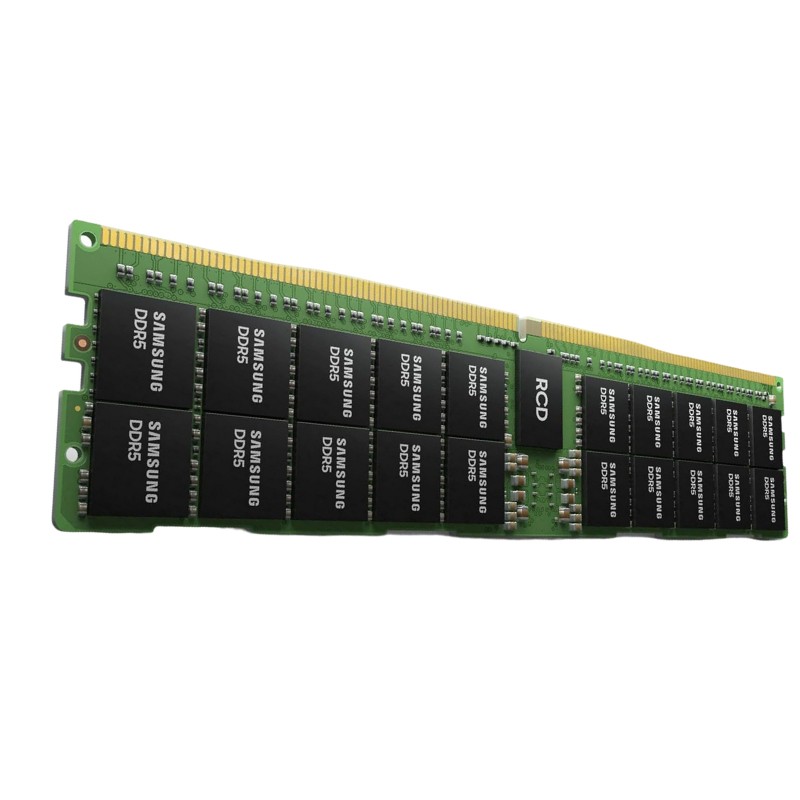
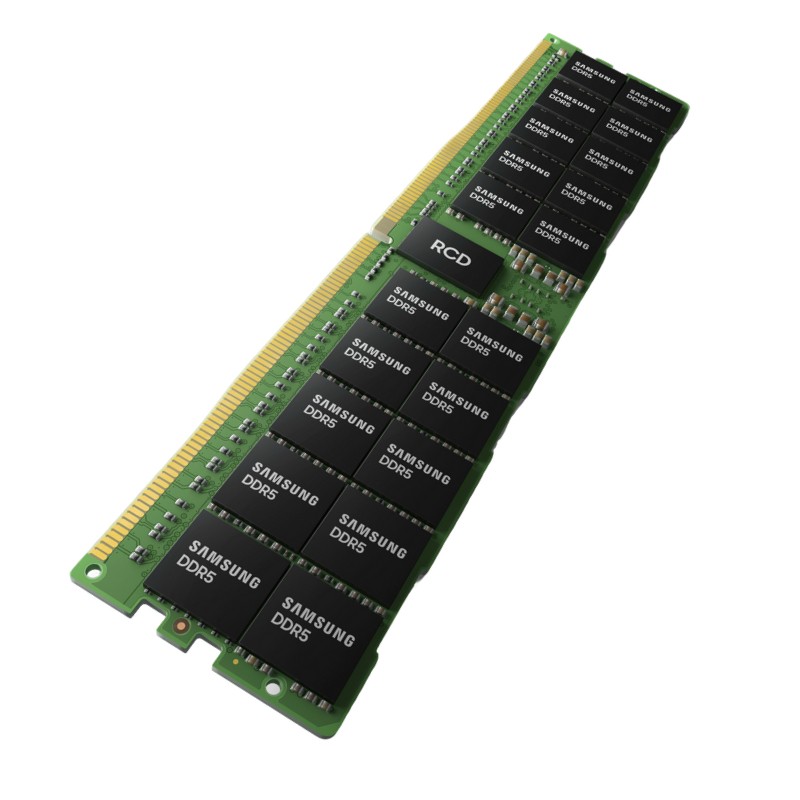
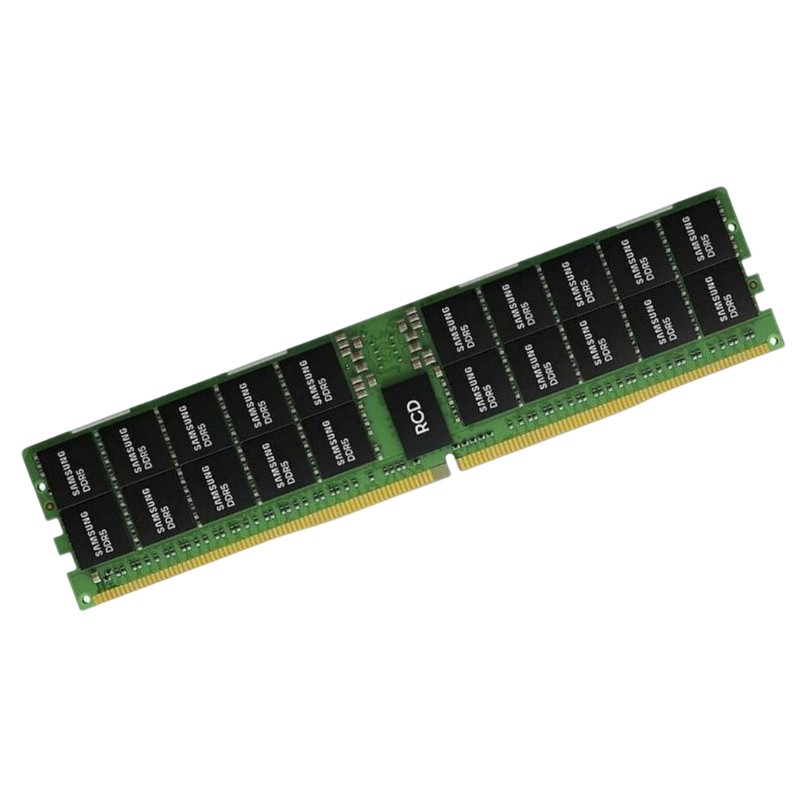
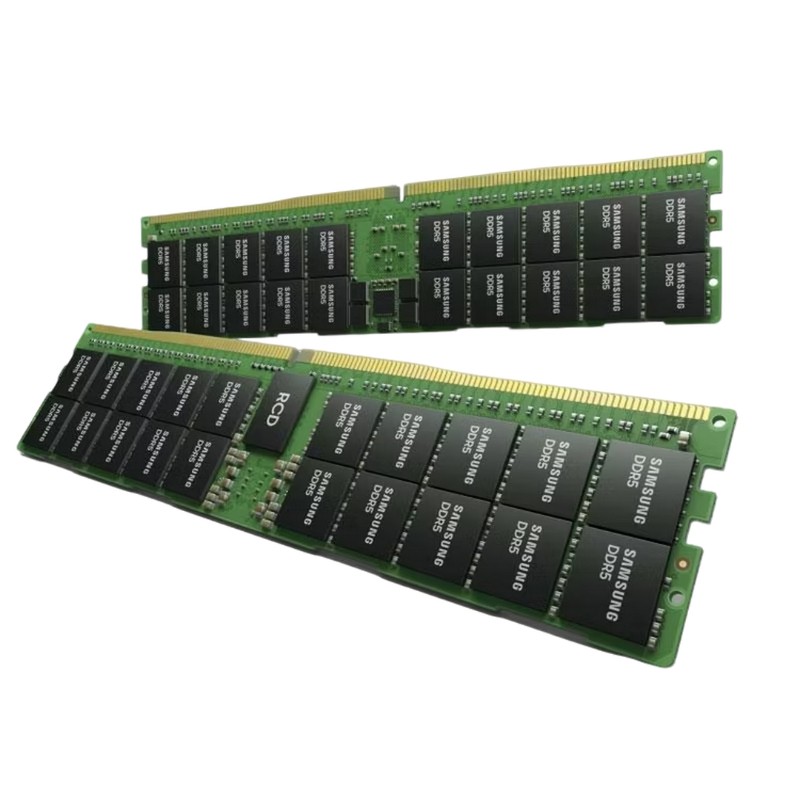
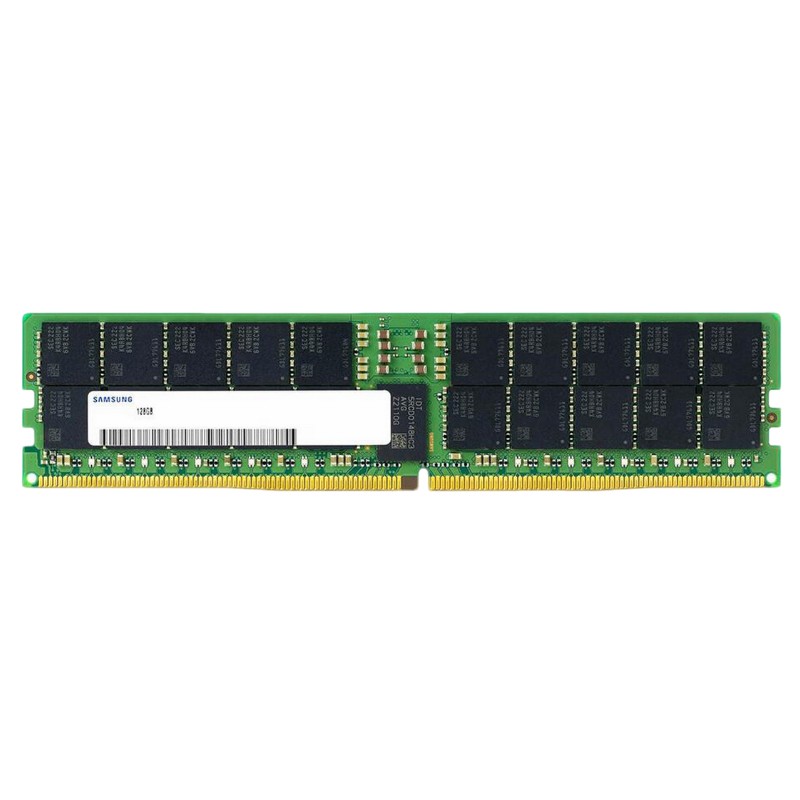
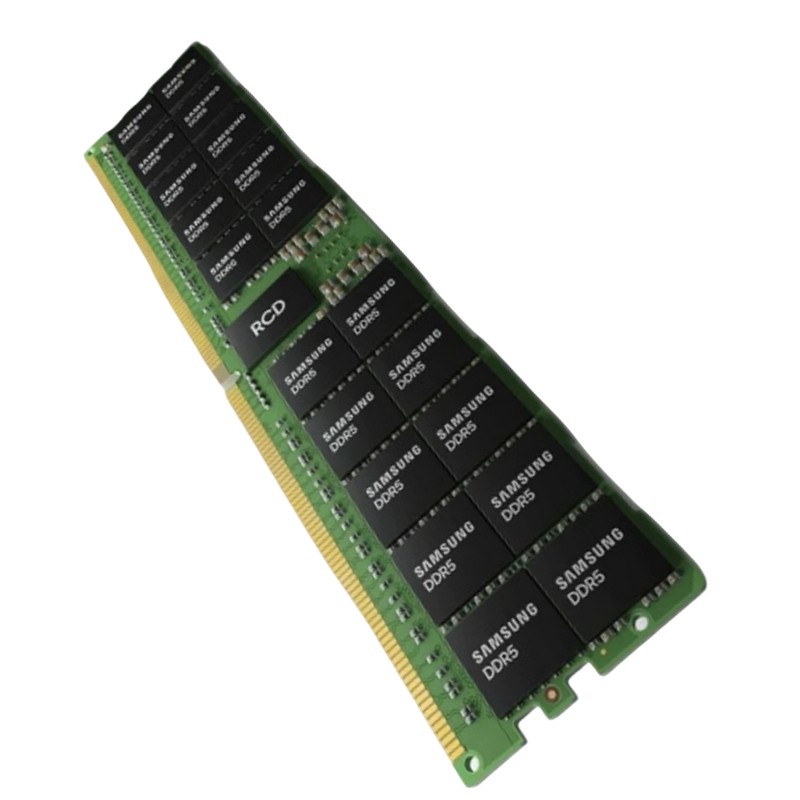
M321RAJA0MB2-CCPEF Samsung DDR5 6400MBPS Pc5-51200 RAM
- — Free Ground Shipping
- — Min. 6-month Replacement Warranty
- — Genuine/Authentic Products
- — Easy Return and Exchange
- — Different Payment Methods
- — Best Price
- — We Guarantee Price Matching
- — Tax-Exempt Facilities
- — 24/7 Live Chat, Phone Support
- — Visa, MasterCard, Discover, and Amex
- — JCB, Diners Club, UnionPay
- — PayPal, ACH/Bank Transfer (11% Off)
- — Apple Pay, Amazon Pay, Google Pay
- — Buy Now, Pay Later - Affirm, Afterpay
- — GOV/EDU/Institutions PO's Accepted
- — Invoices
- — Deliver Anywhere
- — Express Delivery in the USA and Worldwide
- — Ship to -APO -FPO
- — For USA - Free Ground Shipping
- — Worldwide - from $30
Product Overview of Samsung M321RAJA0MB2-CCPEF DDR5 Server Memory
This high-performance server memory module is engineered for demanding computational environments, delivering exceptional bandwidth and unwavering data reliability.
Key Specifications
- Manufacturer: Samsung
- Part Number: M321RAJA0MB2-CCPEF
- Product Type: 128GB DDR5 SDRAM Memory Module
Comprehensive Product Details
- The module is identified by the manufacturer part number M321RAJA0MB2-CCPEF. It represents a single, powerful 128GB memory component designed for next-generation server platforms.
Advanced Memory Architecture
Capacity and Configuration
- Total Capacity: 128 Gigabytes (GB)
- Module Composition: One individual 128GB module
- Memory Generation: Cutting-edge DDR5 SDRAM technology
Performance and Speed Profile
Data Transfer Rates
- Operating Speed: 6400 Megatransfers per second (MT/s)
- Peak Bandwidth: Classified under the PC5-51200 specification
- Latency Timing: Operates at a CAS Latency of CL40
Critical Reliability Features
This component is built for mission-critical systems where data accuracy is non-negotiable.
- Error Correction Code (ECC): Detects and corrects single-bit data errors in real-time.
- Registered Design (RDIMM): Incorporates a register to buffer signals, enhancing signal integrity and stability in systems with large memory capacities.
- Dual Rank Configuration: Effectively doubles the number of memory banks, optimizing performance and allowing the memory controller to handle more data simultaneously.
Physical Design and Form Factor
Module Dimensions and Interface
- Module Type: 288-pin RDIMM (Registered Dual In-Line Memory Module)
- Operating Voltage: Efficient 1.1V operation
- Physical Profile: Standard form factor with a height of 1.00 inch and a depth of 6.75 inches.
Samsung M321RAJA0MB2-CCPEF 128GB Memory Module
Samsung M321RAJA0MB2-CCPEF 128GB DDR5 6400MBPS PC5-51200 Dual Rank ECC Registered 1.1V CL40 SDRAM 288-pin RDIMM Memory Module represents a modern, high-density memory solution engineered for enterprise servers, data centers, and high-performance workstations. This memory module combines the high bandwidth of DDR5-6400 with error-correcting code (ECC) and registered buffering to deliver both speed and reliability required for mission-critical systems. The module’s 128GB capacity and dual-rank organization make it a compelling choice for dense memory configurations where scalability and data integrity are paramount.
Performance Characteristics and Bandwidth
Operating at DDR5-6400 (PC5-51200), this Samsung RDIMM delivers theoretical peak bandwidth up to 51.2GB/s per module in single-channel terms, enabling faster data movement across memory-intensive workloads. The CL40 timing is tuned to balance latency and throughput for server-class applications. Paired with modern CPUs that support DDR5 speeds and advanced memory controllers, the M321RAJA0MB2-CCPEF module helps reduce bottlenecks in database queries, virtualization platforms, in-memory analytics, and HPC workloads.
Latency, Clocking, and Voltage Considerations
With a CAS latency of CL40 and an operating voltage of 1.1V, the memory module adheres to DDR5 specifications that emphasize improved energy efficiency over previous generations. Lower core voltage reduces power draw and heat generation across large memory arrays, which is especially beneficial in rack-scale deployments. While CL40 represents higher absolute latency numbers than low-latency desktop DDR5, its real-world impact is offset by the significant increase in bandwidth and parallelism available in modern server architectures.
Reliability: ECC and Registered (RDIMM) Benefits
This module’s ECC Registered design is engineered for environments where data integrity cannot be compromised. ECC corrects single-bit errors and detects multi-bit errors, significantly reducing the risk of silent data corruption. The registered (buffered) nature stabilizes signaling across multiple DIMMs per channel, enabling larger memory populations and better electrical integrity on the memory bus. These features combined make the module ideal for database servers, virtualization hosts, and financial systems where uptime and correctness are critical.
Dual Rank Architecture and Capacity Scaling
Dual rank modules present two sets of memory chips that the memory controller can address independently. For administrators planning memory expansions, dual rank design often yields higher effective density per channel and can improve sustained throughput under certain workloads due to interleaving benefits. The 128GB capacity per DIMM allows systems to reach very high total memory capacities with fewer slots occupied—useful in servers where spare DIMM slots may be limited.
Compatibility and System Integration
Compatibility with server platforms is essential. The M321RAJA0MB2-CCPEF conforms to standard 288-pin RDIMM mechanical specifications and follows JEDEC DDR5 signaling and timing standards. Integrators should verify motherboard and BIOS support for DDR5 RDIMM modules and consult vendor compatibility lists when deploying at scale. Many contemporary server platforms from major OEMs such as Dell, HPE, Lenovo, and select server-class motherboards provide explicit support for DDR5 RDIMM modules and high-density configurations, but firmware updates may be required for optimal stability and performance.
Thermal and Power Management In Dense Deployments
In high-density memory configurations, thermal management and power distribution must be assessed. Although DDR5 improves power efficiency relative to previous generations, 128GB modules in large arrays still contribute to overall system heat and power draw. Data center operators should account for module thermal behavior within the server thermal envelope, ensuring adequate airflow, appropriate fan curves, and power provisioning. Monitoring tools integrated into server management ecosystems can help track DIMM temperatures and voltages, enabling proactive mitigation if thermal thresholds are approached.
Use Cases and Workload Suitability
The M321RAJA0MB2-CCPEF Samsung 128GB DDR5 RDIMM is purpose-built for enterprise workloads that demand both large memory capacity and high sustained bandwidth. Typical use cases include virtual machine consolidation, large in-memory databases, analytics engines, real-time data processing, and scientific simulations. The module is equally well-suited to high-performance workstation configurations tasked with large-scale media rendering, complex simulations, and engineering workloads where application performance scales with available memory throughput and capacity.
Deployment Scenarios for Cloud and On-Premise Infrastructure
For cloud service providers and private cloud operators, memory density and reliability translate directly to cost efficiency and service stability. By deploying high-capacity RDIMMs, operators can host more VMs per physical server or run more memory-heavy containers while preserving performance SLAs. On-premises enterprises running private data platforms or latency-sensitive applications benefit from the module’s ECC protection and registered buffering—especially when data integrity and predictable performance are business requirements.
Testing, Burn-In, and Validation Best Practices
Before large-scale rollouts, it is advisable to perform systematic validation and burn-in testing using vendor-recommended diagnostics. Memory stress tests, ECC validation tools, and platform-specific memory training exercises can identify marginal modules or platform incompatibilities. Scheduling maintenance windows to run extensive testing reduces the risk of in-field failures and can uncover BIOS tuning parameters that improve stability or enable supported higher-speed modes on certified platforms.
Security Implications and Data Integrity
Memory modules play a role in broader data security postures. ECC Registered modules reduce the risk of data corruption, a type of integrity failure that can have security implications if corrupted data leads to incorrect decision-making or exposes vulnerabilities. Additionally, when exchanging or repurposing server hardware, administrators should follow secure decommissioning procedures to avoid inadvertent data leakage—DDR DIMM contents may persist temporarily after power loss, and secure erase strategies for memory are part of thorough retirement workflows.
Comparative Advantages Versus Alternative Memory Options
Compared to unbuffered ECC or non-ECC memory, RDIMM ECC modules provide stronger electrical stability and error correction capabilities, which are essential for enterprise reliability. Versus LRDIMM alternatives, RDIMM modules typically offer lower latency but may have different trade-offs in maximum supported density per channel depending on platform support. Choice between RDIMM and LRDIMM depends on platform compatibility, required capacity, and latency considerations—system architects should consult vendor guidance to determine the optimal DIMM type for their use case.
High-Performance DDR5 Architecture
The M321RAJA0MB2-CCPEF Samsung DDR5 memory modules provide groundbreaking performance enhancements. The 6400MBPS data transfer rate allows seamless handling of intensive workloads, supporting faster data processing and reduced latency in complex computing operations. DDR5 technology introduces advanced features, including Decision Feedback Equalization (DFE) and on-die ECC, which further optimize signal integrity and module reliability, making it an ideal solution for enterprises with demanding memory requirements.
DDR5 vs DDR4 Memory Advancements
Compared to DDR4 modules, DDR5 offers nearly double the bandwidth and significantly higher memory density. The 6400MBPS Pc5-51200 specification ensures rapid data access, which is critical for virtualization, AI applications, and real-time analytics. DDR5 also reduces operating voltage to 1.1V from DDR4’s 1.2V, enhancing energy efficiency while maintaining high-performance operation under continuous heavy loads.
Enhanced Signal Integrity and Stability
Samsung RDIMM modules employ advanced on-die ECC to correct minor memory errors internally, which minimizes system crashes and data corruption. Registered DIMMs buffer command and address signals, improving signal stability across multiple memory modules. This feature is particularly important for servers requiring large memory capacities, where unbuffered memory modules may struggle with electrical loading and signal degradation.
Optimized for Enterprise Workloads
The M321RAJA0MB2-CCPEF module is optimized for enterprise-grade workloads, including database management, virtualization, cloud infrastructure, and high-performance computing (HPC). With its 128GB capacity and high-speed DDR5 interface, it allows large-scale memory-intensive applications to run efficiently without bottlenecks, enabling organizations to achieve greater computational throughput and faster processing times.
Energy-Efficient Memory Module
Operating at a low voltage of 1.1V, this RDIMM module significantly reduces power consumption compared to its DDR4 predecessors. Reduced power draw translates into lower operational costs and improved thermal performance, which is crucial for data center environments. Coupled with Samsung’s proprietary low-latency architecture, energy efficiency does not come at the expense of performance, ensuring optimal server operation even under full load.