(7% discount is applied at checkout)
Cart is empty
Your go-to destination for cutting-edge server products
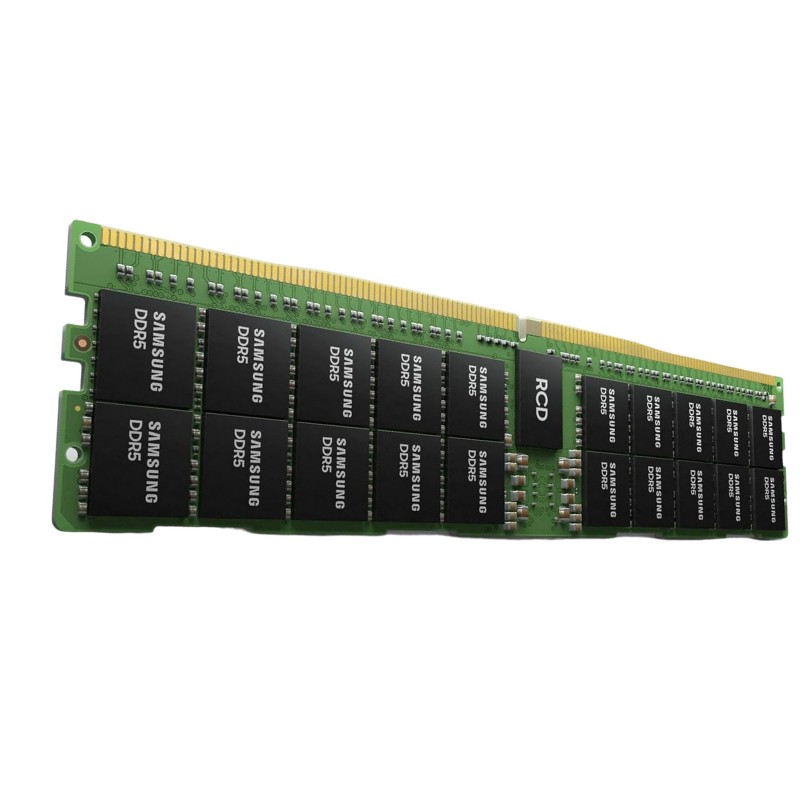


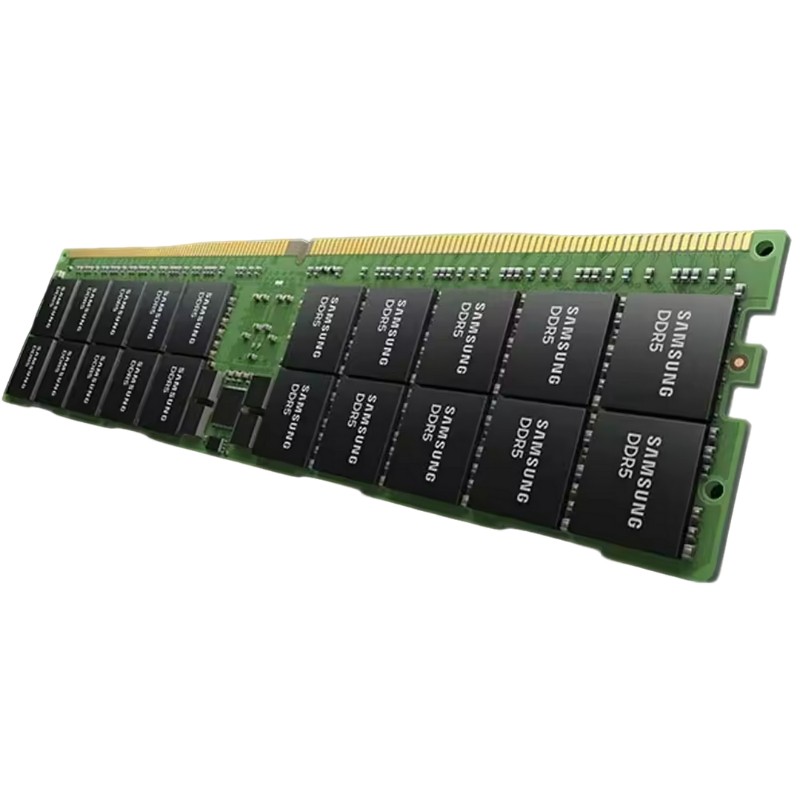
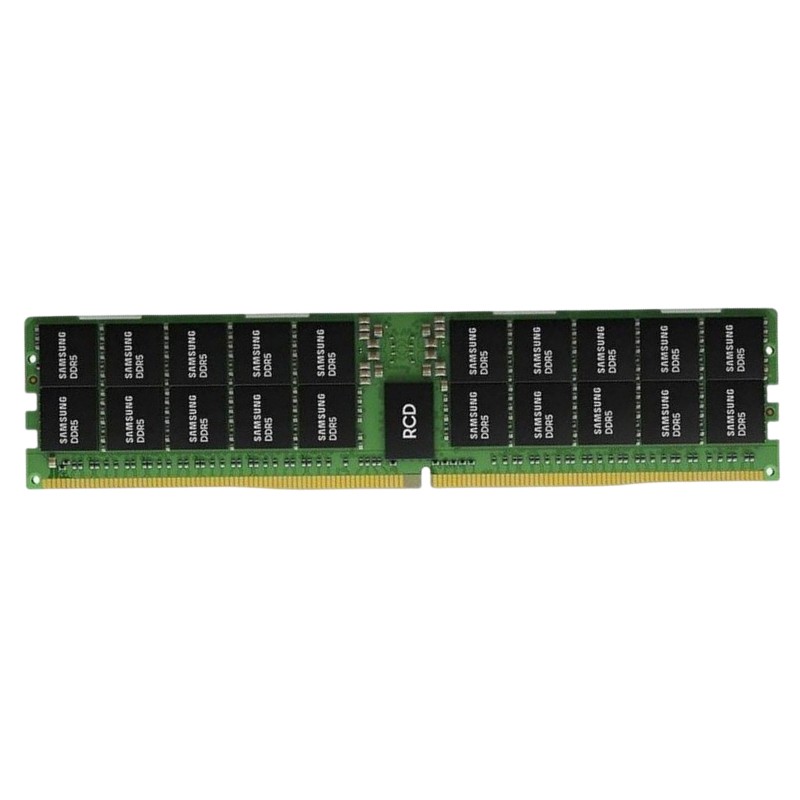
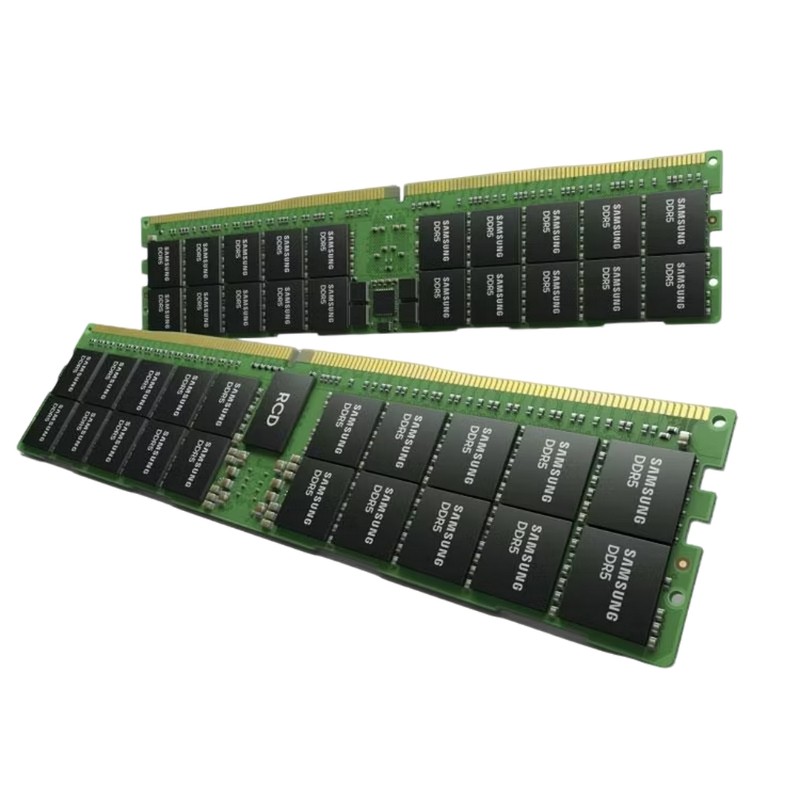
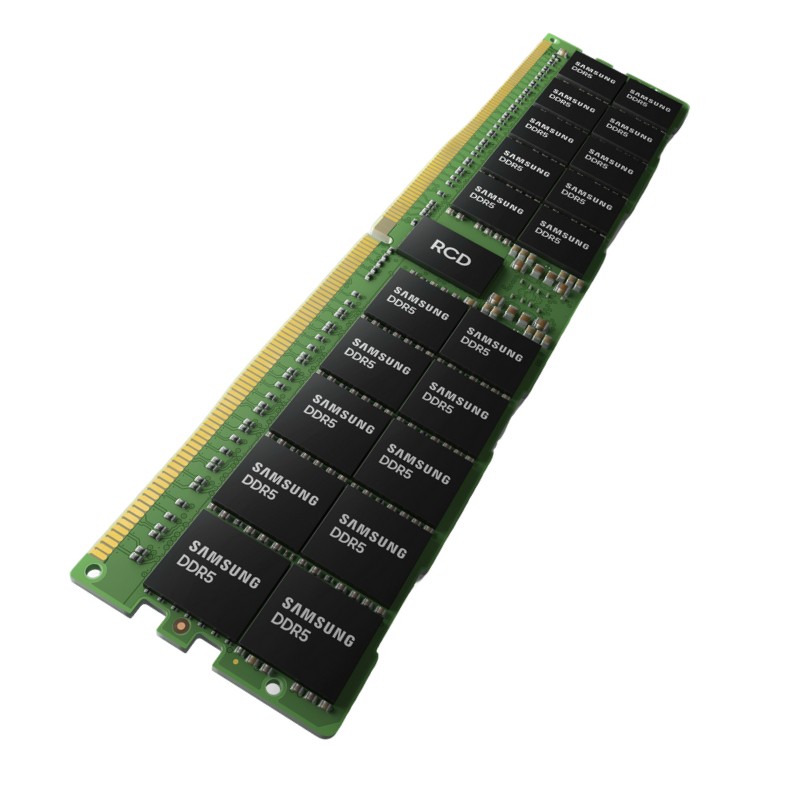
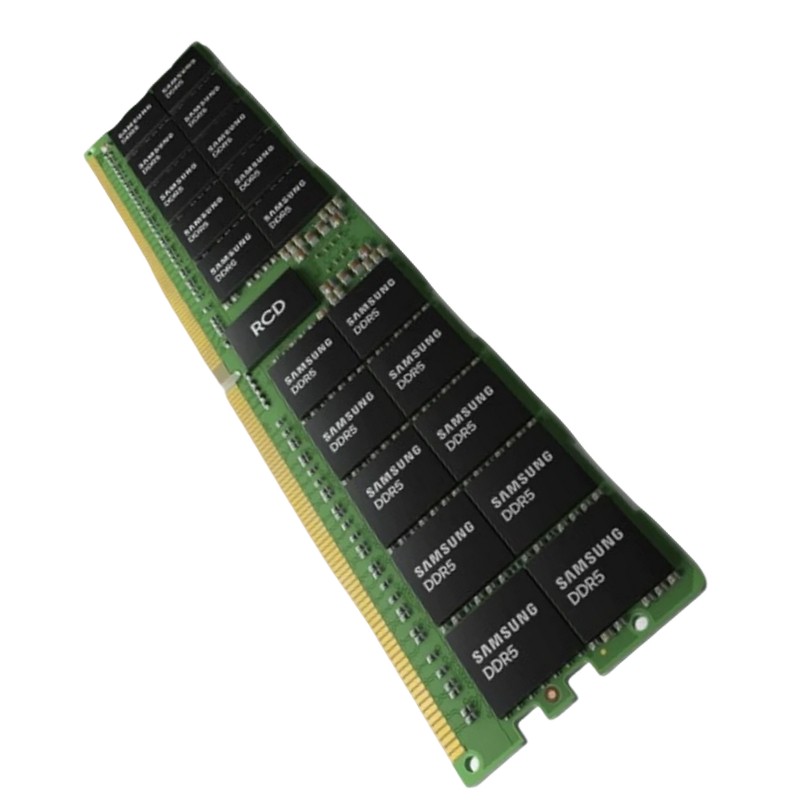
Samsung M321RBJA0M22-CLPWF 256GB DDR5 6400MBPS Pc5-51200 ECC Registered 1.1v CL52 SDRAM 288-pin RDIMM Memory Module. New (System) Pull with 1 year replacement warranty. Call
This high-performance server memory module is engineered for demanding computational environments where reliability and speed are paramount.
Samsung M321RBJA0M22-CLPWF 256GB DDR5 6400MT/s (Pc5-51200) ECC Registered (RDIMM) memory modules represent a high-density, high-bandwidth class of server-grade DRAM engineered for mission-critical data centers and enterprise-class systems. Designed to the DDR5 standard, this RDIMM runs at an effective transfer rate of 6400 megatransfers per second, operates at a low 1.1V supply, and delivers CL52 latency timing optimized for stability and throughput in multi-socket, high-memory-capacity environments. Error-correcting code (ECC) and register buffering provide robust data integrity and signal reliability under heavy workloads.
At Pc5-51200 signaling, the memory module offers peak theoretical bandwidth suitable for memory-intensive applications such as virtualization, large-scale databases, in-memory analytics, and high-performance computing. The 6400MT/s frequency combined with Samsung's DRAM design minimizes latency penalties while maximizing throughput across the memory channel. In practice, sustained performance depends on platform memory controllers, CPU interconnects, and configuration (single-rank vs. multi-rank, population density). For multi-socket servers with fully populated channels, these modules enable predictable scaling of memory bandwidth when paired with modern CPUs that support DDR5 JEDEC profiles.
CL52 denotes the column access latency in DDR5 terms; while higher absolute CAS numbers are typical for higher-speed DDR5 parts, the effective latency in nanoseconds remains competitive due to faster clock cycles. System architects should consider absolute nanosecond latency as well as throughput; workloads that depend on random memory access may observe different performance patterns than streaming or sequential-memory-heavy workloads. Samsung M321RBJA0M22-CLPWF engineers balance timings and voltage (1.1V nominal) to provide a stable margin for ECC correction and thermal headroom under sustained load.
ECC (Error-Correcting Code) on the Samsung M321RBJA0M22-CLPWF RDIMM actively detects and corrects single-bit memory errors and detects multi-bit errors depending on implementation, significantly reducing silent data corruption risks critical to enterprise workloads. Registered buffering (the "R" in RDIMM) amortizes electrical loading across many DRAM devices and stabilizes command/address signals, enabling larger DIMM capacities and denser memory configurations than unbuffered modules. The combined ECC + RDIMM architecture is essential for servers where uptime, data integrity, and predictable fault behavior are non-negotiable.
Compatibility depends on the host server or platform supporting DDR5 registered ECC modules and the corresponding JEDEC-compliant speed bins. System BIOS/UEFI firmware and chipset memory controllers must be validated for 256GB RDIMM operation at 6400MT/s; many server vendors publish Qualified Vendor Lists (QVL) that list validated memory part numbers and recommended firmware revisions. When retrofitting older platforms, administrators should verify voltage support, ranked DIMM population rules, and any microcode or BIOS patches required to enable optimal DDR5 performance and stability.
DDR5’s lower nominal voltage (1.1V) compared with legacy DDR4 provides an energy-efficiency advantage at scale. Samsung’s design focuses on consistent thermal dissipation across the module; still, high-capacity RDIMMs require careful thermal planning inside dense chassis. Adequate airflow, routing of hot-swappable components, and awareness of adjacent power-dense components (CPUs, accelerators, VRMs) are necessary to maintain thermal headroom for long-term reliability. In rack-scale deployments, cooling strategies such as directed airflow, baffles, and measured intake/exhaust ratios help ensure the modules remain within design temperatures under peak loads.
When building servers with 256GB RDIMMs, follow platform vendor guidance for population rules and channel balancing. Filling symmetrical channels and sockets ensures balanced NUMA behavior, which is important for latency-sensitive workloads. Firmware-level memory interleaving, channel sparing, and rank interleaving may be available to improve effective throughput and resiliency. System integrators should also run vendor-provided memory validation utilities and burn-in tests to expose early-life failures and validate ECC operation prior to production rollout.
Data integrity extends beyond ECC to a broader set of operational controls. Memory encryption at the platform level, secure boot chains, and firmware integrity checks complement ECC protection. For regulated industries or environments with strict compliance needs, maintaining an auditable chain of custody for memory components and recording validation logs for ECC events can be important for forensic analysis and compliance reporting. Samsung’s enterprise modules are engineered to meet industry reliability expectations and integrate with established server security workflows.
RDIMM modules differ from UDIMM (unbuffered) and LRDIMM (load-reduced) variants in how they handle electrical loading and rank management. RDIMMs are a common middle ground offering both density and compatibility for many server platforms, while LRDIMMs may enable even denser populations by further reducing electrical load on the memory bus. System architects must weigh trade-offs: RDIMM’s proven reliability and manufacturer validation often make them the preferred option for standard enterprise servers, whereas LRDIMM may be selected for ultra-high-density single-node memory requirements.
Adopting 256GB DDR5 RDIMMs supports future-proofing by aligning with growing memory footprints required by modern software stacks. However, plan upgrades with an eye toward CPU and chipset compatibility; future generations of processors may add higher memory channel counts, different supported speed bins, or new features such as on-die ECC or persistent memory integration. Maintaining modular upgrade strategies—where memory capacity can be increased without wholesale system replacement—helps extend platform lifespan and return on investment.
The module offers 256 gigabytes of DDR5 memory capacity in a single 288-pin RDIMM form factor, enabling vastly increased per-socket memory density compared to previous generations. For administrators and system architects planning memory expansion, a 256GB RDIMM helps consolidate memory footprints, reduce the number of DIMM slots required, and simplify capacity planning across dual-socket and multi-socket server platforms.
Rated at DDR5-6400 (commonly expressed as 6400 MT/s) and marketed as PC5-51200, this memory module delivers raw theoretical bandwidth of approximately 51.2 GB/s per module when accounting for DDR5's double data rate transfer characteristics. Higher frequency memory translates to improved memory throughput for bandwidth-bound workloads such as large in-memory databases, real-time analytics, virtualization hosts, and HPC (high-performance computing) applications that perform many simultaneous memory transactions.
With a CAS latency of CL52, the module is engineered to balance high transfer rates with manageable latency characteristics. While latency numbers on higher-frequency DDR5 parts tend to be larger than low-frequency DDR4, the net effect on real-world performance is often positive because the much higher bandwidth of DDR5 compensates for raw latency increases. Workloads that rely on high streaming throughput typically benefit most from the 6400 MT/s specification.
The M321RBJA0M22-CLPWF operates at a nominal 1.1V supply, representing a continuation of DDR5’s efforts to improve energy efficiency versus older generations. Lower operating voltage contributes to reduced power draw at scale—especially important in dense server racks where hundreds of DIMMs may be deployed—helping data centers lower cooling and operational costs while maintaining higher performance levels.
As an ECC Registered DIMM (RDIMM), this module incorporates both error-correcting code and a register (or buffer) to stabilize address and command signals. ECC corrects single-bit errors and detects multi-bit errors, dramatically improving system reliability in mission-critical environments. The register reduces electrical load on the memory controller, allowing systems to support more modules per channel and achieve larger overall system memory capacities with improved signal integrity.
Samsung’s enterprise DDR5 RDIMMs, including the M321RBJA0M22-CLPWF, are built with RAS features that data center operators expect. ECC functionality is vital for preventing data corruption in long-running systems, and registered buffering enables higher population levels with consistent signal performance. These attributes reduce downtime risk, minimize silent data errors, and support extended uptimes in virtualization clusters and large-scale compute farms.
Moving to DDR5 RDIMM modules allows organizations to future-proof server memory configurations. Because DDR5 increases per-module densities, administrators can achieve larger memory footprints without needing to immediately upgrade server motherboards to support additional sockets or more DIMM slots. This is particularly advantageous for memory-hungry applications such as in-memory caching, big data processing, and AI/ML training inferencing where capacity growth is predictable.
These Samsung M321RBJA0M22-CLPWF DDR5 RDIMMs are designed for use with platforms that explicitly support DDR5 registered ECC memory. When planning upgrades, it is essential to verify motherboard and CPU memory controller compatibility, BIOS or firmware support for PC5-51200 modules, and vendor guidance on population rules and supported DIMM sizes. Proper validation ensures the module operates at its intended speed and power settings and that ECC functionality is fully enabled.
Virtualized environments benefit greatly from the high capacity and reliability of 256GB DDR5 RDIMMs. Higher per-slot capacities reduce the number of required DIMMs to achieve target guest memory pools. This simplifies inventory, reduces failure domains, and allows hypervisors to consolidate more virtual machines per host while preserving performance under mixed workloads.
Databases and in-memory stores that demand both capacity and throughput, such as columnar analytics engines or in-memory key-value stores, will see improved query concurrency and reduced I/O wait when backed by high-bandwidth DDR5 memory. Larger single-module sizes are especially useful for in-memory datasets that otherwise would require multi-node sharding to fit within available RAM.
HPC clusters and scientific compute nodes that run memory-bound simulations, finite-element analyses, or large-scale numerical models also benefit from DDR5’s higher bandwidth and enhanced energy profile. The combination of 6400 MT/s speeds and large-capacity modules reduces memory-bound choke points in parallel applications and helps maximize throughput across CPU cores and accelerators.


 Contact Us
 Information
 Catalog
 Solid State Drives (SSD)
 Network Switches
 Hard Disk Drives
 HBA & Controllers
 PC & Servers
 PC & Server Memory
 CPU & Processors
 Network Routers
 Power Supplies
 Tape Drives & Libraries
 Network Devices
 Computer & Network Cables