(7% discount is applied at checkout)
Cart is empty
Your go-to destination for cutting-edge server products
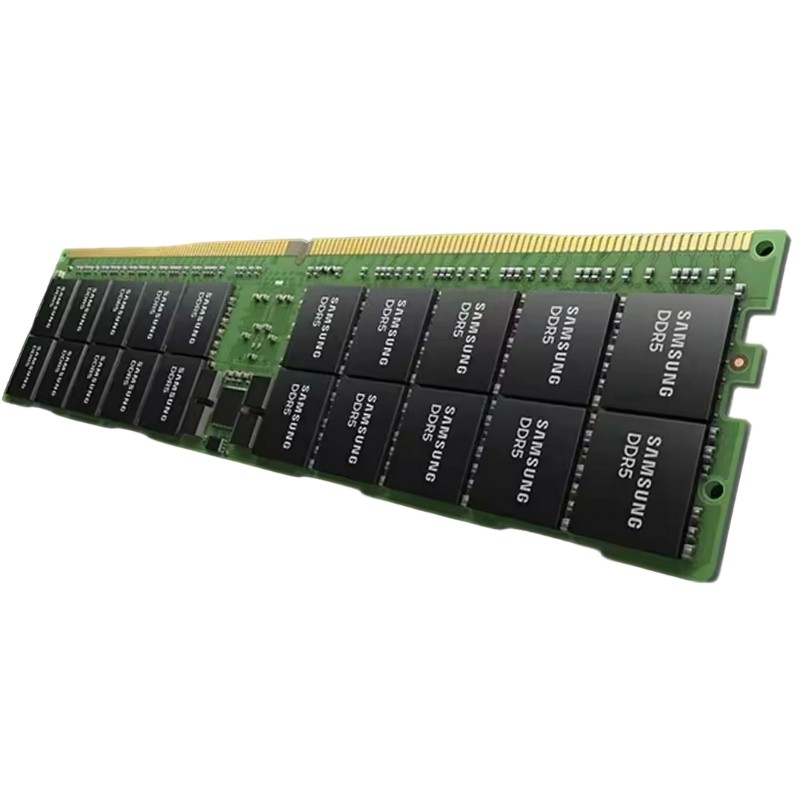


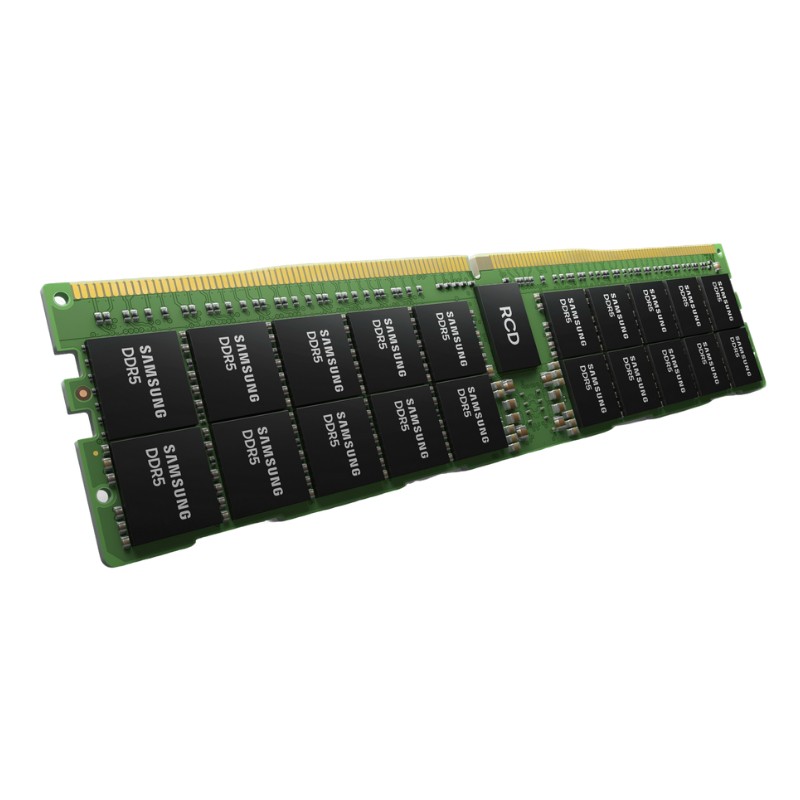
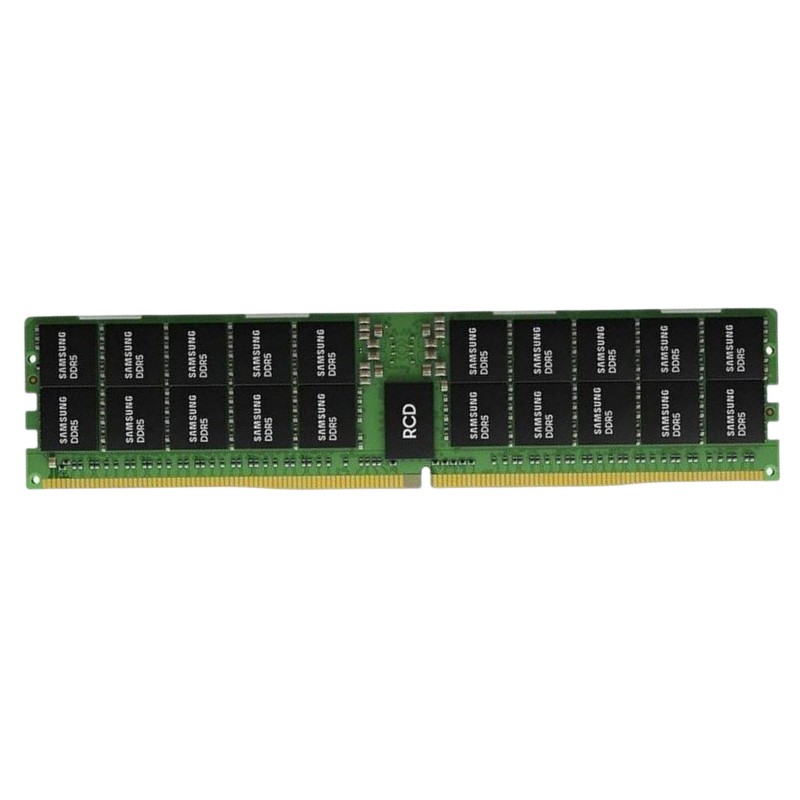
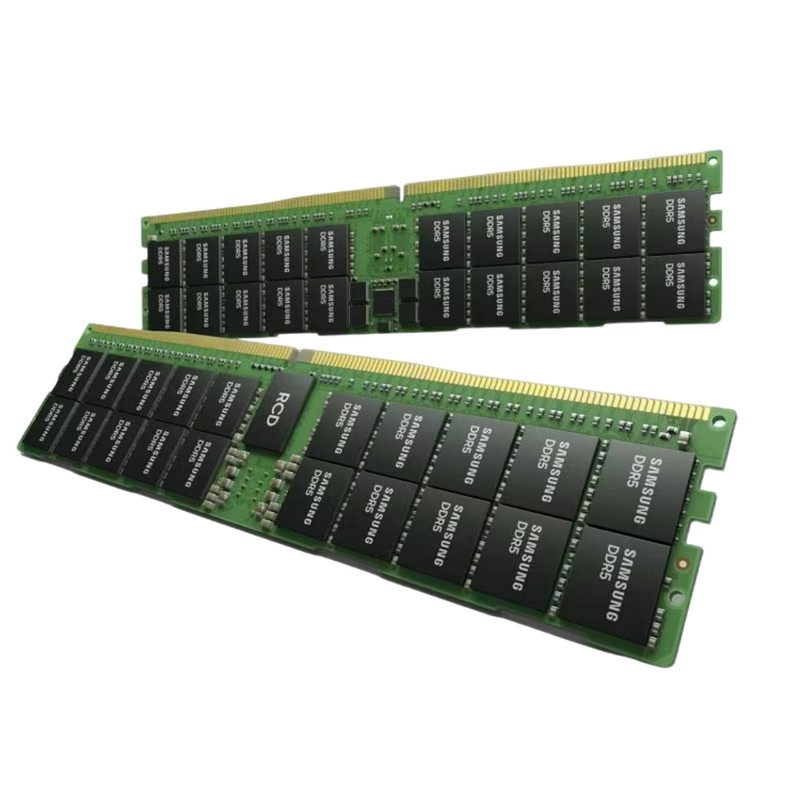
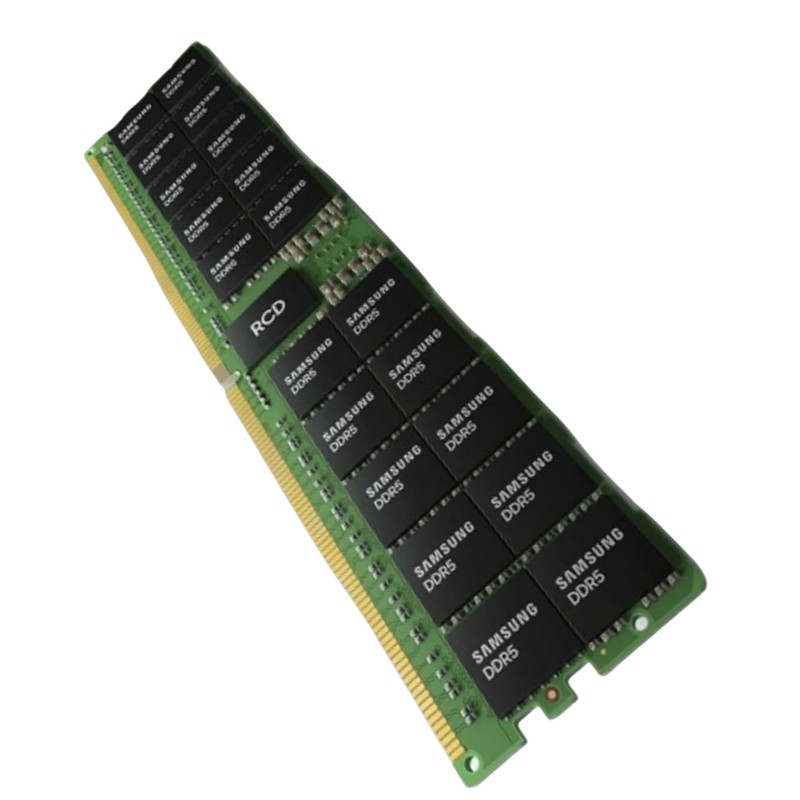
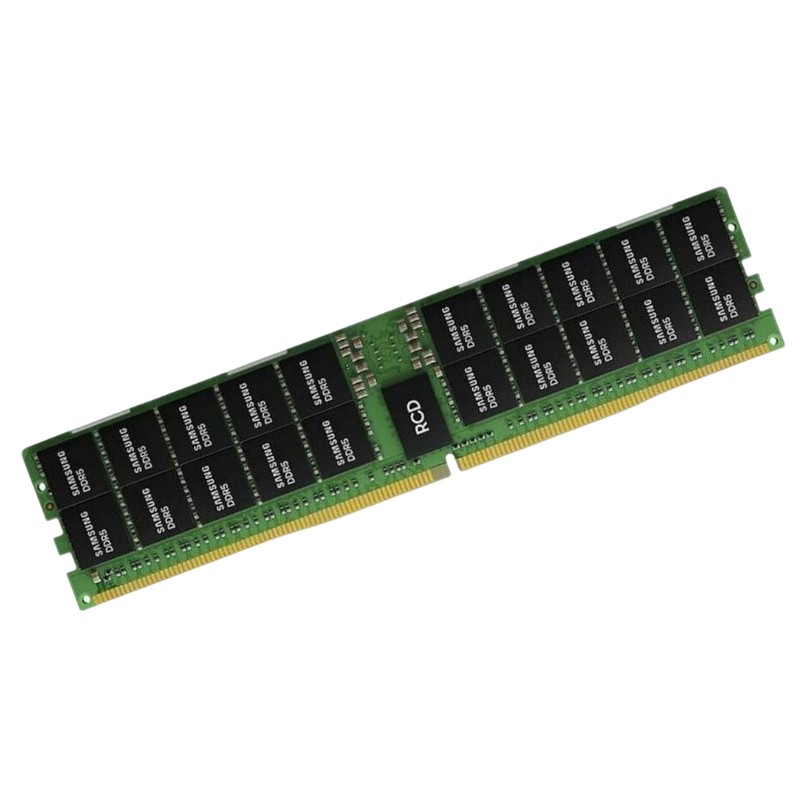
Samsung M321RBJA0M22-CLPYL 256GB DDR5 6400MBPS Pc5-51200 ECC Registered 1.1v CL40 SDRAM 288-pin RDIMM Memory Module. New (System) Pull with 1 year replacement warranty. Call
This high-performance computing component is engineered for enterprise-grade reliability and exceptional data throughput in demanding server environments.
Samsung's M321RBJA0M22-CLPYL 256GB DDR5 6400MT/s PC5-51200 Registered ECC RDIMM represents a new class of high-capacity server memory engineered for data centers, enterprise servers, and high-performance computing platforms. Built to industry specifications with ECC (Error Correcting Code), Registered buffering, and a 288-pin RDIMM form factor, this module balances extreme capacity with reliability and predictable performance under demanding workloads. With a low operating voltage of 1.1V and a CAS latency (CL) of 40, the part is optimized for dense memory configurations and modern CPU architectures that benefit from high-bandwidth DIMMs.
At its core, the M321RBJA0M22-CLPYL is a DDR5 memory module capable of operating at DDR5-6400 speeds (commonly referred to as 6400MB/s or 6400MT/s), aligning with the PC5-51200 performance class. The module's 256GB capacity is achieved through Samsung's advanced die stacking and high-density memory IC technology. The ECC Registered architecture integrates on-module register and ECC logic that reduce electrical loading on the memory controller while maintaining data integrity by automatically detecting and correcting single-bit errors. The 288-pin RDIMM layout is compatible with server motherboards that support registered DDR5 memory, and the module's 1.1V nominal voltage reflects DDR5's energy-efficient advancements compared to earlier generations.
Latency and frequency are critical to understanding real-world performance. The CL40 timing indicates a CAS latency of 40 cycles at the rated 6400MT/s speed; while raw cycle counts may appear higher than some lower-frequency DIMMs, the increased transfer rate compensates and delivers greater effective bandwidth. Operating at 1.1V, the module strikes a favorable balance between performance and power consumption—particularly important in large-scale deployments where overall memory power draw can materially affect thermal design and operating cost. Samsung's internal production and validation ensure these timing and power characteristics are held within server-grade tolerances.
Compatibility is a key consideration for procurement teams and system builders. The module is intended for server-class motherboards and platforms explicitly supporting DDR5 Registered ECC RDIMMs and PC5-51200 speeds. Compatibility can vary by server vendor and BIOS/firmware revisions; therefore, it is essential to consult motherboard and server vendor memory support lists before purchase. Many OEM platforms require specific SPD (Serial Presence Detect) configuration or may limit maximum supported speed depending on population and CPU memory controller capabilities. Samsung's module adheres to JEDEC standards for DDR5 Registered DIMMs, increasing cross-vendor interoperability when used in supported systems.
High bandwidth memory like the M321RBJA0M22-CLPYL is designed to accelerate memory-bound workloads. Workloads such as in-memory databases, large-scale virtualization, analytics processing, AI training and inference, and high-frequency transaction processing benefit directly from increased transfer rates and large per-module capacity. The 256GB density allows system architects to reduce the number of sockets or DIMM slots occupied to reach desired memory footprints, simplifying memory channel balancing and often improving effective memory throughput in multi-socket servers. Where memory capacity has historically been a constraint, modules of this size make it practical to consolidate more data into RAM for faster access.
Scalability is a driver for choosing high-density modules. When designing systems that require terabytes of memory, administrators often choose fewer high-density RDIMMs over many lower-capacity modules to reduce complexity and improve signal integrity. Using the M321RBJA0M22-CLPYL in multi-channel and multi-socket topologies requires attention to channel population rules and balancing to preserve optimal performance. Properly distributed modules across channels and sockets reduce contention and make the most of a system's memory bandwidth. Samsung's RDIMMs are often incorporated into carefully engineered configurations that maximize theoretical throughput while staying within power and thermal limits.
Physically, the 288-pin RDIMM conforms to standard server DIMM dimensions but may include heat spreaders or label materials that impact airflow. When deploying in dense rack servers with multiple populated DIMM slots, ensure that chassis airflow and cooling capacity are adequate to dissipate the cumulative heat generated by CPU, storage, and memory. While DDR5's efficiency reduces per-module power in many scenarios, high-density and high-frequency modules still contribute to thermal load. System integrators should verify that airflow paths are unobstructed and that no additional mechanical constraints—such as oversized CPU coolers or cable routing—interfere with DIMM installation or cooling performance.
Data integrity and security are paramount in regulated industries and large-scale deployments. ECC functionality plays an essential role in maintaining integrity, but system-level practices such as secure boot, firmware signing, and memory encryption (available on some platforms) complement hardware ECC by protecting against more complex threats. Enterprises that must meet regulatory frameworks should document memory configuration, validation steps, and firmware levels as part of their compliance evidence. Samsung's enterprise memory modules are designed to integrate into secure infrastructure stacks and support the traceability and quality documentation required by many auditing processes.
Comparing DDR5 RDIMM to DDR4 and other memory types clarifies value propositions. DDR5 increases per-channel bandwidth and introduces features such as Decision Feedback Equalization (DFE) and improved power distribution (VDD/VDDQ changes), enabling higher frequency operation and greater capacity per module. Compared to unbuffered UDIMM memory intended for desktops, RDIMMs trade slightly higher latency for the benefits of signal integrity, higher stability in multi-DIMM configurations, and superior suitability for server environments. Samsung's DDR5 RDIMM modules leverage these advances to deliver higher sustained throughput and better scalability for enterprise-class applications.
Energy efficiency matters for modern data centers aiming to reduce PUE (Power Usage Effectiveness) and operational expenses. The 1.1V operating voltage of this DDR5 RDIMM signifies an improvement in energy per bit transferred when compared to earlier generations. Deploying high-density modules also has a secondary environmental benefit: fewer physical DIMMs and potentially fewer servers to achieve the same memory capacity reduces material usage and chassis-level energy overhead. Coupled with efficient cooling and server consolidation strategies, adopting modern RDIMMs can contribute to a greener IT footprint while delivering superior application performance.
Benchmarks for server memory should emphasize realistic, workload-aligned metrics rather than synthetic peak numbers alone. Memory-bound application benchmarks, such as large in-memory database throughput, multi-threaded analytics, and virtualization density tests, demonstrate the benefits of higher DIMM bandwidth and capacity. When testing the M321RBJA0M22-CLPYL in a controlled lab, measure latency-sensitive and bandwidth-sensitive scenarios, quantify ECC event rates, and profile thermal behavior under continuous load. Such empirical data helps IT teams predict production performance and determine whether the module’s capacity and frequency align with application service-level objectives.
Deploying many high-capacity RDIMMs at scale requires disciplined practices. Maintain an inventory of validated firmware and BIOS revisions, follow OEM population maps to optimize channel balance, and document every configuration change to simplify troubleshooting. Consider rolling firmware updates and staged deployments to detect integration issues early, and use monitoring tools to track ECC error counts and DIMM temperature trends over time. Standardizing on a single module type across a fleet simplifies spare parts management and reduces complexity when provisioning new systems or performing field replacements.
Unlike earlier generations, DDR5 splits each DIMM into two independent subchannels. This subchannel architecture is implemented on the M321RBJA0M22-CLPYL to improve parallelism and effective command/address routing. By providing two 32-bit access paths (plus ECC bits) per DIMM, the module reduces contention and increases effective bandwidth utilization under mixed thread workloads. Systems that optimize for channel interleaving and scheduler awareness will extract the most benefit from this design.
The lower nominal voltage of 1.1V reflects DDR5’s focus on energy efficiency. For large-scale deployments with hundreds or thousands of DIMMs, reduced per-module power consumption translates to measurable operational cost savings and thermal headroom. The Samsung 256GB RDIMM also supports power management features defined in the DDR5 specification — enabling better on-die power gating and lower idle-state dissipation when supported by the platform BIOS/UEFI.
Operating at 6400 mega-transfers per second, the module’s PC5-51200 rating denotes raw theoretical bandwidth of approximately 51.2 GB/s per module when considering the full 64-bit data path plus ECC overhead. In multi-DIMM configurations, aggregate memory bandwidth scales with the number of populated channels and slots, directly benefiting memory-bound applications such as high-frequency trading engines, real-time analytics, and computational scientific workloads.
The CL40 CAS latency specification is an important factor to interpret in the context of DDR5’s higher operating frequency. While the cycle count for CAS may be higher than comparable DDR4 CL values, the increased clock rate often results in similar or better absolute latencies in nanoseconds. When tuning or comparing modules, consider both clock cycles and absolute time (ns) to determine real-world latency impact for latency-sensitive applications.
ECC Registered modules such as the M321RBJA0M22-CLPYL include on-module buffering and error-correcting logic that protect against single-bit errors and detect multi-bit errors. Registered buffering helps stabilize the electrical interface, enabling higher memory counts and greater overall system reliability. For finance, healthcare, and telecommunication applications where data integrity is non-negotiable, ECC RDIMMs are standard practice and often required by compliance frameworks.
The M321RBJA0M22-CLPYL 256GB RDIMM is particularly well-suited to virtualization platforms where consolidated memory pools reduce physical server counts. By enabling larger VM densities per host, organizations can improve hardware utilization and reduce per-VM overheads. Memory overcommit must still be managed carefully, but the high per-module capacity allows for leaner allocation strategies with fewer DIMMs per socket.
Large-memory database instances and in-memory analytics engines directly benefit from fewer page faults and reduced I/O when more dataset portions can be retained in DRAM. The increased bandwidth of DDR5 6400 MT/s improves throughput for parallel query execution and real-time analytics workloads. Enterprises running column-store databases or caching tiers will see faster query response times when the working set resides fully in memory.
For certain AI inference and HPC workloads where memory bandwidth is a performance limiter, the M321RBJA0M22-CLPYL’s high transfer rate helps mitigate data movement bottlenecks between CPU and memory. While GPU-accelerated training relies heavily on GPU memory, many pre- and post-processing tasks, dataset staging, and model serving on CPU nodes benefit from dense, high-bandwidth main memory.
Edge computing nodes and telco servers often require compact systems with high memory density to operate virtual RAN, packet processing, or NFV workloads. The registered buffering and ECC feature set of this module make it attractive where reliability and fault tolerance are essential in distributed edge environments.


 Contact Us
 Information
 Catalog
 Solid State Drives (SSD)
 Network Switches
 Hard Disk Drives
 HBA & Controllers
 PC & Servers
 PC & Server Memory
 CPU & Processors
 Network Routers
 Power Supplies
 Tape Drives & Libraries
 Network Devices
 Computer & Network Cables