(7% discount is applied at checkout)
Cart is empty
Your go-to destination for cutting-edge server products
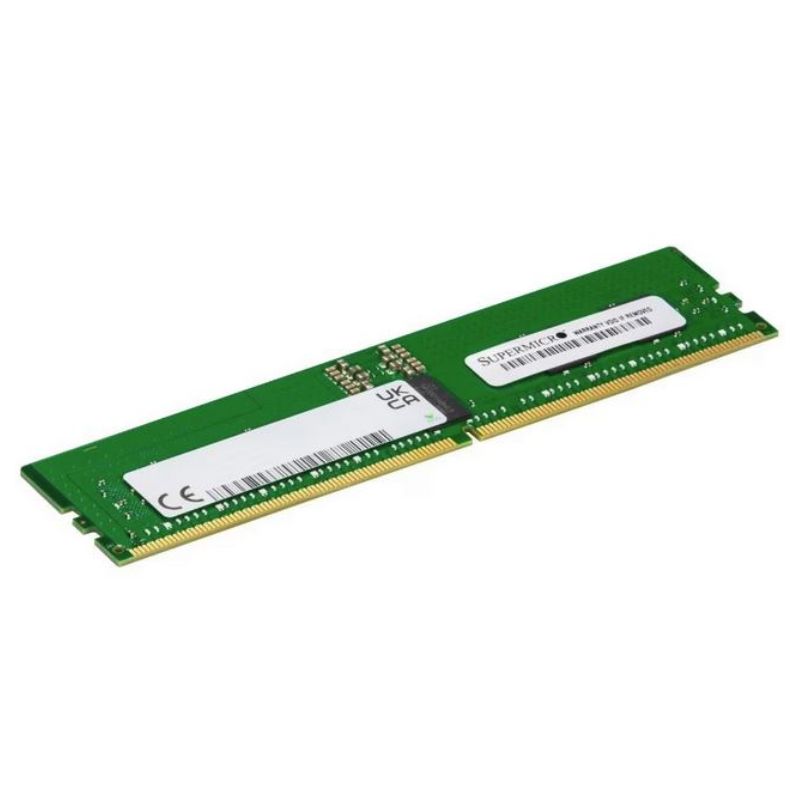


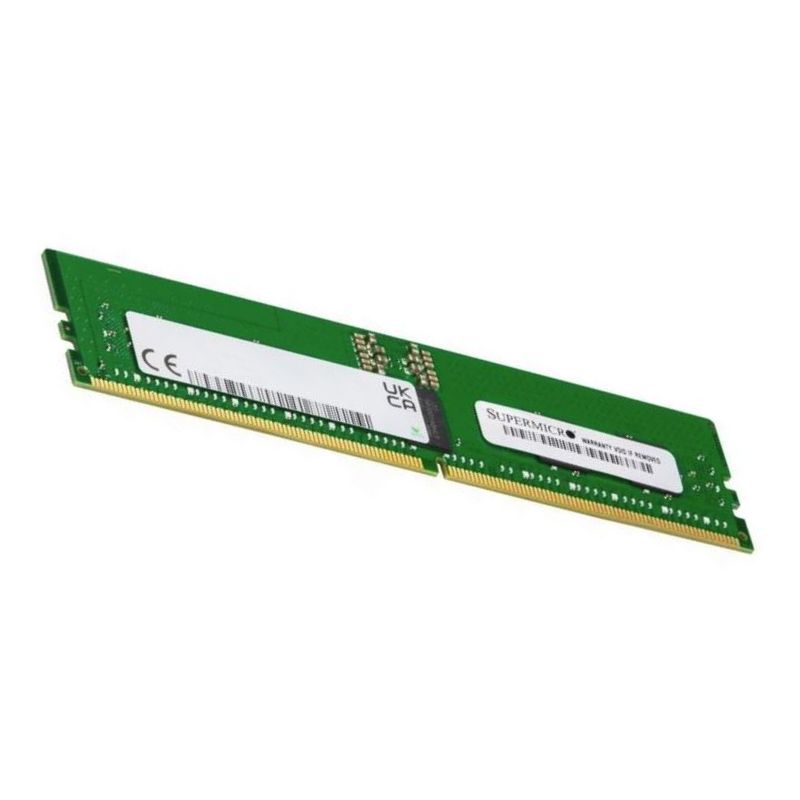
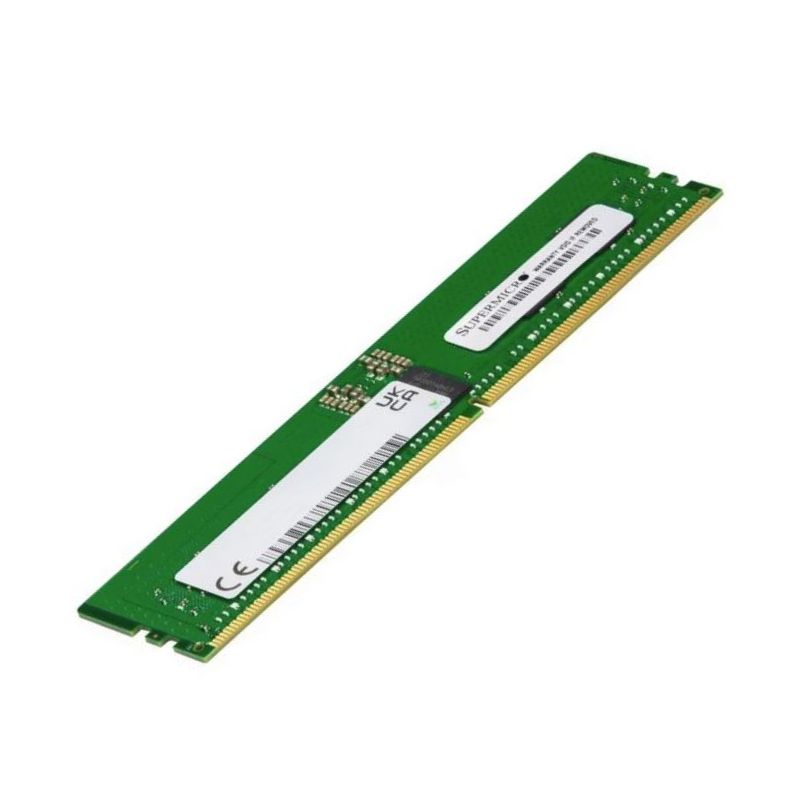
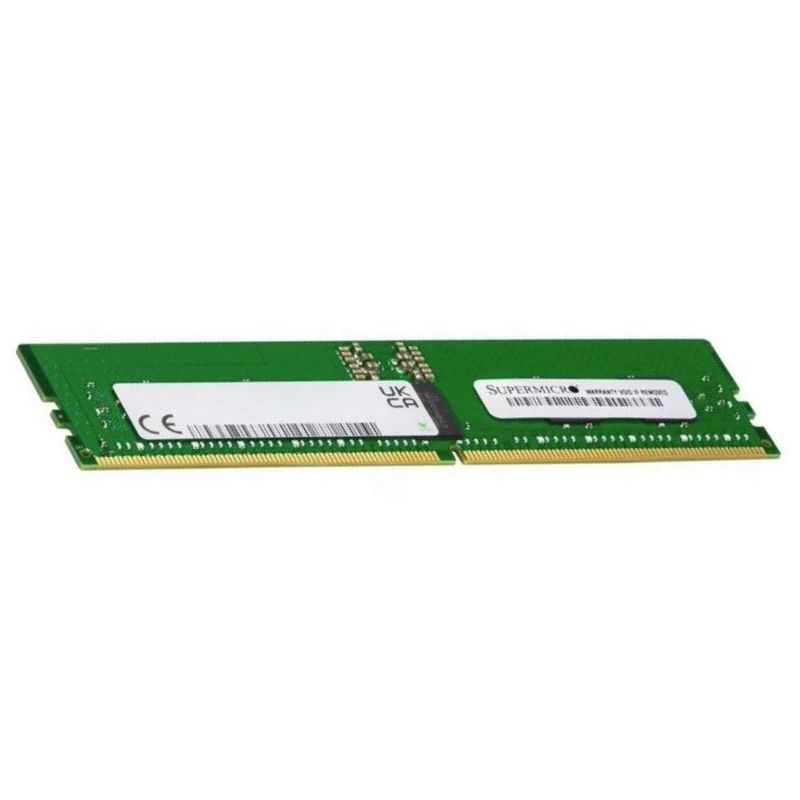
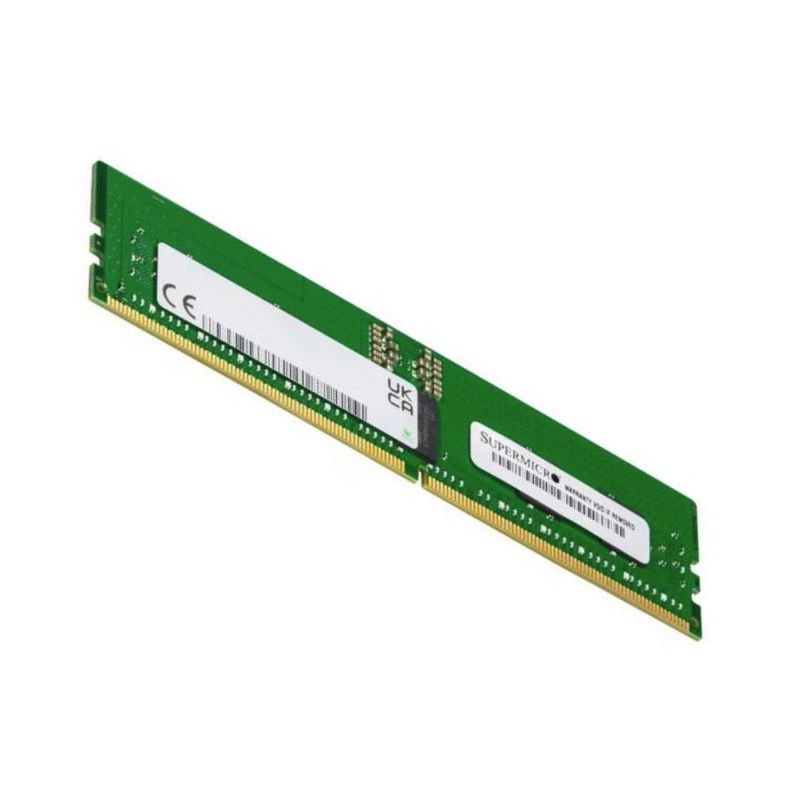
Samsung M324R2GA3DB0-CWMOD 16GB 5600Mbps Pc5-44800 DDR5 SDRAM 288-pin Udimm Memory Module For Server. New Sealed in Box (NIB) with 3 Years Warranty
ECC technology provides automatic error detection and correction, minimizing risks of data corruption and system crashes. This feature is particularly valuable in enterprise environments where data stability is critical.
Operating at a low 1.1V, this DDR5 module balances high-speed performance with reduced power consumption, contributing to overall system energy savings.
Samsung is renowned for producing memory solutions with advanced performance, durability, and quality assurance. The M324R2GA3DB0-CWMOD continues this tradition by combining speed, efficiency, and reliability into a single memory module.
This memory module suits professional servers, high-performance desktops, and demanding computing environments, making it a versatile choice for businesses and IT professionals.
The Samsung M324R2GA3DB0-CWMOD is a 16GB DDR5 unbuffered UDIMM engineered for modern server environments that demand high bandwidth, low latency, and enterprise-grade reliability. Classified as PC5-44800, this module delivers a peak transfer rate of 5600 MT/s (commonly written as 5600 mbps in marketing shorthand) and implements ECC (Error Correcting Code) functionality while remaining unbuffered and single rank X8. Running at a low standard voltage of 1.1 V and using CL46 timing, this memory module balances aggressive performance with power efficiency — a combination ideal for dense memory servers, virtualization hosts, and compute clusters.
Servers differ from consumer PCs in one major way: the tolerance for data errors. ECC memory mitigates the risk of silent data corruption by automatically detecting and correcting single-bit errors, and detecting multi-bit errors. Even though the M324R2GA3DB0-CWMOD is an unbuffered (UDIMM) module rather than RDIMM or LRDIMM, it still provides ECC protection on-module, making it a compelling choice for systems where RDIMM support isn’t required but data integrity remains important. ECC UDIMM DDR5 is particularly attractive for small-to-medium enterprise servers, edge compute nodes, network appliances, and virtualization hosts where a balance of cost, density, and integrity matters.
Unlike registered or load-reduced DIMMs, UDIMMs don't present register or buffer logic on the module. They connect directly to the memory controller, which can simplify timing and reduce latency. Samsung’s implementation of ECC on this UDIMM means that the module includes extra bits for error detection/correction without shifting it into the RDIMM category. For administrators, this means ECC-level protection with UDIMM-level simplicity and compatibility — provided the target motherboard or server BIOS supports ECC unbuffered DDR5.
With a raw transfer rate of 5600 MT/s, PC5-44800 memory substantially increases sustained bandwidth compared to DDR4-era modules. That means better performance in memory-bound workloads: large-scale in-memory databases, high-frequency caching layers, scientific simulations, and high-performance virtual machines. The CL46 CAS latency is typical for DDR5 at that speed grade; overall real-world latency is influenced by both the frequency and the CAS timing, plus motherboard trace lengths and memory controller tuning.
DDR5 raises maximum throughput significantly, which benefits parallelized or heavily multi-threaded workloads. However, absolute latency (in nanoseconds) can be comparable to or slightly higher than older DDR4 parts because increased cycle counts accompany higher transfer rates. In practice, the increased bandwidth of 5600 MT/s often more than compensates for higher cycle latencies in server applications designed to exploit wide data paths.
Before deploying the Samsung M324R2GA3DB0-CWMOD, validate motherboard, CPU memory controller, and BIOS/UEFI compatibility. DDR5 adoption across server platforms accelerated with mainstream server CPUs and chipsets supporting JEDEC-standard DDR5. Key compatibility checks include:
Mixing modules of different ranks (single rank, dual rank) or sizes can affect memory channel interleaving and performance. The M324R2GA3DB0-CWMOD is single rank X8; in slots with mixed rank modules, memory controllers may drop to a conservative timing or reduce achievable maximum frequency. For predictable performance, populate identical modules across channels and follow vendor guidance on population order.
The design and specification of this Samsung 16GB DDR5 UDIMM make it ideal for a broad range of server applications where cost-efficiency and error correction are both priorities:
When running dozens of small-to-medium VMs per physical host, memory density and reliability are crucial. The 16GB module is a building block for scaling memory capacity while preserving ECC protection for guest OS and critical services.
Edge nodes and micro-datacenters often use compact hardware where RDIMM support may be absent. ECC UDIMMs like the M324R2GA3DB0-CWMOD provide server-grade protection on smaller platforms designed for low-power, high-efficiency operation.
Caching layers (e.g., Redis, Memcached) and application servers that rely on in-memory datasets benefit from DDR5 bandwidth. Multiplying 16GB modules across channels scales aggregate capacity for larger cache footprints and higher throughput.
Operating at 1.1 V, DDR5 UDIMMs typically consume less power per transfer than previous generations running at higher voltages. Lower voltage helps in dense server configurations where power budgets and thermal dissipation are constraints. Still, designers must plan for heat accumulation: densely populated DIMM slots plus high sustained memory traffic increase module temperature. Samsung’s UDIMMs are designed for stable operation within standard JEDEC thermal envelopes; however, for sustained heavy loads, ensure adequate airflow and chassis cooling.
DDR5 introduces on-die ECC and improved power management features, including integrated voltage regulation in some module designs. Although UDIMMs do not include on-module voltage regulators like some SO-DIMMs, system-level power states and memory controller telemetry can be used to tune power-performance trade-offs. Administrators should examine BIOS options for memory power saving modes and platform telemetry to ensure reliability.
Samsung is a market leader in DRAM manufacturing; its server-grade modules are produced to strict quality standards with rigorous testing and JEDEC compliance. Enterprise customers choosing Samsung-branded modules benefit from manufacturing traceability, higher component quality, and often better long-term support or warranty terms compared to commodity memory. For mission-critical deployments, source modules through authorized channels to ensure genuine parts and maintain warranty coverage.
Server manufacturers and system integrators typically subject memory to burn-in and validation testing. Samsung’s modules ship with SPD (Serial Presence Detect) profiles that define JEDEC timing parameters; vendors may validate or apply XMP-like profiles for tuned performance. It’s best practice to run memory stress tests (memtest variants, vendor diagnostics) before placing servers into production, especially after firmware and BIOS updates.
It's helpful to contrast the Samsung M324R2GA3DB0-CWMOD to alternatives to decide fit for purpose:
RDIMMs include register logic that improves signal integrity at higher DIMM counts, enabling larger total memory capacity per system. UDIMMs lack the register but carry lower latency and simpler electrical characteristics. For systems with limited DIMM slots and moderate capacity requirements, ECC UDIMMs can be the cost-effective, lower-latency choice.
DDR5 increases per-module bandwidth and introduces architectural changes (e.g., on-die ECC, Dual Channel DIMM channels inside a single module for increased parallelism). Compared with DDR4-3200, PC5-44800 modules provide significantly higher throughput — beneficial for parallel workloads — with similar or slightly higher cycle latencies that are typically offset by the bandwidth gains.
Single Rank modules like the M324R2GA3DB0-CWMOD often permit more DIMMs per channel and may have slight latency advantages. Dual Rank modules can sometimes deliver higher effective throughput due to internal bank interleaving. Depending on the memory controller, the choice between SR and DR can subtly affect performance and capacity planning.
For maximum performance and reliability, consider the following configuration guidelines:
Plan capacity not only for current loads but also for growth: memory is often the limiting resource for VM density, caching, and analytics. Using 16GB building blocks can be cost-effective in many deployments, enabling straightforward scaling while keeping per-module replacement costs manageable.
Emerging platforms may use memory encryption or platform-level protections that interact with DIMM behavior. While the M324R2GA3DB0-CWMOD is a standard JEDEC-compliant UDIMM, administrators should ensure BIOS/firmware compatibility with memory encryption features (e.g., SME/SEV or platform-specific memory encryption) and follow vendor guidance on memory module sourcing to avoid supply-chain risks.
For enterprise environments, procure memory modules from authorized distributors to ensure authentic parts and traceable manufacturing. Counterfeit or gray-market memory can undermine reliability and void vendor support. Ask for certificates of authenticity and check serial numbers against vendor portals when available.
Mixing is possible but not recommended for predictable performance. Modules with different speeds, timings, or ranks may force the controller into conservative settings, reducing overall throughput. For best results, use identical part numbers across channels.
ECC on UDIMMs protects against single-bit errors on a per-module basis similar to RDIMMs; however, RDIMMs include additional register logic that enables higher capacity and stability at scale. ECC UDIMM is suitable when RDIMM-specific features are not required by the platform.


 Contact Us
 Information
 Catalog
 Solid State Drives (SSD)
 Network Switches
 Hard Disk Drives
 HBA & Controllers
 PC & Servers
 PC & Server Memory
 CPU & Processors
 Network Routers
 Power Supplies
 Tape Drives & Libraries
 Network Devices
 Computer & Network Cables