
(7% discount is applied at checkout)
Cart is empty
Your go-to destination for cutting-edge server products
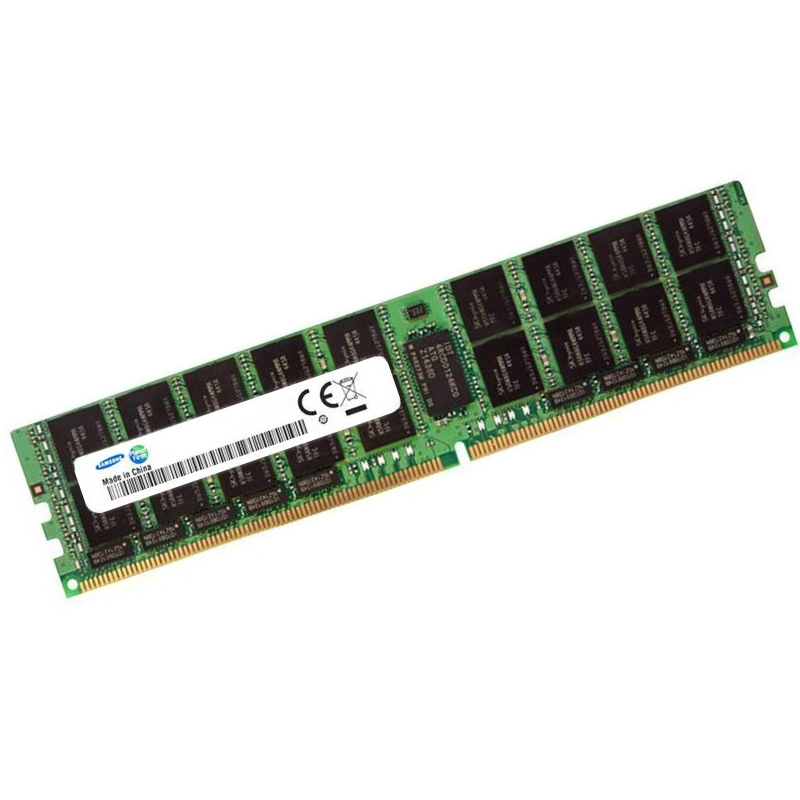
Samsung M386ABG40M51-CAE 256GB 3200Mhz Pc4-25600 Ecc Reg DDR4 288-Pin Ram. New (System) Pull with 1 year replacement warranty
| SKU/MPN | Warranty | Price | Condition | You save |
|---|---|---|---|---|
| M386ABG40M51-CAE | 1 Year Warranty | $3,499.00 | New (System) Pull | You save: $1,224.65 (26%) |
| M386ABG40M51-CAE | 1 Year Warranty | $3,730.00 | New Sealed in Box (NIB) | You save: $1,305.50 (26%) |
The Samsung M386ABG40M51-CAE is a high-capacity 256GB DDR4 SDRAM memory module designed for enterprise-grade performance. Operating at 3200MHz (PC4-25600), this ECC Registered RAM ensures reliability and speed for demanding workloads.
The Samsung M386ABG40M51-CAE 256GB 3200MHz PC4-25600 ECC Registered DDR4 288-Pin RAM belongs to a high-capacity enterprise memory category designed to support modern data center workloads that demand stability, density, and sustained performance. This category focuses on server-class registered DIMMs that enable platforms to scale memory capacity far beyond consumer-grade limitations while maintaining electrical integrity and signal reliability under heavy load. Enterprise DDR4 RDIMM memory modules in this class are engineered to operate continuously in mission-critical environments where uptime, data accuracy, and predictable performance are non-negotiable.
This memory category supports next-generation server infrastructures, virtualization clusters, in-memory databases, and analytics platforms that require extremely large memory pools. With 256GB density per module, this class of DDR4 ECC registered memory allows system architects to populate fewer slots while achieving higher overall system capacity. This is particularly valuable in dual-socket and multi-socket server platforms where memory channel efficiency directly affects computational throughput and power efficiency.
The 256GB DDR4 RDIMM category represents one of the highest density memory configurations available in DDR4 server memory ecosystems. Modules within this class are built using advanced DRAM stacking and high-capacity IC layouts that allow exceptional memory density without sacrificing timing stability. This density level is ideal for large-scale virtualization environments, enterprise resource planning systems, and memory-intensive applications that rely on large datasets remaining resident in RAM.
High-density RDIMM modules such as this one are typically deployed in enterprise servers from major OEMs, supporting platforms that require BIOS-level validation for large DIMM capacities. The registered design reduces the electrical load on the memory controller, enabling stable operation even when multiple high-capacity modules are installed per channel. This ensures that memory scalability does not come at the cost of system reliability.
Registered DIMM memory incorporates a register between the DRAM modules and the memory controller, which buffers command and address signals. This architectural design allows server platforms to support more memory modules per channel compared to unbuffered DIMMs. In enterprise categories, this results in improved signal integrity, lower error rates, and the ability to maintain consistent performance as memory configurations scale upward.
The registered architecture is especially important for 256GB modules operating at 3200MHz, as it ensures timing accuracy across densely populated memory channels. This makes RDIMM memory essential for servers handling large transactional workloads, high concurrency applications, and continuous processing tasks where memory stability is crucial.
Error Correction Code functionality is a defining feature of this enterprise DDR4 memory category. ECC memory actively detects and corrects single-bit memory errors and identifies multi-bit errors, significantly reducing the risk of data corruption. In environments where data integrity directly affects business operations, such as financial services, healthcare systems, and cloud infrastructure, ECC is not optional but mandatory.
For 256GB modules, ECC becomes even more critical due to the sheer volume of data stored in memory at any given time. This category ensures that long-running processes and memory-resident databases maintain consistency and reliability across extended operational periods.
The PC4-25600 DDR4 3200MHz speed tier represents the upper performance range of standardized DDR4 server memory. Memory modules in this category deliver increased bandwidth per channel, allowing CPUs to access data more efficiently. This is particularly beneficial for multi-core processors that rely on fast memory access to avoid bottlenecks in compute-heavy workloads.
Server memory operating at 3200MHz enhances overall system responsiveness in environments such as virtual machine hosting, AI inference platforms, and large-scale application servers. By maximizing memory throughput, this category helps reduce latency in data retrieval and improves the efficiency of memory-intensive operations.
In multi-socket server configurations, memory bandwidth plays a significant role in overall system performance. DDR4 3200MHz RDIMM memory allows each CPU socket to access higher bandwidth per memory channel, reducing contention and improving parallel processing efficiency. This is essential for enterprise workloads that distribute tasks across many cores and threads.
This memory category is optimized for modern server CPUs that support DDR4 3200MHz natively, ensuring that systems can take full advantage of available memory speeds without downclocking due to compatibility issues.
Virtualization platforms rely heavily on memory availability and bandwidth to allocate resources dynamically across virtual machines. High-capacity 256GB DDR4 RDIMM modules allow administrators to consolidate more virtual machines on fewer physical servers while maintaining performance isolation and stability. The 3200MHz speed tier ensures that memory access remains fast even under heavy virtualization density.
In cloud environments, this memory category supports elastic scaling and rapid provisioning, enabling service providers to meet fluctuating demand without compromising service quality.
Samsung enterprise memory products are recognized for their stringent manufacturing processes, rigorous validation protocols, and long lifecycle support. This category benefits from Samsung’s vertically integrated production model, which includes in-house DRAM fabrication, module assembly, and quality assurance. This approach ensures consistent performance characteristics and reliability across production batches.
Enterprise-grade memory modules undergo extensive testing under thermal stress, electrical load, and long-duration operation scenarios. This validation ensures that memory performs reliably in data center environments where systems operate continuously for years.
This category of Samsung DDR4 RDIMM memory is designed to be compatible with a wide range of enterprise server platforms from major manufacturers. These modules are typically validated against server BIOS and firmware configurations to ensure seamless integration. Compatibility extends to systems designed for high-density memory configurations, supporting advanced features such as memory mirroring and sparing.
System integrators and IT administrators value this category for its predictable behavior across different server models, reducing deployment complexity and minimizing the risk of compatibility-related downtime.
This enterprise memory category is ideally suited for workloads that demand extensive memory capacity and reliability. In-memory databases benefit from the ability to store large datasets entirely in RAM, significantly reducing access latency compared to disk-based storage. Applications such as real-time analytics, fraud detection, and recommendation engines rely on this capability to deliver timely results.
Scientific computing and simulation workloads also leverage high-capacity memory to handle complex models and large data structures. The stability and ECC protection provided by this category ensure that computational results remain accurate throughout extended processing cycles.
Large-scale ERP systems and business intelligence platforms require substantial memory resources to manage transactional data, reporting processes, and analytical queries simultaneously. This category supports such environments by enabling servers to maintain large working datasets in memory, improving response times and user experience.
High-capacity DDR4 RDIMM memory allows organizations to scale their enterprise applications without frequent hardware upgrades, providing long-term value and flexibility.
AI and machine learning workloads often involve processing large datasets and model parameters that benefit from high memory capacity. While GPUs handle compute acceleration, system memory plays a crucial role in data preprocessing, model loading, and inference pipelines. This category supports these tasks by offering ample memory space and reliable performance.
Despite their high capacity, DDR4 RDIMM modules in this category are designed to operate within defined thermal and power envelopes suitable for dense server environments. Advanced power management features help balance performance and energy efficiency, reducing overall data center power consumption.
Thermal stability is achieved through optimized PCB layouts and component placement, ensuring even heat distribution across the module. This is essential for maintaining consistent performance in servers with limited airflow or high component density.
When multiple 256GB modules are installed in a single system, power efficiency becomes a critical consideration. This category is optimized to deliver high performance per watt, enabling data centers to scale memory capacity without disproportionately increasing energy costs.
Efficient power usage also contributes to reduced thermal output, simplifying cooling requirements and enhancing overall system reliability.


 Contact Us
 Information
 Catalog
 Solid State Drives (SSD)
 Network Switches
 Hard Disk Drives
 HBA & Controllers
 PC & Servers
 PC & Server Memory
 CPU & Processors
 Network Routers
 Power Supplies
 Tape Drives & Libraries
 Network Devices
 Computer & Network Cables