
(7% discount is applied at checkout)
Cart is empty
Your go-to destination for cutting-edge server products
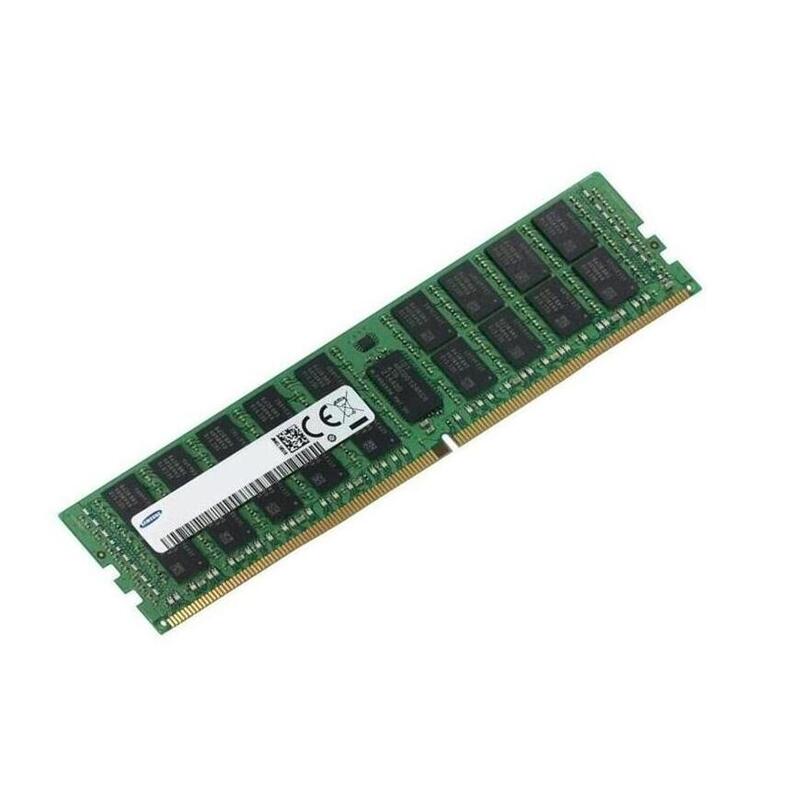
Samsung M393A8G40BB4-CWE 64GB 3200mhz Pc4-25600 Reg DDR4 SDRAM 288-Pin Ram. New Sealed in Box (NIB) with 3 Years Warranty
| SKU/MPN | Warranty | Price | Condition | You save |
|---|---|---|---|---|
| M393A8G40BB4-CWE | 1 Year Warranty | $1,699.00 | New Sealed in Box (NIB) | You save: $594.65 (26%) |
| M393A8G40BB4-CWE | 1 Year Warranty | $1,142.00 | New (System) Pull | You save: $399.70 (26%) |
The Samsung M393A8G40BB4-CWE DDR4 SDRAM is an exceptional memory module that offers a staggering capacity of 64GB. This immense storage capability provides users with a multitude of benefits and ensures that their computing needs are met with ease and efficiency.
The Samsung M393A8G40BB4-CWE is a high-performance, server-grade memory module engineered for reliability, capacity, and speed in demanding data center and enterprise environments. As a 64GB Registered ECC RDIMM, it represents a critical component for servers requiring substantial memory resources for virtualization, database management, high-performance computing (HPC), and large-scale cloud infrastructure. This module is not a standard consumer DIMM; it is built with specialized technologies to ensure data integrity and system stability under continuous operational loads.
Understanding the part number is key to grasping the module's capabilities. The "M393A8G40BB4-CWE" follows Samsung's naming convention, revealing its core attributes. "M" indicates a memory module. "393" often denotes a Registered DIMM (RDIMM) form factor. "A" signifies a 1.2V operating voltage. "8G40" points to the density and bit organization (8Gb components, 40-bit wide with ECC). "BB4" refers to the specific design revision and rank configuration. The suffix "CWE" indicates a speed grade of 3200 Mbps at a CAS Latency (CL) of 24, operating at commercial temperature ranges (0°C to 85°C). This meticulous coding system ensures precise identification for system compatibility and procurement.
The module utilizes the standard 288-pin RDIMM (Registered Dual In-Line Memory Module) form factor. This pin count and layout are specific to DDR4 memory and are not backward compatible with DDR3 or forward compatible with DDR5 slots. The "Registered" aspect is crucial, involving the presence of a register (or buffer) on the module that reduces the electrical load on the server's memory controller. This allows a single server motherboard to support a much larger number of memory modules—often up to 24 or 48 slots—enabling massive total memory capacities essential for enterprise servers.
This module is configured as a Dual Rank (2R) module. A "rank" is a set of DRAM chips that are accessed simultaneously by the memory controller. In a dual-rank module, the memory controller can alternate access between the two ranks, improving overall memory access efficiency and bandwidth utilization compared to a single-rank module of the same capacity, especially in multi-socket server configurations. It provides a balance of performance, capacity, and signal integrity.
Samsung utilizes its own high-quality, advanced 10nm-class (1y-nm) 8-gigabit (Gb) DDR4 SDRAM chips to construct this 64GB module. The x4 data width (meaning each chip has a 4-bit I/O interface) is optimal for ECC memory as it facilitates the necessary redundancy. The module features a high-grade printed circuit board (PCB) with multiple layers for stable signal transmission and power delivery, crucial for maintaining integrity at 3200 Mbps speeds.
Performance in server memory is measured not just by raw speed, but by the interplay of bandwidth, latency, and stability.
The module operates at a data rate of 3200 million transfers per second (MT/s), commonly marketed as 3200 Mbps. This is also expressed as PC4-25600, where "25600" refers to the peak theoretical bandwidth in megabytes per second (MB/s) for the module (64-bit data bus * 3200 MT/s / 8 bits per byte = 25600 MB/s). In a multi-channel server platform (like an 8-channel Intel Xeon Scalable or AMD EPYC system), this bandwidth is multiplied, yielding exceptionally high system-level memory throughput.
The primary timing for this module is CAS Latency 24 (CL24). Timings, such as 24-22-22, represent a series of delays (CL, tRCD, tRP) measured in clock cycles. While higher speeds often lead to higher cycle counts, the actual time in nanoseconds is a better metric. At 3200 MHz (cycle time of 0.625ns), a CL24 latency translates to approximately 15 nanoseconds. This balance of high bandwidth and controlled absolute latency is ideal for mixed workloads in servers.
This DDR4 module operates at the JEDEC standard voltage of 1.2V, a significant reduction from DDR3's 1.5V. This lower voltage is critical in data centers where power consumption and heat generation are major operational cost factors. Reduced power draw per module, when multiplied across thousands of servers, leads to substantial savings in electricity and cooling infrastructure.
The true differentiation of server memory from consumer memory lies in these advanced features, which are non-negotiable for mission-critical systems.
The "ECC" in the module's description is arguably its most important feature. ECC memory can detect and correct the most common types of internal data corruption. Single-bit errors are corrected on the fly, and multi-bit errors are detected and reported to the system. This hardware-level error correction is essential for preventing silent data corruption, system crashes, and computational errors in financial, scientific, and database applications. The module uses a 72-bit bus (64 data bits + 8 ECC bits) to implement this functionality.
The Registered or RDIMM architecture is another cornerstone of server memory. An RDIMM incorporates a memory register (or buffer) on the module itself, positioned between the memory controller and the DRAM chips. This register buffers the command and address signals, reducing the electrical load on the memory controller. This allows a server system to support a significantly larger number of memory modules and higher total capacities with greater stability and signal integrity. The trade-off is an additional clock cycle of latency, but for scalable, multi-CPU servers, the benefits in reliability and capacity far outweigh this minor penalty.
The "x4" organization refers to the data width of the individual DRAM chips on the module (4 bits wide). This is a key detail for server platforms that support SDDC (Single Device Data Correction), a more advanced form of ECC that can correct errors within a single DRAM chip. x4 organization is required for this enhanced level of data protection, which is often enabled in higher-end Intel Xeon Scalable and AMD EPYC platforms. This makes the module compatible with servers offering this robust feature.
The Registering Clock Driver (RCD) is the chip that distinguishes an RDIMM from an unbuffered DIMM (UDIMM). It buffers the address, command, and control signals from the memory controller before passing them to the DRAM chips. This buffering reduces the electrical load, enabling the population of more modules per channel without degrading signal quality. This comes with a one-clock-cycle penalty on certain commands but is essential for achieving high-capacity configurations.
It is important to distinguish this RDIMM from an LRDIMM (Load Reduced DIMM). While RDIMMs buffer only control signals, LRDIMMs buffer the data signals as well, further reducing the electrical load and enabling the highest possible capacities and speeds in fully loaded systems. The M393A8G40BB4-CWE is an RDIMM, offering an excellent balance of performance, capacity, and cost for most multi-socket server applications.
This memory module is not universally compatible; it is designed for specific server platforms.
The Samsung M393A8G40BB4-CWE is validated and optimized for use in modern enterprise servers based on Intel Xeon Scalable (Skylake, Cascade Lake, Cooper Lake, and newer) and AMD EPYC 7002/7003 "Rome" and "Milan" series processors (and compatible platforms). It is crucial to consult the server manufacturer's (e.g., Dell EMC, HPE, Lenovo, Supermicro) memory qualification list to ensure compatibility and optimal operation, as BIOS and firmware settings are tuned for specific modules.
This 64GB module is ideally suited for workloads that demand large, reliable memory pools. Key applications include: In-Memory Databases (SAP HANA, Oracle Database In-Memory), where large datasets are held in RAM for instant analysis. Server and Desktop Virtualization (VMware vSphere, Microsoft Hyper-V), where high memory density allows for hosting a greater number of virtual machines. High-Performance Computing (HPC) and Computational Analytics, where large problems are solved in memory. Enterprise Resource Planning (ERP) and large-scale transaction processing systems requiring maximum uptime and data integrity.
For optimal performance, servers should be populated with identical memory modules—same manufacturer, part number, rank, and speed. Most platforms require memory to be installed in sets per CPU, following a specific slot population order (often starting with the slots furthest from the CPU). Mixing this module with others of different sizes, speeds, or ranks can force the entire memory subsystem to run at the slowest common denominator and may disable multi-channel functionality, severely impacting performance.


 Contact Us
 Information
 Catalog
 Solid State Drives (SSD)
 Network Switches
 Hard Disk Drives
 HBA & Controllers
 PC & Servers
 PC & Server Memory
 CPU & Processors
 Network Routers
 Power Supplies
 Tape Drives & Libraries
 Network Devices
 Computer & Network Cables