(7% discount is applied at checkout)
Cart is empty
Your go-to destination for cutting-edge server products
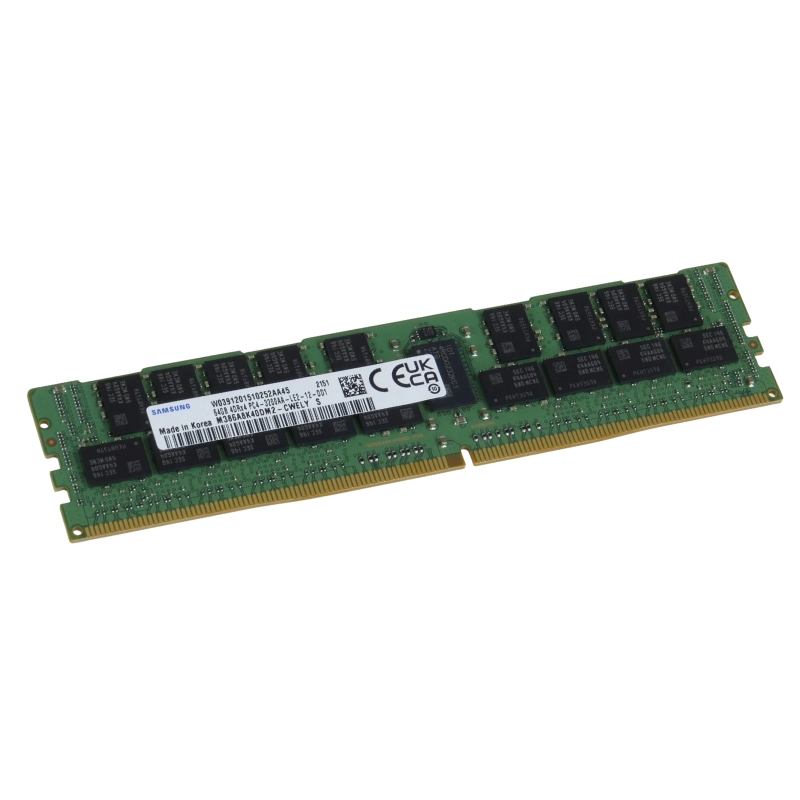


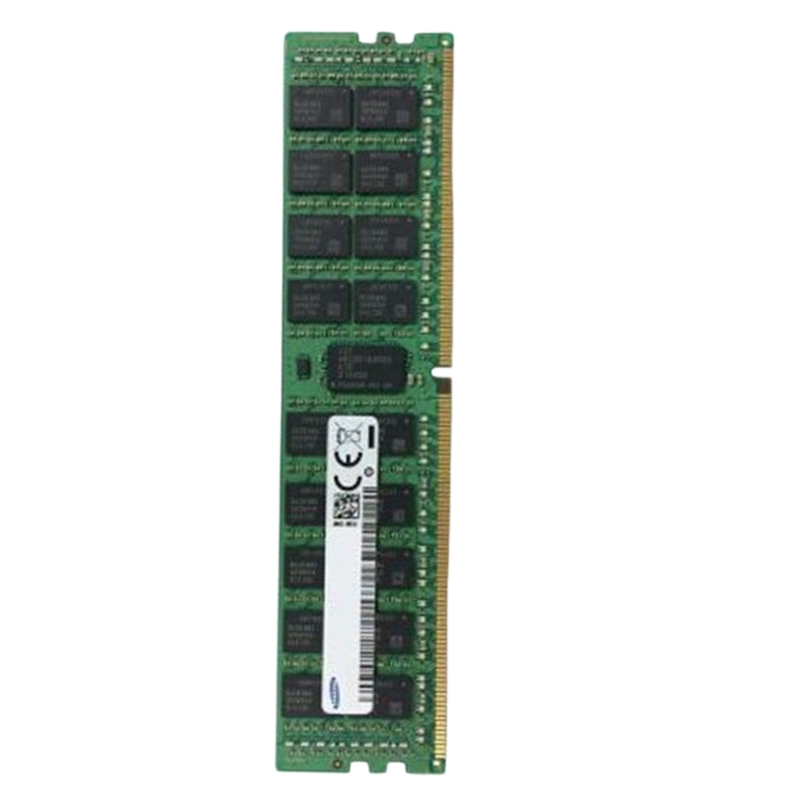
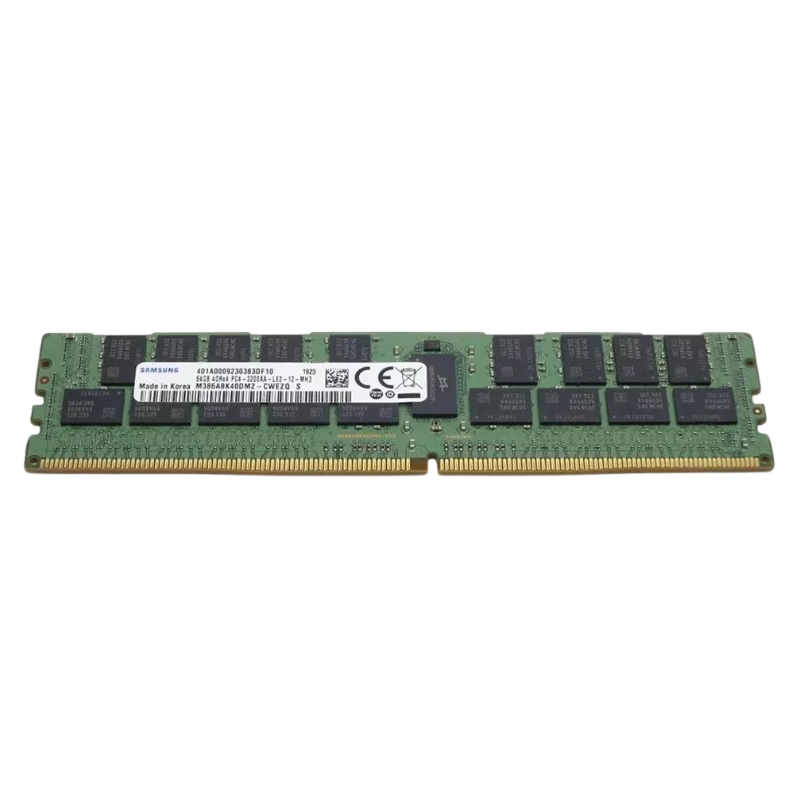
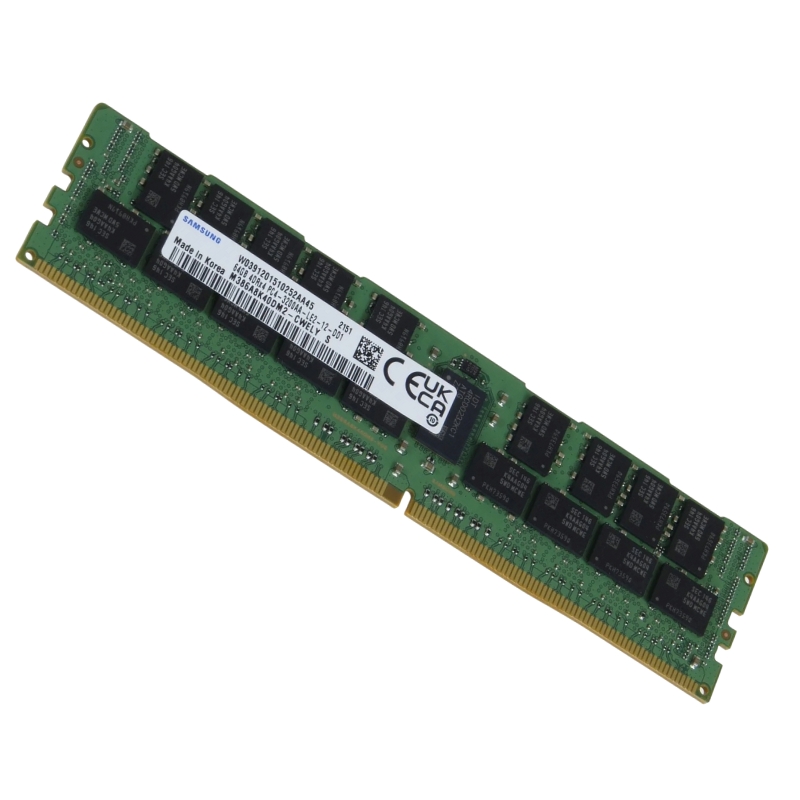
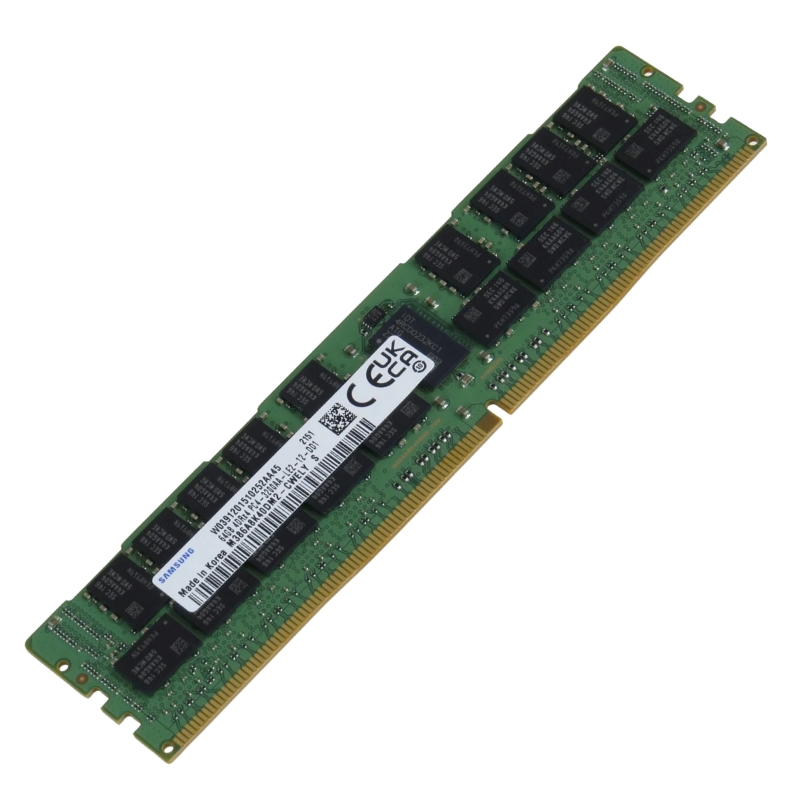
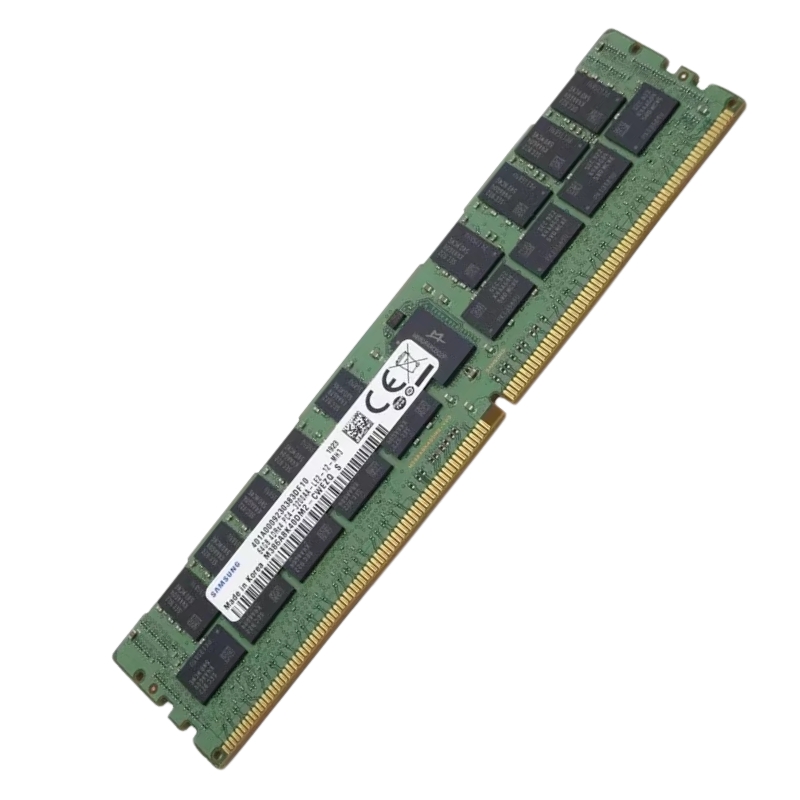
Samsung M393A8G40CB4-CWE 64GB RDIMM PC4-25600 Memory Module. New Sealed in Box (NIB) with 3 Years Warranty
| SKU/MPN | Warranty | Price | Condition | You save |
|---|---|---|---|---|
| M393A8G40CB4-CWE | 1 Year Warranty | $1,198.00 | New (System) Pull | You save: $419.30 (26%) |
| M393A8G40CB4-CWE | 1 Year Warranty | $1,870.00 | New Sealed in Box (NIB) | You save: $654.50 (26%) |
In the demanding environment of modern data centers, cloud infrastructure, and enterprise servers, memory reliability and performance are non-negotiable. At the heart of these systems lies a specific class of memory: Registered ECC DIMMs (RDIMMs). The Samsung M393A8G40CB4-CWE represents a pinnacle of this technology, engineered for mission-critical stability and throughput. Unlike standard desktop memory, server memory must contend with continuous operation, vast data sets, and the imperative of zero data corruption.
In the realm of enterprise computing and data center infrastructure, memory is not merely a component; it is the lifeblood that dictates system performance, stability, and scalability. Among the myriad of options, Samsung's lineup of server-grade memory modules stands as a benchmark for reliability and performance. The Samsung M393A8G40CB4-CWE represents a specific, high-capacity solution engineered for servers demanding robust error correction and unwavering data integrity. This module is not a consumer-grade part but a precision tool designed for continuous operation in mission-critical environments, from cloud server racks and enterprise databases to high-performance computing clusters and virtualization hosts.
The Samsung M393A8G40CB4-CWE is a meticulously engineered component with specifications tailored for server workloads. Understanding these core parameters is essential for system compatibility and performance planning.
The fundamental identity of this memory module is defined by a set of key technical attributes that determine its place within a server ecosystem.
The part number M393A8G40CB4-CWE follows Samsung's internal nomenclature, signaling its server (M393) lineage, 64GB capacity (A8G40), and specific revision/feature set (CB4-CWE). The module offers a substantial 64GB (Gigabytes) of capacity in a single module, configured as a 1x64GB stick. This high-density design allows system builders to achieve large total memory configurations (e.g., 512GB, 1TB, or more) with fewer physical slots, which can improve power efficiency and simplify system architecture.
This module utilizes DDR4 SDRAM (Double Data Rate 4 Synchronous Dynamic Random-Access Memory). DDR4 represents a significant advancement over DDR3, offering higher data rates, increased module densities, and lower operating voltage. Specifically, it is a PC4-25600 module. The "PC4" denotes DDR4, and the "25600" refers to the theoretical maximum data transfer rate in megabytes per second (MB/s). This module is an ECC Registered RDIMM (Error-Correcting Code Registered Dual In-line Memory Module), a combination critical for server stability.
Performance in server memory is measured by both speed and the ability to maintain that speed reliably under load across multiple modules.
The module operates at a data rate of 3200 Mbps (Megabits per second per pin). This is often expressed as a transfer rate of 25600 MB/s (Megabytes per second) for the 64-bit wide module, hence the PC4-25600 classification. The base clock frequency is 1600 MHz, doubled by the DDR (Double Data Rate) technology to achieve the effective 3200 MT/s (MegaTransfers per second) speed. This high data rate accelerates data-intensive applications, reduces latency for cached operations, and improves overall system throughput.
The module's latency is specified by its CL22 timing (CAS Latency 22). CAS Latency is the number of clock cycles between a read command and the moment data is available. While higher clock speeds often accompany slightly higher CAS latencies, the overall performance (often measured in nanoseconds of absolute latency) is optimized for server workloads that prioritize bandwidth and stability over ultra-low latency gaming-style timings. The CL22 rating at 3200 MT/s is a standard and efficient timing for this class of server memory.
The "ECC Registered" designation is what fundamentally separates this module from standard desktop memory. It incorporates two key technologies for server-grade robustness.
ECC is a non-negotiable feature for any server where data integrity and uptime are paramount. It provides advanced error detection and correction.
ECC memory includes extra memory bits (e.g., 8 bits for a 64-bit word, making it a 72-bit module) that store a special code. Every time data is written to memory, the code is calculated and stored. When the data is read, the code is recalculated and compared to the stored code. If a single-bit error (a "soft error" caused by cosmic rays, electrical noise, etc.) is detected, the ECC circuitry can instantly correct it without any interruption to the system. It can also detect, though not always correct, multi-bit errors. This prevents silent data corruption that could lead to application crashes, database corruption, or computational errors.
In a server running 24/7 for weeks or months, the probability of a memory error becomes significant. ECC provides continuous protection, ensuring that financial transactions, customer records, scientific calculations, and virtual machine states remain intact. This dramatically improves system reliability and mean time between failures (MTBF), a critical metric for data center operators.
Registration is a technology that enables stability and support for high memory capacities, working in tandem with ECC.
An RDIMM incorporates a register (or buffer) on the module itself, placed between the memory controller and the DRAM chips. This register buffers the command, address, and control signals, reducing the electrical load on the memory controller. This buffering allows a system to support more memory modules per channel (typically 2-3 RDIMMs vs. 1-2 Unbuffered DIMMs) and higher total memory capacity without signal degradation.
Compared to Unbuffered DIMMs (UDIMMs, common in desktops), RDIMMs offer greater capacity and stability at the cost of a slight, typically one-clock-cycle, latency increase due to buffering. Compared to Load-Reduced DIMMs (LRDIMMs), which use a more advanced buffer, RDIMMs offer an excellent balance of performance, capacity, and cost for most mainstream server applications. The M393A8G40CB4-CWE is an RDIMM, making it ideal for general-purpose servers, storage servers, and business application servers.
The module adheres to the industry-standard 288-pin layout defined for DDR4 DIMMs. The pin count and notch key position are different from DDR3 (240-pin) to prevent accidental insertion into an incompatible slot. The 2Rx4 designation in the part number indicates the module's internal organization: it is a 2-Rank module (2R) with an x4 data width per DRAM chip. This rank and organization configuration is optimized for performance and compatibility with modern server memory controllers, allowing for efficient rank interleaving.
The module operates at a 1.2 Volts (V), which is the standard voltage for DDR4 memory. This is a significant reduction from DDR3's 1.5V or 1.35V, resulting in lower power consumption and reduced heat output—a crucial advantage in densely packed server racks where thermal management and power efficiency directly impact operational costs. The module supports advanced power management features inherent to the DDR4 standard, allowing for further power savings during periods of low activity.
Determining the correct application for this specific memory module is vital for a successful system build or upgrade.
The Samsung M393A8G40CB4-CWE is designed for servers and workstations that support DDR4 ECC Registered RDIMM memory. Compatibility is determined by the server's motherboard/chipset and its CPU (e.g., Intel Xeon Scalable Processors, AMD EPYC Processors, or select Intel Core X-series/AMD Threadripper PRO platforms that support ECC RDIMM). It is imperative to consult the system or motherboard manufacturer's Qualified Vendor List (QVL) to confirm this exact model (M393A8G40CB4-CWE) is tested and supported. Using non-QVL memory, even if technically similar, can lead to boot failures or unstable operation in servers.
This 64GB module excels in a variety of demanding server scenarios where high capacity per module and data integrity are key.
Hypervisors like VMware vSphere, Microsoft Hyper-V, and Proxmox VE are notoriously memory-hungry. Each virtual machine (VM) requires a dedicated allocation of RAM. A server equipped with eight of these modules would provide 512GB of high-speed, reliable ECC memory, capable of hosting dozens of VMs for web servers, application servers, domain controllers, and development environments, ensuring isolation and stability between workloads.
Platforms such as SAP HANA, Oracle Database In-Memory, and Redis perform optimally when entire datasets reside in RAM. The massive capacity of 64GB per module allows for the construction of servers with terabytes of memory, enabling lightning-fast transaction processing, real-time analytics, and big data computation by eliminating the latency of disk-based storage for active data.
Scientific simulations, financial modeling, genomic sequencing, and 3D rendering farms process colossal datasets. These workloads benefit immensely from the high bandwidth of 3200MT/s memory and the stability provided by ECC, as a single uncorrected error could invalidate days of computation. The module's capacity allows for larger problems to be held in memory, reducing slower disk paging.
High-end Network-Attached Storage (NAS) and Storage Area Network (SAN) appliances from vendors like QNAP, Synology, or custom FreeNAS/TrueNAS builds often use ECC RDIMMs. Memory is used for caching read and write operations (ZFS ARC/L2ARC), dramatically accelerating file access speeds and providing protection against data corruption within the cache layer itself. A 64GB module provides ample cache space for busy storage servers.


 Contact Us
 Information
 Catalog
 Solid State Drives (SSD)
 Network Switches
 Hard Disk Drives
 HBA & Controllers
 PC & Servers
 PC & Server Memory
 CPU & Processors
 Network Routers
 Power Supplies
 Tape Drives & Libraries
 Network Devices
 Computer & Network Cables