
(7% discount is applied at checkout)
Cart is empty
Your go-to destination for cutting-edge server products
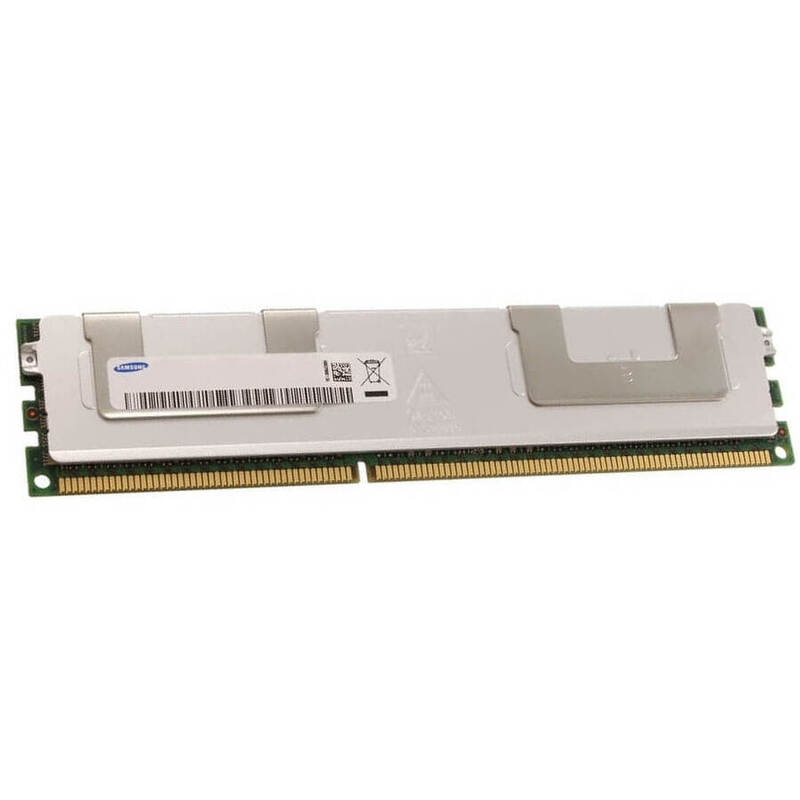
Samsung M393A8G40MB2-CVF 64GB PC4-23400 2933MHZ Cl21 Ecc DDR4 SDRAM Registered RAM. New (System) Pull with 1 year replacement warranty
| SKU/MPN | Warranty | Price | Condition | You save |
|---|---|---|---|---|
| M393A8G40MB2-CVF | 1 Year Warranty | $950.00 | New (System) Pull | You save: $332.50 (26%) |
| M393A8G40MB2-CVF | 1 Year Warranty | $1,099.00 | New Sealed in Box (NIB) | You save: $384.65 (26%) |
The Samsung M393A8G40MB2-CVF RAM is a high-performance memory module that comes with a capacity of 64GB. This impressive capacity makes it an ideal choice for users who require a large amount of memory to handle demanding tasks and applications.
In the demanding world of enterprise computing, server stability, data integrity, and unwavering performance are non-negotiable. At the heart of a reliable server infrastructure lies its memory subsystem, and the Samsung M393A8G40MB2-CVF 64GB DDR4 RDIMM module stands as a testament to engineering excellence. This module is not merely a component; it is a critical investment in operational continuity, designed for multi-socket servers handling intensive workloads such as virtualization, in-memory databases, high-performance computing (HPC), and large-scale data analytics. Its specifications read as a blueprint for robust server architecture, balancing immense capacity with stringent error correction and optimized speed.
Understanding Samsung's part number reveals the core attributes of this module. The "M393" prefix signifies a registered ECC DDR4 module. "A8G40" denotes a 64-gigabit (8GB) component density with a 4-bit pre-fetch and a 40-bit internal bank count. "MB2" indicates the specific revision and design. The crucial suffix "-CVF" is the speed bin identifier: "C" for the generation, "V" for 1.2V operating voltage, and "F" representing a speed grade of 2933 Mbps at CL21 timings. This alphanumeric code is your assurance of the module's exact performance profile and compatibility.
The M393A8G40MB2-CVF offers a massive single-module capacity of 64 gigabytes (GB). It is configured as a 1x64GB kit (single module), utilizing a 2 Rank by 4 (2Rx4) architecture. This 2R design helps improve memory bandwidth efficiency within a channel compared to single-rank modules, allowing for better interleaving and performance in data-intensive applications.
This module operates at a blistering data rate of 2933 million transfers per second (MT/s), marketed as PC4-23400. The "PC4" denotes DDR4, and the "23400" refers to the theoretical peak bandwidth in megabytes per second (approximately 23,400 MB/s). This high bandwidth is essential for reducing bottlenecks in CPU-to-memory communication, ensuring that processors are fed with data as rapidly as possible.
The module runs at a CAS Latency (CL) of 21 cycles at its rated 2933 Mbps speed. Timings are a critical balance between speed and responsiveness; this CL21 timing is optimized for the stability and performance demands of the server environment at this frequency, ensuring reliable command execution.
Operating at a low 1.2 volts, this DDR4 RDIMM adheres to the JEDEC standard for DDR4, providing significant power savings over previous-generation DDR3 modules (typically 1.35V or 1.5V). This reduced voltage translates directly into lower power consumption and heat generation at the rack level, a vital consideration for data center operational expenses (OPEX) and cooling strategies.
Beyond raw speed and capacity, the Samsung M393A8G40MB2-CVF incorporates advanced technologies that define enterprise-grade memory. These features are what separate server memory from standard desktop RAM.
This module combines two key technologies: Error-Correcting Code (ECC) and Registered (or Buffered) design.
ECC is a non-optional feature for any serious server deployment. It detects and corrects the most common types of internal data corruption. Single-bit errors are corrected on-the-fly without any system interruption, while multi-bit errors are detected and reported to the system to prevent corrupted data from propagating. This dramatically reduces silent data errors and system crashes, ensuring data accuracy and application stability.
The "Registered" aspect refers to the inclusion of a register (or buffer) on the module itself. This register sits between the server's memory controller and the DRAM chips. It buffers the command and address signals, reducing the electrical load on the memory controller. This allows a single memory channel to support more modules (in this case, high-density 64GB modules) without signal degradation, enabling much larger total system memory capacities. It enhances signal integrity and system stability, especially in multi-socket servers fully populated with memory.
The physical construction of this module is engineered for the rigors of data center environments.
The module utilizes the standard 288-pin layout defined for DDR4 RDIMMs. The notch key position is different from DDR3 or DDR5, preventing accidental insertion into an incompatible motherboard slot. The gold-plated contacts ensure a reliable, corrosion-resistant connection.
High-density memory modules generate heat. The M393A8G40MB2-CVF typically features a standard or low-profile aluminum heat spreader. This passive cooling solution efficiently dissipates heat away from the DRAM chips, maintaining optimal operating temperatures and preventing thermal throttling that could impact performance and longevity. Proper data center airflow management is complementary to this design.
This module is designed for compatibility with a wide range of enterprise servers from major OEMs like Dell EMC (PowerEdge), HPE (ProLiant, Apollo), Lenovo (ThinkSystem), Cisco (UCS), and Supermicro, among others. It is crucial to verify compatibility with the specific server model's Qualified Vendor List (QVL) to ensure certified operation at the advertised speeds. It is intended for use in systems with Intel Xeon Scalable processors (e.g., Cascade Lake, Skylake-SP) or compatible AMD EPYC platforms that support DDR4-2933 RDIMMs.
The specific characteristics of the Samsung M393A8G40MB2-CVF make it ideally suited for particular high-value server workloads where capacity, reliability, and throughput converge.
In hypervisor environments like VMware vSphere, Microsoft Hyper-V, or KVM, memory is a primary resource constraint. A single 64GB RDIMM allows for higher virtual machine (VM) density per host. The ECC protection is vital for the consolidated workloads, ensuring that a memory error in one VM does not affect others or the host. The high bandwidth supports the aggregated I/O demands of multiple active VMs.
Platforms such as SAP HANA, Oracle Database In-Memory, and Microsoft SQL Server Hekaton thrive on vast pools of fast, reliable memory. The 64GB capacity allows for larger datasets to be held entirely in RAM, accelerating query performance by orders of magnitude. The ECC functionality is absolutely critical here, as a single uncorrected memory error could corrupt a massive in-memory database, leading to severe business consequences.
Clusters used for computational fluid dynamics, genomic sequencing, financial modeling, and climate research require immense memory bandwidth and capacity to process massive datasets. The 2933 Mbps speed of this module helps reduce compute cycle wait times, while the large 64GB footprint allows complex models to reside in memory across many nodes, facilitating faster time-to-solution.
Frameworks like Apache Spark often perform intermediate processing stages in memory. Larger, faster RAM modules enable more efficient data shuffling and caching, significantly speeding up batch processing and real-time analytics jobs on data lakes and warehouses.
Large-scale deployments of SAP, Oracle E-Business Suite, or Salesforce run on robust server fleets. These transactional systems benefit from the stability offered by ECC RDIMMs and the performance provided by high-speed DDR4 to handle concurrent user requests and complex business logic efficiently.
Integrating the Samsung M393A8G40MB2-CVF into a server ecosystem requires careful planning to maximize its benefits.
Servers have specific memory population rules to enable optimal multi-channel architectures (e.g., 6-channel, 8-channel). These rules dictate the order in which slots must be filled to achieve the advertised memory bandwidth. Using 64GB modules allows an administrator to reach a very high total memory capacity (e.g., 1TB, 2TB, or more in a dual-socket server) while potentially using fewer DIMM slots per channel, which can sometimes allow the memory to run at higher speeds compared to fully populating every slot with lower-density modules.
For best performance and stability, it is strongly recommended to populate servers with identical memory modules—same part number, capacity, speed, rank, and manufacturer. Mixing different modules (even from the same brand with different specs) can cause the system to operate all memory at the slowest common denominator of speed and timings, or in worst cases, cause boot failures.
The "2Rx4" designation is a key technical detail with practical implications for system configuration.
A "rank" is a set of DRAM chips that work together to respond to a command from the memory controller, forming the data width (typically 64 bits for ECC, plus 8 bits for ECC, totaling 72 bits). A "2R" module has two independent sets of these chips, which the memory controller can access separately. The "x4" refers to the organization of the individual DRAM chips; they have a 4-bit wide data interface. x4-based modules are essential for supporting advanced reliability features like memory chipkill (SDDC) in server platforms, which can survive a complete DRAM chip failure.
The dual-rank design generally offers better performance than a single-rank (1R) module of the same capacity because it provides more banks for the memory controller to interleave accesses across, hiding latency. However, it may present a slightly higher electrical load than a 1R module. This is why server memory population guides often specify configurations based on rank count per channel. The 64GB capacity achieved in a 2R design represents a significant engineering feat in DRAM density.


 Contact Us
 Information
 Catalog
 Solid State Drives (SSD)
 Network Switches
 Hard Disk Drives
 HBA & Controllers
 PC & Servers
 PC & Server Memory
 CPU & Processors
 Network Routers
 Power Supplies
 Tape Drives & Libraries
 Network Devices
 Computer & Network Cables