
(7% discount is applied at checkout)
Cart is empty
Your go-to destination for cutting-edge server products
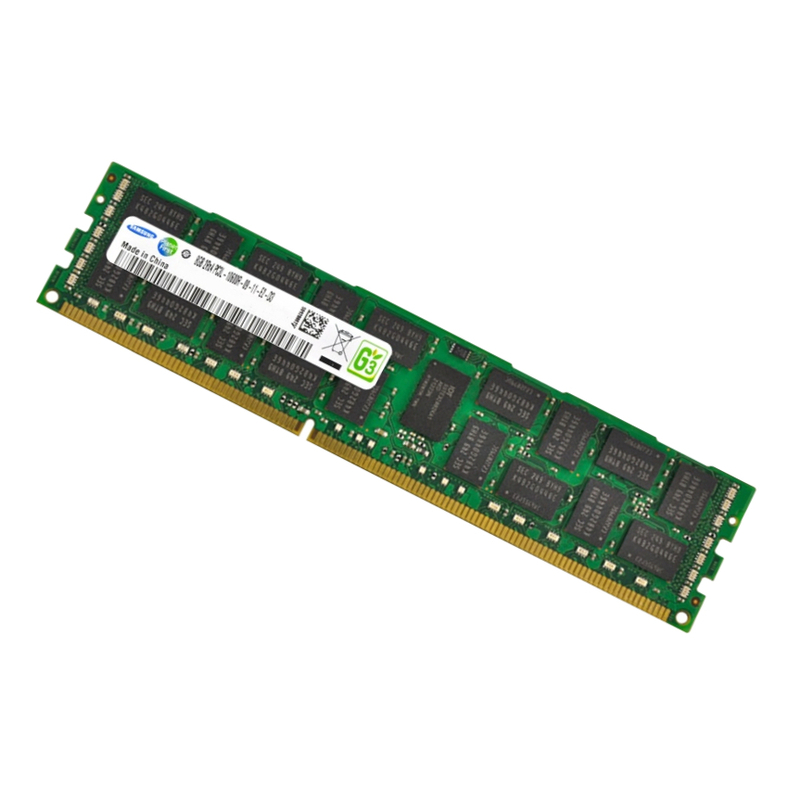
Samsung M393A8G40MB2-CVFBQ 64GB RAM 2933mhz Pc4-23400 Cl21 Ecc Registered DDR4 SDRAM 288-Pin. New (System) Pull with 1 year replacement warranty
| SKU/MPN | Warranty | Price | Condition | You save |
|---|---|---|---|---|
| M393A8G40MB2-CVFBQ | 1 Year Warranty | $950.00 | New (System) Pull | You save: $332.50 (26%) |
| M393A8G40MB2-CVFBQ | 1 Year Warranty | $1,099.00 | New Sealed in Box (NIB) | You save: $384.65 (26%) |
The Samsung M393A8G40MB2-CVFBQ RAM is equipped with an impressive capacity of 64GB, making it an ideal choice for users who require high-performance memory for their demanding tasks. Whether you are a professional gamer, video editor, or data analyst, this RAM module can handle the most resource-intensive applications without compromising on performance.
The Samsung M393A8G40MB2-CVFBQ is a cornerstone component in modern data center and enterprise server environments, engineered to deliver uncompromising reliability, high capacity, and robust performance. This specific module belongs to the esteemed family of Samsung 8Gb B-die based DDR4 Registered RDIMMs, a product line renowned for its stability under continuous load. As a 64GB single module operating at 2933 Mbps, it represents a critical solution for memory-intensive applications, from large-scale virtualization and in-memory databases to high-performance computing (HPC) and cloud infrastructure. Its design prioritizes data integrity and system uptime, making it an indispensable asset for IT infrastructure where failure is not an option.
At its core, this module is defined by a precise set of technical parameters that dictate its compatibility and capabilities. Understanding this alphanumeric identity—M393A8G40MB2-CVFBQ—is key to selecting the correct component for your server infrastructure.
The part number is a detailed roadmap of the module's attributes. Breaking it down: 'M' indicates a memory module. '393' signifies a DRAM component. 'A' denotes a 288-pin RDIMM form factor. '8G40' reveals the component density and organization; here, it points to the 8Gb (Gigabit) DRAM chips used in its construction. 'MB2' is a design revision code. The suffix 'CVFBQ' is equally critical: 'C' indicates a normal commercial operating temperature (0°C to 85°C TC). 'V' specifies the operating voltage of 1.2V. 'F' denotes the speed grade of 2933 megabits per second (Mbps). 'B' represents the CAS Latency (CL) of 21. 'Q' confirms the component revision. This meticulous naming convention ensures precise identification for procurement and compatibility checks.
The module adheres to the standard 288-pin RDIMM (Registered Dual In-line Memory Module) form factor. This physical design is exclusive to server and workstation platforms, incompatible with desktop DIMM slots. The 'Registered' aspect incorporates a register (or buffer) on the module to reduce electrical load on the memory controller, enabling the support of more modules per channel—a fundamental requirement for high-capacity server configurations.
The performance profile of this memory is defined by its interaction with the CPU's memory controller and the system bus.
This is a single 64-gigabyte module. Offering such high density in a single slot allows system builders to achieve massive total memory capacities (e.g., 512GB, 1TB, or more) in multi-slot servers without physically populating every slot, leaving room for future expansion. The configuration '2Rx4' indicates a dual-rank module with a x4 data width. Dual-rank modules offer better performance in most server workloads compared to single-rank modules by allowing more efficient interleaving of memory accesses.
The module operates at a data rate of 2933 million transfers per second (MT/s), commonly referred to as 2933 Mbps. This is also expressed as PC4-23400, where 'PC4' indicates DDR4 and '23400' refers to the theoretical peak bandwidth in megabytes per second (MB/s) for the module (approximately 23,400 MB/s). This speed is a balanced sweet spot for many modern server platforms, offering high bandwidth while maintaining excellent signal integrity and compatibility with a wide range of Intel Xeon Scalable and AMD EPYC processors.
CAS Latency (CL) is a critical timing parameter, measuring the delay in clock cycles between the memory controller requesting data and the first bit of data being available. A CAS Latency of 21 (CL21) is standard and optimized for the 2933 Mbps speed grade in server RDIMMs, ensuring stable operation under load. Server memory prioritizes stability and capacity over ultra-tight timings, making CL21 an appropriate and reliable specification.
The module operates at the standard DDR4 voltage of 1.2V, which is significantly lower than the 1.5V or 1.35V of older DDR3 generations. This reduction in voltage directly translates to lower power consumption and reduced heat output per module—a crucial factor when deploying dozens or hundreds of modules in a data center, where energy efficiency and thermal management are paramount operational concerns.
The defining characteristics that separate server memory from consumer-grade memory are embodied in its Error-Correcting Code (ECC) and Registered design. These are not performance enhancers in the traditional sense but are foundational to system integrity.
ECC is a non-negotiable feature for any mission-critical computing. It enables the memory module to detect and correct the most common types of internal data corruption. Single-bit errors are corrected on-the-fly without any operating system or application intervention, while multi-bit errors are detected and reported to the system. This drastically reduces the risk of silent data corruption, system crashes (blue screens/panics), and application faults caused by memory errors, which can be induced by cosmic rays, electrical noise, or other factors. The Samsung M393A8G40MB2-CVFBQ includes this essential ECC functionality.
ECC works by using extra bits (e.g., 8 bits for every 64 bits of data) to store an encrypted code. When data is written, a code is calculated and stored with it. When the data is read, the code is recalculated and compared to the stored code. Any mismatch triggers the correction logic. This process happens at the hardware level with minimal performance overhead, providing continuous, real-time protection for data residing in RAM.
The "Registered" in this module's description is a key differentiator. An RDIMM places a register (a hardware chip) between the memory controller and the DRAM chips. This register buffers the command and address signals, refreshing them before they reach the memory chips.
The primary benefit is a reduced electrical load on the memory controller. By buffering the signals, the controller sees only the register, not all the individual DRAM chips. This allows a server motherboard to support significantly more memory modules per channel (often 2 or 3 per channel with RDIMMs versus only 1 with unbuffered UDIMMs) and achieve much higher total system memory capacities. It also enhances signal integrity and system stability, especially at higher speeds and in fully-populated memory configurations.
This memory module is not designed for consumer PCs. Its target ecosystem is exclusively enterprise and data center server platforms.
The Samsung M393A8G40MB2-CVFBQ is compatible with a wide array of modern server systems that utilize DDR4 memory and support Registered ECC RDIMMs. This includes platforms from leading OEMs such as Dell (PowerEdge series), HPE (ProLiant series), Lenovo (ThinkSystem), Cisco (UCS), and Supermicro. It is also commonly used in white-box server builds and high-end workstations based on server-grade motherboards.
This 2933 Mbps module is designed to work with server CPU families that officially support this speed. Primarily, this includes Intel Xeon Scalable processors (2nd Generation "Cascade Lake" and later) and AMD EPYC 7002 "Rome" and 7003 "Milan" series processors. Actual operating speed will be determined by the memory controller of the specific CPU and the system BIOS settings, often defaulting to the highest common speed supported by all installed modules and the CPU.
The combination of high density (64GB), robust speed (2933 Mbps), and enterprise-grade reliability (ECC/Registered) makes this module suitable for a vast spectrum of demanding server workloads.
Virtualization hosts (VMware vSphere, Microsoft Hyper-V, KVM) are notoriously memory-hungry. Each virtual machine requires dedicated RAM allocation. High-density modules like the 64GB RDIMM allow for greater virtual machine density per physical server, improving consolidation ratios and reducing hardware, power, and cooling costs in the data center.
Platforms such as SAP HANA, Microsoft SQL Server (with In-Memory OLTP), and other real-time analytics databases store vast datasets in RAM for instantaneous query response. The capacity and reliability of these Samsung modules are essential for the performance and uptime of these business-critical applications.
Scientific computing, financial modeling, and 3D rendering farms require massive, fast, and error-free memory to process complex datasets. The bandwidth provided by 2933 Mbps modules and the stability ensured by ECC are vital for completing these large-scale computations accurately and without interruption.


 Contact Us
 Information
 Catalog
 Solid State Drives (SSD)
 Network Switches
 Hard Disk Drives
 HBA & Controllers
 PC & Servers
 PC & Server Memory
 CPU & Processors
 Network Routers
 Power Supplies
 Tape Drives & Libraries
 Network Devices
 Computer & Network Cables