
(7% discount is applied at checkout)
Cart is empty
Your go-to destination for cutting-edge server products
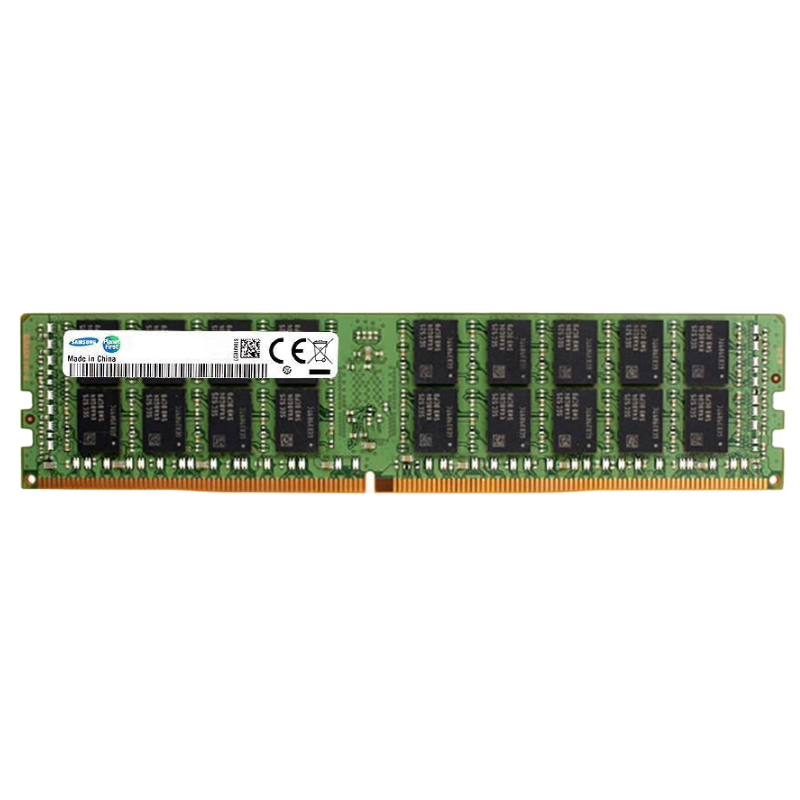
Samsung M393AAG40M3B-CYFCQ 128GB PC4-23400 DDR4-2933MHz ECC CL21 288-Pin DIMM 1.2V Quad Rank Memory Module. New Sealed in Box (NIB)
The Samsung M393AAG40M3B-CYFCQ 128GB PC4-23400 DDR4-2933Mbps 4RX4 ECC Memory module is engineered for enterprise-grade performance, delivering reliability and speed for intensive workloads.
The Samsung M393AAG40M3B-CYFCQ 128GB PC4-23400 DDR4-2933MHz ECC memory module belongs to a high-capacity enterprise server memory category designed to meet the rigorous demands of modern data centers, cloud platforms, virtualization clusters, and mission-critical enterprise workloads. This category focuses on reliability, scalability, and sustained performance under continuous operation, making it a fundamental component in server and workstation environments where data integrity and uptime are non-negotiable.
DDR4 server memory modules in this category are engineered to deliver improved bandwidth, reduced power consumption, and enhanced signal integrity compared to earlier generations. Operating at 2933MHz with PC4-23400 throughput, this memory segment supports high-speed data transfer between the processor and memory subsystem, which is essential for compute-intensive applications such as virtualization, database processing, in-memory analytics, artificial intelligence workloads, and enterprise resource planning systems.
The 128GB capacity classification represents the upper tier of DDR4 RDIMM memory density, allowing server administrators and system architects to maximize memory per slot and per node. This category is particularly suited for environments where memory consolidation is critical, such as hyper-converged infrastructure, private cloud deployments, and large-scale virtualization platforms. High-density modules reduce the total number of DIMMs required, enabling better airflow, lower power consumption per gigabyte, and simplified system configuration.
Memory modules in this capacity range support advanced server use cases including large virtual machine hosting, in-memory databases, real-time analytics engines, and enterprise application servers that require extensive memory allocation. By leveraging quad-rank architecture, this category ensures stable performance even under heavy parallel access patterns, maintaining consistent throughput across multiple memory channels.
Quad rank memory modules are a defining characteristic of high-capacity enterprise DIMMs. This architecture divides the memory into four logical ranks, allowing the memory controller to interleave access and improve overall efficiency. In this category, quad rank design supports higher densities without compromising signal stability, which is crucial for maintaining performance at DDR4-2933 speeds.
The quad rank configuration is optimized for modern server CPUs that are capable of handling higher rank counts per channel. This enables balanced memory population across multiple channels, ensuring optimal bandwidth utilization and reduced latency under enterprise workloads. Such architectural considerations make this category ideal for multi-socket server platforms deployed in data centers and enterprise IT environments.
Error Correcting Code memory is a defining feature of this server memory category. ECC functionality enables automatic detection and correction of single-bit memory errors while detecting multi-bit errors, significantly reducing the risk of data corruption and system crashes. This level of reliability is mandatory for enterprise servers, cloud infrastructure, financial systems, and scientific computing environments.
ECC DDR4 memory modules like those in this category are designed to operate continuously under high thermal and electrical stress. The integration of ECC logic ensures long-term data integrity, making this category suitable for applications where even minimal data errors can have severe operational or financial consequences.
Server memory modules in this category are validated for continuous operation in demanding environments. They are engineered to withstand extended uptime, frequent memory access cycles, and high utilization without degradation in performance. This makes them a preferred choice for enterprise servers running nonstop workloads such as cloud hosting, virtualization clusters, and high-availability database systems.
The combination of ECC protection, quad rank architecture, and enterprise-grade manufacturing standards ensures that memory in this category maintains consistent performance over extended periods. This stability is critical for organizations that rely on uninterrupted service delivery and predictable system behavior.
High-speed DDR4-2933 memory requires precise signal integrity to maintain stability at elevated frequencies. This category incorporates advanced PCB layouts, high-quality components, and stringent manufacturing tolerances to ensure clean signal transmission across the memory bus. These design elements reduce electrical noise and minimize the risk of timing errors.
Thermal efficiency is another key aspect of this category. Operating at 1.2V, DDR4 server memory significantly reduces power consumption compared to previous generations, lowering heat output and improving overall system efficiency. Reduced thermal stress contributes to longer component lifespan and improved reliability in dense server configurations.
This DDR4 RDIMM memory category is designed for compatibility with a wide range of enterprise server platforms from leading OEMs. It supports modern Intel and AMD server processors that are optimized for DDR4-2933 operation, ensuring seamless integration into contemporary server architectures. Compatibility validation ensures stable performance when deployed in certified server systems.
Registered DIMM design enhances electrical stability by buffering address and command signals, allowing servers to support higher memory capacities without compromising reliability. This makes RDIMM memory the preferred choice for enterprise-grade servers that require large memory footprints.
Enterprise servers often feature multiple CPU sockets and numerous memory channels per processor. This category of memory is engineered to perform optimally in such configurations, supporting balanced memory population and consistent bandwidth across channels. Proper channel utilization is essential for maximizing CPU performance and minimizing memory access latency.
High-capacity RDIMM modules enable efficient scaling in multi-socket systems by reducing the total number of DIMMs required per server. This simplifies memory configuration, improves airflow, and reduces overall system complexity while maintaining high memory throughput.
Memory modules in this category undergo extensive validation with server BIOS and firmware to ensure compatibility and stability. This validation process includes testing across different workloads, thermal conditions, and system configurations. Such rigorous qualification ensures predictable behavior in production environments.
Firmware-level compatibility also enables advanced memory management features such as memory mirroring, sparing, and advanced error reporting. These capabilities enhance system resilience and provide IT administrators with greater visibility into memory health and performance.
The DDR4-2933 speed grade delivers a theoretical bandwidth of PC4-23400, making this category suitable for data-intensive workloads that require fast memory access. Higher bandwidth directly benefits applications such as large-scale virtualization, in-memory databases, real-time analytics, and high-performance computing.
With a CAS latency of CL21, this category balances speed and stability, ensuring reliable performance across a wide range of enterprise workloads. Latency characteristics are optimized to deliver consistent response times, even under heavy memory access patterns.
DDR4 memory technology introduces significant improvements in efficiency compared to DDR3. Lower operating voltage reduces power consumption, while increased bank groups and improved prefetch architecture enhance parallelism. This category leverages these advancements to deliver higher performance per watt.
Improved efficiency translates into lower operational costs for data centers, as reduced power consumption and heat output decrease cooling requirements. This makes DDR4-2933 memory an attractive option for organizations seeking to optimize total cost of ownership.
Enterprise applications often require a balance between low latency and high throughput. This category of memory is engineered to provide consistent performance across diverse workloads, ensuring that both latency-sensitive and bandwidth-intensive applications perform reliably.
The quad rank architecture and registered design contribute to predictable access patterns, enabling server CPUs to efficiently schedule memory operations. This results in smoother performance under mixed workloads common in enterprise environments.
This DDR4 server memory category is well-suited for a broad range of enterprise and data center applications. High capacity, ECC protection, and reliable performance make it ideal for virtualization hosts, cloud infrastructure, database servers, and high-performance computing clusters.
In virtualized environments, high-density memory enables greater virtual machine consolidation, improving resource utilization and reducing hardware footprint. In database and analytics platforms, large memory capacity supports in-memory processing and faster query performance.
Cloud service providers and private cloud operators rely on high-capacity server memory to deliver scalable and responsive services. This category supports dense virtualization by providing ample memory resources per node, enabling efficient workload distribution.
ECC protection and enterprise-grade reliability are critical in cloud environments where data integrity and service availability are paramount. Memory modules in this category help maintain consistent performance across fluctuating workloads.
Modern databases and analytics platforms increasingly rely on large memory pools to process data in real time. This category of memory supports in-memory databases, real-time analytics engines, and machine learning workloads that require fast access to large datasets.
High bandwidth and stable latency characteristics enable efficient data processing, reducing bottlenecks and improving overall application performance. This makes the category an essential component in data-driven enterprise architectures.
The 288-pin DIMM form factor is the standard for DDR4 server memory, ensuring compatibility with modern server motherboards. This category adheres strictly to JEDEC specifications, ensuring mechanical and electrical compatibility across certified platforms.
Registered DIMM design improves signal integrity by buffering control signals, enabling stable operation at higher capacities and speeds. This physical and electrical design is optimized for enterprise servers that require large memory configurations.
Operating at 1.2V, this memory category delivers improved power efficiency compared to earlier generations. Lower voltage operation reduces energy consumption and heat generation, contributing to overall system efficiency.
Efficient power management is particularly important in data centers where energy costs and thermal constraints are critical considerations. DDR4 memory helps organizations achieve sustainability and cost-efficiency goals.
Dense server environments require memory modules that can operate reliably under constrained airflow and elevated temperatures. This category is engineered to maintain stability in such conditions, ensuring consistent performance across densely populated racks.
Advanced thermal and electrical design features contribute to long-term reliability, making this memory category suitable for high-density deployments in enterprise and cloud data centers.


 Contact Us
 Information
 Catalog
 Solid State Drives (SSD)
 Network Switches
 Hard Disk Drives
 HBA & Controllers
 PC & Servers
 PC & Server Memory
 CPU & Processors
 Network Routers
 Power Supplies
 Tape Drives & Libraries
 Network Devices
 Computer & Network Cables