
(7% discount is applied at checkout)
Cart is empty
Your go-to destination for cutting-edge server products
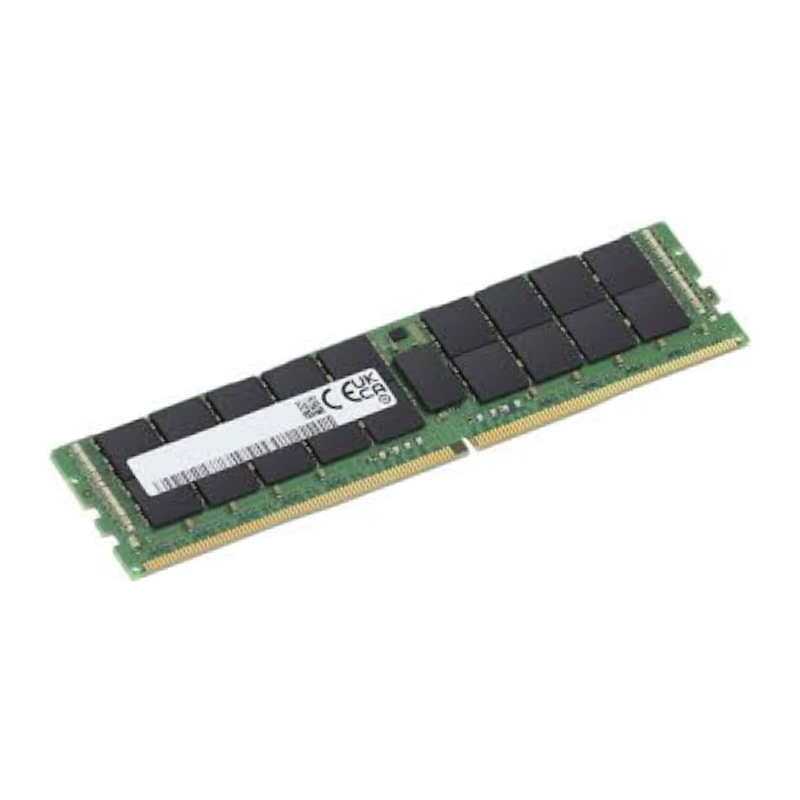


Samsung M393B2K70CMB-YF8 Memory 16GB 1x16GB 1066mhz Pc3-8500 Ecc Registered DDR3 SDRAM Dimm 240-Pin. New (System) Pull with 1 year replacement warranty
The Samsung M393B2K70CMB-YF8 is a high-performance 16GB DDR3L ECC Registered RDIMM designed for enterprise servers and professional workstations. With reliable error correction and energy-efficient low-voltage operation, this module ensures stability and durability for mission-critical applications.
The Samsung M393B2K70CMB-YF8 Memory 16GB 1x16GB 1066MHz PC3-8500 ECC Registered DDR3 SDRAM DIMM 240-Pin represents a specialized category of enterprise-grade server memory engineered to deliver stability, data integrity, and consistent performance within mission-critical computing environments. This category focuses on Registered ECC DDR3 memory modules designed specifically for servers, workstations, and enterprise infrastructure that demand reliability over consumer-level performance tuning. Built on Samsung’s advanced semiconductor manufacturing processes, this memory category emphasizes longevity, compatibility, and predictable behavior under sustained workloads.
Unlike standard desktop memory, this category integrates error correction and signal buffering technologies that significantly reduce system instability, making it ideal for data centers, virtualization platforms, database servers, and enterprise applications where downtime and data corruption are unacceptable. The 16GB capacity per module offers a balanced approach to scalability and performance, allowing system architects to populate multiple memory slots efficiently while maintaining optimal memory channel utilization.
DDR3 SDRAM forms the technological backbone of this memory category, offering improvements over previous DDR2 standards in terms of power efficiency, bandwidth, and overall signal integrity. Operating at 1066MHz with a PC3-8500 bandwidth rating, this category of memory is optimized for systems that prioritize stability and compatibility rather than aggressive overclocking or consumer gaming performance.
The DDR3 architecture supports higher memory densities and reduced operating voltage compared to older generations, enabling data centers to reduce overall power consumption while maintaining consistent throughput. In enterprise settings, DDR3 remains widely deployed due to its proven track record, extensive platform support, and predictable behavior across a wide range of server motherboards and chipsets.
The PC3-8500 designation signifies a theoretical peak bandwidth of approximately 8.5GB/s per module, which aligns with server workloads that require steady and sustained memory access rather than burst-oriented performance. This bandwidth profile is particularly effective for transactional databases, file servers, virtualization hosts, and enterprise applications that benefit from consistent memory latency and throughput.
This category of memory is tuned to operate within JEDEC specifications, ensuring broad compatibility across OEM and custom-built server platforms. The focus on specification adherence minimizes compatibility risks and simplifies system validation processes for IT professionals and system integrators.
Registered, or buffered, memory further distinguishes this category by introducing a register between the memory controller and the DRAM modules. This register reduces the electrical load on the memory controller, enabling systems to support larger memory configurations with improved signal integrity.
In multi-DIMM server configurations, registered memory allows for higher capacity scaling without sacrificing stability. This makes the Samsung M393B2K70CMB-YF8 category particularly suitable for servers with multiple memory channels and high DIMM counts, where unbuffered memory would struggle to maintain signal quality.
The 16GB capacity offered by this memory category strikes a practical balance between density and flexibility. A single 16GB DIMM allows system builders to incrementally scale memory capacity while maintaining optimal channel population strategies. This approach is beneficial for servers that may require future upgrades without complete memory replacement.
High-density single modules also simplify inventory management for IT departments, reducing the number of part variations required to maintain and upgrade server fleets. The 1x16GB configuration supports both initial deployments and phased expansion strategies in enterprise environments.
Using 16GB registered ECC modules enables efficient population of memory channels, ensuring balanced bandwidth distribution across CPU memory controllers. This category supports symmetric memory configurations that enhance overall system performance while maintaining redundancy and fault tolerance.
For virtualization and cloud environments, this capacity profile allows administrators to allocate sufficient memory resources to multiple virtual machines without exhausting physical memory slots prematurely.
The 240-pin DIMM form factor defines the physical interface for this memory category, ensuring compatibility with a wide range of DDR3-capable server and workstation motherboards. This standardized design simplifies installation and replacement, reducing downtime during maintenance or upgrades.
Samsung’s adherence to strict manufacturing tolerances ensures consistent physical and electrical characteristics across production batches, which is critical for enterprise deployments that rely on uniform hardware configurations.
This memory category is designed to operate seamlessly with server-grade CPUs and chipsets from major vendors that support DDR3 ECC Registered memory. It is particularly well-suited for platforms that require validated memory configurations to maintain warranty coverage and system certification.
System integrators and OEMs often specify memory modules like the Samsung M393B2K70CMB-YF8 due to their proven compatibility and reliability across diverse hardware ecosystems.
In data center environments, standardized memory modules like the Samsung M393B2K70CMB-YF8 simplify deployment, maintenance, and scalability. Cloud service providers prioritize memory categories that deliver consistent performance and low failure rates across thousands of servers.
This category’s focus on reliability and compatibility aligns with the operational requirements of modern cloud infrastructure.
The validation process for this category includes electrical testing, thermal stress testing, and compatibility verification across supported platforms. These measures ensure that the memory meets the stringent requirements of enterprise customers.
Consistent quality control enables organizations to deploy these modules with confidence in mission-critical applications.


 Contact Us
 Information
 Catalog
 Solid State Drives (SSD)
 Network Switches
 Hard Disk Drives
 HBA & Controllers
 PC & Servers
 PC & Server Memory
 CPU & Processors
 Network Routers
 Power Supplies
 Tape Drives & Libraries
 Network Devices
 Computer & Network Cables


