(7% discount is applied at checkout)
Cart is empty
Your go-to destination for cutting-edge server products
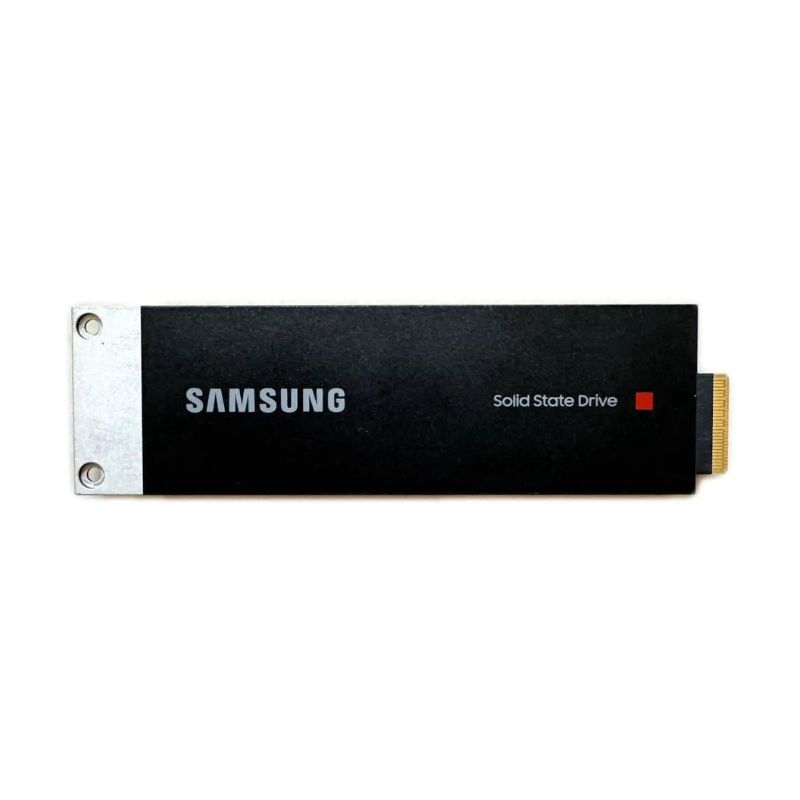


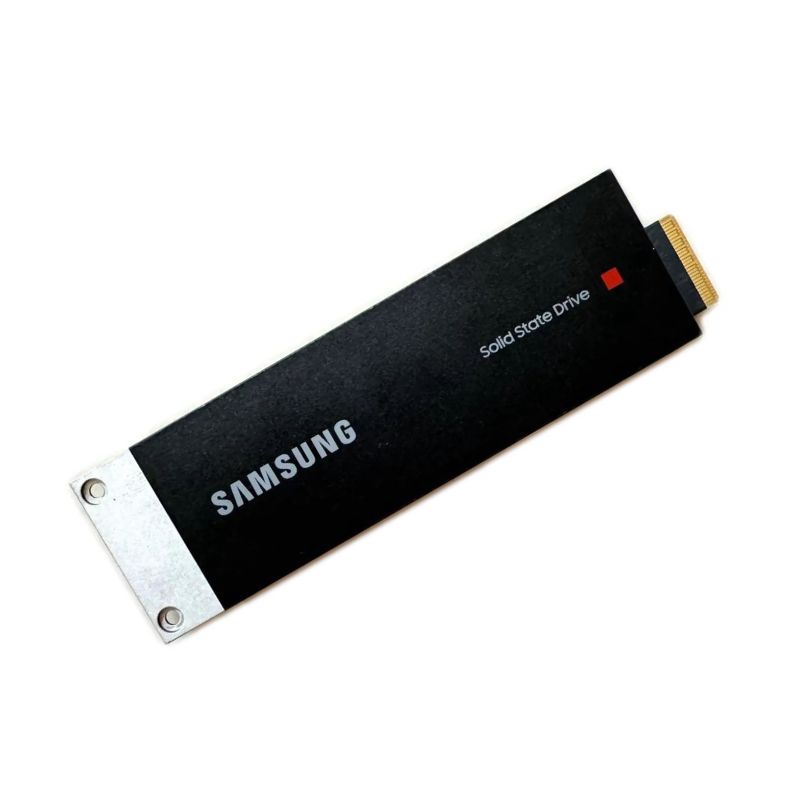
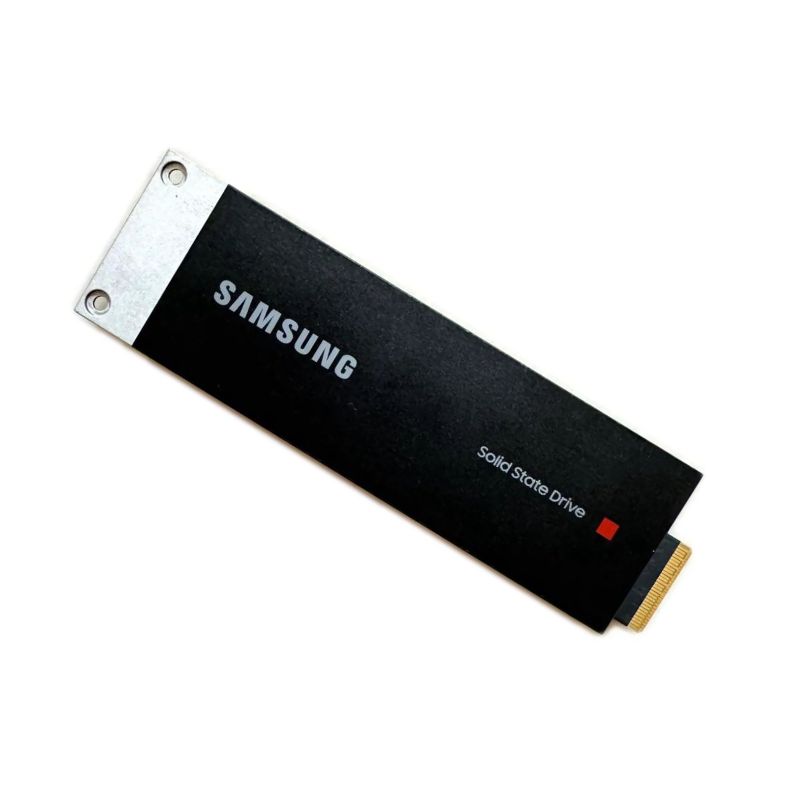
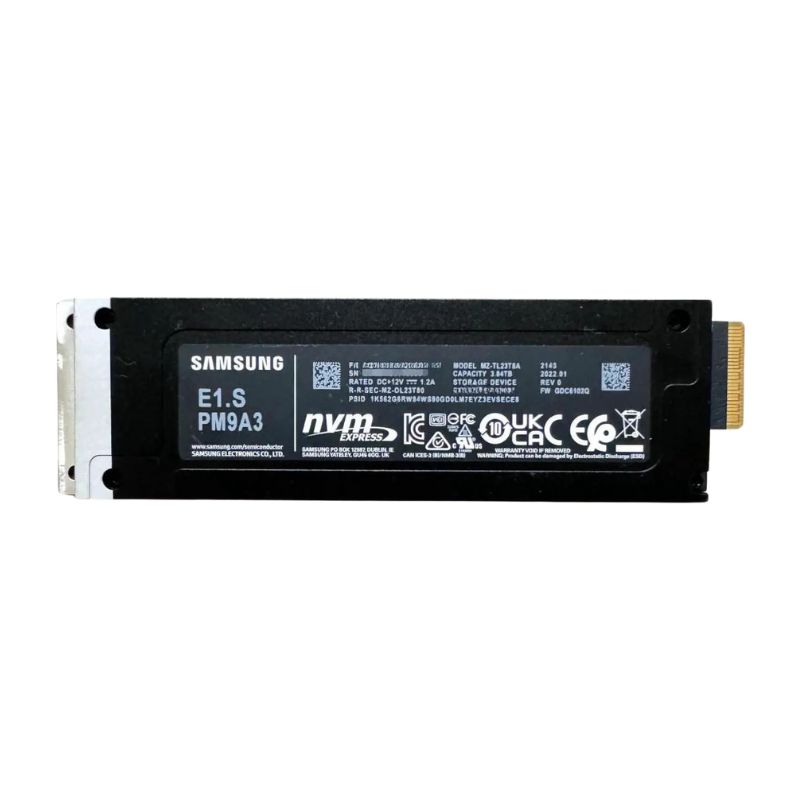
Samsung MZ-TL23T8A Pm9a3 3.84TB E1.S PCIE Gen 4x4 Internal 13.5 Watt 128 Layer V-Nand TLC Solid State Drive. New Sealed in Box (NIB) with 3 Years Warranty
The Samsung MZ-TL23T8A PM9A3 3.84TB solid-state drive is engineered for modern data centers and enterprise servers requiring superior throughput, minimized latency, and exceptional endurance. Built with advanced V6 (128-Layer) V-NAND TLC, this E1.S form factor SSD ensures outstanding performance consistency for high-demand workloads. Its optimized PCIe Gen 4 x4 interface delivers extremely fast data transmission, making it a reliable choice for scalable infrastructure environments.
The Samsung MZ-TL23T8A PM9A3 3.84TB E1.S PCIe Gen 4x4 internal solid state drive is engineered for advanced data workloads, hyperscale computing, cloud infrastructure, and enterprise-class storage subsystems. Built on a foundation of 128-layer V-NAND TLC technology, this drive represents an evolution of efficiency, durability, and scalable high-speed performance. It is optimized for environments requiring consistent throughput, efficient power consumption, and enhanced thermal management. By leveraging the E1.S form factor, it transforms data center density and simplifies storage expansion while reducing operational complexity.
With a Mean Time Between Failures (MTBF) of 2 million hours, the Samsung PM9A3 offers incredible dependability for critical workloads. It is built using high-quality components and advanced NAND management algorithms, ensuring consistent performance throughout its lifecycle.
Designed for highly scalable cloud and edge computing infrastructure, the PM9A3 series utilizes Samsung’s sixth-generation V-NAND technology to provide improved performance, durability, and energy efficiency. The E1.S design allows optimized airflow within modern server architectures, offering better thermal control and higher storage density.
The Samsung PM9A3 strikes an excellent balance between powerful performance and controlled energy usage. It offers efficient power draw even under demanding read/write operations, making it ideal for environments where thermal and electrical efficiency are essential.
The E1.S interface showcases transformative benefits in rack-optimized systems. Its slimmer, elongated structure enables increased airflow pathways and better cooling efficiency. With more drives accommodated within the same chassis footprint, organizations can scale storage to new heights without altering physical infrastructure. This shift from traditional 2.5-inch SSDs toward EDSFF standards substantially improves overall performance-per-watt ratios.
At the core of the PM9A3 series lies extraordinary read and write capabilities enabled by PCIe Gen 4x4 throughput. This interface doubles bandwidth compared to its Gen 3 predecessor, presenting exceptional gains in sequential and random access transfers. These advantages support artificial intelligence pipelines, large transactional databases, real-time analytics, virtualization, and multi-tenant hosting services.
With four lanes of PCI Express Gen 4 bandwidth, the drive handles large volumes of parallel traffic while preserving data flow consistency. This enables simultaneous activities such as high-speed caching, data indexing, and I/O-intensive tasks. Organizations running compute-heavy workloads benefit from faster response times and minimized queue saturation.
A major factor influencing an SSD’s reliability is its ability to maintain optimal operating temperature under load. The Samsung PM9A3 model incorporates sophisticated thermal distribution features that mitigate overheating risks. This allows the drive to sustain power levels up to roughly 13.5 watts without degradation or throttling. As hyperscale systems often experience dense population of storage units, E1.S form factor cooling benefits become even more compelling.
Designed with enterprise energy practices in mind, this SSD performs high-speed tasks with efficient power utilization. Advanced dynamic power management allows the drive to adjust consumption based on workload intensity, resulting in cost-effective performance scaling. The 13.5-watt threshold ensures safe and dependable operations across extended durations.
The foundation of the Samsung MZ-TL23T8A PM9A3 SSD is its advanced 128-layer V-NAND TLC storage technology. This architecture enhances areal density, improves read/write efficiency, and reduces error rates compared to earlier NAND generations. It also supports enhanced endurance cycles crucial for mission-critical enterprise environments.
The adoption of the E1.S EDSFF standard has revolutionized how hyperscale storage systems are engineered. Compared to traditional 2.5-inch designs, E1.S SSDs provide higher drive density, better thermal properties, and accelerated maintenance workflows. These improvements play a crucial role for enterprises expanding storage clusters or modernizing legacy installations.
Servers designed for EDSFF architecture take full advantage of the uniform, modular layout that E1.S SSDs provide. Swapping, inserting, and reorganizing drives becomes faster, improving serviceability. This leads to reduced downtime and enhanced overall infrastructure reliability.
Because E1.S drives can be densely packed without compromising performance, data centers gain significant improvement in rack utilization. More capacity fits into the same physical footprint, giving hyperscale environments the flexibility to grow without hardware redesigns.
The TLC V-NAND architecture ensures reliable program/erase cycles, and the SSD’s firmware constantly monitors health parameters to maintain optimal performance. Such endurance characteristics are essential for organizations with persistent data rotation.


 Contact Us
 Information
 Catalog
 Solid State Drives (SSD)
 Network Switches
 Hard Disk Drives
 HBA & Controllers
 PC & Servers
 PC & Server Memory
 CPU & Processors
 Network Routers
 Power Supplies
 Tape Drives & Libraries
 Network Devices
 Computer & Network Cables