(7% discount is applied at checkout)
Cart is empty
Your go-to destination for cutting-edge server products
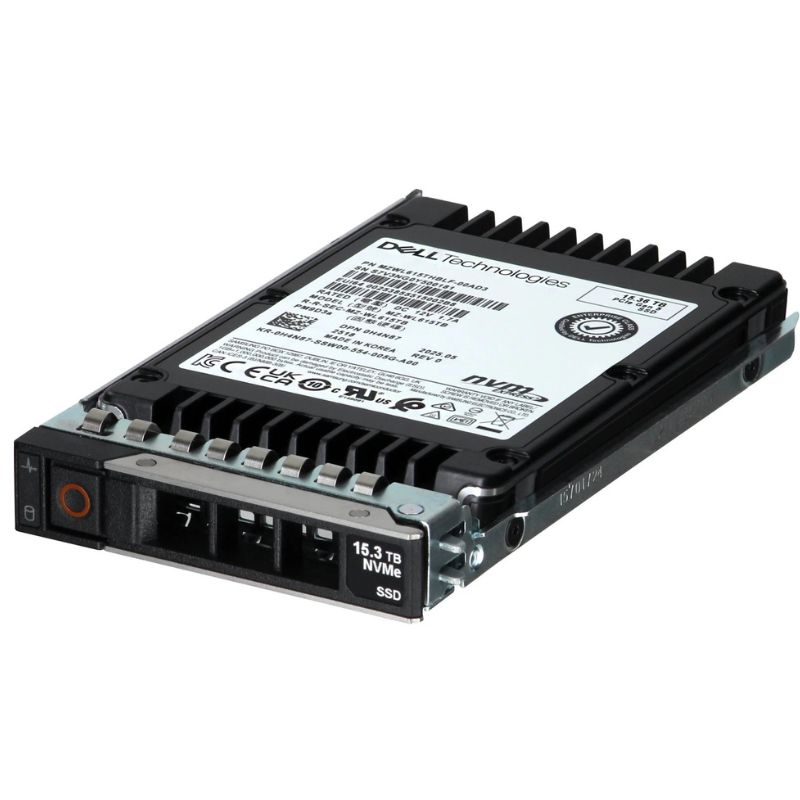


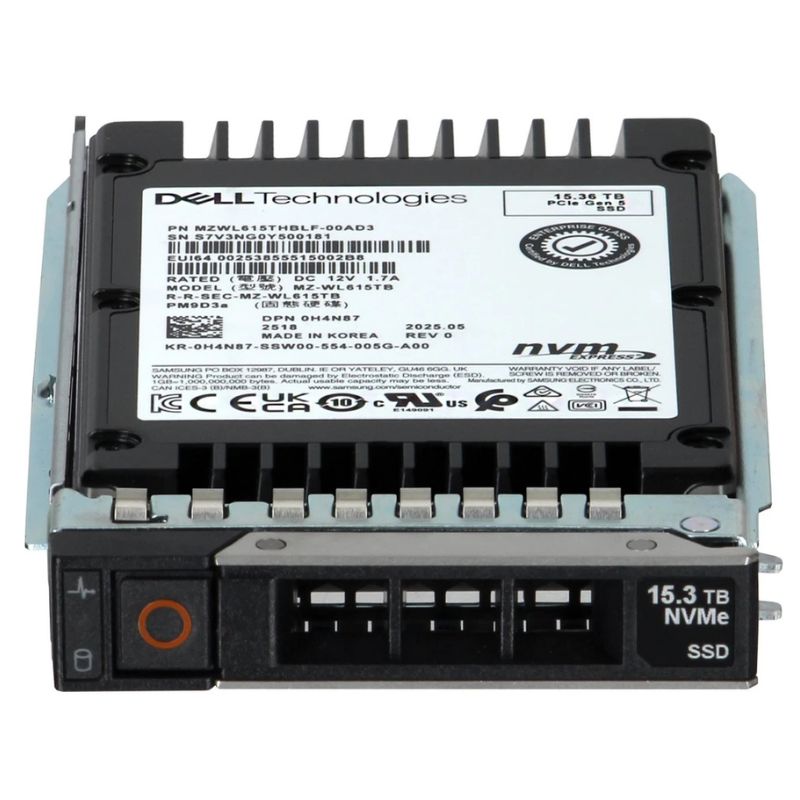
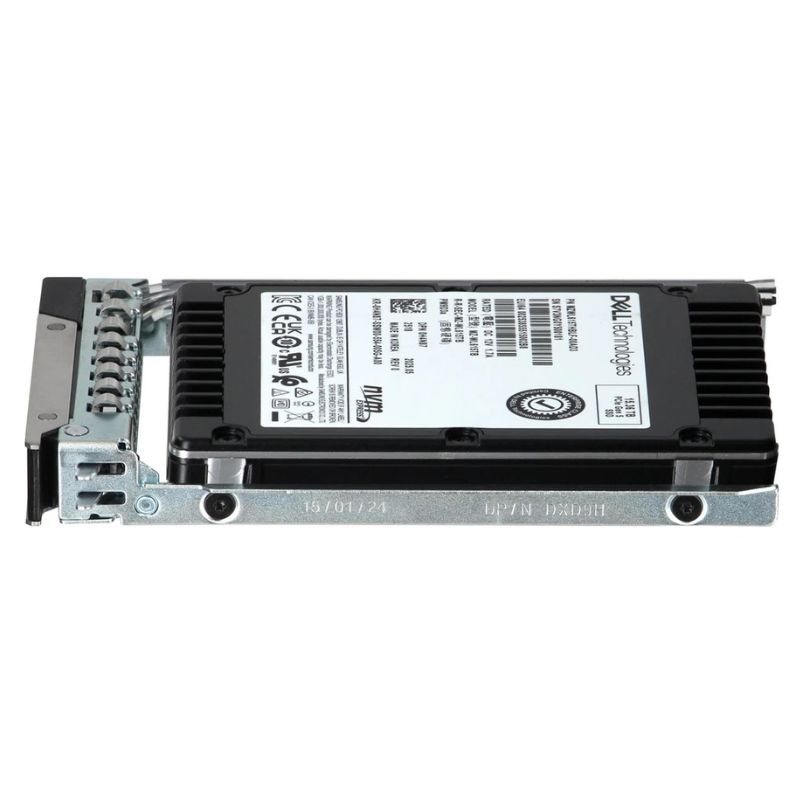
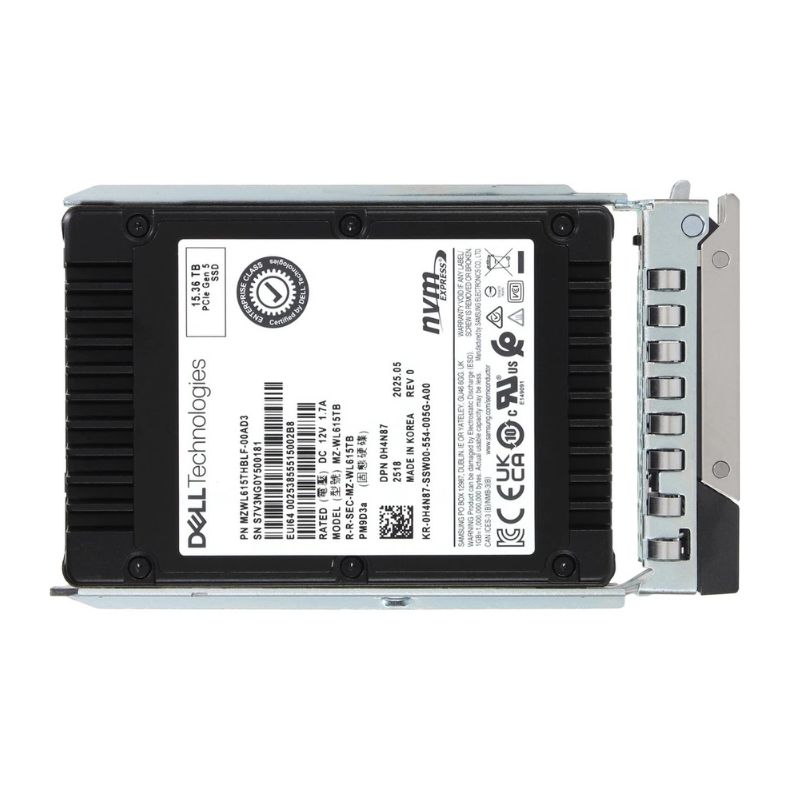
Samsung MZ-WL615TB 15.36TB PM9D3a PCI-E U.2 SFF Internal SSD. Excellent Refurbished with 1 year replacement warranty
Highlight of Samsung MZ-WL615TB 15.36TB PCI-E Enterprise SSD
The Samsung PM9D3A 15.36TB internal solid state drive is engineered for enterprise-grade workloads, high-capacity storage environments, and next-generation data center applications. Designed with a U.2 2.5-inch form factor and PCIe 5.0 x4 interface, this high-speed SSD delivers exceptional throughput, low latency, and dependable endurance for demanding business operations.
The Samsung MZ-WL615TB 15.36TB PM9D3a PCIe 5.0 x4 U.2 2.5in Internal SSD is engineered for modern enterprise computing environments that demand exceptional storage density, dependable endurance, and extremely fast data throughput. Designed for data center deployment, virtualization clusters, cloud infrastructure, and enterprise analytics platforms, this high-capacity NVMe SSD delivers advanced PCIe Gen5 technology in a compact U.2 2.5-inch form factor suitable for rack-mounted servers and mission-critical systems.
Organizations managing rapidly growing datasets require enterprise SSD storage solutions capable of sustaining high transactional workloads while maintaining low latency and operational consistency. The Samsung PM9D3a series fulfills these requirements with advanced NAND flash architecture, intelligent thermal management, and optimized firmware specifically developed for professional server environments. The 15.36TB storage capacity provides substantial room for large databases, AI training datasets, virtualization images, software-defined storage pools, and enterprise backup repositories.
PCIe 5.0 x4 connectivity dramatically improves bandwidth capabilities compared to earlier PCIe generations, enabling faster access to mission-critical applications and accelerating workloads involving intensive read and write operations. The U.2 interface further enhances deployment flexibility by supporting hot-swappable enterprise storage configurations widely used in modern server chassis and enterprise storage arrays.
Enterprise IT infrastructure requires hardware components capable of operating continuously under heavy workloads. The Samsung PM9D3a enterprise SSD is developed with reliability-focused engineering to ensure stable performance across 24/7 operations. Unlike consumer-grade SSDs, enterprise NVMe drives are validated for demanding server environments where downtime can negatively affect operational continuity and revenue generation.
Samsung integrates enterprise-class NAND flash memory, advanced error correction technologies, and intelligent wear-leveling algorithms into the PM9D3a platform. These technologies help extend drive lifespan while preserving consistent performance under sustained workloads. The drive also includes robust power-loss protection mechanisms designed to minimize the risk of data corruption during unexpected power interruptions.
The Samsung MZ-WL615TB SSD utilizes advanced V-NAND technology that improves storage density, endurance, and operational efficiency. Multi-layer NAND stacking enables enterprise drives to achieve extremely high capacities while maintaining lower power consumption and improved thermal characteristics. This architecture supports the increasing storage requirements of modern enterprises without significantly increasing physical server footprint.
Samsung’s enterprise NAND design also contributes to reduced latency and improved input/output operations per second, allowing servers to process larger volumes of transactional data simultaneously. High-density flash memory is particularly beneficial for virtualized environments, software-defined data centers, and cloud hosting platforms that rely on rapid access to distributed datasets.
One of the defining characteristics of the Samsung PM9D3a 15.36TB SSD is its PCIe 5.0 x4 interface. PCIe Gen5 technology delivers significantly increased throughput compared to PCIe Gen4 and PCIe Gen3 storage solutions, making it highly suitable for next-generation enterprise workloads that involve intensive data processing, machine learning applications, and high-frequency transactional environments.
Data centers increasingly require storage devices capable of supporting high-bandwidth workloads without introducing bottlenecks. PCIe 5.0 connectivity enables servers to move massive amounts of information rapidly between processors, memory subsystems, and storage arrays. This results in improved responsiveness for enterprise applications such as SQL databases, virtualization platforms, AI analytics, and distributed cloud computing infrastructures.
Latency reduction remains a critical objective for enterprise storage infrastructure. The Samsung PM9D3a NVMe SSD is optimized to minimize latency during random access operations, enabling applications to retrieve and process data more efficiently. Lower latency directly impacts enterprise productivity by reducing delays within mission-critical systems and improving overall user experience for hosted applications.
Financial institutions, healthcare providers, scientific research facilities, and cloud service providers frequently rely on low-latency storage environments to support real-time processing tasks. PCIe 5.0 NVMe architecture enables the PM9D3a SSD to meet these performance expectations while maintaining operational consistency under heavy concurrent workloads.
Sequential read and write performance play a major role in enterprise backup operations, media rendering, analytics processing, and high-capacity file transfers. The Samsung MZ-WL615TB SSD is engineered to deliver exceptional sequential throughput that accelerates large-scale data movement within enterprise infrastructures.
High sequential speeds contribute to faster database replication, reduced backup windows, improved virtualization migration times, and enhanced content delivery performance. Enterprises working with large media assets, AI datasets, and cloud storage architectures benefit substantially from the high-bandwidth capabilities of PCIe Gen5 enterprise SSD technology.
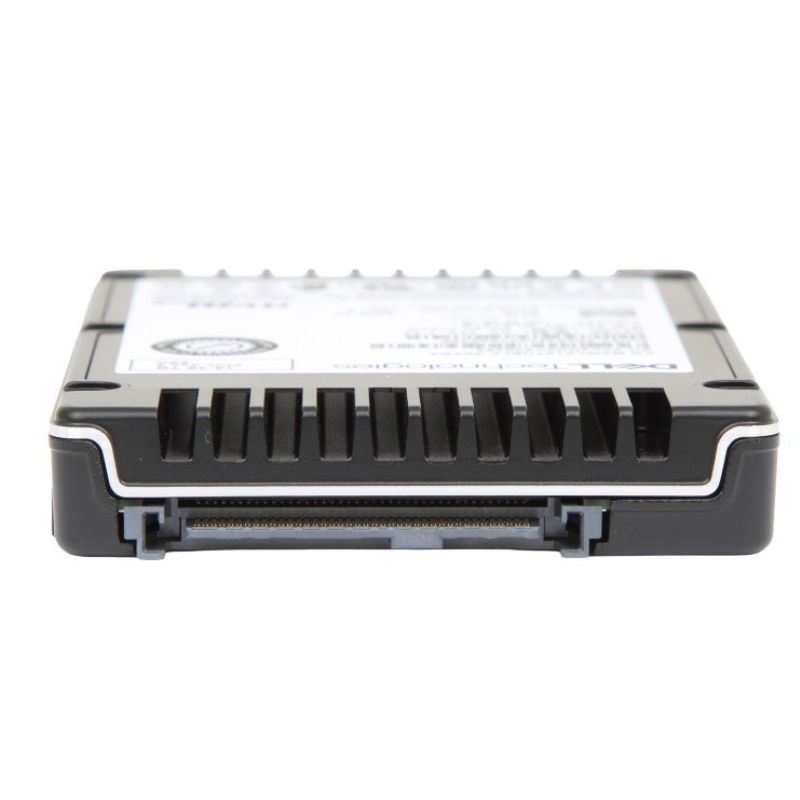
The U.2 2.5-inch form factor remains one of the most widely adopted enterprise SSD standards in professional server deployments. The Samsung PM9D3a SSD combines high-capacity storage with the physical compatibility required for modern enterprise server chassis, storage appliances, and hyperscale data center environments.
Unlike consumer M.2 SSDs, U.2 enterprise drives are specifically engineered for sustained thermal performance, hot-swap capability, and high-endurance server operation. This design allows IT administrators to deploy and replace storage devices efficiently without extensive downtime or infrastructure disruption.
Hot-swappable drive support is essential for enterprise environments that prioritize continuous uptime and operational resilience. The Samsung PM9D3a U.2 SSD allows administrators to replace or upgrade drives while systems remain operational, minimizing interruptions to hosted applications and business services.
This capability is especially important for cloud providers, enterprise hosting platforms, and high-availability storage systems where downtime can impact productivity and service-level agreements. The U.2 interface also simplifies storage expansion strategies for organizations scaling their infrastructure over time.
Thermal management is a critical consideration within densely populated data center racks. Enterprise SSDs operating under sustained workloads generate heat that must be managed efficiently to preserve stability and performance consistency. Samsung designs the PM9D3a SSD with optimized thermal characteristics suitable for professional server airflow configurations.
The 2.5-inch U.2 enclosure assists in dissipating heat more effectively than smaller consumer storage formats, enabling stable performance during continuous high-speed data operations. Improved thermal handling also contributes to enhanced hardware longevity and reduced risk of thermal throttling.
The Samsung MZ-WL615TB enterprise SSD is suitable for a broad range of professional computing applications requiring large storage capacity, high endurance, and exceptional data transfer speeds. Enterprises across multiple industries deploy high-capacity NVMe SSDs to support rapidly growing workloads and increasingly complex infrastructure requirements.
Modern virtualization platforms demand fast and reliable storage capable of supporting multiple virtual machines simultaneously. The Samsung PM9D3a SSD enables virtualization hosts to maintain responsive performance even under heavy resource utilization. High IOPS capability improves application responsiveness while large storage capacity allows organizations to consolidate more workloads within fewer physical servers.
Hyperconverged infrastructure deployments also benefit from PCIe Gen5 enterprise SSD technology due to the need for fast distributed storage performance. The PM9D3a drive supports scalable virtualization architectures that prioritize low latency, high availability, and efficient storage resource allocation.
Cloud service providers require enterprise SSD storage capable of supporting dynamic workloads across multi-tenant environments. The Samsung PM9D3a 15.36TB SSD provides the combination of density, performance, and endurance necessary for cloud-native infrastructure and enterprise hosting operations.
Large storage capacity allows providers to maximize rack-level efficiency while reducing the number of physical drives required within storage clusters. PCIe Gen5 performance further enhances responsiveness for cloud-hosted applications, containerized services, and distributed computing frameworks.
Relational databases, NoSQL environments, and transactional processing systems depend heavily on storage performance. The Samsung MZ-WL615TB SSD accelerates query execution, indexing operations, and transactional workloads through low-latency NVMe architecture and high-bandwidth PCIe connectivity.
Database administrators can leverage the high endurance and fast response times of enterprise SSD storage to improve application performance and support larger datasets. Industries such as finance, healthcare, telecommunications, and e-commerce frequently require enterprise NVMe drives to sustain demanding transactional environments.
High-capacity enterprise SSDs play a major role in reducing data center complexity while improving infrastructure efficiency. The Samsung PM9D3a 15.36TB SSD allows organizations to consolidate larger amounts of storage into fewer devices, reducing server footprint and simplifying storage management.
Storage consolidation contributes to lower power consumption, reduced cooling requirements, and more efficient rack utilization. Enterprises seeking to modernize legacy storage infrastructure can benefit significantly from migrating to high-density NVMe SSD deployments that offer superior performance and operational efficiency.
By integrating extremely high-capacity SSDs into enterprise systems, organizations can reduce the number of physical drives required for large-scale storage pools. Fewer drives translate into simplified cabling, reduced maintenance complexity, and improved airflow within server environments.
The Samsung PM9D3a SSD supports these optimization strategies while maintaining the reliability and endurance necessary for enterprise-grade operations. Reduced component count also contributes to lower failure rates across storage infrastructures.
Data center operators constantly seek methods to maximize compute and storage density within limited rack space. The 15.36TB capacity of the Samsung PM9D3a SSD enables administrators to deploy substantial storage resources without increasing rack footprint.
Improved rack density helps organizations scale their storage infrastructure more efficiently while minimizing operational costs associated with physical expansion. This becomes increasingly important for hyperscale data centers, enterprise cloud environments, and edge computing deployments.
Data protection remains a top priority within enterprise storage environments. The Samsung PM9D3a enterprise SSD incorporates multiple technologies designed to protect sensitive information and maintain data integrity during continuous operations.
Enterprise SSDs frequently handle confidential business records, financial transactions, healthcare data, and proprietary intellectual property. Robust storage security features help organizations comply with industry regulations while reducing the risk of unauthorized access and data corruption.
Advanced error correction technologies play an essential role in preserving data accuracy within enterprise storage systems. Samsung integrates sophisticated error management mechanisms into the PM9D3a platform to detect and correct potential data inconsistencies before they affect operational stability.
These reliability features contribute to long-term data integrity while supporting high write endurance across demanding workloads. Enterprise environments benefit from predictable storage performance and minimized risk of unexpected data loss.
Unexpected power interruptions can compromise data integrity if storage systems fail to complete pending write operations. Enterprise SSDs such as the Samsung PM9D3a include power-loss protection technologies designed to safeguard critical data during abrupt shutdown scenarios.
This feature is especially valuable within financial systems, transactional databases, and cloud environments where incomplete write operations may lead to corruption or service disruptions. Enhanced power protection mechanisms contribute to overall infrastructure reliability and business continuity.
Unlike consumer SSDs that may experience performance degradation during prolonged activity, enterprise SSDs are engineered for consistent operation under continuous workloads. The Samsung PM9D3a maintains stable throughput and predictable latency even during sustained read-intensive and mixed-use enterprise applications.
Consistency is particularly important for mission-critical environments where storage bottlenecks can affect application responsiveness and operational efficiency. Enterprise firmware optimization helps ensure predictable performance across varying workload conditions.
Samsung develops enterprise SSD firmware specifically for server and data center environments. Firmware optimization contributes to improved workload balancing, reduced latency fluctuations, and enhanced resource management under demanding conditions.
The PM9D3a SSD firmware is designed to support enterprise reliability requirements while maximizing PCIe Gen5 throughput potential. Intelligent workload management enables stable operation across virtualization platforms, database environments, and analytics infrastructures.
Many enterprise environments operate read-intensive applications involving large-scale data retrieval, analytics processing, and content delivery operations. The Samsung MZ-WL615TB SSD is optimized for such workloads, providing rapid data access while maintaining operational stability.
Read-intensive optimization improves performance for search indexing, business intelligence analytics, media streaming infrastructure, and AI inference systems. Enterprises deploying high-performance applications benefit from the fast access times and scalable architecture of PCIe Gen5 NVMe storage.
The Samsung PM9D3a PCIe 5.0 U.2 SSD is designed to integrate seamlessly into modern enterprise server ecosystems supporting NVMe storage technology. Compatibility with enterprise hardware platforms allows organizations to upgrade storage infrastructure while preserving deployment flexibility.
Many next-generation servers and enterprise storage appliances now support PCIe Gen5 architectures to accommodate rapidly growing performance requirements. The PM9D3a SSD aligns with these advancements by providing forward-looking storage capabilities for evolving data center environments.
Enterprise administrators require storage devices compatible with major server vendors and storage platforms. The Samsung PM9D3a SSD supports deployment across enterprise-grade rack servers, blade systems, storage nodes, and software-defined storage environments.
Broad compatibility simplifies infrastructure planning while enabling organizations to modernize storage performance without extensive hardware redesign. The U.2 interface also facilitates efficient deployment within existing enterprise storage architectures.
As enterprise workloads continue expanding, organizations require scalable storage technologies capable of supporting future growth. The Samsung PM9D3a SSD provides the high capacity and performance headroom necessary for evolving infrastructure requirements.
Scalable enterprise SSD deployments help businesses adapt to increasing data generation, expanding virtualization environments, and growing cloud service demands. PCIe Gen5 connectivity further ensures long-term compatibility with future enterprise computing platforms.
The transition from traditional hard disk drives to enterprise NVMe SSDs has transformed modern data center performance expectations. The Samsung MZ-WL615TB SSD offers substantial advantages over mechanical storage technologies in terms of speed, latency, reliability, and operational efficiency.
Mechanical drives struggle to meet the performance requirements of modern analytics, virtualization, and AI workloads. Enterprise SSD technology eliminates many of these limitations by providing dramatically faster access times and improved parallel processing capabilities.
Hard disk drives rely on spinning platters and mechanical read heads, resulting in significantly higher latency compared to solid-state storage. The Samsung PM9D3a enterprise SSD eliminates mechanical limitations through flash-based architecture that enables near-instantaneous data access.
Reduced latency improves application responsiveness, database transaction processing, and virtualization performance. Organizations migrating from HDD-based storage infrastructures frequently experience substantial improvements in operational efficiency and user experience.
Energy efficiency has become increasingly important within enterprise data centers focused on reducing operational costs and environmental impact. Enterprise SSDs generally consume less power than large arrays of mechanical drives while delivering substantially greater performance.
The Samsung PM9D3a SSD contributes to energy-efficient infrastructure design through advanced NAND architecture and optimized power management technologies. Reduced power consumption also helps lower cooling requirements within densely populated server environments.


 Contact Us
 Information
 Catalog
 Solid State Drives (SSD)
 Network Switches
 Hard Disk Drives
 HBA & Controllers
 PC & Servers
 PC & Server Memory
 CPU & Processors
 Network Routers
 Power Supplies
 Tape Drives & Libraries
 Network Devices
 Computer & Network Cables