(7% discount is applied at checkout)
Cart is empty
Your go-to destination for cutting-edge server products
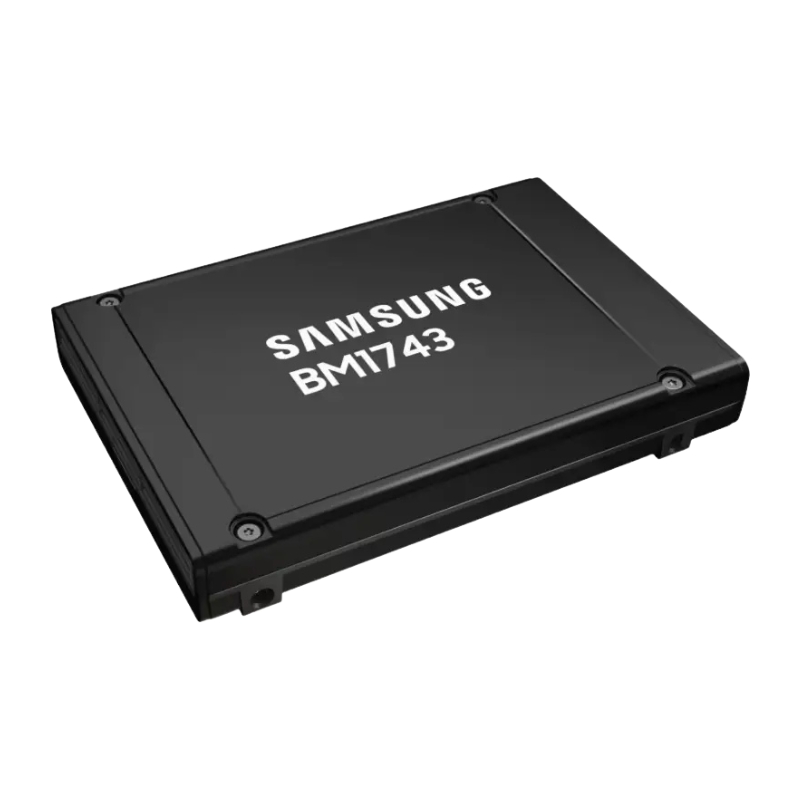


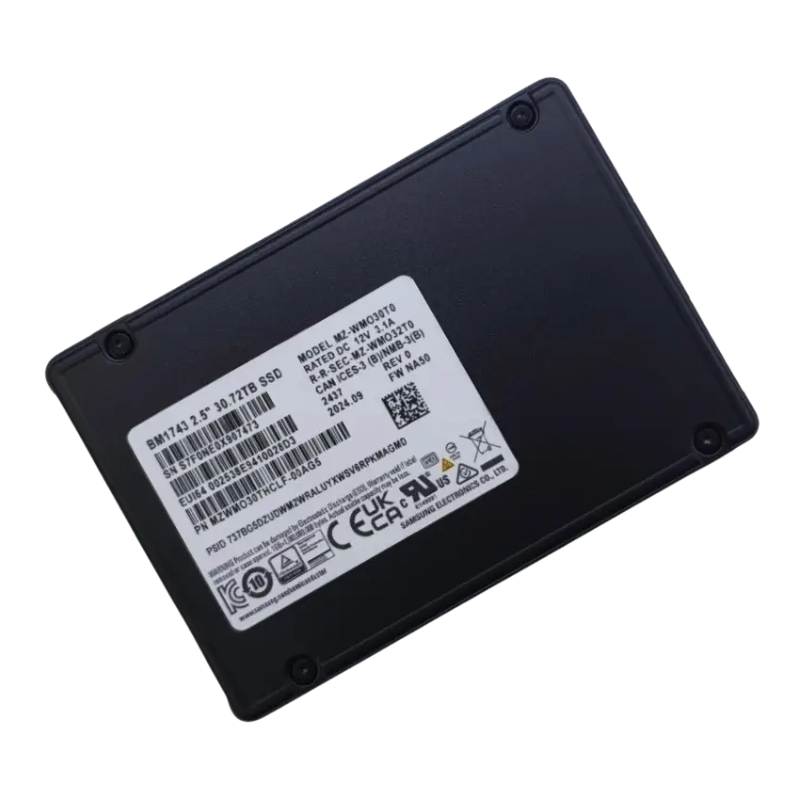
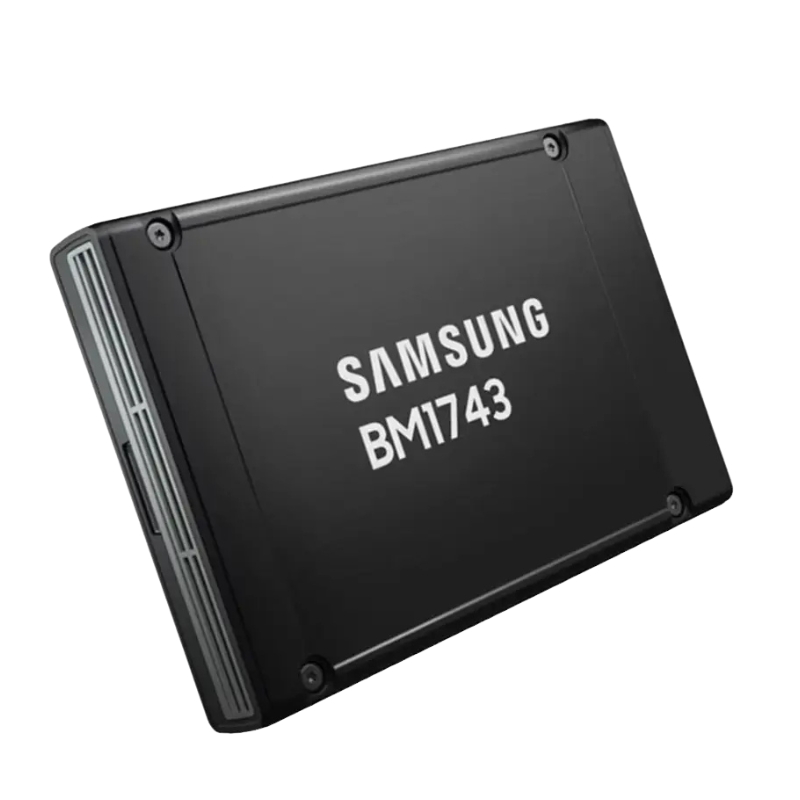
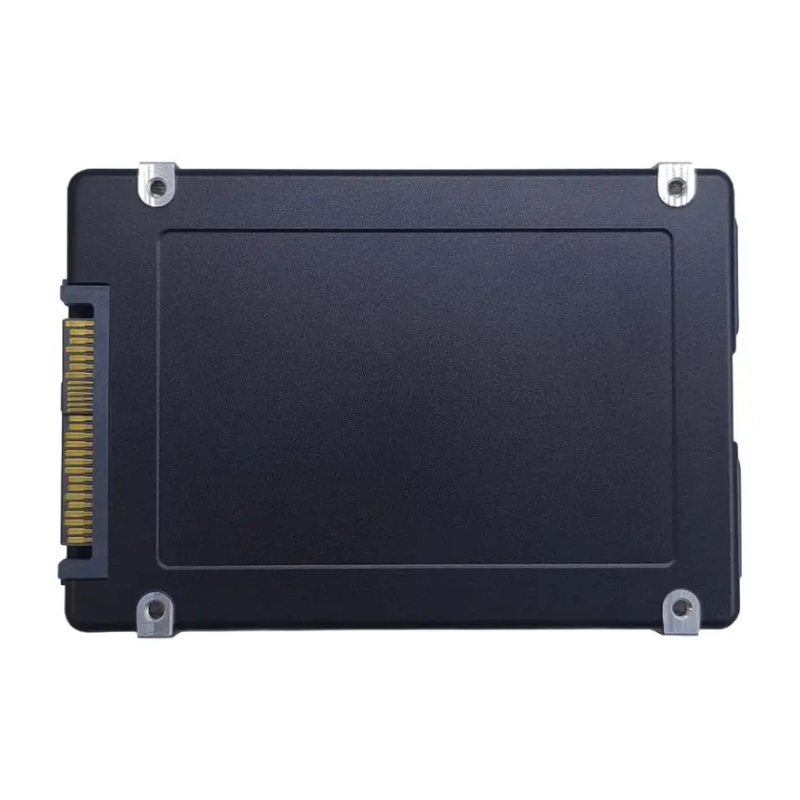
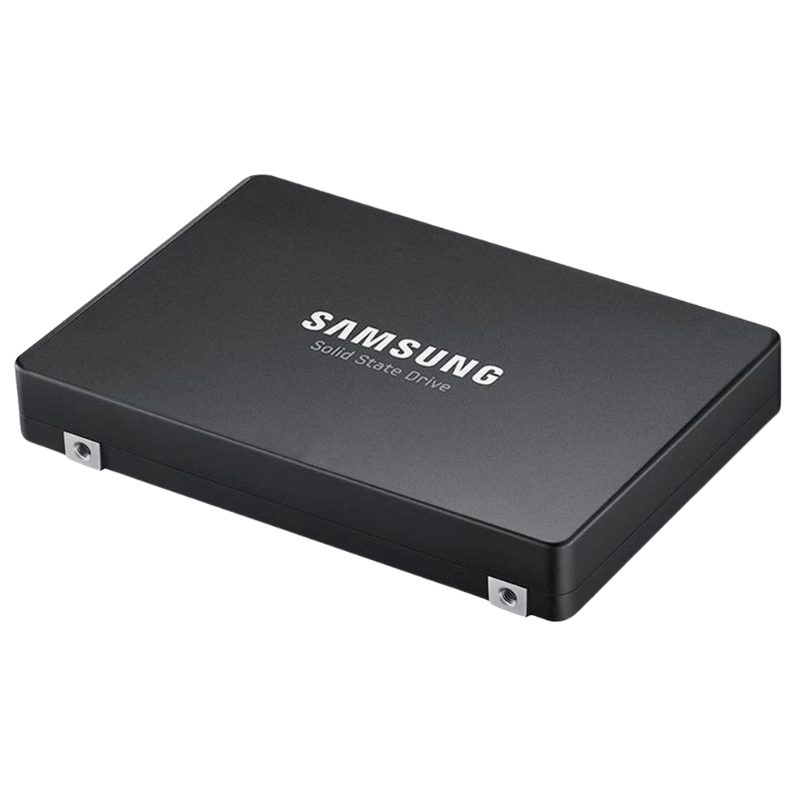
Samsung MZ-WMO30T0 BM1743 30.72TB PCIe Gen5 2.5Inch U.2 Gen4 NVMe SSD. Excellent Refurbished with 1 Year Replacement Warranty
The Samsung MZ-WMO30T0 BM1743 30.72TB NVMe SSD is a high-capacity, enterprise-grade storage solution designed for demanding workloads, next-generation data centers, and mission-critical applications. With blazing-fast performance, exceptional endurance, and a robust 2.5-inch U.2 form factor, this solid-state drive delivers outstanding reliability and speed for environments requiring consistent, high-throughput data access.
Sequential Performance
The Samsung MZ-WMO30T0 BM1743 30.72TB PCIe Gen5 2.5Inch U.2 Gen4 NVMe SSD represents a new generation of high-capacity, high-performance enterprise storage solutions designed for modern data-centric infrastructures. This category of storage devices focuses on delivering exceptional read and write throughput, optimized latency performance, and extreme durability to support environments requiring uninterrupted data availability. As organizations handle larger workloads, more complex datasets, and continuous user demands, enterprise-grade NVMe SSDs become essential assets that enhance operational efficiency and infrastructure responsiveness.The evolution from traditional spinning drives and slower SATA-based SSDs to U.2 NVMe solutions marks a fundamental shift in enterprise storage engineering. This category places emphasis on the high-speed PCIe interface, leveraging Non-Volatile Memory Express technology to push performance far beyond what legacy interfaces can achieve. With the Samsung MZ-WMO30T0 BM1743, the focus is on high-density storage paired with advanced flash memory technologies to meet both performance-critical and space-efficient infrastructure requirements.
PCIe Gen5 storage represents one of the most significant performance leaps in data center technology. The Samsung MZ-WMO30T0 BM1743 leverages this advanced interface to provide improved bandwidth, reduced latency, and more efficient communication between the SSD and server. The category of PCIe Gen5 NVMe drives is designed to eliminate operational bottlenecks and deliver parallelism at unprecedented levels for enterprise computing. By adopting Gen5 technology, servers can achieve data transfer speeds dramatically higher than previous PCIe generations, enabling faster analytics processing, real-time application responsiveness, and accelerated virtualization performance.U.2 NVMe storage retains the mechanical form factor of traditional 2.5-inch enterprise drives but incorporates a superior electrical interface. This allows data centers to adopt high-speed NVMe storage without significant infrastructure modification. U.2’s hot-swap capability also allows for easier maintenance, faster system expansion, and improved failover strategies. The Samsung MZ-WMO30T0 BM1743 fits seamlessly into U.2-based infrastructure, making it a compelling choice for companies upgrading performance without altering their existing rack designs.
NVMe technology is engineered to utilize multiple queues, providing parallel data pathways that enhance processing efficiency. In categories such as high-performance computing, artificial intelligence training, machine learning inference, cloud-based architectures, and large database management, the Samsung MZ-WMO30T0 BM1743 excels due to its ability to handle simultaneous read and write operations with consistent speed. Unlike SATA or SAS protocols, NVMe reduces command latency and increases command queue depth, allowing applications to access stored data faster and more efficiently.Large enterprises transitioning to NVMe architectures experience immediate improvements in system uptime, data access speed, and computational throughput. For workloads involving real-time decision-making, the difference between NVMe and traditional storage can significantly affect business continuity and service delivery. This is why NVMe SSDs such as the Samsung BM1743 series have become foundational to next-generation data center operations.
With a massive 30.72TB capacity, the Samsung MZ-WMO30T0 BM1743 stands within a category of ultra-high-capacity SSDs designed to replace multiple lower-density drives. High-density NVMe SSDs reduce physical rack space requirements while increasing storage efficiency, leading to lower cooling demands, simplified cable management, and reduced power consumption. For organizations seeking to consolidate storage arrays, this category delivers unmatched density benefits that translate into lower operational expenditure.Capacity scaling is an essential aspect of modern enterprises managing growing data repositories. The 30.72TB class places emphasis on providing extensive storage capacity while maintaining consistent performance under heavy workloads. This category allows IT administrators to maintain structured storage scaling plans without sacrificing reliability or speed. As data requirements increase in size and complexity, high-capacity NVMe SSDs such as this model become critical in optimizing long-term infrastructure planning.
Among the most defining attributes of the Samsung MZ-WMO30T0 BM1743 SSD is its exceptional input/output performance, which reflects the advanced category of PCIe Gen5 NVMe storage devices. Designed for mission-critical workloads and high-traffic databases, this class of SSDs supports faster boot times, improved application responsiveness, and more efficient resource utilization. The PCIe Gen5 bandwidth supports significantly higher throughput levels, enhancing data processing speed for applications ranging from virtualization clusters to multi-tenant cloud environments.Multi-core processors, parallel application workloads, and high-bandwidth networking benefit greatly from the improved communication channel between the SSD and CPU. This elevated performance tier ensures that data centers experience reduced latency during peak operations, faster data migrations, and greater consistency in requested I/O tasks. Whether supporting large-scale business applications or cloud-native environments, the performance characteristics of this category ensure a stable and responsive system architecture.
One of the most significant advancements in this storage category is NVMe’s ability to provide multiple simultaneous queues with thousands of commands. Queue depth optimization directly contributes to the responsiveness of server applications by enabling simultaneous processing of large volumes of data requests. The Samsung MZ-WMO30T0 BM1743 takes advantage of this architecture to deliver reduced latency and more consistent throughput, which is particularly beneficial in virtualization and multi-user environments.Latency reduction is especially crucial in workloads that process millions of transactions per second. Real-time trading, AI model training, ERP system processing, and major e-commerce infrastructures depend on reliable low-latency performance. Because of this, the category of enterprise-grade NVMe Gen5 SSDs has become the preferred choice for operations requiring instant data access and tight response times.
As storage performance increases, efficient thermal management becomes a critical component of SSD design. The Samsung MZ-WMO30T0 BM1743 incorporates advanced heat management technologies that align with this category’s emphasis on sustained performance and long-term reliability. Heat dissipation plays a significant role in preventing performance throttling, which can negatively impact enterprise workloads. NVMe SSDs in this category utilize optimized controller designs, strategically layered heat spreaders, and intelligent firmware adjustments to maintain safe operating temperatures under stress.Power efficiency is equally important in large-scale environments, as data centers aim to reduce operational costs. The category of enterprise NVMe SSDs prioritizes high-performance output with minimized power draw, enabling organizations to achieve high storage density without compromising energy consumption. By integrating low-power modes and adaptive performance scaling, SSDs of this class enhance thermal efficiency while maintaining optimal read and write speeds.
Enterprise SSDs in the Gen5 NVMe category include sophisticated data protection mechanisms to ensure reliability. The Samsung MZ-WMO30T0 BM1743 incorporates end-to-end error correction, advanced ECC algorithms, and power-loss protection features that preserve data integrity even during unexpected outages. These measures help guarantee that mission-critical workloads can operate safely without data corruption or performance degradation.Additionally, firmware-level enhancements improve SSD behavior under stress, detect anomalies before they escalate, and maintain consistent performance across varying environmental conditions. By utilizing adaptive algorithms and predictive monitoring, the category offers higher stability and better long-term dependability.


 Contact Us
 Information
 Catalog
 Solid State Drives (SSD)
 Network Switches
 Hard Disk Drives
 HBA & Controllers
 PC & Servers
 PC & Server Memory
 CPU & Processors
 Network Routers
 Power Supplies
 Tape Drives & Libraries
 Network Devices
 Computer & Network Cables