(7% discount is applied at checkout)
Cart is empty
Your go-to destination for cutting-edge server products
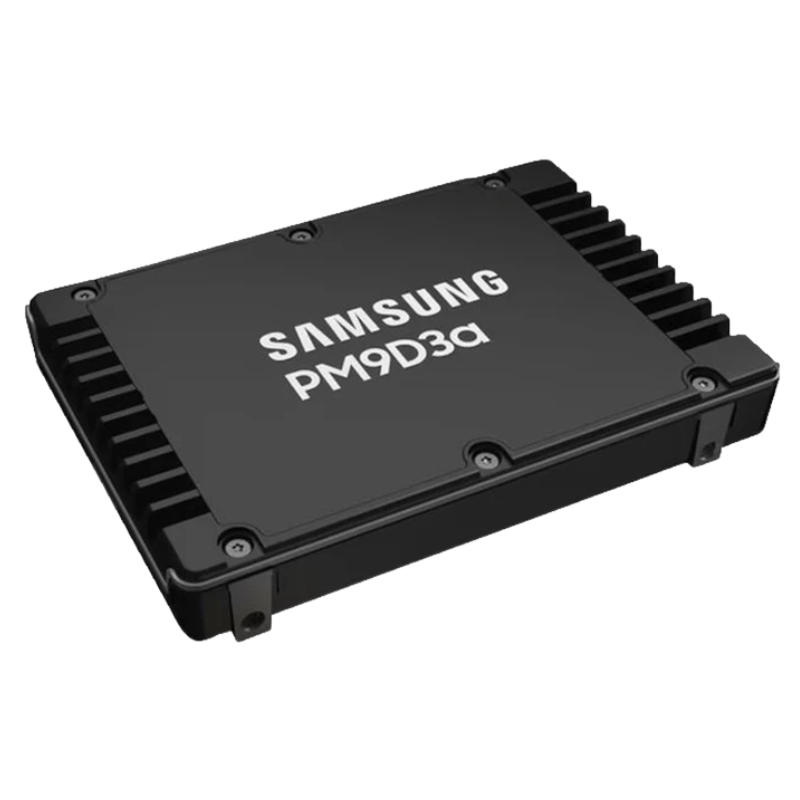


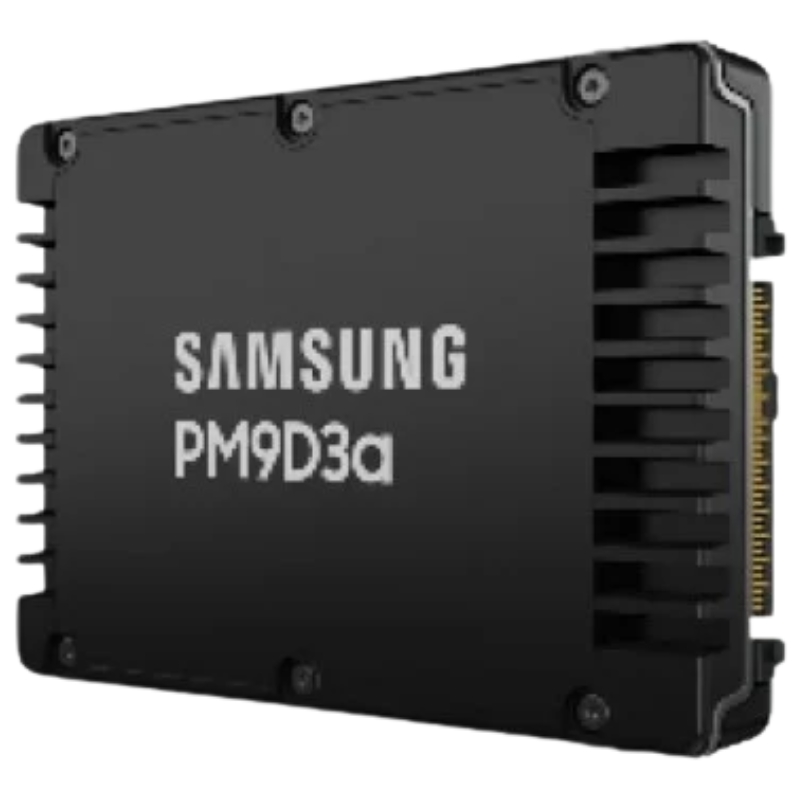
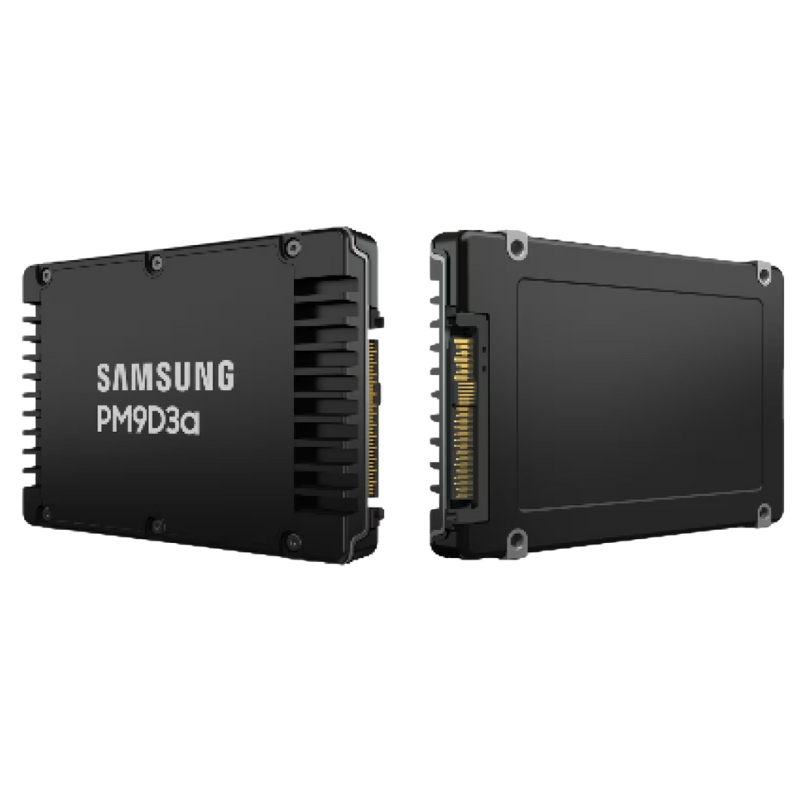
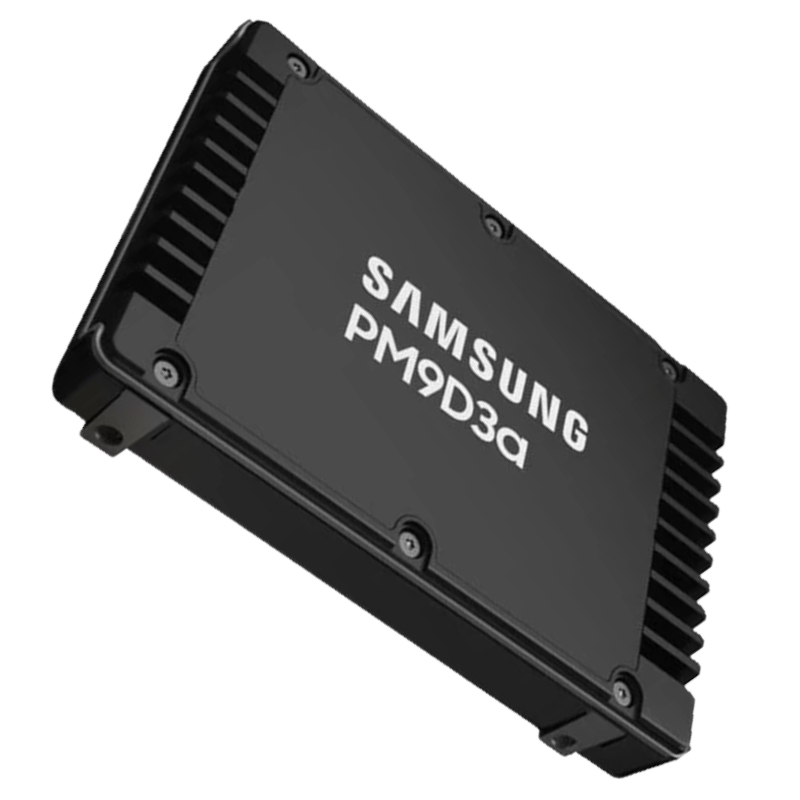
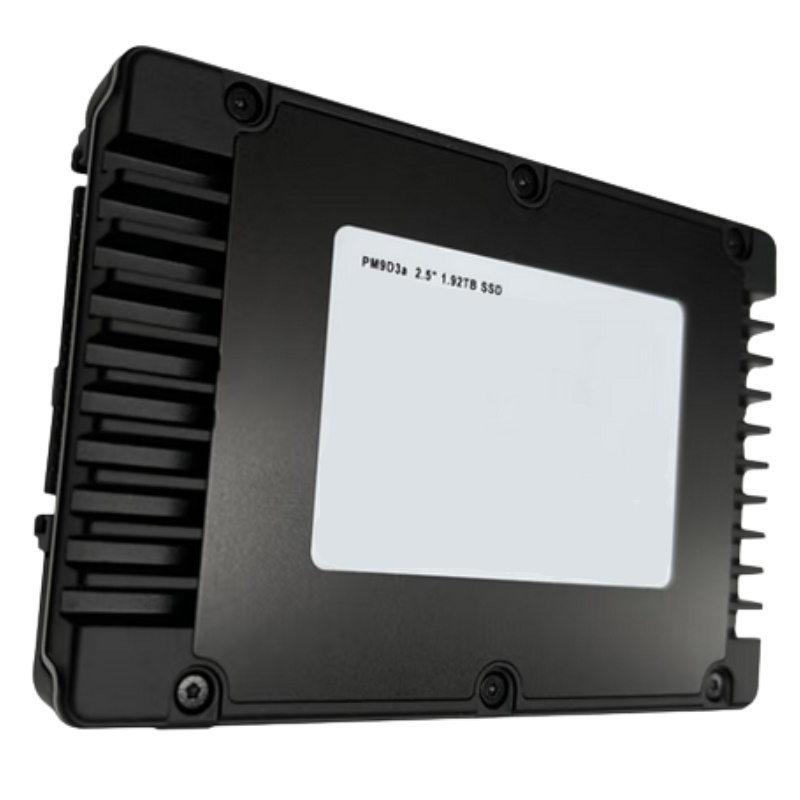
Samsung MZ3L67T6HBLC PM9D3A 7.68TB PCI-Express Gen 5.0 X4 E3.S 1T Internal Server SSD. New Sealed in Box (NIB) with 3 Years Replacement Warranty
Designed for modern servers, the PM9D3A brings a potent blend of high throughput, low latency, and space‑saving E3.S (1T) design for dense deployments across data centers and enterprise infrastructures.
This category focuses on the MZ3L67T6HBLC Samsung PM9D3A 7.68TB PCI-Express Gen 5.0 x4 E3.S internal server solid state drive — an enterprise-grade NVMe storage option built for modern data center workloads, virtualization stacks, and high-concurrency I/O environments. The listing groups devices that share the same E3.S compact server form factor, PCIe Gen 5.0 interface and NVMe protocol, and capacity range around 7.68TB. On this page you will find category-level descriptions, deployment and compatibility guidance, purchasing considerations for system integrators and procurement teams, and best practices for extracting consistent, high-performance operation from Gen 5.0 SSDs in rack-scale and edge deployments.
Devices in this category adhere to the PCI-Express Gen 5.0 x4 electrical and protocol standards and use the E3.S mechanical form factor optimized for dense server chassis and blade systems. PCIe Gen 5.0 delivers a generational increase in raw bandwidth compared with Gen 4, enabling higher IOPS and throughput for latency-sensitive applications. The E3.S form factor provides a balance between density and thermal headroom — it is engineered for hot-pluggable dense storage sleds and direct-attach server bays where space, airflow, and serviceability are key concerns.
The canonical capacity represented here is 7.68TB, a common enterprise mid-range capacity ideal for mixed read/write workloads, metadata storage, caching layers, and write-optimized log stores. Capacity selection within this category depends on how you balance cost per terabyte against endurance and over-provisioning. 7.68TB typically maps to enterprise internal addressable capacity after vendor formatting and reserved firmware space — it is sized to deliver a strong mix of usable capacity and endurance for heavy consolidated server workloads.
Expect a performance envelope designed for heavy random I/O and throughput-driven sequential operations. Gen 5.0 x4 reduces protocol bottlenecks and enables higher peak sequential reads/writes and significantly improved random IOPS compared with previous-generation PCIe. For category-level guidance, these SSDs are targeted for database caching, VM boot volumes, distributed storage nodes, and I/O-accelerated services where both bandwidth and predictable low latency matter. Performance will vary by workload mix (4K random vs. large-block sequential), host settings, and firmware tuning; plan capacity and RAID topology accordingly.
Enterprise-class SSDs in this category include firmware and hardware features designed to protect data and preserve drive life under sustained server workloads. Typical features you should look for include power-loss protection, end-to-end data path protection, media-management algorithms, bad-block management, and SMART telemetry for proactive monitoring. Endurance metrics — measured in drive writes per day (DWPD) or terabytes written (TBW) over the warranty period — are critical selection criteria and should be matched to your expected write amplification and workload intensity.
Manageability is a central category attribute: enterprise NVMe SSDs provide vendor firmware update mechanisms, NVMe-MI or other management interfaces, and SMART/Log pages that expose critical operating metrics. For data center fleets, firmware stability and update policies are as important as peak performance — choose drives whose firmware release notes, vendor support process, and ecosystem tooling align with your change-control procedures.
Small, high-bandwidth form factors like E3.S concentrate power and thermal density. This category emphasizes drives engineered to maintain sustained I/O while respecting thermal throttling curves. In rack designs where airflow is constrained or ambient temperatures rise, ensure adequate airflow and thermal monitoring are in place. Power management features and platform-level thermal policies will affect sustained throughput and should be evaluated during system qualification.
The MZ3L67T6HBLC PM9D3A 7.68TB class of SSDs is well suited for boot volumes and datastore tiers in virtualized clusters and cloud-hosting infrastructure where many VMs generate random IOPS and require low-latency access to persistent storage. Use these drives for high-density hyperconverged nodes to deliver accelerated guest performance without sacrificing endurance.
Databases with mixed read/write patterns — including relational databases, NoSQL stores, and time-series engines — benefit from the combination of high random IOPS and generous endurance. These drives often serve as transaction-log volumes, caching tiers, or distributed database shards that need low-latency write acknowledgement and consistent throughput.
For inference and streaming workloads, the Gen 5.0 interface provides headroom for rapid model loads and high concurrency reads. In edge deployments where space and power are constrained, the E3.S mechanical profile offers a compact, ruggedized option that integrates into blade and small-form-factor servers.
Content delivery appliances and caching front-ends that serve large numbers of concurrent reads benefit from the sequential bandwidth and read-optimized firmware tuning in this category. These drives can act as durable caches in front of slower bulk storage layers, reducing latency for end users and offloading network traffic.
Compared with Gen 3 and Gen 4 devices, Gen 5.0 SSDs deliver a significant bandwidth increase per lane, enabling higher concurrent throughput and higher aggregated IOPS for parallelized server workloads. When selecting between generations, weigh the benefit of added bandwidth against platform availability, cost, and the host's ability to saturate the device. If your workload is not bandwidth-limited (for instance, very small random reads where latency dominates), the practical advantage of Gen 5 over Gen 4 may be smaller — but Gen 5 provides future-proofing and extra headroom for scaling.
The E3.S form factor sits between the high-density E1.S and the larger U.2 drive styles. E3.S is ideal where a balance of density, serviceability, and thermal dissipation is necessary. Choose E3.S for blade and sled-optimized servers; choose U.2 if you require legacy 2.5-inch bay compatibility and easier human-serviceability; choose E1.S where maximum density is the priority.
Within enterprise SSDs, you will find different firmware tunes for read-optimized, mixed-use, and write-optimized drives. For caching and read-heavy workloads pick read-optimized variants; for heavy logging or write-heavy database use cases, validate endurance ratings and write-optimized firmware. The PM9D3A-class drives aim to deliver a mixed-use balance suitable for a broad set of modern server applications.


 Contact Us
 Information
 Catalog
 Solid State Drives (SSD)
 Network Switches
 Hard Disk Drives
 HBA & Controllers
 PC & Servers
 PC & Server Memory
 CPU & Processors
 Network Routers
 Power Supplies
 Tape Drives & Libraries
 Network Devices
 Computer & Network Cables