(7% discount is applied at checkout)
Cart is empty
Your go-to destination for cutting-edge server products
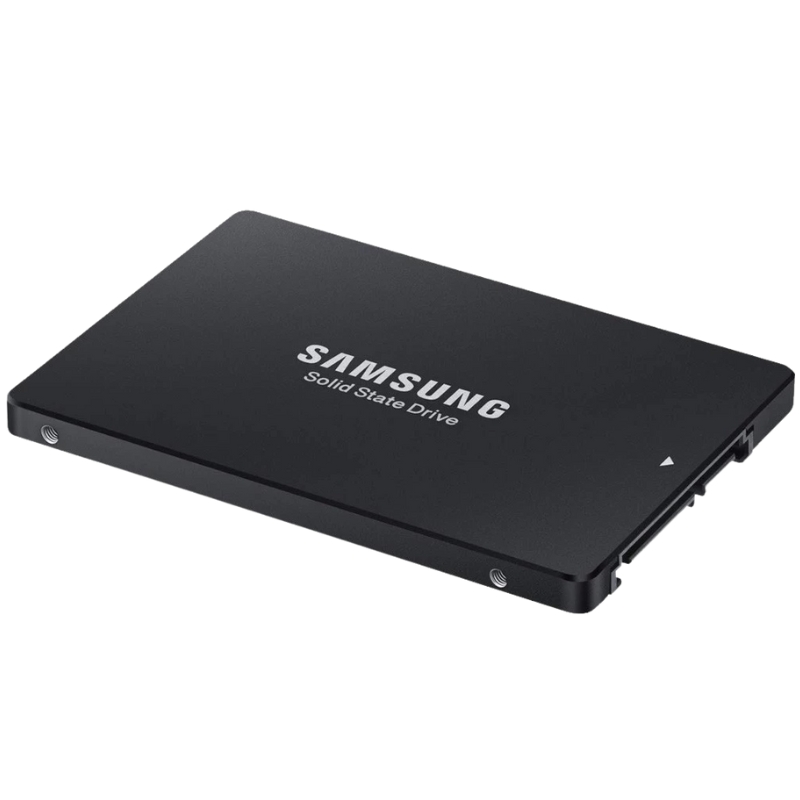


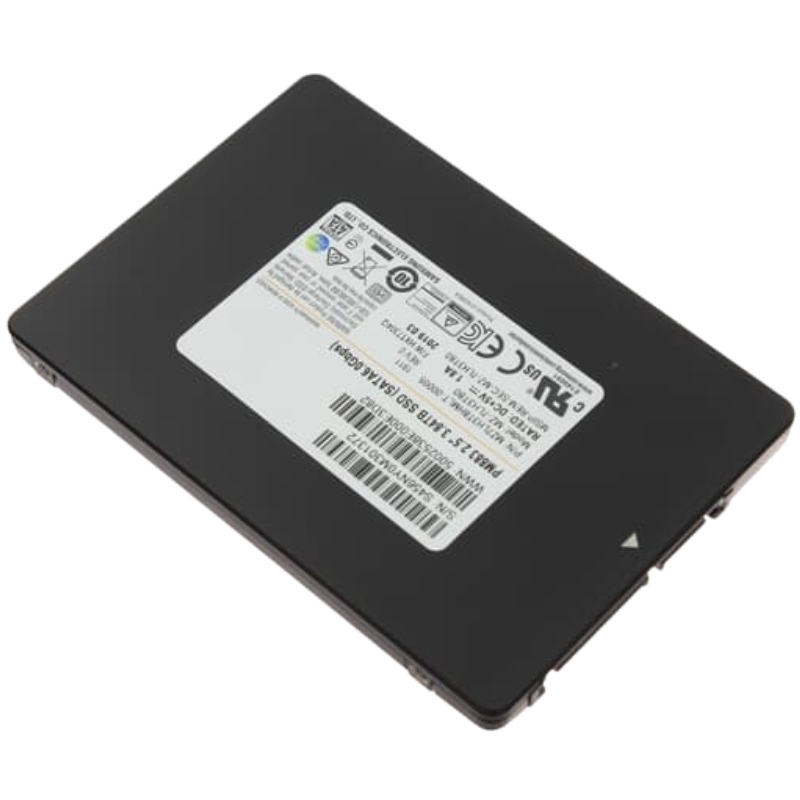
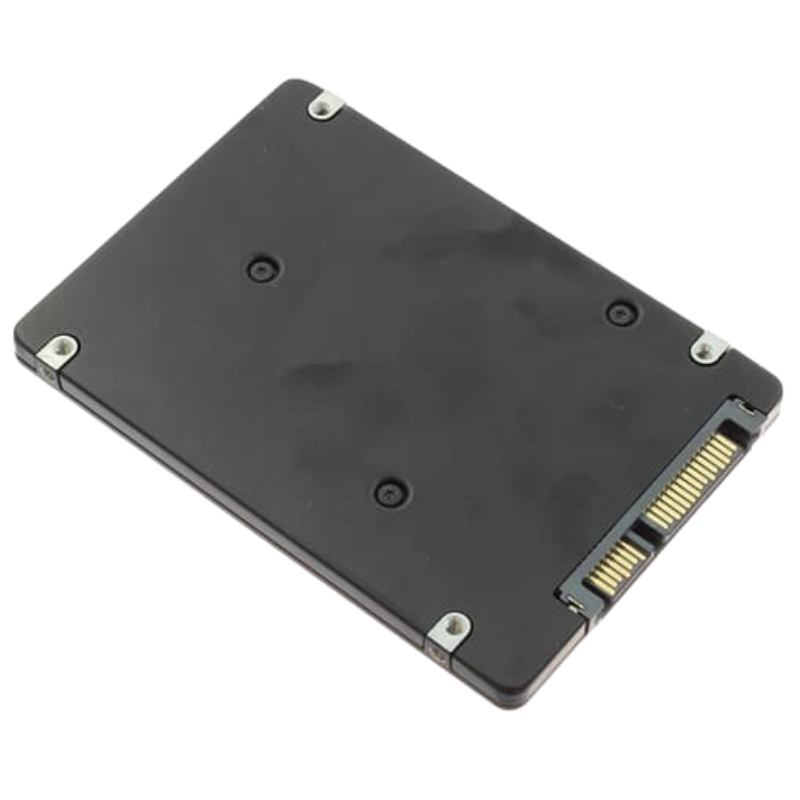
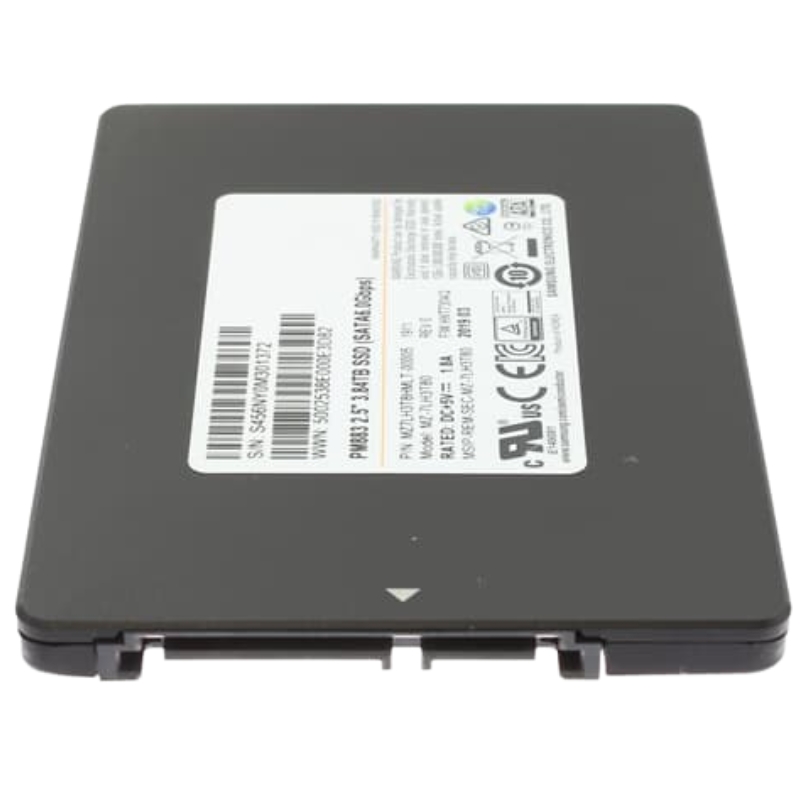
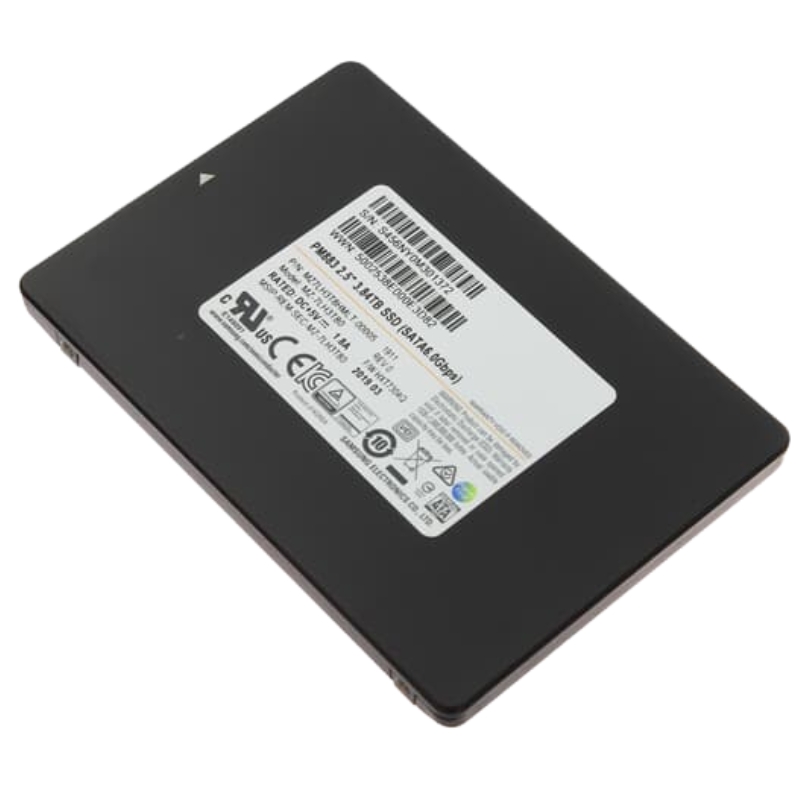
Samsung MZ7LH3T8HMLT-00AH3 PM883 3.84TB SATA-6GBPS SFF Internal Enterprise Solid State Drive. Excellent Refurbished with 1 Year Replacement Warranty - HPE Version
The Samsung PM883 3.84TB internal SSD is engineered for demanding data environments, offering robust performance and reliability for enterprise-grade applications.
Designed for consistent throughput and low latency, the PM883 delivers exceptional read/write speeds and IOPS performance.
The Samsung PM883 model MZ7LH3T8HMLT-00AH3 is a 3.84TB enterprise-class solid state drive designed for dense, 24/7 datacenter and server workloads. Its SATA 6.0 Gbps interface and 2.5-inch small form factor (SFF, 7mm z-height) make it a drop-in replacement for legacy SATA bays while delivering flash-level latency, improved power-efficiency versus rotating media, and sustained mixed-workload throughput. The drive targets content delivery, web and application servers, cache tiers and other use cases where high capacity per slot, predictable performance and long-term endurance are primary selection criteria.
At the heart of the PM883 is Samsung’s 3D V-NAND (vertical NAND) architecture combined with an enterprise controller tuned for reliability. V-NAND stacks memory cells vertically, increasing bit-density and improving endurance characteristics versus older planar architectures. For storage architects this means you can achieve multi-terabyte capacities in a 2.5-inch footprint without sacrificing the error-rate protection and write-endurance required by heavy read/write mixes. The controller firmware implements sophisticated ECC and wear-leveling routines that reduce the effective uncorrectable bit error rate and maintain data integrity across the drive’s lifetime.
The PM883 is optimized for datacenter power envelopes. Typical active read and write power figures are low compared to legacy HDDs and many earlier SSD designs, helping lower overall rack-level power consumption in dense deployments. Thermal management features such as Dynamic Thermal Guard prevent thermal runaway by throttling performance as necessary; this protects the drive and the host system, and preserves data integrity under sustained heavy load. Power-loss protection (PLP) using onboard capacitors helps ensure that in-flight writes committed to the drive’s write cache are completed safely when an unexpected power event occurs.
The PM883’s sequential performance hovers near the practical limits of the SATA 6Gb/s interface for the class: roughly 550 MB/s read and up to 520 MB/s write in typical sequential workloads. That makes the series a reliable performer for large-block transfers (backup ingest, streaming content delivery, sequential logging) where throughput is the dominant metric. Remember that SATA’s theoretical ceiling (around 600 MB/s before protocol overhead) means most performance gains beyond the numbers above require moving to NVMe/PCIe architectures.
Random 4 KB read performance (≈98K IOPS) and random write performance (≈25–30K IOPS depending on firmware and host conditions) place the PM883 in the “entry-to-mainstream enterprise” performance bracket. In mixed workloads (web serving, metadata-heavy database tiers, virtualization) the drive’s firmware optimizes response time and queue handling to produce predictable I/O latencies — a critical attribute for quality-of-service (QoS) sensitive environments. When comparing to NVMe devices, expect lower IOPS and slightly higher latency, but also significantly lower cost per TB in SATA form.
For enterprise buyers, stated endurance is a prime selection factor. The PM883 3.84TB variant is specified to deliver roughly the equivalent of 1.3 DWPD (Drive-Writes-Per-Day) over a typical multi-year warranty window; in vendor documentation this translates to a multi-petabyte total bytes written budget across the drive’s covered lifespan. Samsung’s enterprise series are also commonly rated with MTBF values in the millions of hours and include features to reduce uncorrectable bit error rates and maintain consistent operation under 24/7 loads. These spec-driven guidelines help planners size refresh cycles and warranty/service strategies.
Drive endurance is often expressed as TBW (Total Bytes Written) or DWPD. For the 3.84TB PM883 the practical TBW over a multi-year warranty window is large enough for common datacenter roles — examples include caching layers, read-heavy VM images, and CDN edge nodes. For write-intensive logging or high-churn databases, planners should compare the TBW and DWPD rating against projected daily writes (e.g., GB/day per drive) and factor in RAID overhead and spare capacity. Hyperscalers and OEM product pages list TBW figures and MTBF estimates for planning purposes; those figures should be used as inputs to lifecycle and TCO models.
The PM883 platform has been rebranded or resold by various OEMs (HPE, Dell, Lenovo and others) and frequently appears under partner part numbers with identical mechanical and electrical spec sheets. Because the drive conforms to the SATA 2.5" 7mm form factor and industry-standard SATA signaling, it integrates with a wide range of servers, storage enclosures and embedded platforms that accept standard SFF drives. OEM SKUs sometimes incorporate vendor-specific firmware or security features (e.g., self-encrypting drive options) so verify fit and firmware match when buying for managed server fleets. For many buyers, the PM883’s broad OEM adoption simplifies replacement and spares inventories.
When deploying PM883 drives in hot-swap server bays, ensure the carrier or caddy provides the mechanical tolerance for a 7mm drive and that the RAID/controller firmware is compatible with enterprise SATA drives (some consumer controllers may incorrectly interpret advanced enterprise flags). For blade and modular systems, cross-check the OEM part (custom labeling) to ensure warranty and support continuity.
One of the PM883’s strongest selling points is cost-per-GB in an enterprise flash form-factor. For operations with rack-space constraints or high-capacity cold/hot-archive needs, multi-terabyte 2.5" drives reduce the number of required bays and simplify inventory. Compare price-per-GB and operational power consumption with both HDDs and NVMe SSDs to identify the lowest TCO for each tier.
Within the enterprise SATA class the PM883 is positioned as a balanced performer: stronger than entry consumer SSDs, but generally more cost-effective than the highest-endurance SATA devices geared specifically for heavy mixed-write OLTP or logging workloads. Evaluate TBW/DWPD alongside expected write patterns — the PM883 family commonly ships in OEM-supported capacities and endurance points that match mainstream datacenter roles.


 Contact Us
 Information
 Catalog
 Solid State Drives (SSD)
 Network Switches
 Hard Disk Drives
 HBA & Controllers
 PC & Servers
 PC & Server Memory
 CPU & Processors
 Network Routers
 Power Supplies
 Tape Drives & Libraries
 Network Devices
 Computer & Network Cables