(7% discount is applied at checkout)
Cart is empty
Your go-to destination for cutting-edge server products
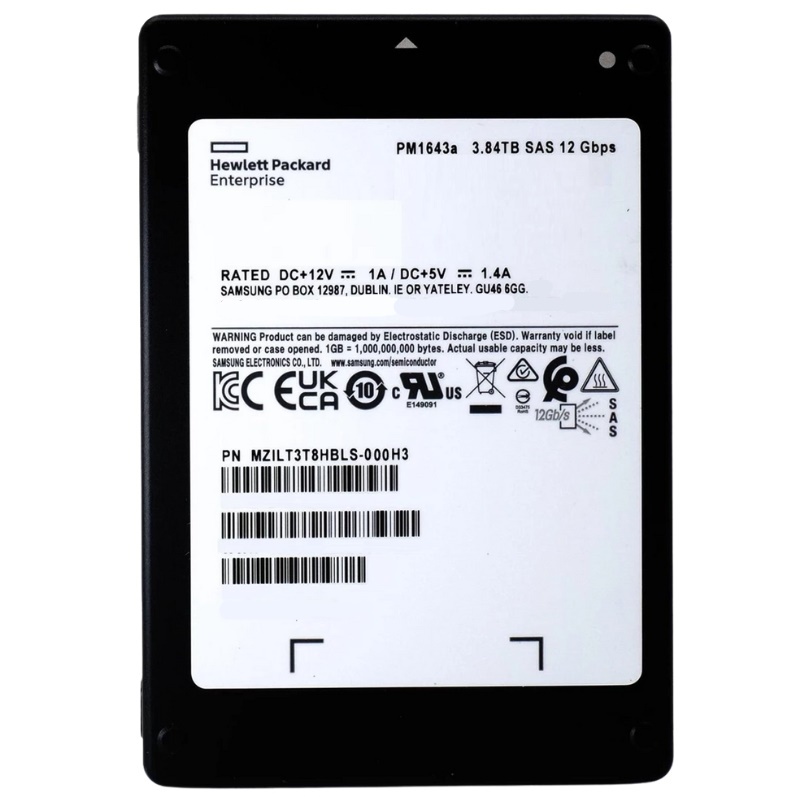


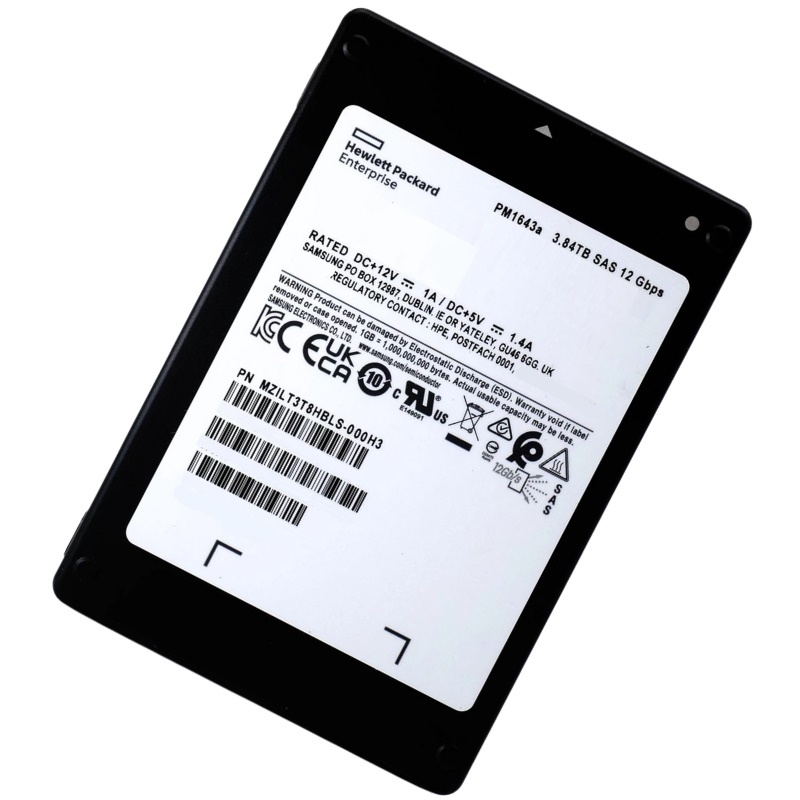
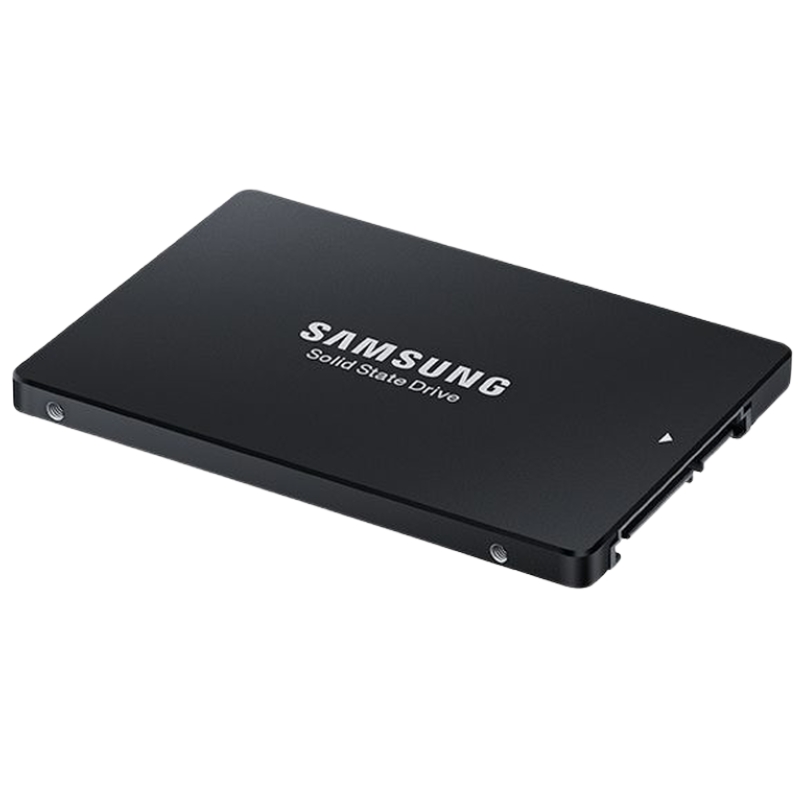
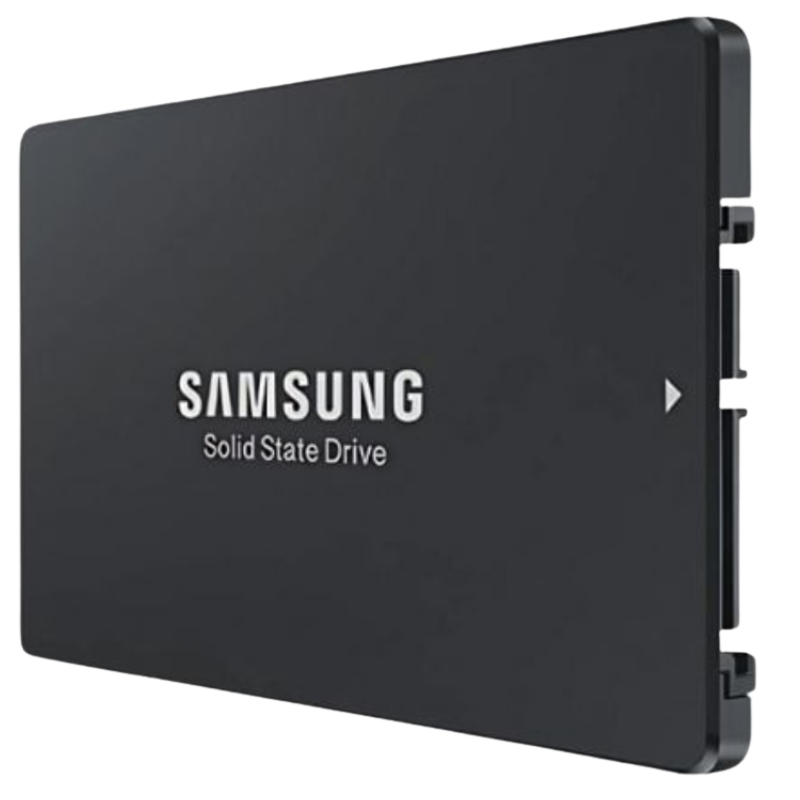
Samsung MZILT3T8HBLS-000H3 PM1643A 3.84TB SAS-12GBPS Read Intensive SFF Enterprise Internal Solid State Drive. New Sealed in Box (NIB) with 3 Years Warranty - HPE Version
The Samsung MZILT3T8HBLS-000H3, more commonly known within the industry as the PM1643a, represents a pinnacle of enterprise solid-state drive technology. Designed explicitly for read-intensive applications in data centers and enterprise servers, this 3.84TB SAS-12Gbps SSD delivers exceptional performance, unparalleled reliability, and the robust feature set required for 24/7 operation. Leveraging the high-speed Serial Attached SCSI (SAS) interface and built upon Samsung's renowned V-NAND technology, this drive is engineered to accelerate data access, reduce latency, and maximize uptime for critical business operations, big data analytics, content delivery networks, and virtualized environments.
The "SAS-12Gbps" designation is a critical differentiator for this drive. Serial Attached SCSI is the enterprise and data-center standard for high-performance, high-reliability storage connectivity, offering significant advantages over consumer-grade SATA interfaces.
The 12 gigabits per second (12Gbps) data rate per channel is the latest standard in SAS technology. Unlike SATA, which operates in half-duplex (data can only be sent or received at any one time), SAS is a full-duplex interface. This means the drive can read and write data simultaneously, effectively doubling the potential bandwidth for mixed workloads, which are commonplace in enterprise settings. This results in blisteringly fast data transfer rates, drastically reducing wait times for data-intensive operations.
SAS is built for mission-critical environments. It features enhanced error recovery, better signal integrity, and longer cable lengths. Furthermore, SAS architectures support expansive connectivity through dual-port capabilities and wide ports. The dual-port feature allows a single SSD to be connected to two different host controllers simultaneously, providing a crucial path for failover redundancy. If one controller fails, the other can immediately take over, ensuring continuous data availability—a non-negotiable requirement for enterprise storage area networks (SANs) and high-availability servers.
The "Read-Intensive" classification is not a limitation but a specific optimization. Enterprise workloads are diverse, and using a drive designed for the wrong workload type can lead to premature wear and suboptimal performance.
NAND flash memory cells have a finite number of program/erase (P/E) cycles. A write operation (programming a cell) is significantly more taxing on the NAND than a read operation. A Read-Intensive drive is engineered for applications where the ratio of read commands to write commands is very high, typically around 80% read and 20% write or greater. These drives use a specific type of NAND and controller optimization to provide the best cost-per-gigabyte for this usage profile while still offering excellent endurance.
The performance and endurance of the PM1643a are a direct result of its internal architecture, featuring Samsung's cutting-edge components.
At the heart of this SSD is Samsung's vertical NAND (V-NAND) technology. Unlike planar NAND, which lays memory cells flat on a single layer, V-NAND stacks cells in a vertical 3D structure. This architecture allows for much higher densities in a smaller physical space, improves performance by reducing electrical interference, and dramatically increases endurance by using a cell design that withstands more P/E cycles. This directly translates to the drive's ability to handle years of constant read-heavy operations.
The drive is governed by a sophisticated SAS controller, which acts as the brain of the SSD. It manages all data transfers between the host system and the NAND flash, performs error correction, handles wear leveling, and executes garbage collection. Samsung's controller is finely tuned to leverage the full duplex nature of the SAS interface, ensuring that the immense bandwidth available is utilized efficiently to minimize latency and maximize IOPS (Input/Output Operations Per Second).
Enterprise drives must guard against data corruption in the event of an unexpected power failure. The PM1643a is equipped with a robust power-loss protection circuit. This typically includes an array of capacitors that store enough energy to provide emergency power if main power is lost. This allows the controller to complete any pending writes in its cache to the non-volatile NAND memory, ensuring data integrity and preventing corruption. This feature is absolute table stakes for any enterprise storage device.
Endurance is measured in Terabytes Written (TBW) or Drive Writes Per Day (DWPD). The PM1643a, as a read-intensive model, is rated for a specific TBW over its warranty period. For example, a 3.84TB model might be rated for 6.9 PBW (Petabytes Written) or approximately 3 DWPD over a 5-year warranty. This means you could write 3 full drive capacities every single day for 5 years and remain within its warranty specifications. This provides immense headroom for the intended 80/20 read/write workload.
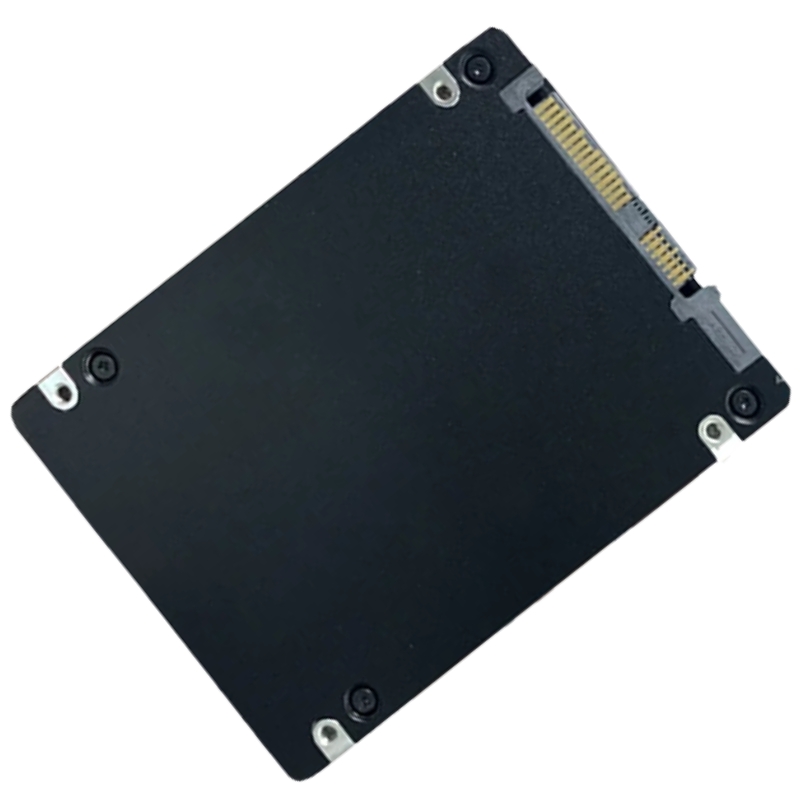
The "SFF" in the product name stands for Small Form Factor, specifically referring to the 2.5-inch drive size. However, the key to integration is the connector on the back of the drive.
This drive utilizes the SFF-8639 connector (also increasingly known as U.3). This is a versatile, multi-protocol connector that is physically identical to the SFF-8639 connectors used for U.2 NVMe drives but is wired to support SAS, SATA, and NVMe protocols. This allows data center operators to deploy a single, unified backplane in their servers and storage arrays that can accept SAS (like this PM1643a), SATA, or NVMe drives, providing ultimate flexibility for mixing and matching storage tiers and technologies within the same enclosure.
Understanding the PM1643a requires seeing it in the context of the broader enterprise SSD market.
Consumer or entry-level enterprise SATA SSDs lack the performance, dual-port redundancy, high queue depth handling, and robust power-loss protection of a SAS drive. The SAS interface's full-duplex nature alone offers a monumental advantage in busy environments. The PM1643a is in a different class altogether, designed for true enterprise reliability.
NVMe (Non-Volatile Memory Express), which operates over PCIe lanes, offers even higher raw bandwidth and lower latency than SAS. However, SAS remains a dominant force due to its maturity, superior scalability in large arrays, and dual-port redundancy that is inherent and mature in SAS ecosystems. The PM1643a offers a fantastic balance of high performance, exceptional reliability, and cost-effectiveness for workloads that don't require the absolute lowest latency that NVMe provides.
Samsung's own lineup includes Mixed-Use and Write-Intensive SAS drives. These drives are built with higher-endurance NAND and are designed for workloads with a much higher proportion of writes (e.g., 50/50 or 70/30 write/read). They typically come with a higher endurance rating (DWPD) and a higher price tag. Choosing the read-intensive PM1643a for a read-heavy application is the most cost-effective and technically appropriate choice.
The strengths of the Samsung PM1643a shine in specific deployment scenarios.
Replacing spinning hard disks with the PM1643a for server boot drives drastically reduces server boot times and improves overall system responsiveness. The high random read performance allows the operating system and applications to load files instantly.
In a large storage array (SAN or NAS), storage is often tiered. The fastest tier (Tier 0) might be NVMe, a high-performance tier (Tier 1) would be SAS SSDs like the PM1643a, and a capacity tier (Tier 2) would be large HDDs. The PM1643a is perfect for Tier 1, hosting frequently accessed "hot" data for fast retrieval.
In financial trading, every microsecond of latency counts. The combination of high IOPS and the consistent, low latency of the SAS interface makes this drive suitable for storing and accessing market data and trading algorithms where speed is paramount.


 Contact Us
 Information
 Catalog
 Solid State Drives (SSD)
 Network Switches
 Hard Disk Drives
 HBA & Controllers
 PC & Servers
 PC & Server Memory
 CPU & Processors
 Network Routers
 Power Supplies
 Tape Drives & Libraries
 Network Devices
 Computer & Network Cables