(7% discount is applied at checkout)
Cart is empty
Your go-to destination for cutting-edge server products
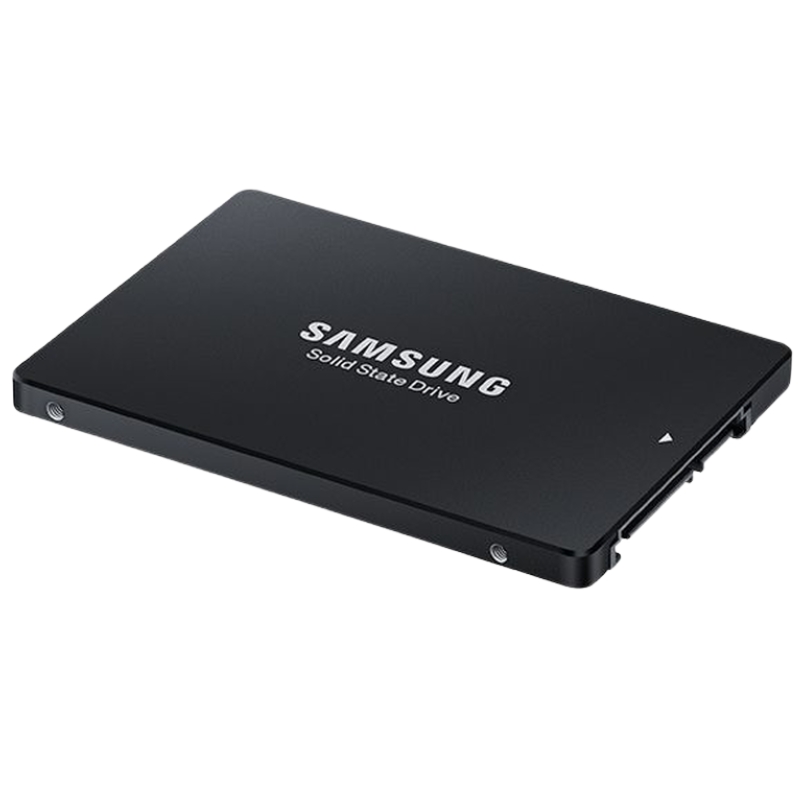


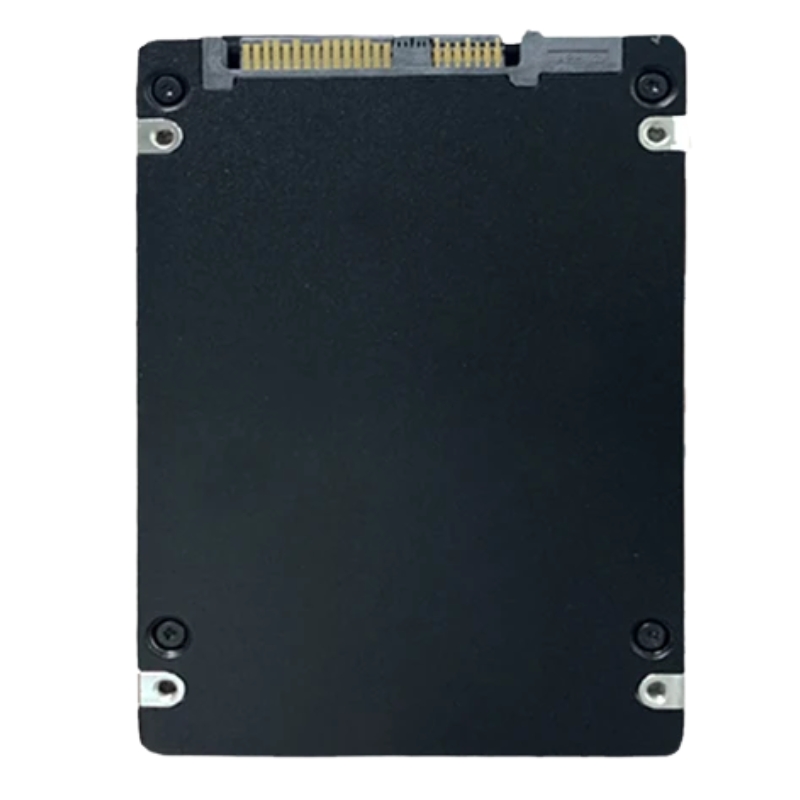
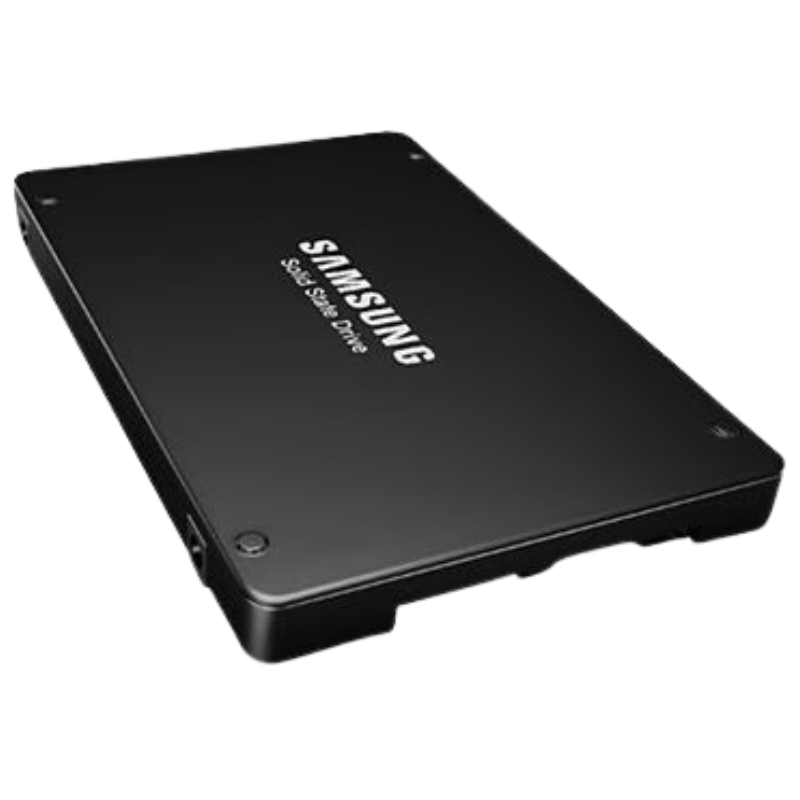
Samsung MZILT3T8HBLS-00AHI PM1643A 3.84TB SAS-12GBPS SFF Enterprise Internal Solid State Drive. Excellent Refurbished with 1 year replacement warranty - Hitachi Version
In the high-stakes environment of modern data centers, storage is not merely a component; it is the foundation upon which performance, reliability, and scalability are built. The Samsung MZILT3T8HBLS-00AHI PM1643a 3.84TB SAS-12Gbps SFF Solid State Drive represents the pinnacle of enterprise-grade storage technology. Engineered for mission-critical applications, this SSD delivers exceptional input/output operations per second (IOPS), blistering data transfer rates, and unwavering endurance, making it an ideal solution for the most demanding workloads. As a Serial Attached SCSI (SAS) drive, it leverages the robust SAS-12Gbps interface to eliminate bottlenecks and ensure consistent, low-latency performance even under sustained heavy use. This drive is not just a storage device; it is a strategic asset for businesses where data velocity and integrity are paramount.
The transition to faster storage interfaces is a necessity in an era of exponential data growth. The SAS (Serial Attached SCSI) protocol has long been the backbone of enterprise and data-center storage systems due to its reliability, scalability, and performance. The 12Gbps (12 gigabits per second) iteration doubles the bandwidth of the previous 6Gbps standard, enabling a new echelon of speed and efficiency.
The primary advantage of the SAS-12Gbps interface is its raw bandwidth. With a full-duplex interface, it can theoretically achieve up to 12Gbps per direction, allowing for simultaneous high-speed read and write operations. This is crucial for applications like high-frequency trading, real-time analytics, and large-scale virtualization, where latency is measured in microseconds and can directly impact business outcomes.
SAS architecture is renowned for its excellent scalability. It supports expansive topologies with the use of expanders, allowing hundreds or even thousands of drives to be connected in a single system. This makes it perfectly suited for storage area networks (SANs), direct-attached storage (DAS) arrays, and complex server configurations, providing the flexibility needed for future growth.
Enterprise environments demand resilience. The SAS protocol includes advanced error detection and recovery mechanisms, such as end-to-end data integrity checking and time-tested SCSI commands. These features ensure that data is accurately written and retrieved, minimizing the risk of corruption and providing administrators with greater confidence in their storage infrastructure.
A defining feature of SAS SSDs like the PM1643a is their support for dual-port connections. This means the drive has two independent physical paths to the host system. In a configured redundant setup, if one path fails (due to a faulty cable, HBA, or controller), the second path instantly takes over, ensuring continuous operation with zero downtime. This is a non-negotiable requirement for mission-critical applications in finance, healthcare, and e-commerce.
The Samsung PM1643a is not just another SSD; it is a meticulously engineered storage solution designed to thrive under constant pressure. Let's dissect its core components and specifications.
This drive utilizes the 2.5-inch Small Form Factor (SFF-8639) specification. This compact size allows for high storage density in modern server racks and storage arrays. By fitting more drives per square foot, data centers can achieve greater total capacity and performance within the same physical footprint, optimizing both space and power efficiency.
The drive is offered with a raw capacity of 3.84 terabytes (TB). It is important to understand that a portion of this capacity is dedicated to over-provisioning (OP). Over-provisioning is a critical technique where a percentage of the NAND flash is reserved and not exposed to the host system. This extra space is used by the SSD's controller for garbage collection, wear leveling, and bad block management. This process significantly enhances the drive's performance consistency and longevity, especially under write-intensive workloads. The 3.84TB capacity point indicates a specific level of over-provisioning that balances available space with exceptional endurance and sustained write performance.
While Samsung does not always publicly disclose the exact NAND type for every enterprise model, drives in this class typically utilize Samsung's cutting-edge V-NAND (Vertical NAND) technology. V-NAND stacks memory cells in vertical layers, dramatically increasing density and performance while reducing power consumption compared to planar NAND. This technology enables the high capacity, endurance, and speed that the PM1643a delivers.
Performance in enterprise SSDs is measured in more than just sequential read and write speeds. Random IOPS and latency are often more critical metrics.
The SAS-12Gbps interface enables exceptional sequential transfer rates. The PM1643a is capable of achieving sequential read speeds that saturate a significant portion of the SAS link, ensuring that moving large files, performing backups, or streaming data is incredibly fast and efficient.
This is where the drive truly shines for enterprise workloads. Random IOPS (Input/Output Operations Per Second) measure how quickly the drive can access small, scattered pieces of data. Database transactions, virtual machine booting, and email servers all rely on high random IOPS. The PM1643a, with its powerful controller and high-quality NAND, delivers consistently high random read and write IOPS, ensuring smooth operation of thousands of simultaneous requests.
Latency is the delay between a request for data and the response. The PM1643a boasts exceptionally low latency figures. This is achieved through an optimized controller architecture and the inherent speed of NAND flash. Low latency translates to faster application response times, a smoother user experience, and the ability to process more transactions per second.
Enterprise drives are rated for endurance, typically expressed in Total Bytes Written (TBW) or Drive Writes Per Day (DWPD).
DWPD indicates how many times the entire usable capacity of the drive can be written to per day, every day, throughout its warranty period. A drive with a 3 DWPD rating and a 5-year warranty, for example, is built to handle having its entire capacity written to three times daily for five years. The Samsung PM1643a is designed for a high DWPD rating, categorizing it as a write-intensive drive, built to handle the most punishing workloads.
The PM1643a features an extremely high Mean Time Between Failures (MTBF), often in the range of 2.5 million hours. This statistic, derived from predictive modeling, reflects the drive's exceptional component quality and design robustness, promising years of reliable service.
This drive boasts an exceptionally low Uncorrectable Bit Error Rate (UBER), significantly better than that of consumer-grade SSDs. This means the chance of encountering a data error that cannot be corrected by the drive's internal ECC (Error Correcting Code) is astronomically low, safeguarding data integrity.
The combination of high IOPS, low latency, and exceptional endurance makes the Samsung PM1643a suitable for a wide array of demanding enterprise applications.
In HPC clusters and big data environments like those running Hadoop or Spark, vast datasets are processed in parallel. The storage layer must feed data to compute nodes at immense speeds to prevent bottlenecks. The PM1643a's high throughput and low latency ensure that processors are never left waiting for data, maximizing cluster efficiency and reducing time-to-insight.
Whether it's a massive SQL database supporting a financial application or a NoSQL database for a large web service, these systems perform millions of small, random read and write operations every second. The consistent performance and high random IOPS of the PM1643a ensure fast query responses and quick transaction commits, which are directly tied to application performance and user satisfaction.
Virtual Desktop Infrastructure (VDI) presents a unique "boot storm" challenge, where hundreds or thousands of virtual machines boot up simultaneously, generating an enormous, sudden I/O load on the storage system. The PM1643a is engineered to handle these intense burst workloads with ease, providing a seamless experience for end-users. It also excels as storage for the hypervisor hosts themselves.
CDN edge servers cache popular content close to users to reduce latency. These servers require fast storage to quickly serve up video streams, software updates, and web content. The high read performance and reliability of the PM1643a make it an excellent choice for ensuring fast and uninterrupted content delivery.
In algorithmic trading and electronic transaction processing, every microsecond counts. The storage system must record transactions and market data with extreme speed and absolute reliability. The low latency, dual-port failover capability, and data integrity features of the SAS-based PM1643a are perfectly aligned with the zero-tolerance for downtime or error in this sector.
Understanding where SAS fits in the modern storage hierarchy is key to making an informed purchasing decision.
SATA SSDs are common in consumer devices and some entry-level enterprise applications. However, they are fundamentally different from SAS:
The PM1643a is in a different league altogether compared to SATA drives.
NVMe (Non-Volatile Memory Express) is a newer protocol designed specifically for flash storage, connecting directly via the PCIe bus for ultra-low latency and immense bandwidth.
For many enterprises, a tiered storage approach is optimal: using NVMe for the most performance-critical tiers and high-end SAS drives (like the PM1643a) for a high-performance capacity tier, offering a better total cost of ownership without a significant performance compromise.
Deploying the Samsung PM1643a requires attention to compatibility and configuration.
The drive features a SAS-12Gbps (SFF-8639) interface. It is fully backward compatible with SAS-6Gbps and SAS-3Gbps systems, though it will operate at the lower speed when connected to older hardware. To leverage its full 12Gbps potential, it must be connected to a SAS-12Gbps Host Bus Adapter (HBA) or RAID controller and compatible backplane. It is compatible with major server OEMs like Dell, HPE, Cisco, and IBM, though it's always prudent to check the vendor's compatibility matrix.
Modern server operating systems like Windows Server, Linux (e.g., RHEL, Ubuntu Server), and VMware ESXi have built-in drivers for SAS HBAs and drives. Typically, no special drivers are needed for basic functionality. However, for advanced management and monitoring, using tools provided by the HBA manufacturer (e.g., Broadcom (formerly Avago)/LSI) or Samsung's own SSD tools is recommended.


 Contact Us
 Information
 Catalog
 Solid State Drives (SSD)
 Network Switches
 Hard Disk Drives
 HBA & Controllers
 PC & Servers
 PC & Server Memory
 CPU & Processors
 Network Routers
 Power Supplies
 Tape Drives & Libraries
 Network Devices
 Computer & Network Cables