(7% discount is applied at checkout)
Cart is empty
Your go-to destination for cutting-edge server products
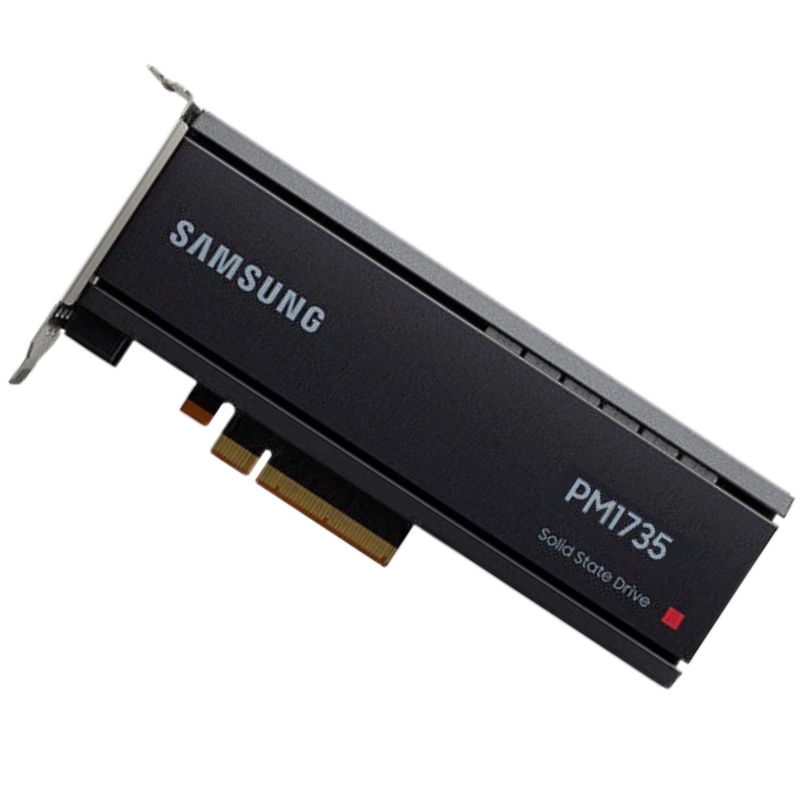


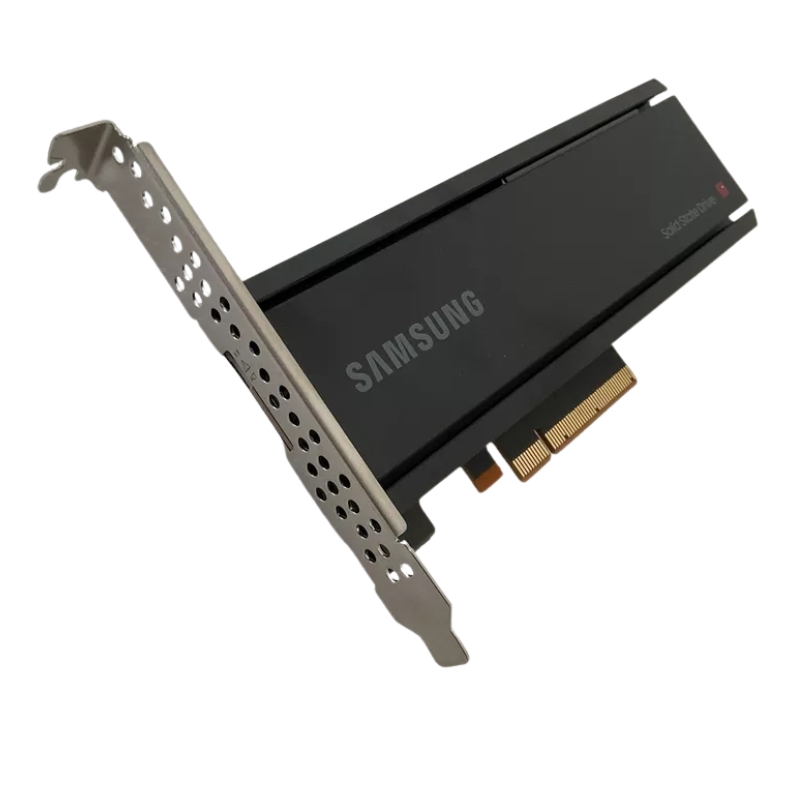
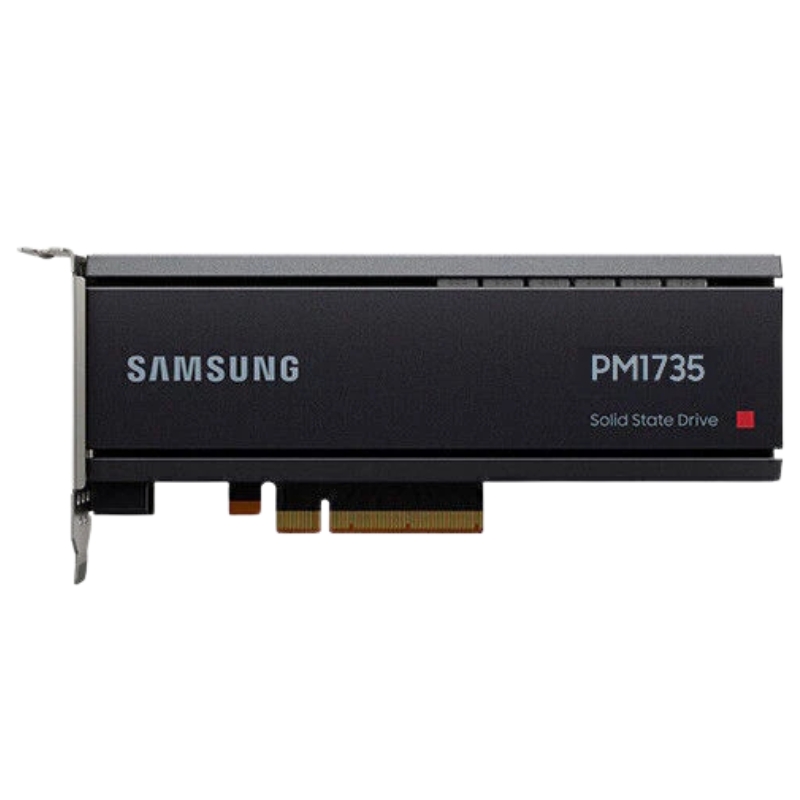
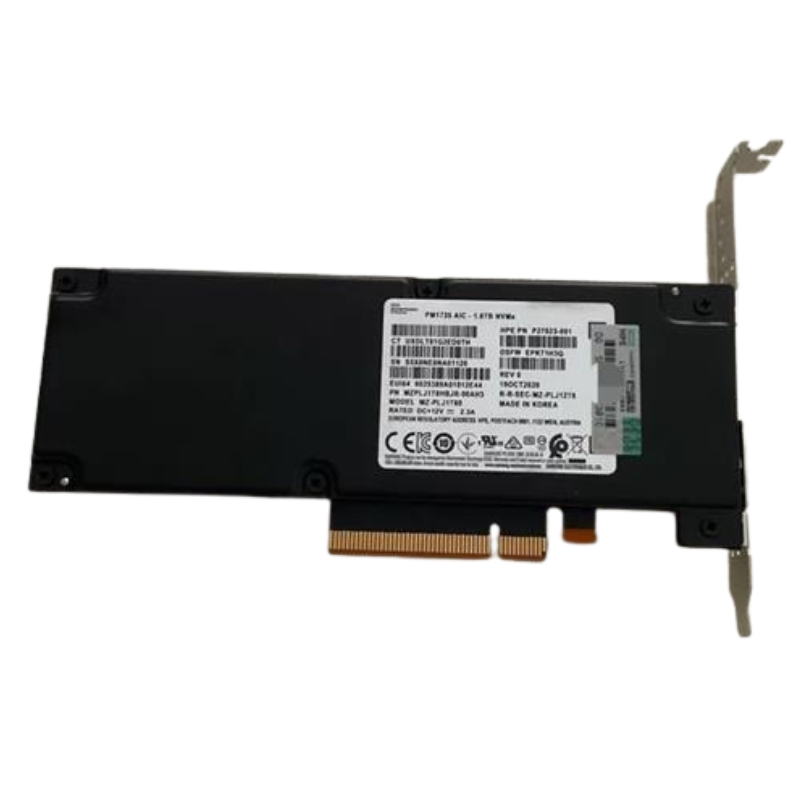
Samsung MZPLJ12THALA-00007 PM1735 12.8TB PCI-E 4.0 x8 NVMe HHHL TLC Solid State Drive. Excellent Refurbished with 1-Year Replacement Warranty
The Samsung MZPLJ12THALA-00007 PM1735 is a high-performance enterprise-grade solid state drive engineered for demanding workloads. With massive storage capacity and advanced PCI-E 4.0 technology, it delivers exceptional speed, reliability, and efficiency for data-intensive applications.
The Samsung MZPLJ12THALA-00007 PM1735 12.8TB PCI-E 4.0 x8 NVMe HHHL TLC Solid State Drive belongs to a class of high-capacity, enterprise-grade NVMe storage devices engineered for modern data centers, cloud platforms, and mission-critical applications. This category focuses on full-height, half-length (HHHL) add-in card (AIC) NVMe SSDs that pair the breakneck throughput and lower latency of NVMe over PCIe 4.0 with the space efficiency and thermal design expected by server integrators and storage architects.
Devices in this category are commonly characterized by the following core attributes: high raw capacity (multi-terabyte, often in the 8TB–16TB range), TLC NAND for an optimized balance of cost and durability, enterprise-tuned firmware, PCIe 4.0 x8 interfaces for sustained throughput, and form factors (HHHL AIC) that fit standard server PCIe slots. These SSDs are designed to deliver consistent low latency under heavy mixed workloads, robust background garbage collection, and features important to enterprise management and reliability.
When evaluating category devices such as the PM1735 12.8TB, it's useful to separate raw peak numbers from sustainable real-world performance. PCIe 4.0 x8 connectivity provides a wide bandwidth pipe for parallel NVMe queues and multiple submission/completion queues, enabling very high sequential and random I/O throughput. This means faster bulk data moves (large sequential reads/writes) as well as improved request handling for high-concurrency transactional workloads (random reads/writes).
Sequential throughput directly impacts workloads such as large file ingest, streaming, backup and restore operations, and bulk analytics. HHHL PCIe 4.0 x8 SSDs are optimized to sustain multi-gigabyte-per-second transfers while maintaining thermal stability and predictable performance over time.
Random I/O performance and latency are critical for databases, virtual machine density, and latency-sensitive microservices. Category drives emphasize consistent low latency and high IOPS under mixed read/write patterns, making them suitable for front-end and application acceleration use cases where per-request responsiveness matters.
NVMe is an I/O protocol built for NAND flash and modern nonvolatile memory. Compared to legacy protocols, NVMe reduces I/O path inefficiencies and unlocks the parallelism of modern SSD controllers and NAND packages. PCIe 4.0 doubles the per-lane bandwidth of PCIe 3.0, and using an x8 electrical configuration multiplies that bandwidth further — ideal for high-capacity SSDs that must move large volumes of data quickly while supporting many concurrent I/O queues.
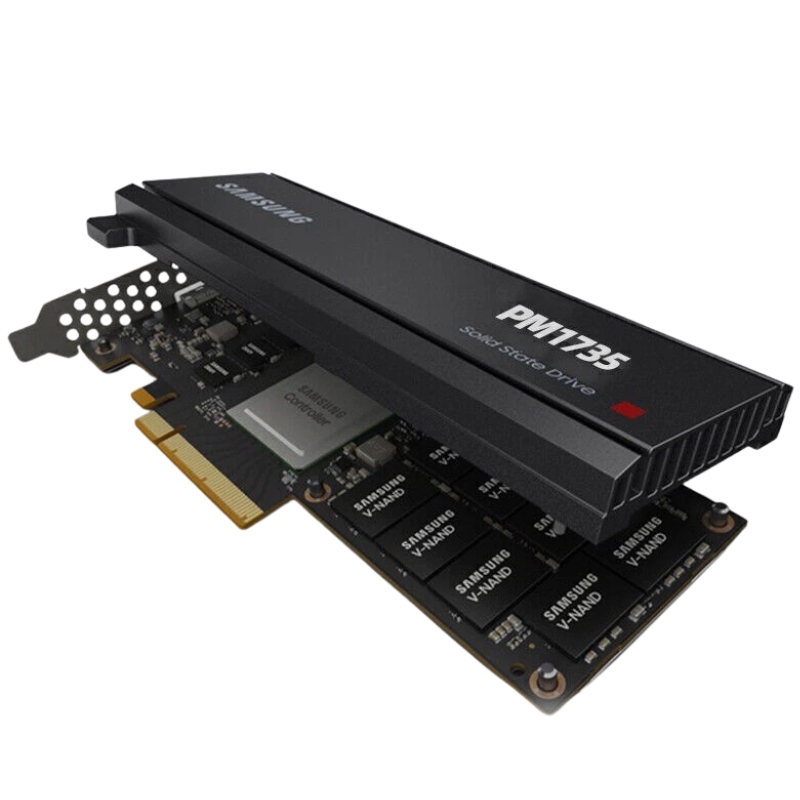
The HHHL (full-height, half-length) add-in card form factor provides an optimal balance between capacity, cooling surface area, and server slot compatibility. Compared with smaller U.2 or M.2 devices, AICs offer larger heatsinks and more PCB space for advanced controller and power delivery components. For dense compute racks and servers that provide multiple PCIe slots, HHHL NVMe AICs are often the preferred choice for maximizing throughput and simplifying maintenance and swap-outs.
Thermal design is a central consideration for HHHL SSDs. Large heatsinks and controlled airflow paths work together to keep controller and NAND temperatures within optimal ranges, preventing throttling and preserving sustained performance during heavy workloads. Many devices in this category include thermal throttling safeguards in firmware, enabling graceful performance scaling rather than abrupt failures.
Using an AIC form factor may consume a valuable PCIe slot, but it also simplifies cabling because the device connects directly to the motherboard. System integrators often prefer AICs for high-bandwidth NVMe storage deployments, carefully planning slot assignment, server airflow, and power budgets to accommodate multiple drives in 1U and 2U server platforms.
Drives in this category prioritize data integrity, availability, and long lifetime under sustained enterprise loads. that includes power-loss protection, end-to-end data path protection, advanced error correction, and firmware designed to minimize performance variance caused by background maintenance tasks. While TLC NAND aims to balance cost and endurance, enterprise SSD firmware and overprovisioning strategies compensate to deliver the endurance and write endurance metrics required by data centers.
Enterprise NVMe drives typically support vendor management tools and standard NVMe admin commands for firmware updates, telemetry, and health reporting. These features integrate with data center monitoring systems to provide insights into endurance usage, temperature trends, and predicted failure windows — essential for scheduling maintenance and minimizing unplanned downtime.
The PM1735 12.8TB and similar category devices are best suited for scenarios that require a combination of high capacity, high throughput, and low latency. Typical deployment patterns include:
Although this category is primarily aimed at centralized datacenter environments, HHHL NVMe cards sometimes appear in edge servers and telco racks where PCIe slots and robust cooling are available. Edge deployments benefit from the high local capacity and fast local access that reduce reliance on remote storage.
Before selecting a device from this category, check server and motherboard specifications for PCIe 4.0 slot support (or PCIe 3.0 backwards compatibility, recognizing reduced peak bandwidth). Confirm that the system BIOS, OS NVMe drivers, and management software support enterprise NVMe features and any vendor-specific agent utilities that may be required for firmware updates and telemetry.
Modern OS kernels include NVMe drivers and generally detect NVMe AICs automatically. However, for enterprise feature sets (secure erase, namespace management, firmware updates), ensure you have the vendor-recommended firmware and tools. Where possible, test drives in staging environments to verify firmware interoperability and driver compatibility under your specific workload mix.
System architects must assess backplane airflow and power delivery. HHHL devices draw more current than small form-factor SSDs, so server power budgets should be planned accordingly. In blade and dense platforms that limit PCIe slot availability, alternative form factors like U.2 or EDSFF may be considered — but HHHL remains a high-performance option where slot space is available.
Enterprise NVMe SSDs commonly support on-device encryption, ranging from AES encryption engines to integration with host key management solutions. Hardware-based encryption helps meet regulatory obligations and simplifies secure decommissioning. When selecting a drive, confirm supported encryption standards, the availability of secure erase commands, and compatibility with your organization’s key management policies.
Secure erase features are important for repurposing or retiring drives while meeting compliance requirements. Verify vendor documentation for supported secure erase commands and recommended procedures for cryptographic sanitization when decommissioning hardware.
Firmware integrity checks and signed firmware updates protect against tampering and reduce the risk of supply chain attacks. Choose devices whose firmware update paths utilize cryptographic signing and that offer clear procedures for secure rollback and recovery.
Purchasing enterprise SSDs requires balancing capacity, performance, endurance, support, and total cost of ownership. When evaluating the PM1735 12.8TB class devices, compare vendor warranties, available support SLAs, and whether replacement programs or field-replaceable unit (FRU) services are offered. Also consider the impact of overprovisioning and provisioning strategies: adding a buffer of spare capacity can improve sustained performance and extend effective lifetime.
Considerations
While headline cost per TB matters, calculate the real value using workload-specific metrics: latency under concurrency, sustained throughput during peak windows, and the administrative costs of maintenance and downtime. Enterprise SSDs often justify a higher upfront price by lowering operational risk, reducing latency-related penalties, and increasing VM or container density.
Data center operators must consider environmental factors — ambient temperature, airflow, vibration, and rack density — when deploying HHHL NVMe AICs. Thermal throttling and reduced lifetime can result from suboptimal airflow. It is essential to match the drive’s recommended operating envelope to the server chassis and rack cooling strategy.
High performance SSDs can consume nontrivial power during peak sustained operations. Include peak and idle power figures in capacity planning to avoid power constraints and to inform UPS sizing, rack PDUs, and cooling requirements.
Selecting the right enterprise NVMe category device is about matching the device characteristics to workload demands and operational constraints. Prioritize real-world testing, confirm thermal and power compatibility with target servers, and ensure that monitoring and lifecycle management practices are in place. The Samsung MZPLJ12THALA-00007 PM1735 12.8TB class exemplifies the high-capacity, high-throughput SSD tier used by organizations that require predictable performance, enterprise reliability, and the operational maturity to manage flash at scale.


 Contact Us
 Information
 Catalog
 Solid State Drives (SSD)
 Network Switches
 Hard Disk Drives
 HBA & Controllers
 PC & Servers
 PC & Server Memory
 CPU & Processors
 Network Routers
 Power Supplies
 Tape Drives & Libraries
 Network Devices
 Computer & Network Cables