(7% discount is applied at checkout)
Cart is empty
Your go-to destination for cutting-edge server products
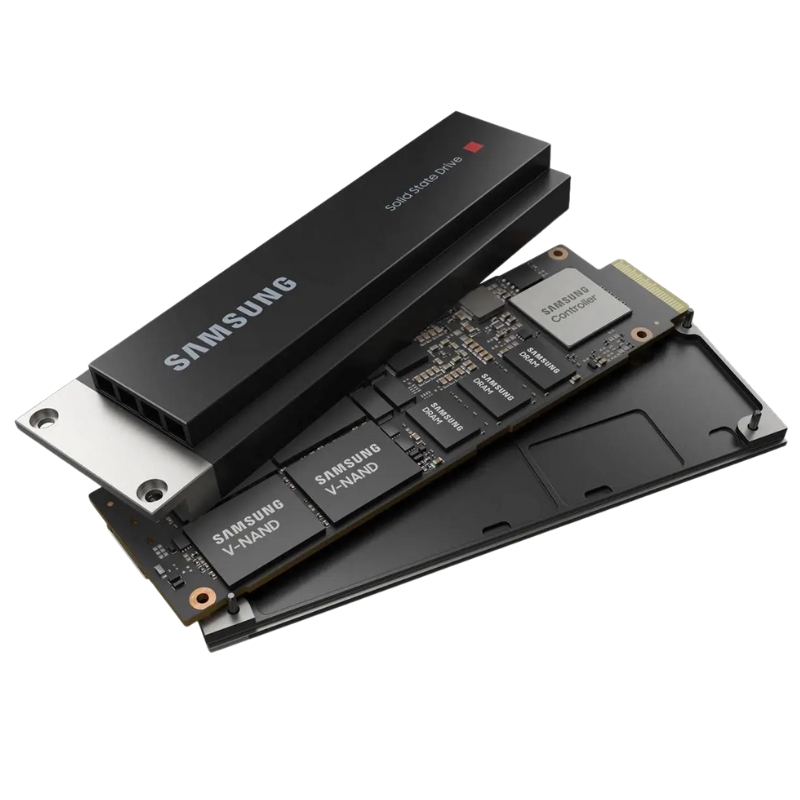


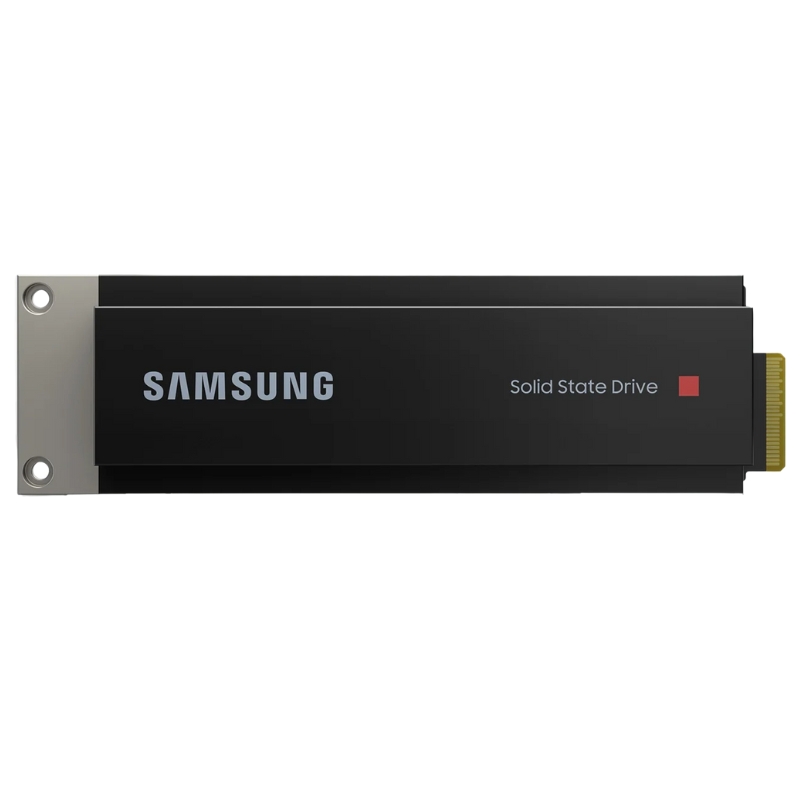
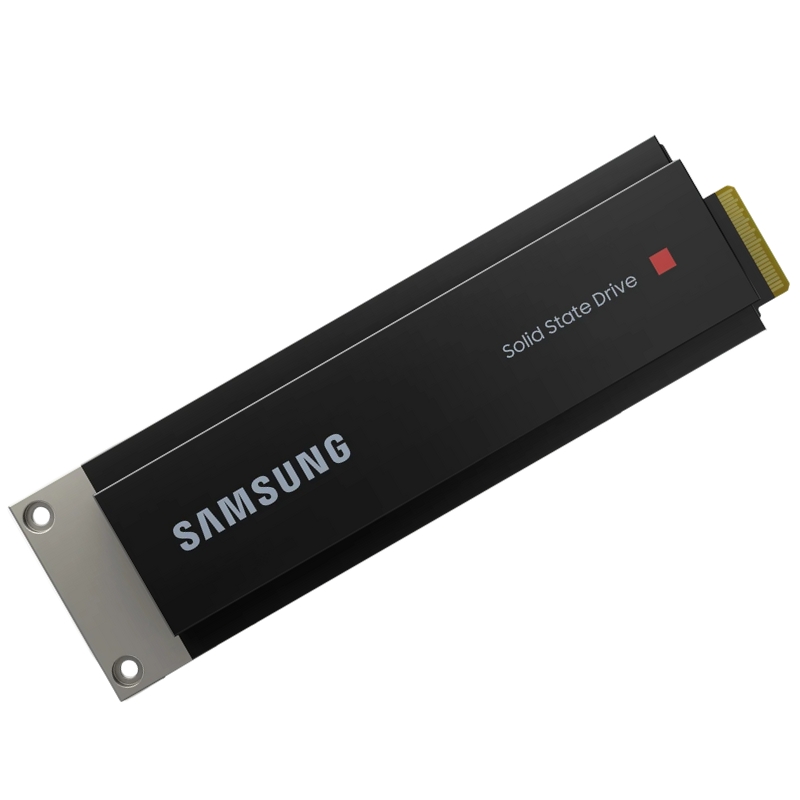
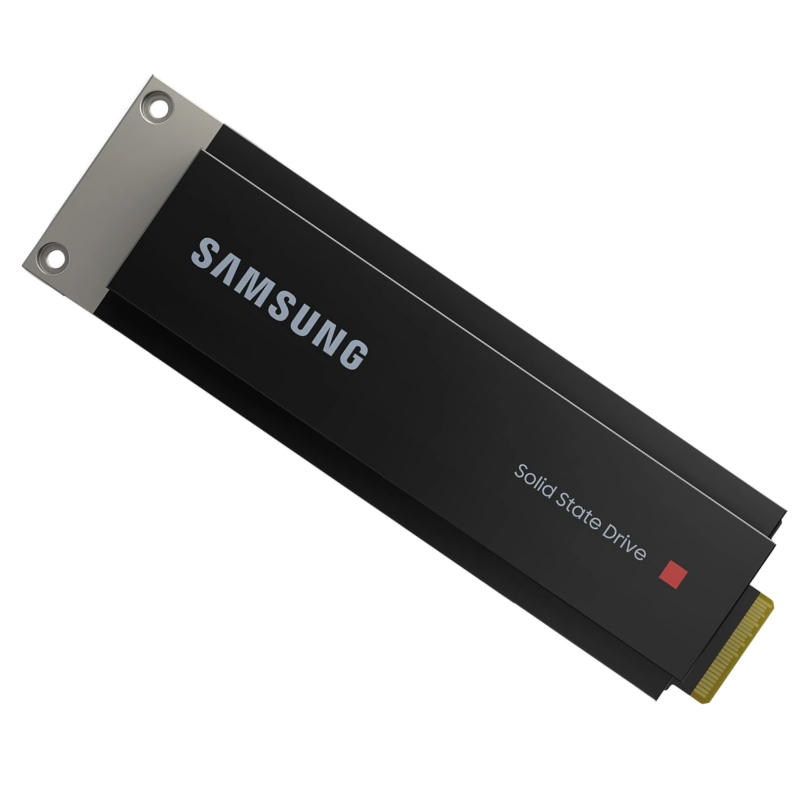
Samsung MZTL63T8HFLT-00AW7 PM9D3A E1.S 9.5mmt 3.84TB PCI-Express Gen.5 X4 Solid State Drive. New Sealed in Box (NIB) with 3 Years Warranty
The Samsung PM9D3a E1.S 3.84TB solid-state drive represents a monumental leap forward in enterprise and data center storage technology. As a pioneer in memory solutions, Samsung has engineered this drive to harness the raw, untapped potential of the PCI-Express Gen 5.0 interface, delivering unprecedented levels of bandwidth, IOPS (Input/Output Operations Per Second), and latency reduction. This drive is not merely an incremental upgrade; it is a foundational component for the next generation of computing, built to alleviate data bottlenecks in the most demanding environments, from AI and machine learning workloads to high-frequency trading databases and real-time analytics platforms.
Adopting the innovative E1.S (EDSFF E1.S) form factor, the PM9D3a is designed for high-density, scalable server deployments. Its 9.5mm thickness (often referred to as "9.5mmt") offers a perfect balance between physical space, thermal management, and capacity. This category of storage is engineered for IT professionals, data center architects, cloud service providers, and enterprises that require the absolute highest performance, reliability, and efficiency from their storage infrastructure. The Samsung MZTL63T8HFLT-00AW7 is a specific variant within this category, offering a substantial 3.84TB of capacity to handle massive datasets.
The Samsung PM9D3a is built upon a symphony of cutting-edge technologies that work in concert to achieve its remarkable performance profile. Understanding these core innovations is key to appreciating its place in the market.
The transition from PCIe 4.0 to PCIe 5.0 is a generational shift, doubling the bandwidth per lane. A PCIe 5.0 x4 interface offers a theoretical bandwidth of nearly 16 GT/s (Giga Transfers per second) per lane, resulting in a total bi-directional bandwidth of approximately 128 Gb/s. This immense pipeline ensures that the drive's ultra-fast NAND and controller are never constrained by the host interface, making it future-proof for the most bandwidth-intensive applications that are emerging today and tomorrow.
At the heart of the PM9D3a lies Samsung's proprietary 8th-generation Vertical NAND (V-NAND) technology. This TLC (Triple-Level Cell) 3D NAND architecture stacks memory cells in over 200 layers, achieving incredible density and performance within a compact footprint. V8 NAND provides faster read/write speeds, lower power consumption, and significantly higher endurance compared to previous generations and competing planar NAND technologies. This allows for the high 3.84TB capacity in the E1.S form factor without compromising on speed or reliability.
A powerful, multi-core, ARM-based controller acts as the brain of the SSD. It manages all operations, including error correction, wear leveling, bad block management, and communication with the host system. Paired with sophisticated firmware algorithms, the controller enables advanced features like:
The move away from traditional 2.5-inch and M.2 form factors is critical for modern data centers. The E1.S form factor, part of the EDSFF (Enterprise and Data Center SSD Form Factor) family, is specifically designed to address the limitations of its predecessors.
The E1.S "ruler" design is long and narrow, allowing it to be packed densely into 1U and 2U servers. A single server tray can hold numerous E1.S drives, enabling petabyte-scale storage in a single rack unit. This maximizes storage capacity per watt and per square foot, a critical metric for large-scale cloud and enterprise deployments.
High-performance PCIe Gen 5 SSDs generate significant heat. The E1.S form factor's 9.5mm thickness provides a larger surface area for heat dissipation compared to M.2 drives. It is designed for optimal airflow in server wind-tunnel environments, often featuring a copper heatsink label and being designed to work in conjunction with system-level cooling solutions to maintain peak performance under sustained workloads.
The E1.S connector and PCB layout are engineered for the high-speed signals required by PCIe 5.0, minimizing signal loss and crosstalk. It also provides more stable and robust power delivery pins compared to M.2, which is essential for consistent performance under heavy load.
The Samsung PM9D3a E1.S 3.84TB is engineered for staggering performance metrics that push the boundaries of what is possible in enterprise storage.
Leveraging the PCIe Gen 5 x4 interface, this drive achieves sequential read speeds that can exceed 13,000 MB/s and sequential write speeds surpassing 10,000 MB/s. This enables rapid transfer of large files, swift loading of massive datasets into memory, and efficient handling of large-block sequential workloads common in video processing, scientific computing, and data backup/restoration.
For enterprise applications, random performance is often more critical than sequential speed. The PM9D3a delivers exceptional random read performance of up to 2,500,000 IOPS and random write performance of up to 1,000,000 IOPS (4K random). This immense IOPS capability ensures that databases, virtual machines, and transaction-heavy applications can operate with lightning-fast response times, supporting thousands of simultaneous user requests.
Performance consistency is paramount. Samsung's advanced controller ensures exceptional QoS, providing predictable low latency even under mixed, heavy workloads. Average read latency is typically under 80 microseconds, and write latency under 15 microseconds, ensuring real-time processing capabilities.
The combination of extreme performance, high capacity, and robust reliability makes the Samsung PM9D3a E1.S drive ideal for a myriad of high-end applications.
AI/ML model training involves iterating over enormous datasets. The drive's massive bandwidth and IOPS allow data scientists to load training epochs much faster, drastically reducing model iteration times and accelerating time-to-insight. It acts as a high-performance cache for training data between network storage and GPU memory.
Online Transaction Processing (OLTP) and Online Analytical Processing (OLAP) databases handling millions of transactions per second require sub-millisecond storage latency. The PM9D3a ensures that database queries, joins, and commits are executed with minimal delay, improving overall application performance and user experience.
In financial trading, microseconds matter. The ultra-low latency of this SSD ensures that market data can be written and read back almost instantaneously, giving algorithmic trading systems a critical speed advantage.
In hyper-converged infrastructure (HCI) and environments with thousands of virtual machines, storage is a shared resource. The high IOPS and excellent QoS of the PM9D3a prevent performance degradation, ensuring that "noisy neighbors" do not impact the performance of other VMs on the same host.
For 8K video editing, rendering, and real-time special effects, storage must keep up with massive media files. The sequential throughput of this drive allows for smooth playback and editing of extremely high-resolution content directly from the storage array.
Understanding where the Samsung PM9D3a E1.S stands in the broader storage landscape helps in making an informed decision.
Compared to the previous generation of PCIe 4.0 SSDs (which typically max out at ~7,000 MB/s reads), the PM9D3a offers nearly double the bandwidth. This performance delta is most apparent in bandwidth-saturated applications, significantly reducing processing and wait times.
While U.2 (2.5-inch) offers similar capacity and performance, it is physically larger, limiting density. M.2 drives are compact but struggle with thermal throttling under sustained PCIe 5.0 workloads. The E1.S form factor of the PM9D3a strikes the ideal balance, offering high density, superior thermal management, and uncompromised Gen 5 performance.
Samsung has a long history of providing OEM drives for the world's largest server manufacturers. The PM9D3a is the culmination of this experience, offering a mature, reliable, and high-performance solution compared to first-generation products from some competitors.


 Contact Us
 Information
 Catalog
 Solid State Drives (SSD)
 Network Switches
 Hard Disk Drives
 HBA & Controllers
 PC & Servers
 PC & Server Memory
 CPU & Processors
 Network Routers
 Power Supplies
 Tape Drives & Libraries
 Network Devices
 Computer & Network Cables