(7% discount is applied at checkout)
Cart is empty
Your go-to destination for cutting-edge server products
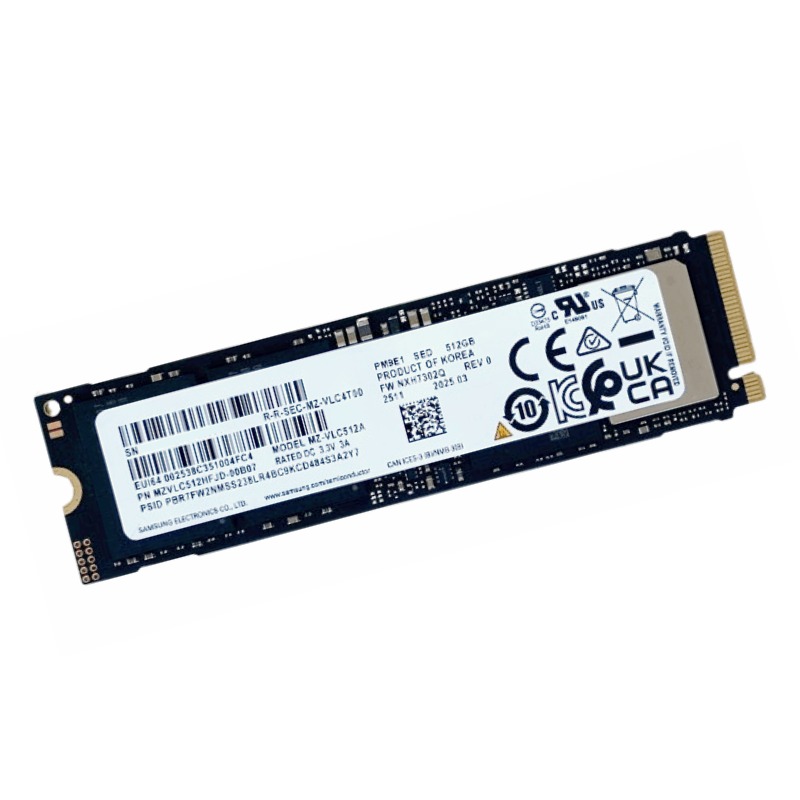


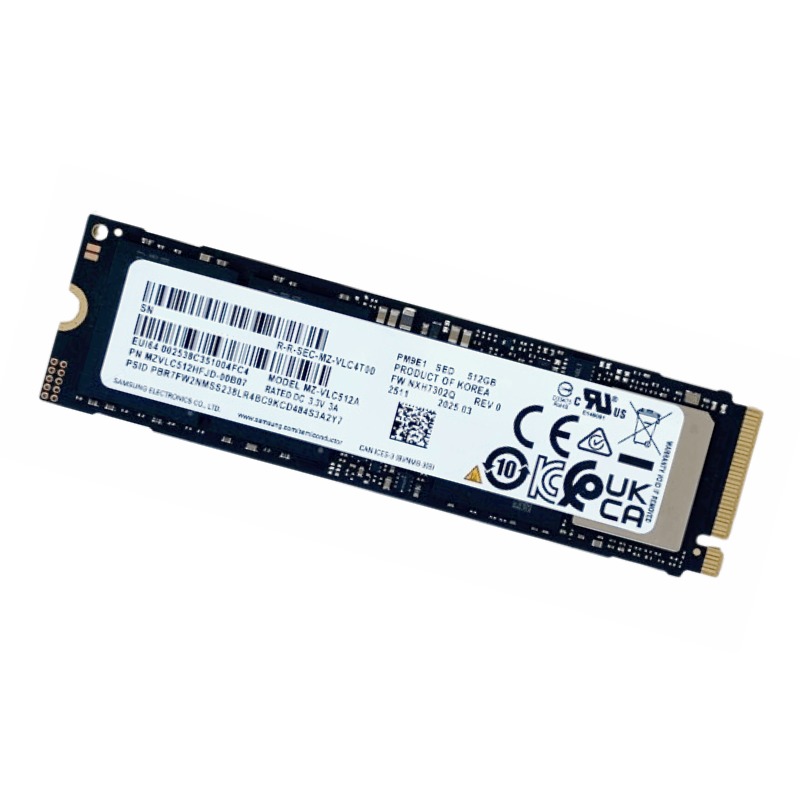
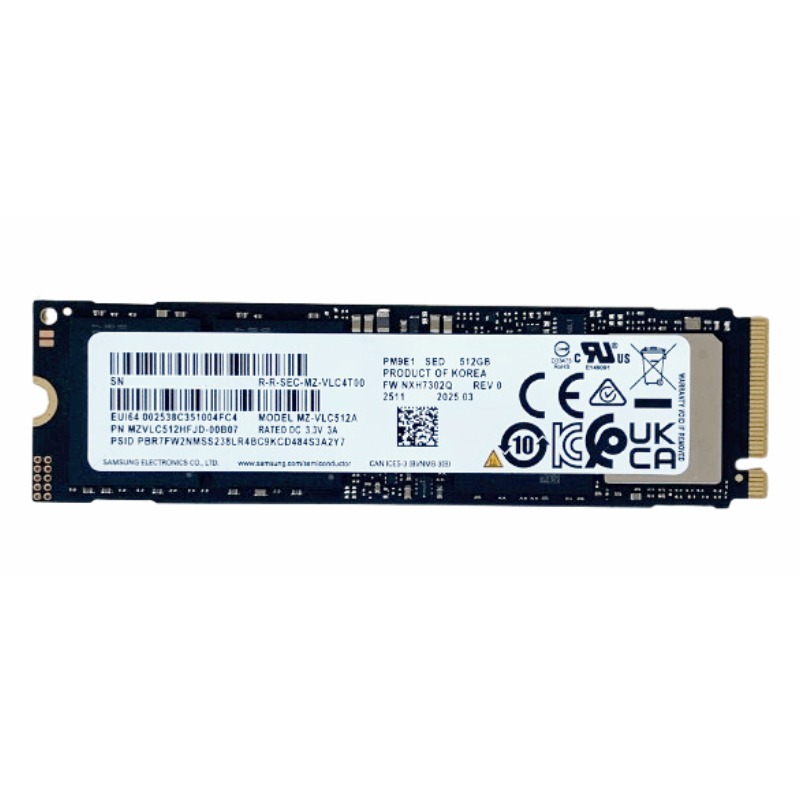
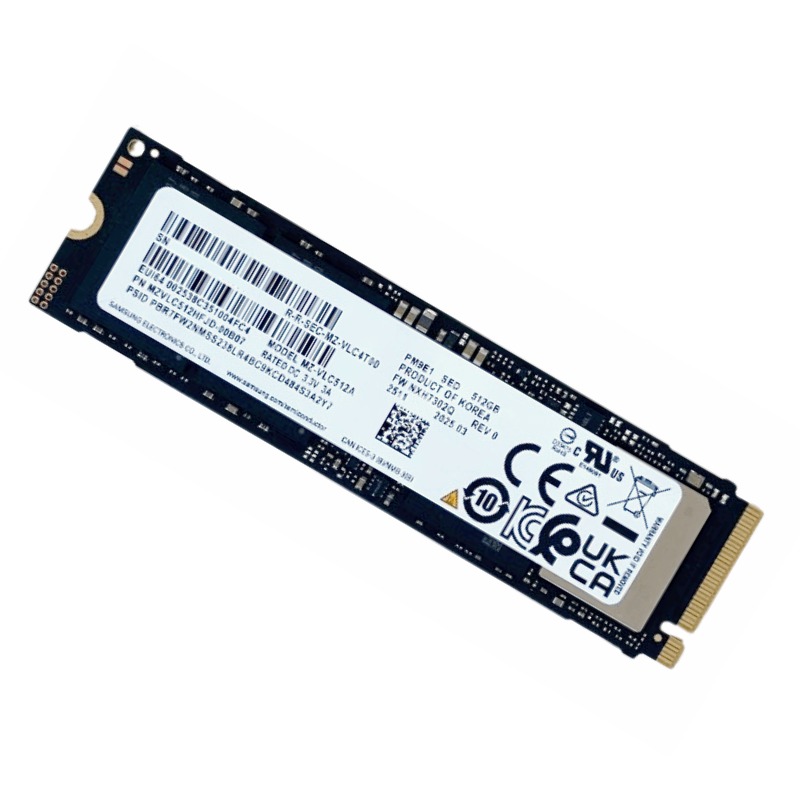
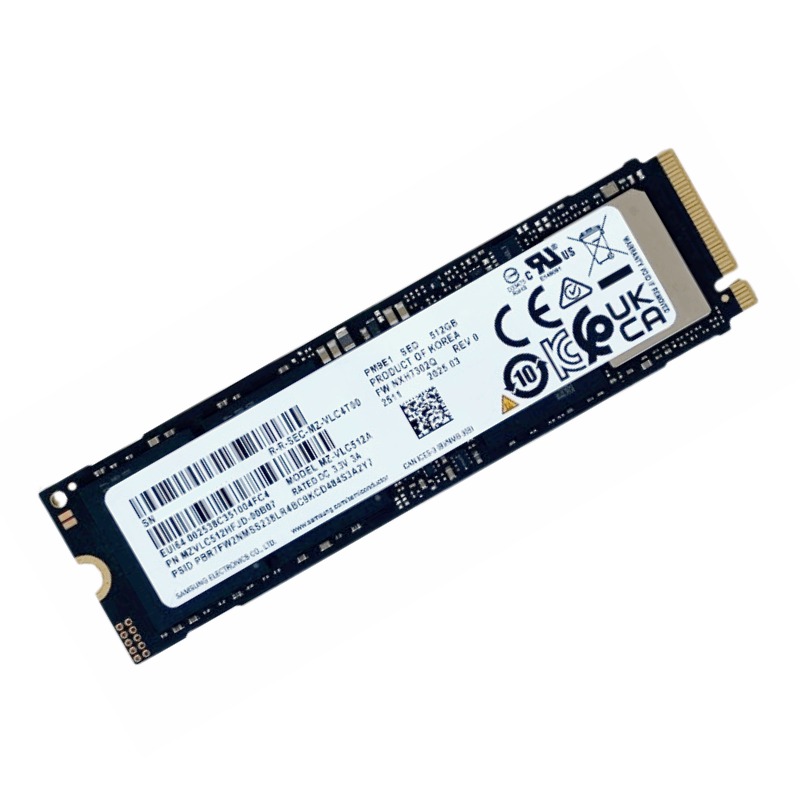
Samsung MZVLC512HFJD-00B07 PM9E1 512GB M.2 PCI Express 5.0 X4 (nvme) SSD. New Sealed in Box (NIB) with 3 years Replacement Warranty
Experience exceptional responsiveness with the SAMSUNG PM9E1 MZVLC512HFJD-00B07, an internal solid-state drive engineered for ultra-fast data access. Its advanced PCI Express 5.0 x4 (NVMe) interface ensures accelerated transfers across intensive applications, creative workflows, and high-performance computing.
Designed for effortless integration, the drive fits seamlessly into any M.2-compatible bay while leveraging cutting-edge NVMe architecture to unlock full system potential.
The Samsung MZVLC512HFJD-00B07 PM9E1 512GB M.2 PCIe 5.0 x4 NVMe Internal SSD represents a class of ultra-high-speed solid-state storage solutions engineered for modern computing platforms that demand accelerated throughput, responsive multitasking, and exceptional efficiency. By leveraging the PCI Express 5.0 interface, this drive moves beyond the performance ceilings of earlier PCIe generations, offering significantly improved data lanes, lower latency thresholds, and optimized command handling. Devices in this category are commonly favored in systems where fast sequential operations, enhanced I/O patterns, and dependable endurance ratings are crucial. These drives are often integrated into high-performance desktops, gaming systems, data-intensive workstations, and compact form-factor builds requiring maximum velocity without sacrificing energy efficiency.
Within the broader landscape of M.2 NVMe SSDs, the PCIe 5.0 subcategory stands as one of the most advanced, using refined controller logic, improved NAND flash structures, and thermal-tuned hardware designs to ensure stable peak output. The Samsung PM9E1 model in particular is recognized for balancing raw throughput with reliability-driven firmware algorithms, enterprise-inspired endurance features, and broader compatibility across motherboards supporting next-generation PCIe interfaces. This category emphasizes both speed and efficiency, catering to users who rely on storage that can rapidly handle high volumes of data, operate smoothly under sustained storage loads, and contribute to overall system responsiveness in various application tiers.
Drives designed under the category of PCIe 5.0 x4 NVMe storage, such as the Samsung MZVLC512HFJD-00B07 PM9E1, are engineered to expand the performance potential of modern computing environments. The PCIe 5.0 interface doubles the bandwidth of PCIe 4.0, enabling these SSDs to receive and transmit data at considerably faster rates, which reduces waiting times in large file operations, enhances content rendering efficiency, accelerates boot processes, and supports demanding software applications with improved stability. The use of non-volatile memory express (NVMe) technology further enhances their operational profile by streamlining command queues and minimizing bottlenecks traditionally associated with older storage protocols.
This category of drives often benefits from improved controller architecture, allowing for parallel execution paths, enhanced queue depth management, and refined error correction processes. The efficiency gains enable smoother operation even when multiple high-demand tasks are executed simultaneously. NVMe-based PCIe 5.0 storage solutions are also highly optimized for multi-threaded workloads, making them well-suited for environments that rely heavily on advanced multitasking or enterprise-grade data workflows. As part of this specialized storage segment, the Samsung PM9E1 combines PCIe 5.0 throughput with advanced firmware to ensure consistent performance under diverse workloads and thermal conditions.
The Samsung MZVLC512HFJD-00B07 PM9E1 is carefully designed with an internal structure that reflects the priorities of high-end NVMe storage engineering. At its core is a Samsung-engineered controller optimized for PCIe 5.0 throughput pathways, ensuring that every layer of the device—from NAND management to host communication—operates with precision and consistency. As part of this product category, the drive consists of high-endurance NAND flash memory modules that support fast read-write cycles while preserving long-term data reliability.
In PCIe 5.0 NVMe products, controller efficiency plays a defining role in overall drive responsiveness, and the PM9E1 benefits from refined logic that effectively manages voltage levels, temperature, and data organization. The firmware algorithms embedded in the drive work continuously to optimize wear leveling, garbage collection, and error correction, contributing to stable long-term operation even under heavy workload intensities. This architectural approach is characteristic of devices within this advanced SSD category, where integration of robust control mechanisms ensures that speed does not come at the cost of lifespan or operational consistency.
Thermal management is a prominent feature across PCIe 5.0 NVMe SSD categories because the enhanced bandwidth and high-speed data transmission naturally generate elevated heat levels. The Samsung PM9E1 incorporates internal thermal-regulating features designed to sustain performance even during intensive workloads. By using heat-optimized materials, improved controller efficiency, and hardware-based thermal guards, the drive maintains performance stability without thermal throttling issues that might otherwise compromise high-speed throughput.
The category of advanced M.2 PCIe 5.0 NVMe drives often includes thermal sensors and dynamic frequency-scaling algorithms that automatically adjust performance output to preserve safe temperature boundaries. These integrated designs help manage prolonged high-intensity workloads such as large-scale file transfers, high-resolution video editing, database queries, and software compilation. The Samsung PM9E1 benefits from this category-wide emphasis on heat mitigation, ensuring that users can rely on sustained data movement without sharp speed drops due to temperature fluctuations.
Within the category of high-performance NVMe SSDs, the Samsung MZVLC512HFJD-00B07 PM9E1 is especially suited for systems that require rapid accessibility to data, minimal latency, and tight performance consistency. Its PCIe 5.0 x4 interface allows it to excel across both consumer-level and professional environments. Enthusiast gaming platforms gain improved level-loading performance, reduced in-game stutter, and quicker texture-streaming thanks to the drive’s ability to deliver fast random read operations. Creative professionals benefit from the drive’s ability to handle large project files and intensive workloads in applications such as 3D modeling, 4K/8K video editing, and digital rendering.
In productivity-focused environments, the PM9E1 offers a smooth experience for running multiple applications at once, whether managing extensive spreadsheets, large datasets, simulation tools, or database environments. Developers working with complex codebases also benefit from reduced compile times and faster indexing operations. In compact and low-power devices, the category’s emphasis on energy efficiency allows for high performance without imposing excessive power draw, making it ideal for small-form-factor workstations, ultracompact desktops, and embedded systems requiring elevated storage performance.
Although categorized primarily as a client or prosumer M.2 PCIe 5.0 SSD, the Samsung PM9E1 inherits several reliability attributes typically associated with enterprise-class storage solutions. The category emphasizes consistent data integrity, robust error correction, and optimized endurance metrics. These attributes support continuous operation under heavy or mixed workloads and enable the drive to maintain consistent performance even as data volumes increase over its lifecycle.
The integration of advanced wear-leveling algorithms ensures that memory cells receive even usage distribution, which significantly contributes to the drive’s reliability over time. Devices in this category typically feature internal health monitoring systems that allow users to track drive performance, temperature, and anticipated lifespan metrics. This element of self-diagnostics aligns with the category’s emphasis on operational transparency and user-oriented reliability.
The Samsung MZVLC512HFJD-00B07 PM9E1 is optimized for systems equipped with M.2 slots supporting PCIe 5.0 x4 connectivity. The category of PCIe 5.0 NVMe SSDs requires appropriate platform support for users to realize full bandwidth advantages, although such drives are backward-compatible with earlier PCIe generations at reduced speeds. This ensures flexibility when integrating the PM9E1 into existing builds, while offering full performance scaling for next-generation motherboards.
Compatibility within this SSD category typically spans a wide range of operating systems and motherboard chipsets. Modern BIOS and UEFI environments are designed to easily recognize PCIe 5.0 NVMe SSDs, facilitating fast setup and secure boot deployments. This seamless integration makes the category particularly appealing to system builders who require rapid installation, minimal configuration, and immediate functionality upon deployment.
The M.2 form factor plays a critical role in the success of PCIe 5.0 NVMe SSDs like the Samsung PM9E1. This compact design allows for maximum performance density, enabling small devices to achieve previously unattainable levels of storage speed. Unlike larger SATA-based counterparts, M.2 NVMe drives require no additional cabling and contribute to streamlined airflow inside compact enclosures.
This form factor category also excels in energy efficiency, allowing high-performance storage modules to operate using minimal power while generating less heat per watt. Because of its modular design and advanced interface support, the M.2 category is widely used across ultrabooks, mini-PCs, gaming machines, and professional workstations that demand both speed and minimal hardware footprint.
Data preservation is central to the NVMe PCIe 5.0 category, and the Samsung PM9E1 utilizes a suite of technology features to reduce data corruption risks. The category typically incorporates advanced ECC algorithms, global wear leveling, and end-to-end data path protection to maintain stability across long-term operation. The PM9E1 follows this pattern with internal firmware that constantly evaluates cell distribution, minimizes read-disturb effects, and adjusts internal processes to reduce degradation under repeated workloads.
These technologies enhance reliability for users who regularly handle critical or sensitive data. Whether dealing with application files, professional documentation, or high-capacity media projects, the category’s emphasis on strong error protection ensures that the drive can support long-term professional demands.
The NVMe protocol significantly improves queue handling over legacy storage standards, allowing PCIe 5.0 NVMe drives like the Samsung PM9E1 to support large numbers of simultaneous data requests. This is particularly important for users who rely on multitasking or workflow environments that require constant background reads and writes. The category supports deep queue depths, enabling storage to scale performance smoothly under parallel operations.
For developers, engineers, media creators, and gamers, this translates into consistently reduced latency and fewer stalls during peak usage. The category’s firmware optimizations ensure that commands are carried out efficiently, even during heavy workload spikes, making PCIe 5.0 NVMe drives ideal for modern software ecosystems that depend on multithreaded task distribution.
Durability is a defining characteristic of devices within this advanced NVMe PCIe 5.0 category. The Samsung PM9E1 is built to handle consistent daily workloads without performance loss due to excessive wear. High-quality NAND flash contributes to endurance, while intelligent management algorithms help optimize write distribution. This ensures that even under frequent large-file transfers or continuous operations, the drive can sustain its rated performance metrics.
Additionally, the category emphasizes strong resistance to physical shock and vibration due to its soldered component architecture and lack of moving parts. As a result, the PM9E1 is suitable for portable computing devices, specialized equipment, and compact systems that may experience frequent movement. The firmware further ensures that idle states, sleep modes, and wake cycles function smoothly, reducing unnecessary write operations while extending overall longevity.
High-performance storage devices within this category are optimized for reduced energy consumption, enabling them to deliver fast responses while minimizing strain on system resources. The Samsung PM9E1 benefits from low-voltage design characteristics and intelligent power-saving states that help balance performance needs with efficient battery usage in portable devices.
This makes the category ideal for laptops and energy-conscious environments where storage components must deliver fast access times without significantly raising power draw. The combination of PCIe 5.0 efficiency improvements and Samsung’s optimized firmware allows the PM9E1 to operate smoothly in both high-intensity and low-power scenarios.
The Samsung PM9E1’s membership in the PCIe 5.0 NVMe SSD category highlights its ability to handle diverse workloads with consistent speed. Whether used for everyday computing tasks, professional editing software, virtualization, or gaming, the drive adapts to varying operational demands. This category supports optimized caching techniques that uphold strong responsiveness in frequently used applications.
Users working with compressed assets, encrypted files, or large multimedia libraries will appreciate the ability of PCIe 5.0 NVMe drives to rapidly access and manipulate complex data structures. This performance consistency reflects the category’s overarching priority: delivering storage designed for modern, evolving software environments and future-generation computing ecosystems.
Systems utilizing PCIe 5.0 NVMe SSDs can achieve substantial gains in overall performance when paired with matching hardware configurations. The category benefits from motherboards equipped with optimized PCIe lane distribution, improved memory subsystem support, and advanced cooling solutions. To maximize performance of devices like the Samsung PM9E1, users often rely on updated UEFI firmware, high-efficiency CPU architectures, and advanced chipset designs.
The category’s performance scaling ensures seamless integration with components designed to handle high throughput, making it well-suited for advanced gaming systems, AI-assisted workflows, virtualization environments, and data-intensive scientific applications. The PM9E1 complements these configurations with its blend of speed, reliability, and thermal stability.
One of the major advantages of this category is the future-proofing it offers. PCIe 5.0 NVMe SSDs like the Samsung PM9E1 ensure that computing systems remain compatible with upcoming software demands and evolving performance standards. As file sizes grow, content creation evolves, and applications become more data-hungry, drives in this category maintain enough bandwidth to meet increasing requirements.
Because the category aligns with cutting-edge PCIe 5.0 architecture, it supports forward-compatible scaling for systems built with longevity in mind. This allows users to upgrade computing platforms without worrying that the storage subsystem will become a bottleneck.
The Samsung MZVLC512HFJD-00B07 PM9E1 512GB M.2 PCI Express 5.0 x4 NVMe Internal Solid State Drive belongs to a category defined by exceptional speed, refined architecture, and modern interface enhancements. Devices in this segment excel in delivering low latency, fast application loading, efficient multitasking, and sustained performance across varied usage patterns. The PM9E1 reflects the category’s emphasis on high throughput, long-term reliability, and energy-efficient operation while remaining compact enough for a wide range of computing devices.
This storage category’s defining attributes—such as advanced thermal control, robust data protection algorithms, lightning-fast interface bandwidth, and multi-layer firmware optimization—ensure that the PM9E1 stands out as a capable solution for high-performance users. Whether deployed in professional, gaming, or everyday computing environments, the category offers the speed and stability necessary to support current and future generations of software and workflow demands.


 Contact Us
 Information
 Catalog
 Solid State Drives (SSD)
 Network Switches
 Hard Disk Drives
 HBA & Controllers
 PC & Servers
 PC & Server Memory
 CPU & Processors
 Network Routers
 Power Supplies
 Tape Drives & Libraries
 Network Devices
 Computer & Network Cables