(7% discount is applied at checkout)
Cart is empty
Your go-to destination for cutting-edge server products


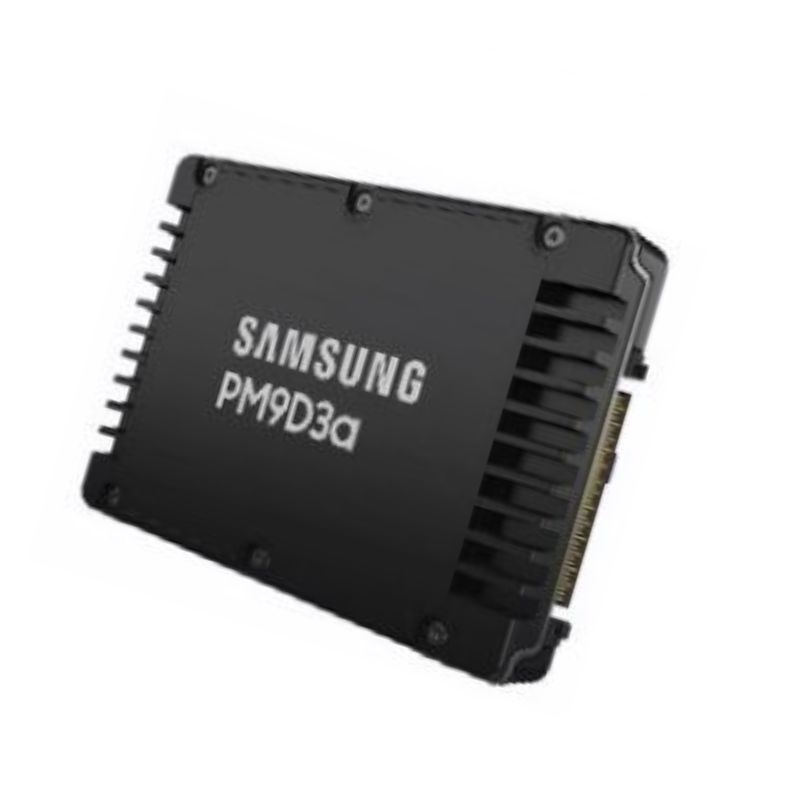
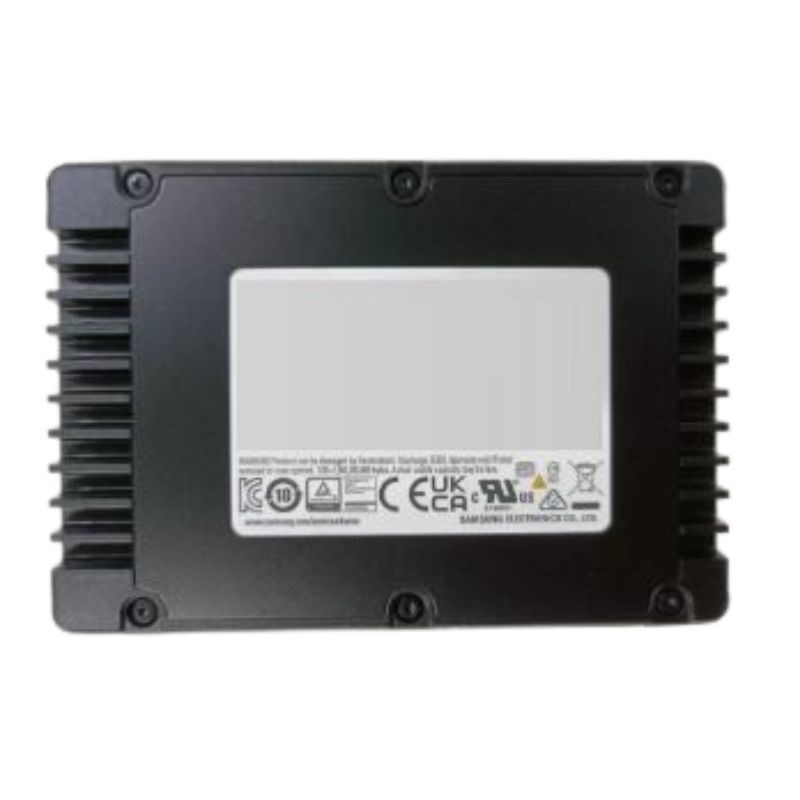
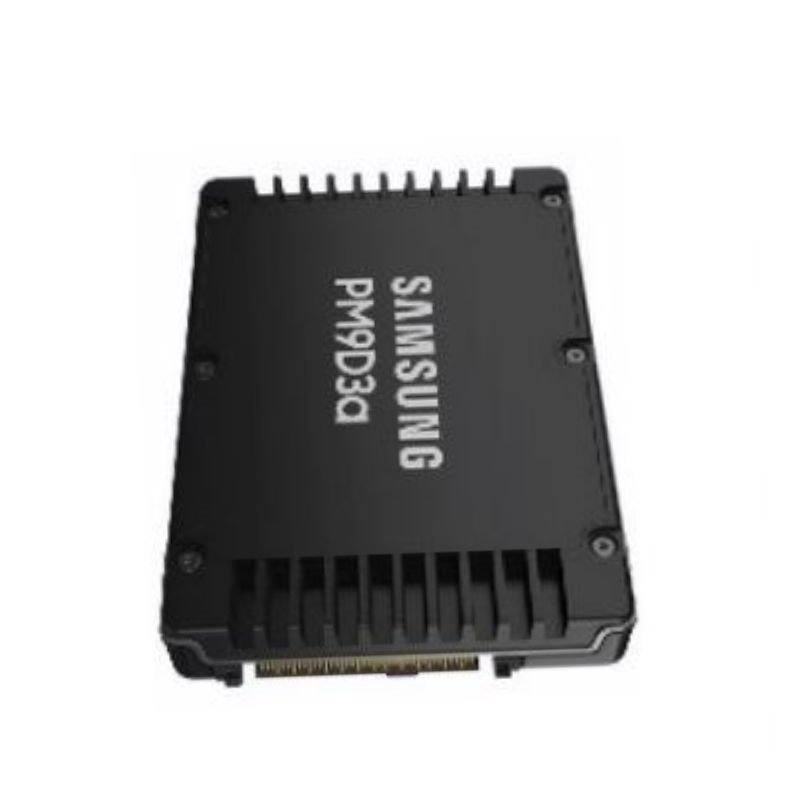
Samsung MZWL61T9HFLT-00BW7 PM9D3a 1.92TB PCI-E 5.0 Internal Solid State Drive. New Sealed in Box (NIB) with 3 Years Warranty
Product Overview
The SAMSUNG PM9D3a 1.92TB PCIe 5.0 x4 2.5-Inch SSD is designed for demanding enterprise workloads, delivering high efficiency, remarkable durability, and exceptional transfer speeds.
The Samsung MZWL61T9HFLT-00BW7 PM9D3a 1.92TB PCI-E 5.0 2.5-inch Internal Solid State Drive sits in a high-performance, enterprise-focused category designed for servers, professional workstations, edge appliances, and any environment that demands low latency, consistent throughput, and durable flash storage. This category is characterized by the move to PCIe Gen5 NVMe, the trusted 2.5-inch U.2/U.3 form factor for dense front-accessible bays, and the reliability features expected by IT teams who run business-critical workloads around the clock. While consumer drives often prioritize peak benchmarks, the PM9D3a-class category emphasizes sustained performance under load, predictable quality of service (QoS), and robust power-loss and data-path protection so systems remain responsive and safe even under stress.
In this continuous description, you’ll find in-depth guidance on capabilities, use cases, performance expectations, endurance classes, deployment patterns, installation tips, compatibility considerations, data-center best practices, and optimization techniques relevant to the PM9D3a 1.92TB and its closely related sub-models. If you are evaluating upgrades from PCIe Gen3 or Gen4 SSDs, or building new platforms around PCIe Gen5, the content below clarifies how this category raises the bar for efficiency and total cost of ownership (TCO).
Modern servers frequently expose front bays that accept 2.5-inch NVMe drives via U.2 or U.3 connectors. This format balances hot-swappability, density, and thermal control. Unlike add-in-card (AIC) NVMe, 2.5-inch bays let administrators replace, expand, or rebalance storage live while preserving uptime—critical for clustered and high-availability environments. The Samsung PM9D3a 1.92TB, in this category context, fits neatly into these trays, leveraging standardized backplanes and cabling so you can scale capacity and performance predictably across nodes.
Many chassis and backplanes now support U.3, which can route multiple protocol types over the same backplane. Whether your infrastructure uses U.2 or U.3, this category’s focus remains on NVMe over PCIe Gen5, prioritizing low overhead and concurrency. When planning upgrades, check your server’s backplane and expander documentation to confirm the precise connector, cable, and backplane support for Gen5 signal integrity.
PCIe Gen5 doubles the per-lane bandwidth compared to PCIe Gen4, enabling more IOPS headroom and lower latency under contention. In practice, this translates to better multi-tenant performance for virtualized environments, improved job completion times for data pipelines, and higher consolidation ratios for storage-heavy applications. Even when raw peaks aren’t fully saturated, the efficiency and responsiveness of Gen5 benefit real-world queuing and tail-latency behavior, especially where microbursts and fan-outs are common.
Enterprise NVMe firmware is optimized not just for peak performance but for consistent response times under steady-state write and read mixes. This category highlights predictable QoS, helping ensure that 99th-percentile latencies remain tight during compactions, garbage collection, or background wear management. For databases and analytics engines, predictable latency matters more than short-lived bursts; this is where PM9D3a-class drives shine.
With PCIe Gen5 bandwidth and NVMe’s queuing model, these drives excel when many cores and threads submit I/O concurrently. The category’s sweet spot is highly parallel, small-to-medium block operations typical of OLTP databases, containerized microservices, and busy file or object gateways. If your stack leverages modern I/O schedulers and async I/O frameworks, you’ll see the benefits most clearly.
The 1.92TB capacity point is a widely adopted enterprise sweet spot: large enough for serious datasets, small enough to enable fine-grained scaling across many bays. Organizations often combine multiple 1.92TB PM9D3a-class drives into RAID groups or software-defined storage (SDS) pools to balance performance, resiliency, and cost. This approach lets architects add capacity in predictable increments while mapping performance linearly as bays fill.
Many architectures prefer more smaller drives over fewer larger drives to reduce blast radius and improve parallel I/O. The PM9D3a 1.92TB capacity lends itself to these designs, striking a strong balance between cost per GB, slot utilization, and rebuild timing.
Enterprise SSDs are frequently offered in endurance “flavors,” typically categorized as read-intensive, mixed-use, or write-intensive (often correlated to approximate drive writes per day, or DWPD, over the warranty period). The Samsung PM9D3a family aligns to these established profiles, allowing buyers to match endurance to workload characteristics.
To prolong SSD life and maintain top-tier QoS, administrators often reserve a portion of capacity as over-provisioning. While the PM9D3a class already includes factory over-provisioning, additional host-level spare area (e.g., leaving 5–15% unallocated) can help further stabilize write amplification under difficult workloads. This is especially valuable in mixed-use and write-heavy profiles.
Drives in this category typically include power-loss protection (PLP) capacitors that commit in-flight data in the event of sudden power interruption. They also provide end-to-end data path protection (often involving CRC/ECC on internal paths), sector-level error recovery, and firmware logic that prioritizes data integrity. For regulated industries and mission-critical workloads, these features are non-negotiable.
Enterprise SSD firmware undergoes rigorous validation cycles, with deterministic garbage collection and scheduling policies crafted to keep variance low. The PM9D3a category benefits from this discipline: fewer surprise pauses, tighter p99 latency, and more predictable steady-state behavior than consumer-focused models not tuned for 24×7 duty.
Drives in this segment commonly support secure erase and standardized sanitization commands for decommissioning. Combined with namespace management and potential NVMe security features, administrators gain fine-grained control over data lifecycle in multitenant or compliance-sensitive environments. Always validate your security posture against your firmware’s supported feature set and your organization’s policies.
While published peak metrics vary by model and endurance tier, what sets this category apart is performance consistency across random, mixed, and sustained workloads. Expect strong small-IO performance for OLTP and metadata-heavy services, and robust sequential throughput to accelerate ingest, ETL staging, and backup verification. Under contention, PCIe Gen5 headroom helps maintain responsiveness as queues deepen.
For customer-facing services, the goal is to keep p95/p99 latency tight, not just maximize mean throughput. This is where PM9D3a-class firmware and Gen5 bandwidth work together: they can absorb flash housekeeping without wild spikes, keeping UX steady even during compaction, log rotation, or snapshotting.
Before deployment, confirm server BIOS/UEFI is current and that your NVMe backplane supports PCIe Gen5 link speeds. Some platforms allow per-slot speed configuration; ensure drives negotiate the intended link. For mixed generations in the same chassis, Gen5 devices may operate at lower link speeds if the backplane or upstream lanes are Gen4—this is normal, but for full value you’ll want end-to-end Gen5.
fio and blktrace for benchmarking and observability.Hardware RAID, software RAID, and SDS platforms (Ceph, vSAN, StorPool, BeeGFS, Gluster-like stacks, ZFS-based designs) each have nuanced best practices for NVMe. The PM9D3a 1.92TB capacity is often used as a cache tier or primary performance tier, with mirroring or erasure coding for resilience. The guiding principle is to avoid bottlenecked controllers and let NVMe parallelism shine; scale lanes, queues, and CPU cores accordingly.
Enterprise 2.5-inch NVMe drives rely on predictable front-to-back airflow. Ensure the chassis fans and drive carriers direct air across the SSD heat spreader as designed. The PM9D3a category is engineered to run continuously, but thermal equilibrium matters for sustained performance and longevity. If your rack operates in a high-ambient environment or with variable cooling, monitor drive temperature along with controller inlet temps to preempt throttling.
Plan for the drive’s active and idle power envelopes; PCIe Gen5 devices can draw more under heavy I/O than earlier generations due to increased speeds. Most platforms expose per-slot power telemetry. Pair this with policy-driven power profiles where available to strike the right balance between performance and efficiency.
While flash is less sensitive to vibration than spinning disks, high-density racks and powerful fans can introduce mechanical vibration. Use quality carriers and follow vendor guidelines for mounting to maintain optimal thermal conduction and to prevent micro-movement that can affect long-term connector reliability.
This category primarily targets workloads where low latency and sustained IOPS are essential, but it also excels in mixed profiles requiring both throughput and transactional responsiveness.
Because PM9D3a-class drives are often used for mission-critical tiers, integrate them with regular snapshots, application-consistent backups, and, if required, replication to remote sites. High-speed local NVMe dramatically reduces backup windows, especially for incremental and forever-incremental strategies that track changed blocks efficiently.
NVMe tiers hold the freshest, most frequently accessed data. As datasets cool, migrate them to capacity tiers (SATA SSDs, HDDs, object storage) to free up Gen5 bays for hot paths. The result is a cost-efficient hierarchy that keeps premium media focused on where it delivers maximum impact.
Organizations subject to regulatory frameworks (e.g., ISO, SOC, HIPAA-like controls, or financial compliance regimes) should map PM9D3a-class features to their policies. Typical needs include data-at-rest protections, access controls, auditable sanitization, and change-management over firmware.
Document every change to firmware, configuration, and topology. Maintain a golden image for provisioning and roll back promptly if anomalies appear after upgrades.
Within the broader enterprise flash landscape, PCIe Gen5 2.5-inch NVMe occupies a balanced middle ground: more serviceable and denser than AIC, more uniform and hot-swappable than M.2, and much higher performance and lower latency than legacy SAS/SATA SSDs. The PM9D3a 1.92TB capacity specifically targets organizations that want fine-grained scaling, predictable endurance, and easy fleet management across standard server bays.
While PCIe Gen5 NVMe may carry a premium over Gen4 or SAS/SATA, the TCO calculus often favors the PM9D3a class due to higher consolidation, faster job completion, and reduced node count for the same service level. Fewer servers and lower software licensing can dwarf the price difference, especially where software is licensed per core or host.
Faster storage reduces the time-to-idle for CPU and accelerators, improving overall power efficiency at the workload level. Dense front-bay layouts also use rack space efficiently, which contributes to better datacenter PUE when combined with modern cooling strategies.
The PM9D3a 1.92TB category is equally at home in edge servers that require rugged consistency, core data centers scaling multi-petabyte clusters, and private clouds supporting multi-tenant workloads. The common thread is predictability: faster recovery operations, stable p99 latency, and sustained throughput that doesn’t fade when your systems get busy.
With fast NVMe at the node, bring computation closer to data. This reduces east-west traffic, cuts latency, and simplifies troubleshooting. The PM9D3a category supports this philosophy with reliable, serviceable front-bay performance media.
If supported by your selected sub-SKU and firmware, NVMe namespaces can carve a single physical device into isolated logical units. This is useful for service providers and multi-tenant platforms that want strong separation with straightforward operational boundaries.
Map service level objectives (SLOs) to telemetry. Tie p95/p99 thresholds to autoscaling events or workload migration policies. With Gen5 NVMe tiers, you can react early to contention before users feel it.
Combine local PM9D3a 1.92TB NVMe tiers with lightweight replication to core. This preserves low latency for immediate decisions while maintaining data durability and global visibility.


 Contact Us
 Information
 Catalog
 Solid State Drives (SSD)
 Network Switches
 Hard Disk Drives
 HBA & Controllers
 PC & Servers
 PC & Server Memory
 CPU & Processors
 Network Routers
 Power Supplies
 Tape Drives & Libraries
 Network Devices
 Computer & Network Cables