(7% discount is applied at checkout)
Cart is empty
Your go-to destination for cutting-edge server products
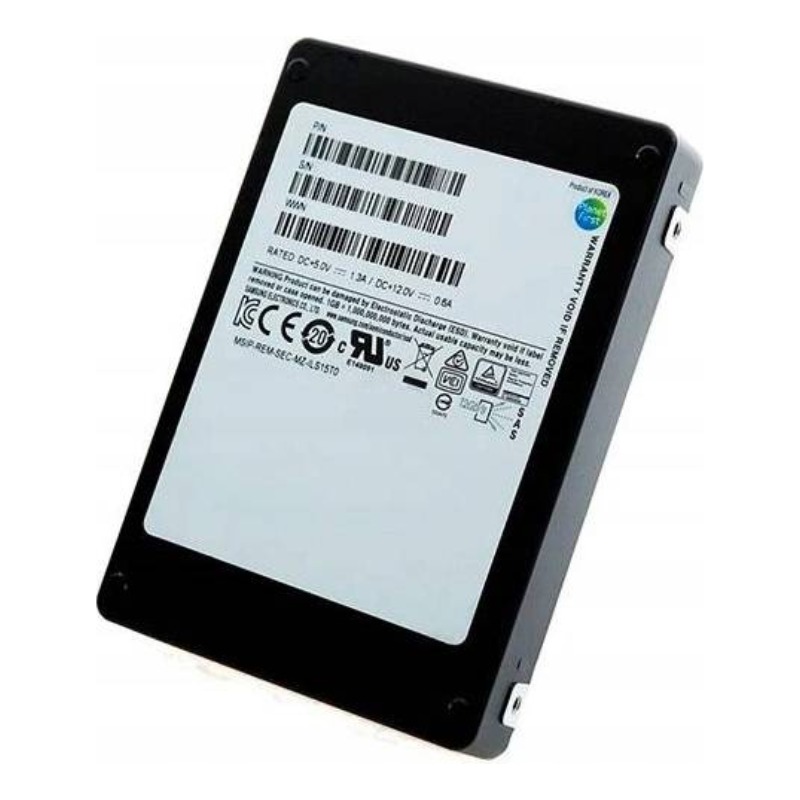


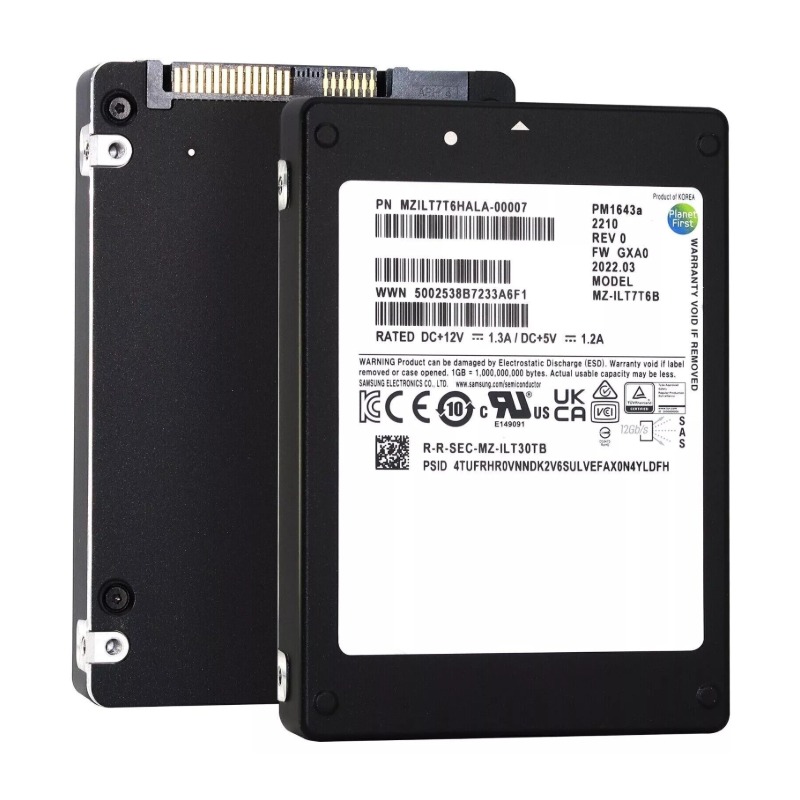
Samsung MZWLL7T6HMLA-00AC3 7.68TB PM1723B PCI Express 3.0 (nvme) U.2 2.5inch Internal SSD. New Sealed with 1 year Replacement Warranty
The SAMSUNG PM1723b 7.68TB internal SSD is engineered for environments that demand exceptional speed, consistent throughput, and dependable uptime. Designed around a robust PCI Express 3.0 (NVMe) U.2 architecture, this drive delivers rapid data access suitable for enterprise-class servers, virtualized systems, and high-performance computing tasks.
This SSD excels in scenarios where rapid computation, low latency, and consistent performance are essential. Its high endurance structure and advanced controller technology make it ideal for enterprise data centers, large-scale applications, and mission-critical systems seeking long-term reliability.
The Samsung MZWLL7T6HMLA-00AC3 7.68TB PM1723B NVMe U.2 SSD represents a high-performance enterprise-class solid-state storage solution designed to meet the needs of data-intensive environments, mission-critical server infrastructures, and high-demand application ecosystems. As part of Samsung’s PM1723B product line, this 7.68TB U.2 SSD is optimized for sustained workloads, large-scale virtualized deployments, and scenarios requiring exceptional throughput, low latency, and industry-leading endurance. It leverages the PCI Express 3.0 interface and NVMe protocol to reduce bottlenecks and support efficient handling of parallel operations across enterprise storage stacks such as hypervisors, cloud nodes, virtualization clusters, distributed databases, and analytics engines.
Built with Samsung’s highly reliable V-NAND technology, the MZWLL7T6HMLA-00AC3 SSD integrates advanced controller architecture, data protection features, and enterprise-grade wear-leveling algorithms, ensuring predictable performance across mixed workloads. Its 2.5-inch U.2 form factor fits seamlessly into modern data center chassis, blade servers, and scale-out storage arrays without requiring specialized adapters. With a focus on durability, power efficiency, and predictable latency, this drive is ideal for businesses upgrading from SATA or SAS SSDs seeking measurable gains in speed and reliability.
The Samsung PM1723B series is engineered for a broad range of enterprise applications, from high-speed caching and Tier-0 storage to large-scale OLTP platforms and multi-tenant cloud infrastructures. The 7.68TB capacity enables data-dense deployments where footprint and power utilization must be balanced with I/O consistency. Because it utilizes NVMe technology, this SSD provides significantly lower latency than traditional SAS counterparts, improving load balancing for unpredictable I/O patterns and supporting real-time computing architectures.
Enterprise NVMe U.2 SSDs represent a crucial evolution in data center storage technology. While consumer NVMe drives often emphasize peak sequential speeds, enterprise NVMe solutions like the PM1723B prioritize sustained I/O consistency, thermal stability, and robust failure prevention. The U.2 interface is especially advantageous for rack-mounted server environments because it maintains hot-swap capability, offers superior airflow compatibility, and integrates easily into RAID-controlled backplanes and storage expander configurations.
The U.2 NVMe category addresses needs that span virtualization clusters, cloud workload balancing, multi-socket servers, and distributed compute nodes. Companies seeking to deploy multi-tier architectures frequently use U.2 NVMe SSDs to offload latency-sensitive queries, host VM swap files, run high-frequency trading models, or support in-memory database extensions. With NVMe-over-Fabrics (NVMe-oF) gaining adoption, U.2 SSDs continue to prove their value by delivering high levels of predictable performance even as networks become increasingly disaggregated.
Although M.2 NVMe SSDs are recognized for their compact footprint, enterprise deployments often favor U.2 because of its thermal efficiency, ease of drive replacement, and compatibility with scalable backplane architectures. The Samsung MZWLL7T6HMLA-00AC3 exemplifies how U.2 can offer the same NVMe benefits while maintaining enterprise durability. Hot-swappable bays allow technicians to service drives without interrupting workloads, and airflow across traditional 2.5-inch drive trays ensures consistent operating temperatures.
Furthermore, U.2 connectors support higher power budgets than M.2 modules, enabling drives like the PM1723B to maintain higher sustained write speeds and more robust error correction routines. This distinction matters significantly in enterprise settings where high queues and mixed workloads can stress lower-power interfaces.
The PCI Express 3.0 interface continues to be widely used in enterprise rack servers due to its balance of reliability, throughput, and compatibility. Although PCIe Gen4 is emerging, countless production environments still rely on Gen3 architectures, making the Samsung PM1723B ideal for multi-generation server farms, legacy workloads, and companies adopting a phased migration approach.
With four lanes of PCIe 3.0 (x4), the MZWLL7T6HMLA-00AC3 SSD delivers strong sustained read/write performance while minimizing latency under heavy load. NVMe’s command set allows the drive to handle massive I/O queues, accelerating batch processing, virtual machine launching, and disk-intensive analytics workloads. These characteristics make the PM1723B line invaluable for organizations upgrading from SATA or SAS storage hierarchies.
NVMe drastically reduces the overhead associated with legacy interfaces. While SAS and SATA systems rely on command stacks designed for spinning disks, NVMe communicates directly with the CPU via PCIe lanes, minimizing translation layers and reducing latency. In enterprise clouds and private data centers, this translates to faster workload processing, better VM density, and quicker failover times.
The Samsung PM1723B series leverages NVMe to achieve a more efficient queue architecture, supporting multiple parallel operations without traditional bottlenecks. For large-scale virtualization deployments, this can yield smoother resource scheduling, reduced processing delays, and improved user experience in complex multi-tenant configurations.
The MZWLL7T6HMLA-00AC3 is engineered for a range of data center workloads. Enterprise storage administrators, virtualization architects, and cloud platform engineers can deploy this drive confidently in infrastructure clusters requiring predictable throughput, low write amplification, and sustained endurance.
Virtualized environments thrive on consistent, low-latency storage. When multiple virtual machines compete for disk access, storage latency becomes a critical bottleneck. The Samsung PM1723B substantially reduces this bottleneck by providing fast parallel I/O handling. Administrators running VMware ESXi, Microsoft Hyper-V, Proxmox, KVM, or Xen platforms can expect smoother VM provisioning, faster snapshot creation, and more stable performance during peak I/O spikes.
Multi-tenant cloud platforms also benefit from the PM1723B’s predictable performance profile, as the drive supports thousands of simultaneous queue entries, enabling efficient hosting of diverse workloads. The 7.68TB capacity allows storage pooling or Tier-0 caching layers to operate with substantial overhead for scaling.
Databases such as MySQL, MariaDB, PostgreSQL, SQL Server, Oracle DB, and NoSQL engines like MongoDB and Cassandra depend on high IOPS for write-heavy operations. The Samsung 7.68TB PM1723B excels in mixed-use patterns where both read and write transactions occur continuously. It sustains consistent throughput even during checkpointing, replication bursts, or complex indexing operations.
Analytics platforms such as Hadoop, Spark, Elasticsearch, Splunk, and big-data clusters benefit from NVMe’s parallelism. The SSD handles random reads efficiently, enabling faster search queries, improved log ingestion, and optimized performance for distributed processing frameworks.
HPC environments demand low latency, repeatable performance, and reliable endurance under extreme workloads. Simulation models, code compilation clusters, scientific imaging, genomic sequencing, and GPU-accelerated workloads require storage that can keep up with rapid data movement. The PM1723B’s NVMe controller design and enterprise-grade thermal management make it well-suited for these environments.
Samsung’s V-NAND architecture provides several advantages over planar NAND. By stacking memory cells vertically, V-NAND allows for higher density, faster write times, and improved durability. These characteristics are essential for enterprise applications where reliability and sustained performance matter more than peak speeds.
The PM1723B 7.68TB drive benefits from V-NAND’s endurance enhancements, supporting heavy write cycles without significant degradation. For businesses running continuous logging, real-time analytics, or database journaling, this endurance translates to operational continuity and reduced maintenance overhead.
Enterprise environments cannot risk data corruption, even during power loss or unexpected failures. The Samsung MZWLL7T6HMLA-00AC3 includes multiple layers of data protection including end-to-end data path protection, power loss protection capacitors, and error correction algorithms. These features safeguard mission-critical workloads by preventing incomplete writes and ensuring consistent data integrity across the drive’s lifespan.
End-to-end protection ensures that data is validated at every step of the write and read process. Whether information travels from the host system, through the controller, or into the NAND cells, integrity is maintained. This reduces the risk of silent corruption, making the drive suitable for enterprise storage arrays and distributed file systems.
Power interruptions can cause catastrophic data loss in non-enterprise drives. The PM1723B features robust capacitors that secure in-flight data during unexpected outages. This is crucial for data centers with heavy transaction loads or cloud applications requiring near-instant recovery.
The Samsung 7.68TB PM1723B integrates into common enterprise infrastructures with minimal configuration. Its U.2 interface allows direct insertion into standard server drive trays, and its NVMe support works with most modern operating systems and hypervisors out of the box. Whether deployed in a Tier-0 all-flash array, a hybrid cluster, or a scale-out NAS/SAN platform, the drive enhances overall system responsiveness and workload scalability.
Organizations using Dell PowerEdge, HPE ProLiant, Lenovo ThinkSystem, Cisco UCS, Supermicro, and other major server lines can deploy the PM1723B seamlessly. Many systems already feature native U.2 backplanes or can use U.2-to-PCIe adapters to integrate NVMe drives. This flexibility expands upgrade paths and allows data centers to modernize storage without needing to overhaul entire infrastructures.
The 7.68TB capacity provides excellent density for flash-based arrays. Enterprise IT teams can scale high-performance clusters by mixing multiple PM1723B SSDs to build fault-tolerant, low-latency storage pools. Whether using RAID configurations, software-defined storage layers, or hyperconverged solutions, the PM1723B promotes consistent and reliable scaling.


 Contact Us
 Information
 Catalog
 Solid State Drives (SSD)
 Network Switches
 Hard Disk Drives
 HBA & Controllers
 PC & Servers
 PC & Server Memory
 CPU & Processors
 Network Routers
 Power Supplies
 Tape Drives & Libraries
 Network Devices
 Computer & Network Cables