(7% discount is applied at checkout)
Cart is empty
Your go-to destination for cutting-edge server products
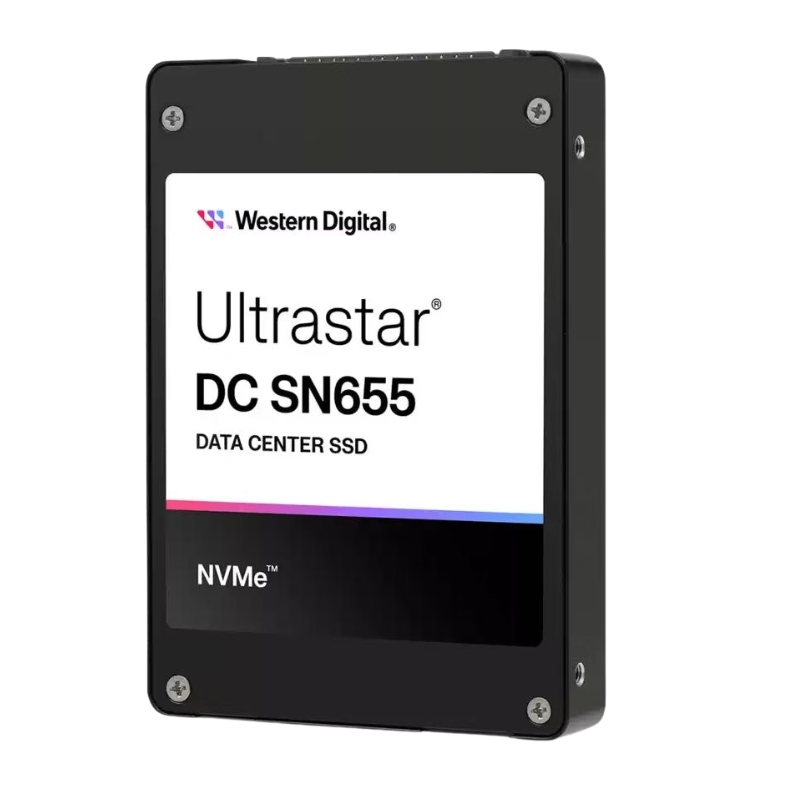


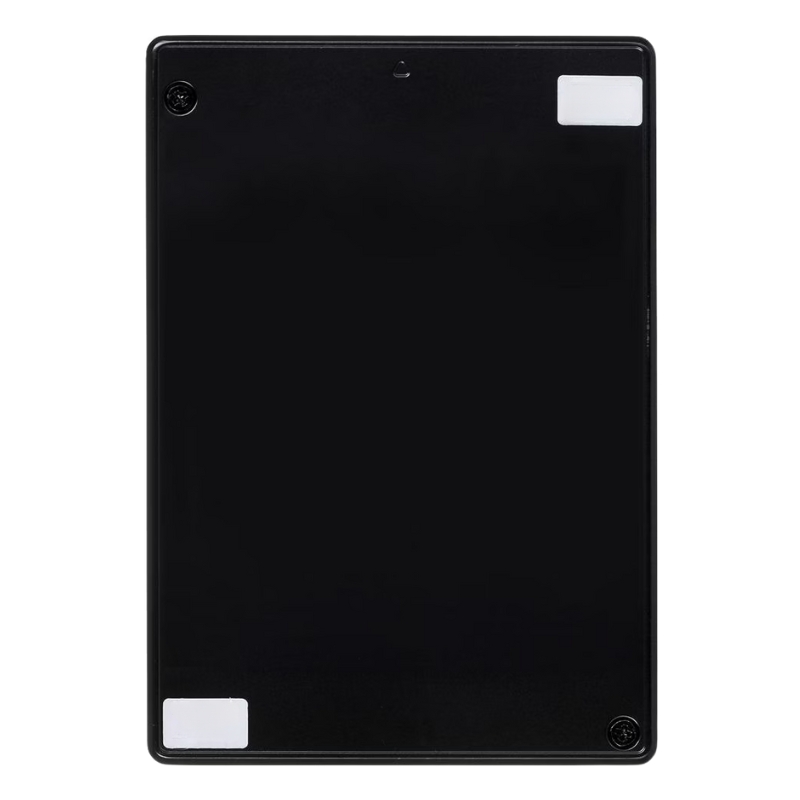
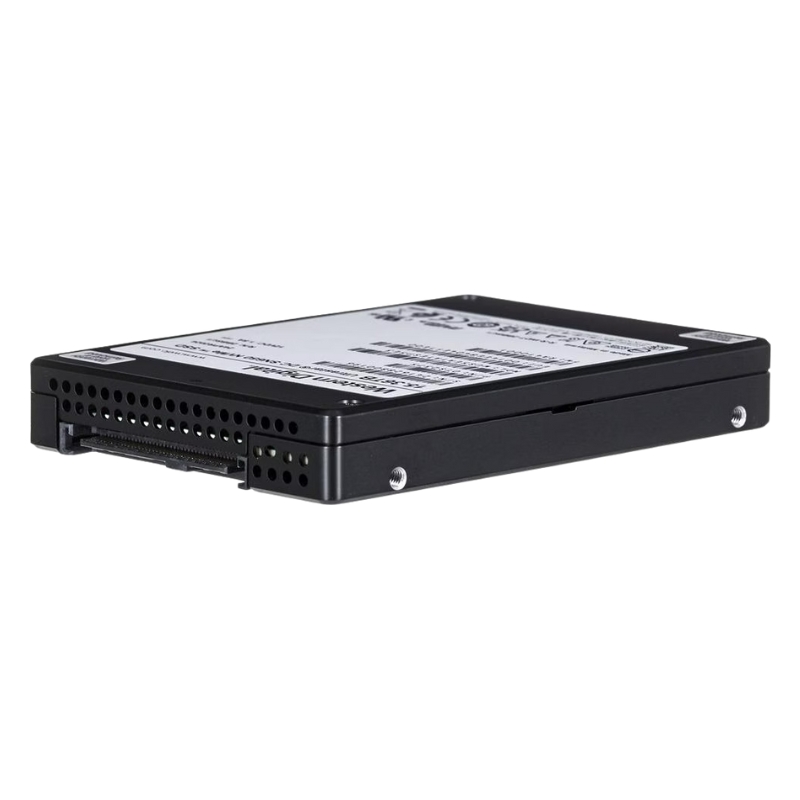
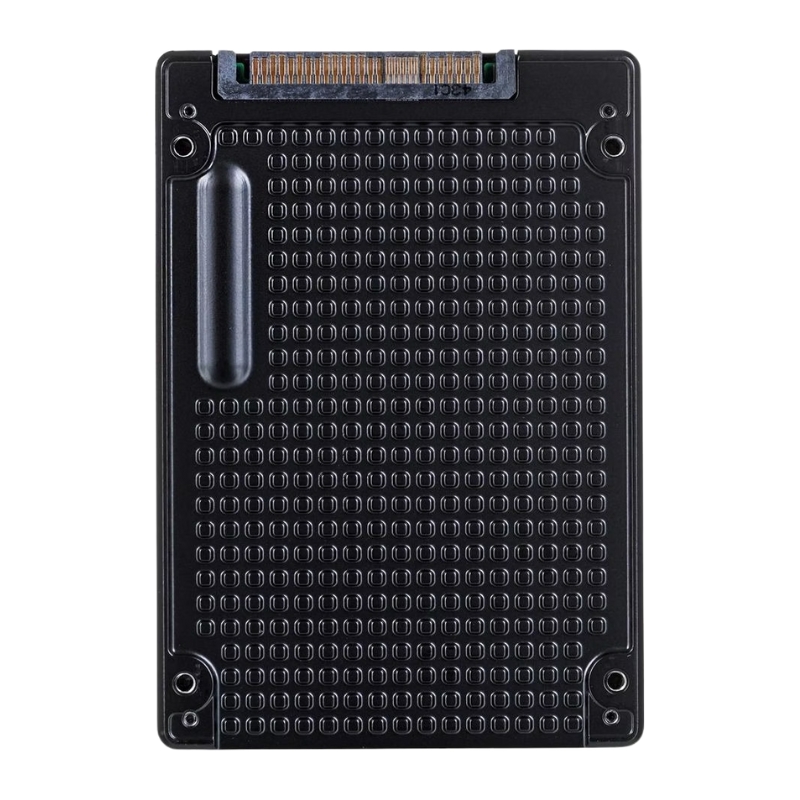
Sandisk 0TS2463 Ultrastar DC SN655 15.36TB PCI-E Gen4 NVMe 1.4b U.3 15mm ISE Solid State Drive. New Sealed in Box (NIB) with 3 years Warranty
The Sandisk 0TS2463 Ultrastar DC SN655 15.36TB Solid State Drive delivers enterprise-grade storage performance and endurance for demanding data center applications. Built with PCIe Gen4 NVMe 1.4b technology and a compact U.3 15mm form factor, this drive offers blazing-fast data speeds and enhanced reliability.
The 0TS2463 SanDisk Ultrastar DC SN655 Series represents a significant evolution in enterprise-class solid-state storage, specifically engineered for the relentless demands of modern data centers, cloud infrastructure, and high-performance computing environments. As a PCIe Gen4 NVMe U.3 drive, it bridges the gap between cutting-edge performance, exceptional capacity, and operational flexibility, offering a future-proof solution for IT administrators and infrastructure planners.
The flagship 15.36TB model (part number 0TS2463) stands as a testament to Western Digital's innovation in 3D NAND technology. This immense capacity allows enterprises to consolidate workloads and data onto fewer drives, reducing the physical footprint per terabyte within server racks. The result is a direct reduction in total cost of ownership (TCO) through savings in power, cooling, and real estate, while simultaneously simplifying data management and scalability.
Built on a foundation of high-reliability TLC (3D Triple-Level Cell) NAND, the DC SN655 is designed for sustained performance under heavy write workloads. Its advanced controller and firmware are optimized for mixed-use scenarios, ensuring consistent low latency and high IOPS whether handling read-intensive, write-intensive, or mixed application traffic. The drive's architecture is a direct response to the needs of software-defined storage, hyper-converged infrastructure (HCI), and big data analytics platforms.
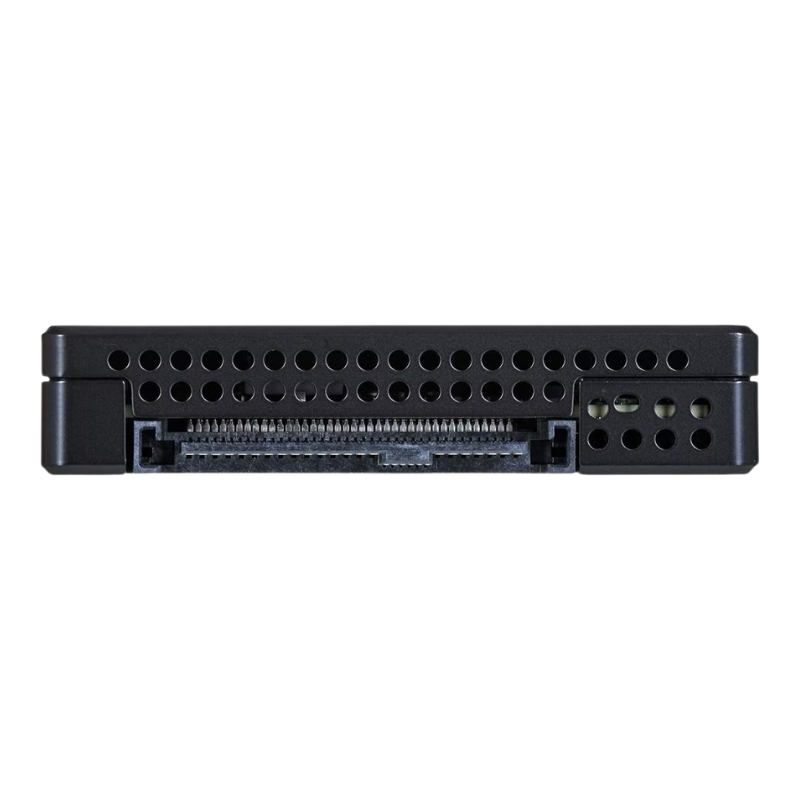
The choice of form factor and interface is critical in enterprise deployments. The SanDisk Ultrastar DC SN655 leverages the U.3 (15mm) form factor, a key differentiator that provides unparalleled flexibility in heterogeneous data centers.
U.3 is not merely a connector; it is a multi-faceted interface standard that consolidates the physical compatibility of SAS, SATA, and NVMe into a single, unified connector. This allows the same drive bay in a server or storage array to support any of these three protocols. The DC SN655, being a U.3 NVMe drive, can be deployed in existing infrastructure designed for SAS or SATA, providing a seamless and cost-effective path to NVMe performance without a complete hardware overhaul.
At the heart of the DC SN655's performance is its PCIe Gen4 x4 lane interface, compliant with the NVMe 1.4b specification. This combination doubles the available bandwidth compared to the previous PCIe Gen3 standard, enabling sequential read and write speeds that can saturate the interface.
The 15mm height (Z-height) of this drive is a common standard for high-capacity enterprise SSDs. It provides the necessary physical space to package the large number of NAND packages and robust power delivery components required for a 15.36TB capacity point, all while ensuring compatibility with standard 2.5-inch enterprise drive bays.
Raw performance metrics are the lifeblood of any enterprise storage decision. The SanDisk Ultrastar DC SN655 15.36TB is engineered to deliver top-tier performance that meets the stringent requirements of tier-0 and tier-1 storage workloads.
Leveraging the PCIe Gen4 interface, the drive achieves remarkable sequential transfer rates, significantly accelerating data-heavy tasks like video streaming, large-scale backups, and scientific simulations. More importantly for server environments, its random read and write IOPS (Input/Output Operations Per Second) are exceptionally high. This translates to the ability to handle a massive number of simultaneous small-block transactions, which is characteristic of database operations, virtual machine boot storms, and transaction processing systems.
Unlike consumer-grade SSDs that may throttle under prolonged activity, the DC SN655 is built for consistent performance. Its advanced flash management, including sophisticated wear-leveling and garbage collection algorithms, ensures that latency remains low and IOPS remain high even during extended periods of 100% workload. The drive's Quality of Service (QoS) guarantees are crucial for service-level agreements (SLAs), ensuring that 99.9% of I/O operations are completed within a predictable, tight latency band.
Drive endurance is quantified by its Terabytes Written (TBW) rating and its corresponding Drive Writes Per Day (DWPD). The 15.36TB model is rated for a substantial TBW value, which, when calculated over its warranty period, results in a high DWPD. A DWPD of, for example, 1.0 means you can write the entire 15.36TB capacity of the drive every single day for the duration of its warranty (typically 5 years) without exceeding its endurance specification. This makes it suitable for write-intensive applications like AI/ML data logging, financial trading, and large-scale data ingestion.
In a data center, downtime is not an option. The 0TS2463 Ultrastar DC SN655 is architected with a comprehensive suite of features designed to maximize uptime, protect data integrity, and simplify maintenance.
A critical feature for any enterprise SSD is protection against unexpected power loss. The DC SN655 incorporates a robust Power Loss Protection circuit. This system typically includes onboard capacitors that store enough energy to complete any in-progress write operations and flush the contents of the volatile DRAM cache to the non-volatile NAND in the event of a power failure. This prevents data corruption and ensures transactional consistency, a non-negotiable requirement for database and financial applications.
Security is paramount. The drive supports TCG Enterprise (Trusted Computing Group) security specifications, enabling comprehensive security management. The Instant Secure Erase (ISE) feature allows administrators to cryptographically erase all data on the drive in a matter of seconds by deleting the encryption key. This renders the previous data permanently inaccessible, providing a fast, secure, and auditable method for drive decommissioning, repurposing, or end-of-life return.
To prevent silent data corruption, the drive employs end-to-end data path protection. This means that from the moment data enters the drive's interface until it is written to NAND, and again when it is read back, it is protected by error-correcting codes (ECC) and cyclic redundancy checks (CRCs). This safeguards against data corruption that could occur within the drive's internal SRAM, DRAM buffer, or during transmission between the controller and NAND.
The unique combination of high capacity, PCIe Gen4 performance, and U.3 flexibility makes the SanDisk 0TS2463 Ultrastar DC SN655 15.36TB drive ideal for a wide spectrum of demanding enterprise applications.
In SDS and HCI environments, storage is virtualized and distributed across a cluster of nodes. The high performance and low latency of the DC SN655 accelerate virtualized workloads, while its large capacity reduces the number of drives required per node, lowering the overall solution cost and complexity. It provides the high-density, high-performance storage pool needed for running virtual machines, containers, and associated data services.
Applications like Hadoop, Splunk, and Elasticsearch thrive on fast data ingestion and query performance. The sequential read/write speed of the DC SN655 accelerates data loading from source systems, while its high random read IOPS speeds up query response times for data scientists and analysts, leading to faster insights and decision-making.
Training complex machine learning models requires feeding massive datasets to GPU clusters. The DC SN655 acts as a high-performance tier for the AI data pipeline, capable of serving large batches of training data to GPUs with minimal latency, preventing them from sitting idle and ensuring optimal utilization of expensive computational resources.
For CDNs and streaming services, the drive's high sequential read performance and capacity make it perfect for storing and delivering high-resolution video content. Its ability to handle numerous concurrent streams ensures a smooth, buffer-free experience for end-users, even during peak demand.
In the world of finance, microseconds matter. The consistent low latency and high IOPS of the DC SN655 enable faster transaction processing, real-time risk analysis, and quicker access to market data, providing a competitive edge in high-frequency trading and other time-sensitive financial applications.
Understanding where the 0TS2463 Ultrastar DC SN655 sits in the broader storage hierarchy is key to making an informed procurement decision.
The jump from PCIe Gen3 to Gen4 is a fundamental doubling of the per-lane bandwidth. A Gen4 x4 drive like the SN655 offers roughly 8 GB/s of theoretical bandwidth compared to ~4 GB/s for a Gen3 x4 drive. In real-world terms, this means significantly faster data transfers, reduced wait times for large file operations, and higher overall system throughput, especially in all-flash arrays.
While U.2 is also a 2.5-inch form factor for NVMe, U.3's key advantage is its tri-mode compatibility (SAS/SATA/NVMe). U.2 is typically NVMe-only. M.2, common in clients and some edge servers, lacks the power delivery, thermal headroom, and hot-swap capabilities required for mainstream data center deployment. The 15mm U.3 form factor is the industry standard for high-capacity, high-performance enterprise NVMe drives.
NVMe is a protocol designed from the ground up for non-volatile memory, leveraging the high-speed PCIe bus. It drastically reduces command overhead and supports massively parallel queues compared to the older SAS and SATA protocols, which were built on legacy hard drive architectures. The result is that an NVMe drive like the DC SN655 offers orders of magnitude higher IOPS and significantly lower latency than even the fastest SAS or SATA SSDs.


 Contact Us
 Information
 Catalog
 Solid State Drives (SSD)
 Network Switches
 Hard Disk Drives
 HBA & Controllers
 PC & Servers
 PC & Server Memory
 CPU & Processors
 Network Routers
 Power Supplies
 Tape Drives & Libraries
 Network Devices
 Computer & Network Cables