(7% discount is applied at checkout)
Cart is empty
Your go-to destination for cutting-edge server products
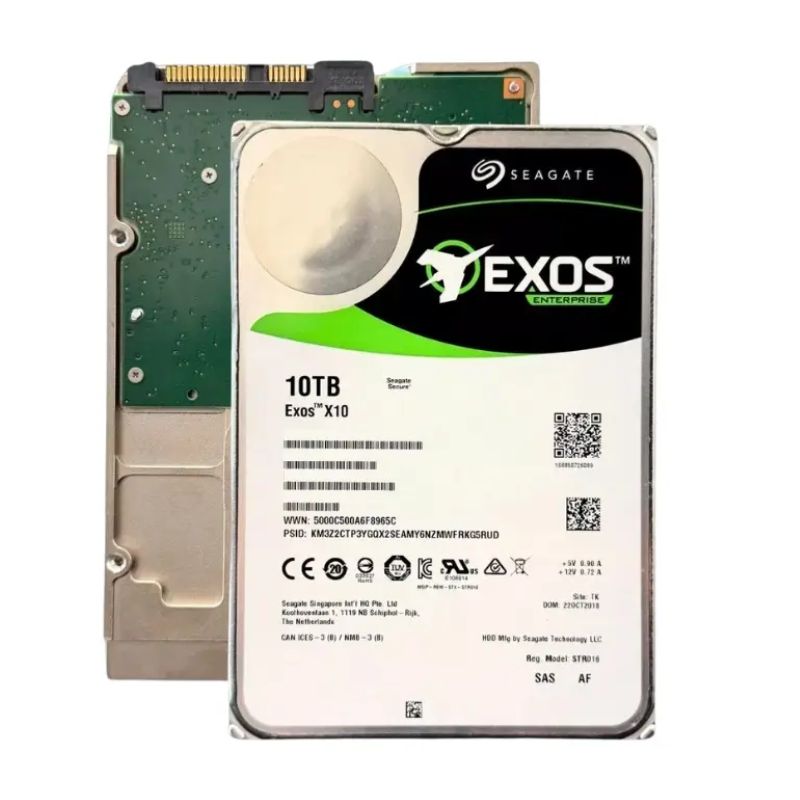


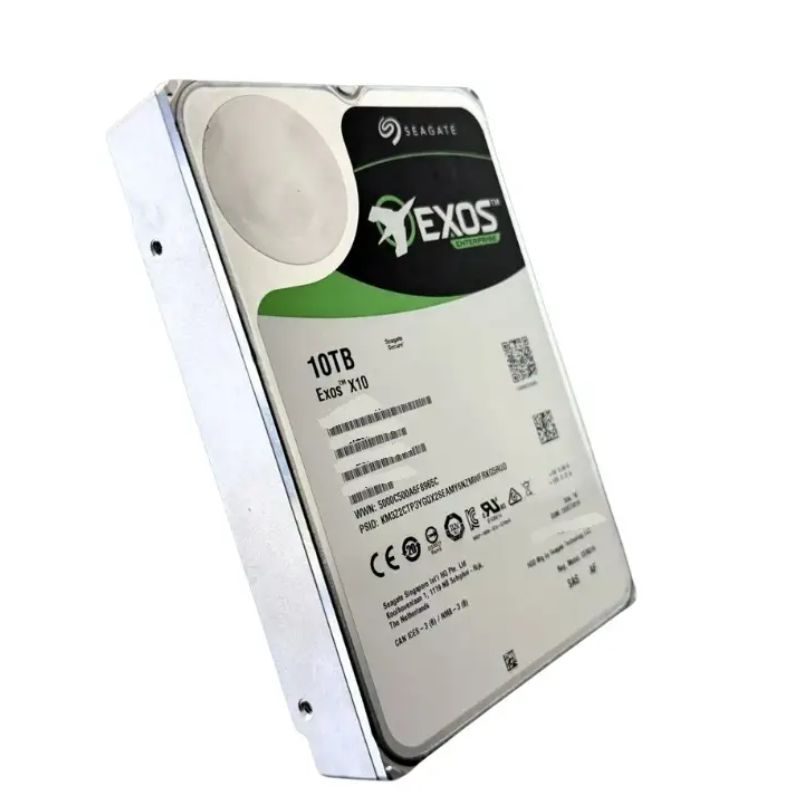
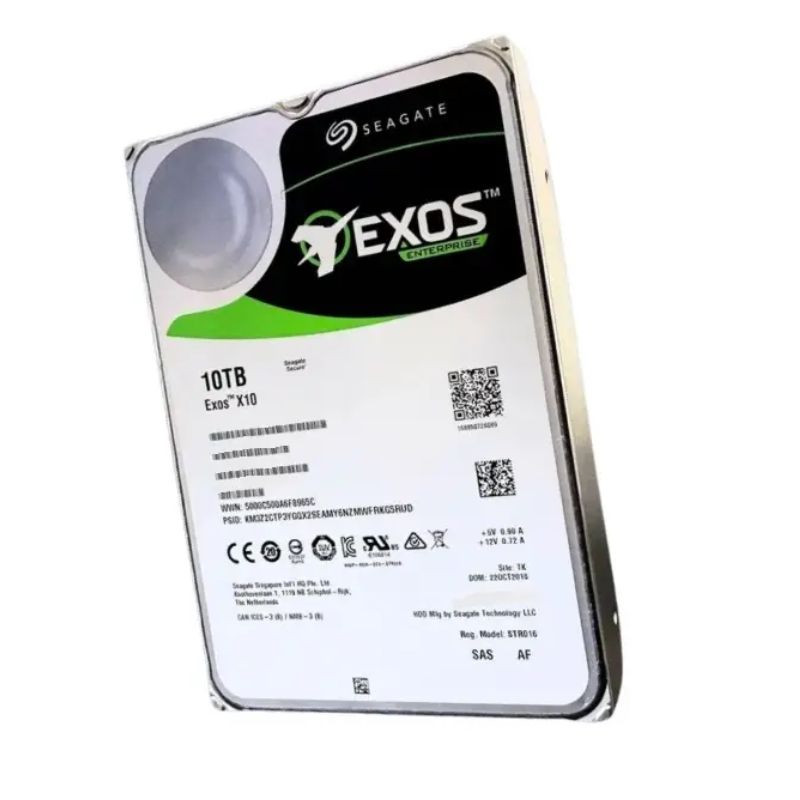
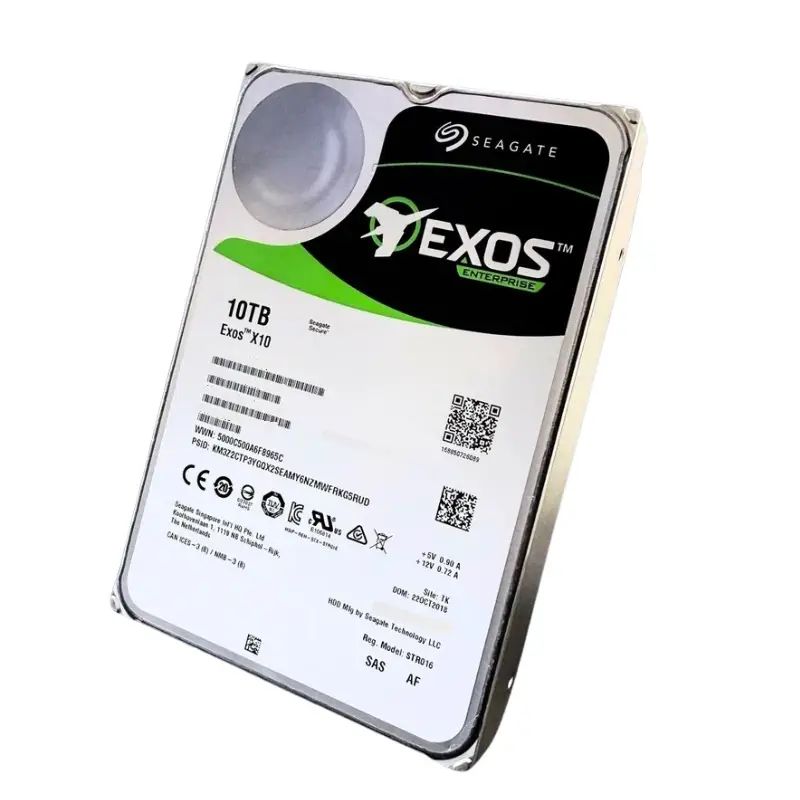
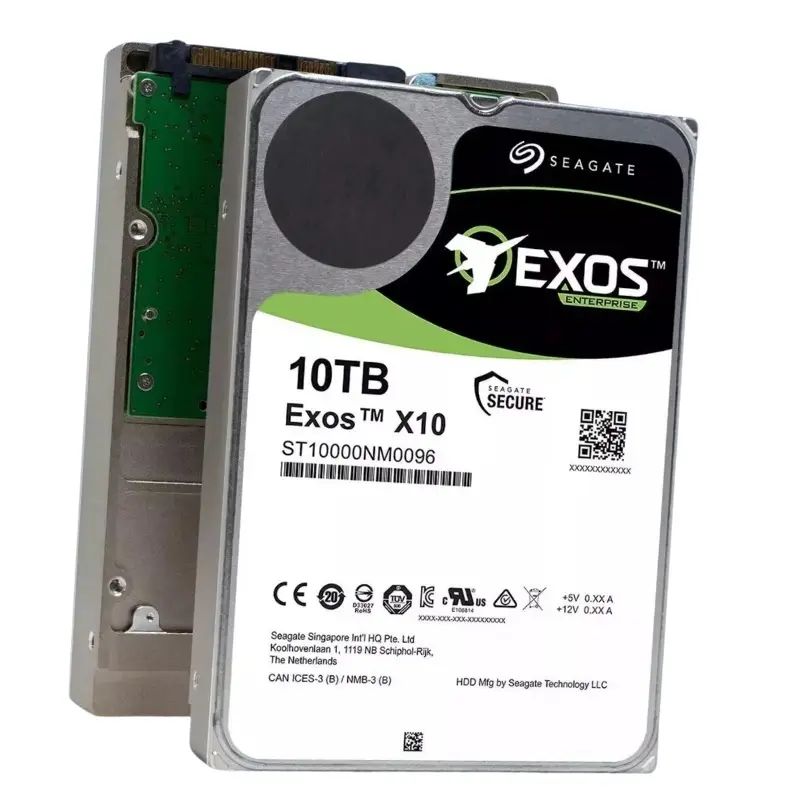
Seagate ST10000NM0206 Exos X10 10TB 7.2K RPM SAS-12GBPS 256MB Buffer 4kn Helium Filled 3.5Inch HDD. Excellent Refurbished with 1-Year Replacement Warranty
The Seagate ST10000NM0206 Exos X10 10TB enterprise hard drive is engineered for hyperscale and cloud data centers. With 7.2K RPM rotational speed, SAS-12Gbps interface, and a 256MB buffer, this helium-filled 3.5-inch HDD ensures reliable performance, high capacity, and efficient storage for demanding workloads.
The Seagate ST10000NM0206 Exos X10 10TB SAS hard disk drive belongs to a specialized enterprise-capacity storage category designed to support data-intensive, always-on workloads. This category focuses on high-capacity, high-reliability mechanical storage solutions optimized for mission-critical servers, storage arrays, and data center infrastructures. Enterprise SAS HDDs are engineered to deliver consistent performance, predictable latency, and long-term durability in environments where uptime, scalability, and data integrity are essential operational requirements.
Drives within this category are built to operate continuously under heavy workloads, often exceeding hundreds of terabytes of data transfers per year. Unlike consumer-grade SATA hard drives, enterprise SAS drives integrate advanced firmware, superior vibration tolerance, and enhanced error recovery controls that align with professional storage controllers. The Exos X10 series exemplifies this category by combining high areal density with helium-filled construction, enabling greater capacity while maintaining thermal efficiency and mechanical stability.
Enterprise-capacity SAS hard drives occupy a crucial position between performance-focused solid-state drives and archival cold storage solutions. This category is frequently deployed in tiered storage architectures, where large volumes of frequently accessed but not latency-critical data must be stored reliably. Use cases include primary data repositories, backup targets, distributed file systems, and object storage platforms that require predictable throughput rather than ultra-low latency.
The 10TB capacity offered by drives such as the Exos X10 allows data centers to maximize storage density within standard 3.5-inch bays. This density reduces rack footprint, power consumption per terabyte, and overall infrastructure complexity. As data growth accelerates across industries, high-capacity enterprise HDD categories remain foundational to cost-effective data management strategies.
The Serial Attached SCSI interface defines the professional connectivity standard for this hard drive category. Operating at 12Gb/s, SAS provides significantly higher bandwidth, superior command queuing, and dual-port connectivity compared to consumer SATA interfaces. These characteristics make SAS HDDs particularly suitable for redundant storage configurations, failover architectures, and multi-path I/O environments.
Dual-port SAS capability allows a single drive to connect simultaneously to two separate controllers, enhancing availability and enabling seamless failover in clustered storage systems. This feature is essential in enterprise environments where uninterrupted access to data is mandatory. The robust command set supported by SAS also enables precise error handling and performance optimization at the controller level.
SAS hard drives in this category support advanced SCSI command sets designed for enterprise workloads. These commands allow storage controllers to manage queue depths efficiently, prioritize critical operations, and maintain consistent throughput under concurrent access. This level of protocol sophistication ensures that performance remains stable even when multiple applications or virtual machines access the same storage pool.
Enterprise SAS HDDs also support features such as persistent reservations and enhanced diagnostic reporting. These capabilities enable storage administrators to monitor drive health proactively and integrate drives into complex storage ecosystems with minimal risk of data inconsistency.
This category of hard disk drives is engineered for compatibility with enterprise RAID controllers, host bus adapters, and storage backplanes. Adherence to strict SAS specifications ensures seamless integration into validated server and storage platforms. The standardized 3.5-inch form factor allows these drives to be deployed across a wide range of chassis designs, from dense storage shelves to traditional rack-mounted servers.
Enterprise-grade connectors and signal integrity standards further enhance reliability, reducing the likelihood of connection-related failures during long-term operation.
The Exos X10 10TB drive represents a category defined by advanced mechanical engineering and helium-filled enclosure technology. Helium has a lower density than air, reducing internal turbulence and drag on spinning platters. This allows manufacturers to increase platter count while maintaining manageable power consumption and thermal output.
Helium-filled enterprise HDDs enable higher areal density, which directly contributes to increased capacity within the same physical footprint. This design also reduces mechanical stress on internal components, enhancing long-term reliability and lowering failure rates over extended operational lifespans.
Operating at 7,200 revolutions per minute, this category of enterprise HDD balances performance and efficiency. While not designed to compete with solid-state storage in terms of latency, 7.2K RPM drives provide strong sequential throughput suitable for large data transfers, backups, media repositories, and analytics workloads.
The rotational speed supports consistent read and write performance, especially when combined with large onboard cache memory. This balance makes the category versatile for mixed workloads that include both streaming data access and moderate random I/O patterns.
Enterprise HDDs in this category integrate substantial cache memory, such as a 256MB buffer, to optimize data flow between the drive and the host system. The cache temporarily stores frequently accessed data and write operations, smoothing performance spikes and reducing mechanical latency.
Advanced caching algorithms managed by enterprise firmware ensure efficient utilization of buffer memory. This contributes to improved responsiveness in transactional workloads and more consistent throughput during sustained data transfers.
The adoption of 4Kn native sector formatting defines a modern subcategory of enterprise hard disk drives focused on improved efficiency and data integrity. Traditional 512-byte sectors impose overhead that becomes increasingly inefficient at large capacities. By utilizing 4,096-byte sectors, 4Kn drives reduce metadata overhead and enhance error correction capabilities.
This sector format improves storage efficiency and aligns with contemporary operating systems and file systems optimized for larger block sizes. In enterprise environments handling massive datasets, 4Kn drives contribute to more efficient disk utilization and reduced fragmentation.
Enterprise HDD categories emphasize robust error correction mechanisms to protect data during read and write operations. Larger sector sizes enable stronger error correction codes, increasing the drive’s ability to detect and recover from data errors. This is particularly important in high-capacity drives where the probability of encountering bit errors increases as total stored data grows.
Combined with SAS protocol-level error handling, these features ensure that data integrity is preserved throughout the drive’s operational life, supporting mission-critical applications and compliance requirements.
Drives in this category are rated for heavy annual workloads, often exceeding 500TB per year. This rating reflects the drive’s ability to handle sustained read and write activity without accelerated wear. Enterprise HDDs are validated for continuous 24/7 operation, making them suitable for always-on data center deployments.
High workload tolerance ensures consistent performance over time, even in demanding environments such as cloud storage platforms and large-scale enterprise databases.
Thermal performance is a critical consideration in the enterprise-capacity HDD category. Helium-filled construction reduces internal friction, which in turn lowers heat generation during operation. This contributes to more stable operating temperatures, especially in densely populated storage enclosures.
Lower thermal output reduces the burden on data center cooling systems, improving overall energy efficiency. When multiplied across hundreds or thousands of drives, these efficiencies translate into significant operational cost savings.
Enterprise HDDs are engineered to deliver optimal performance per watt. Advanced power management features allow drives to adjust power usage based on workload intensity. Idle power states and intelligent spin management help reduce energy consumption during periods of low activity.
This efficiency aligns with modern data center sustainability initiatives, where reducing power usage and carbon footprint is increasingly important.
High-capacity enterprise HDDs are often deployed in environments with numerous adjacent drives, increasing the risk of rotational vibration interference. This category incorporates rotational vibration sensors and compensation algorithms that maintain performance stability even in high-density configurations.
Enhanced mechanical stability ensures consistent head positioning and read/write accuracy, protecting both performance and data integrity under challenging physical conditions.


 Contact Us
 Information
 Catalog
 Solid State Drives (SSD)
 Network Switches
 Hard Disk Drives
 HBA & Controllers
 PC & Servers
 PC & Server Memory
 CPU & Processors
 Network Routers
 Power Supplies
 Tape Drives & Libraries
 Network Devices
 Computer & Network Cables