(7% discount is applied at checkout)
Cart is empty
Your go-to destination for cutting-edge server products
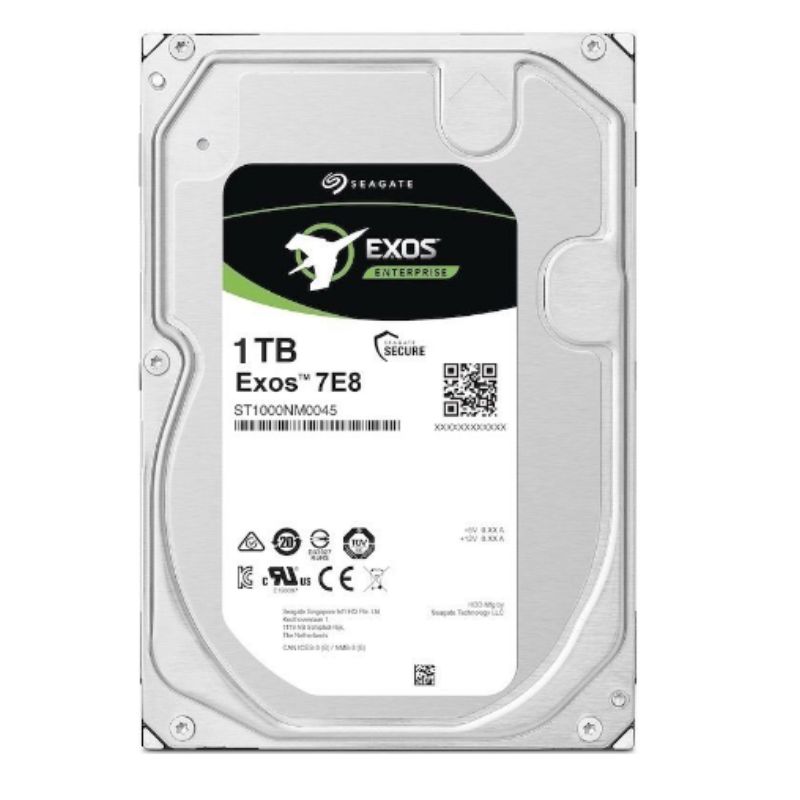


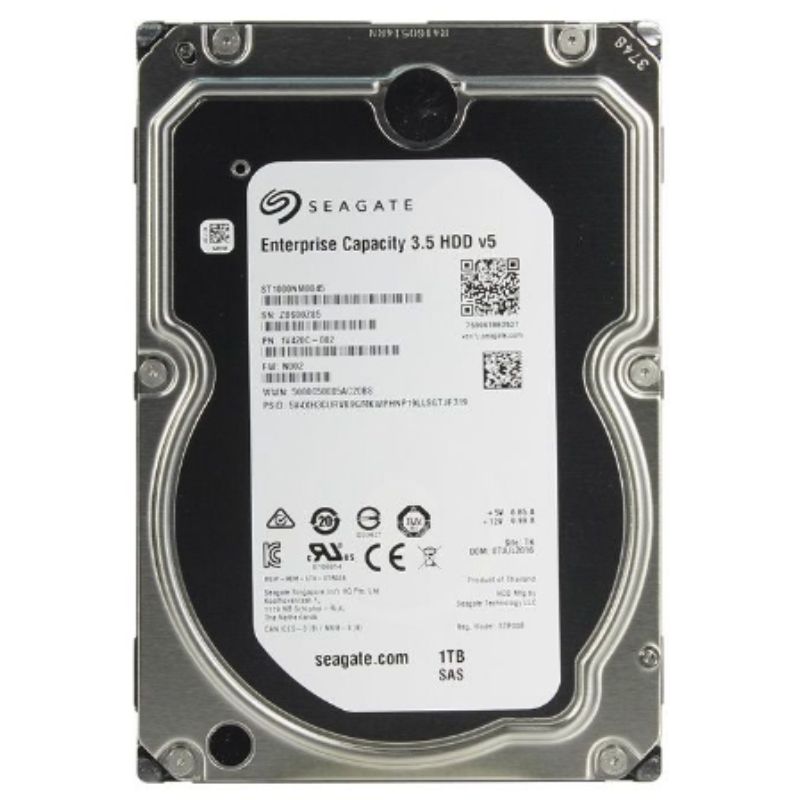
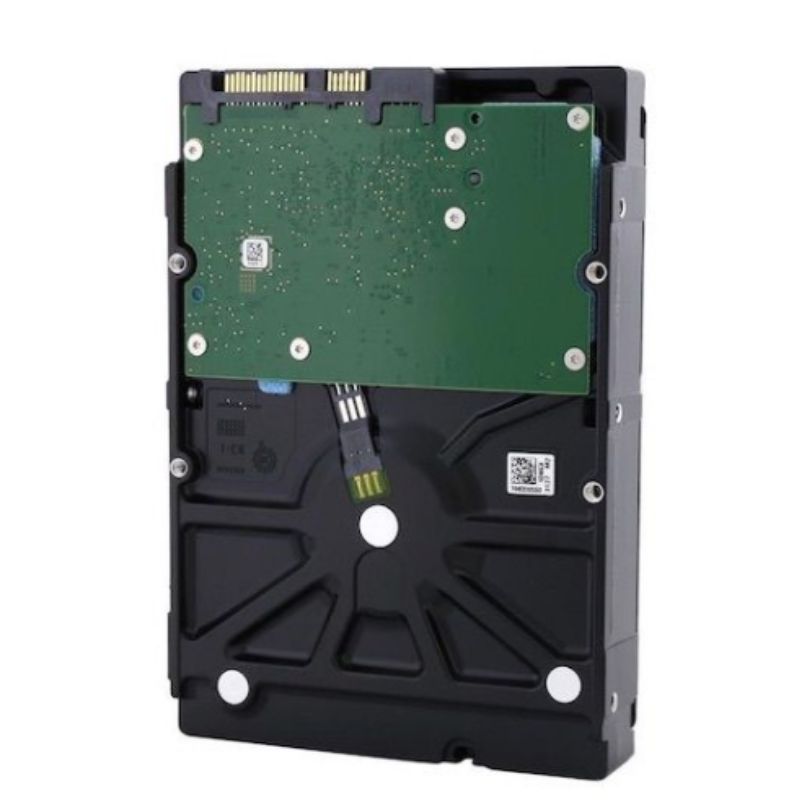
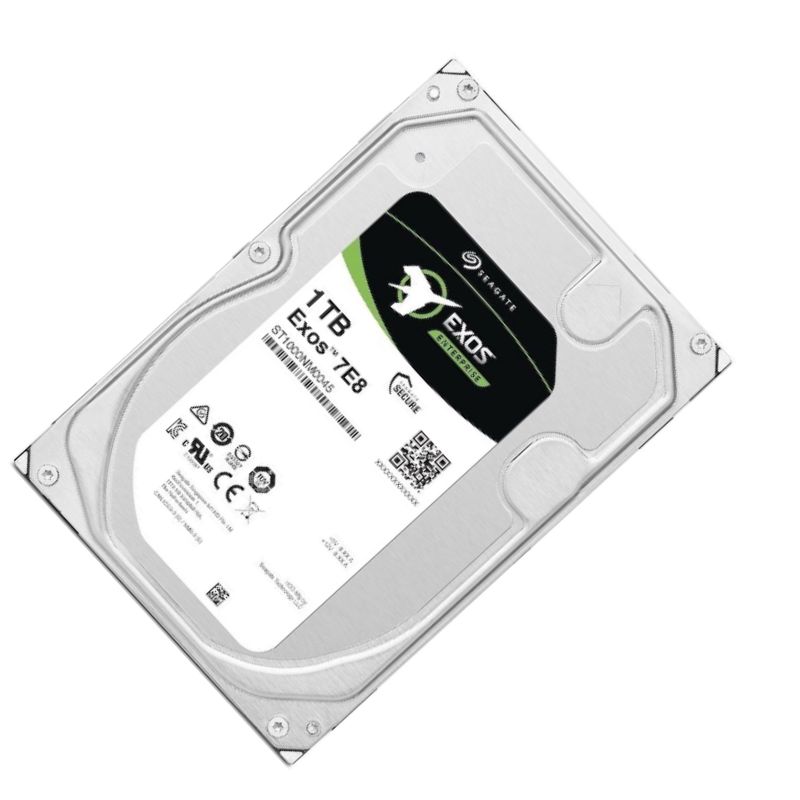
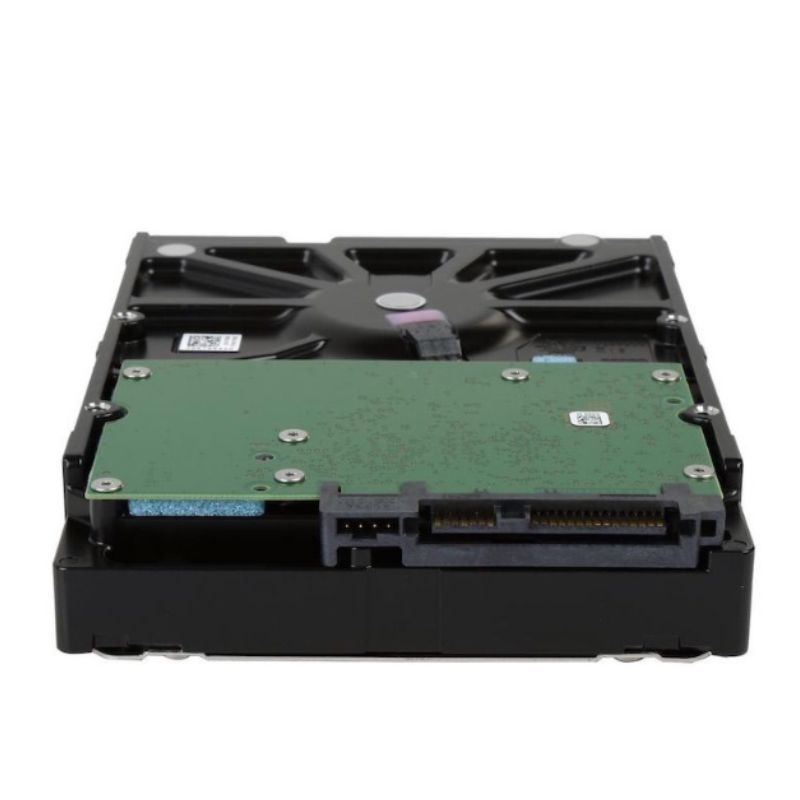
Seagate ST1000NM0045 Exos 7e8 1TB 7.2K RPM SAS-12GBPS 128MB Buffer 512n 3.5Inch HDD. Excellent Refurbished with 1-Year Replacement Warranty
The Seagate ST1000NM0045 Exos 7e8 1TB enterprise hard drive is engineered for hyperscale and cloud environments. With 7.2K RPM rotational speed, SAS-12Gbps interface, and a 128MB buffer, this 3.5-inch HDD offers dependable performance, scalability, and secure storage for mission-critical workloads.
The Seagate ST1000NM0045 Exos 7e8 1TB 7.2K RPM SAS 12Gbps 128MB Buffer 512n 3.5-inch HDD belongs to the enterprise nearline hard disk drive category, a segment specifically engineered for business-critical storage environments that require a balance of capacity, reliability, consistent performance, and cost efficiency. This category is widely deployed in data centers, enterprise servers, storage arrays, and cloud infrastructure where predictable performance and long operational lifecycles are essential. Nearline HDDs are designed to operate continuously under sustained workloads while delivering dependable data access for applications that are sensitive to downtime and data loss.
Enterprise nearline drives differ significantly from consumer or desktop hard drives in terms of firmware optimization, mechanical durability, and workload tolerance. They are validated for multi-drive enclosures, support advanced error recovery controls, and integrate features that maintain performance stability even in vibration-heavy rack-mounted environments. The Exos 7e8 family exemplifies this category by combining proven rotational magnetic storage technology with enterprise-grade engineering standards.
This category of hard disk drives utilizes the Serial Attached SCSI interface, which is a cornerstone technology in enterprise storage architectures. SAS provides full-duplex communication, higher command queue depths, and superior error handling compared to SATA-based solutions. With a 12Gbps interface, the Exos 7e8 HDD category supports high-throughput data transfers between the drive and the host system, enabling efficient operation in environments with multiple simultaneous read and write requests.
SAS connectivity is particularly advantageous in multi-drive backplanes and storage arrays, where dual-port capability enhances redundancy and failover support. Enterprise SAS HDDs can maintain connectivity through alternate paths, improving system availability and supporting high-availability storage designs. This makes the category suitable for mission-critical workloads where uninterrupted access to data is mandatory.
The 7,200 RPM rotational speed defines this category as a nearline performance tier, offering a balance between energy efficiency and access speed. While not intended to compete with high-RPM performance drives or solid-state storage, 7.2K RPM enterprise HDDs deliver consistent sequential throughput suitable for bulk data storage, backups, archival systems, and content repositories. The rotational speed ensures stable read and write performance across extended operating periods.
Nearline HDDs such as those in the Exos 7e8 category are frequently used in scenarios where data is accessed regularly but does not require ultra-low latency. Examples include backup targets, media streaming servers, large file repositories, and secondary storage tiers in hierarchical storage architectures.
The inclusion of a 128MB cache buffer enhances data handling efficiency within this category. The buffer temporarily stores frequently accessed data and write commands, smoothing out I/O bursts and improving perceived performance. For sequential workloads, the cache assists in optimizing read-ahead and write-back operations, reducing the impact of mechanical latency inherent to spinning disks.
Enterprise HDD cache management algorithms are designed to prioritize data integrity and consistency. Unlike consumer drives that may aggressively cache writes, enterprise nearline HDDs ensure that cached data is managed safely, often in coordination with system-level caching and RAID controllers.
The 1TB capacity of the Seagate Exos 7e8 drive positions it within a category designed for efficient storage utilization in enterprise systems that prioritize reliability over sheer capacity density. While higher-capacity drives are available, 1TB nearline HDDs remain relevant in environments that require balanced configurations, predictable rebuild times, and manageable fault domains.
Lower-capacity enterprise drives can offer advantages in RAID configurations by reducing rebuild durations after a drive failure. Faster rebuilds minimize exposure to additional failures and help maintain data protection levels. This characteristic makes the category suitable for applications where resilience and uptime are more critical than maximizing storage per drive.
The 512n sector format indicates native 512-byte logical and physical sectors, ensuring compatibility with a wide range of operating systems, legacy applications, and storage controllers. This sector format simplifies deployment in mixed environments and avoids potential performance penalties associated with sector emulation or misalignment.
Enterprise nearline HDDs in this category are frequently used in systems where backward compatibility is essential, such as legacy databases or long-established enterprise applications. Native sector formatting ensures predictable behavior and reduces configuration complexity.
Enterprise nearline hard disk drives are engineered for continuous 24/7 operation, with reliability metrics that exceed those of consumer-grade drives. The Exos 7e8 category incorporates design elements that support high workload ratings, ensuring that the drives can handle sustained data transfer volumes over extended periods without performance degradation.
Reliability is achieved through precision manufacturing, rigorous testing, and the use of enterprise-grade components. These drives are designed to withstand thermal fluctuations, mechanical stress, and extended duty cycles common in data center environments.
This category supports significantly higher annual workload ratings compared to desktop HDDs, making it suitable for enterprise applications that involve constant data movement. High workload tolerance ensures that the drive can sustain read and write operations without accelerated wear, contributing to predictable service life and reduced maintenance requirements.
Nearline HDDs are often deployed in backup and replication scenarios where large volumes of data are transferred regularly. The ability to handle such workloads reliably is a defining characteristic of this category.
Enterprise HDDs incorporate advanced error detection and recovery mechanisms that prioritize data integrity and system stability. Firmware-level controls manage error recovery timing to align with RAID controller expectations, preventing unnecessary drive dropouts. This behavior is critical in maintaining array health and avoiding false failure conditions.
Data protection features within this category are designed to work in conjunction with system-level redundancy, ensuring that data remains accessible and consistent even in the event of transient errors.
The 3.5-inch form factor defines this category as a standard for enterprise storage systems that prioritize capacity and durability. The larger physical size allows for robust mechanical assemblies, stable platters, and effective heat dissipation. This form factor is widely supported across enterprise server chassis and storage enclosures.
Mechanical design considerations include spindle stability, actuator precision, and enclosure rigidity. These elements contribute to consistent performance and reduced error rates, even under sustained vibration and thermal stress.
Rotational vibration can significantly impact HDD performance and longevity in multi-drive systems. This category incorporates vibration tolerance technologies that allow drives to maintain accuracy and performance when exposed to external vibrations. These features are essential in large storage racks where numerous drives operate simultaneously.


 Contact Us
 Information
 Catalog
 Solid State Drives (SSD)
 Network Switches
 Hard Disk Drives
 HBA & Controllers
 PC & Servers
 PC & Server Memory
 CPU & Processors
 Network Routers
 Power Supplies
 Tape Drives & Libraries
 Network Devices
 Computer & Network Cables