(7% discount is applied at checkout)
Cart is empty
Your go-to destination for cutting-edge server products
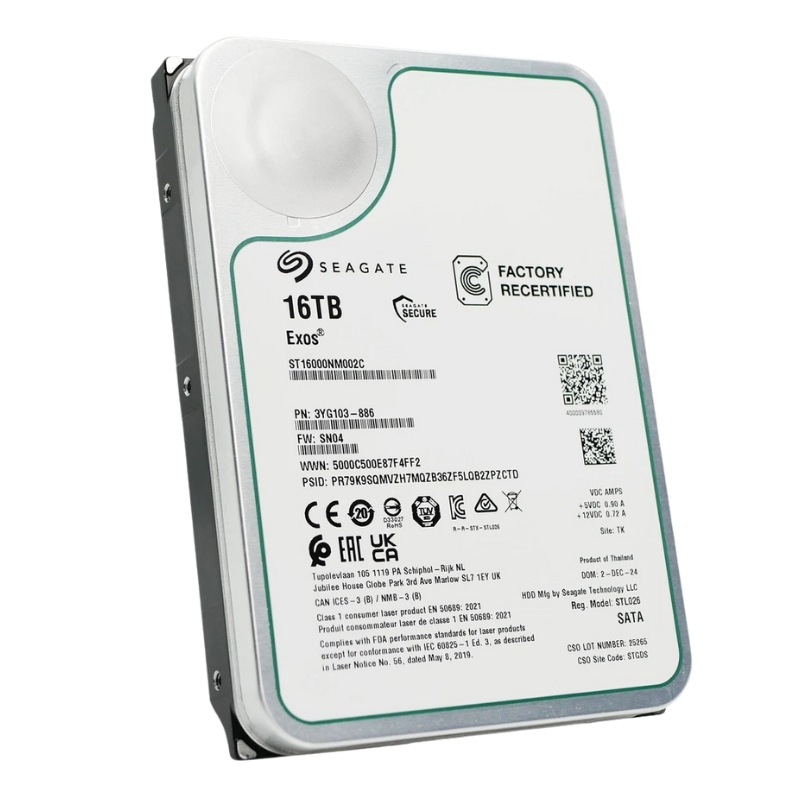


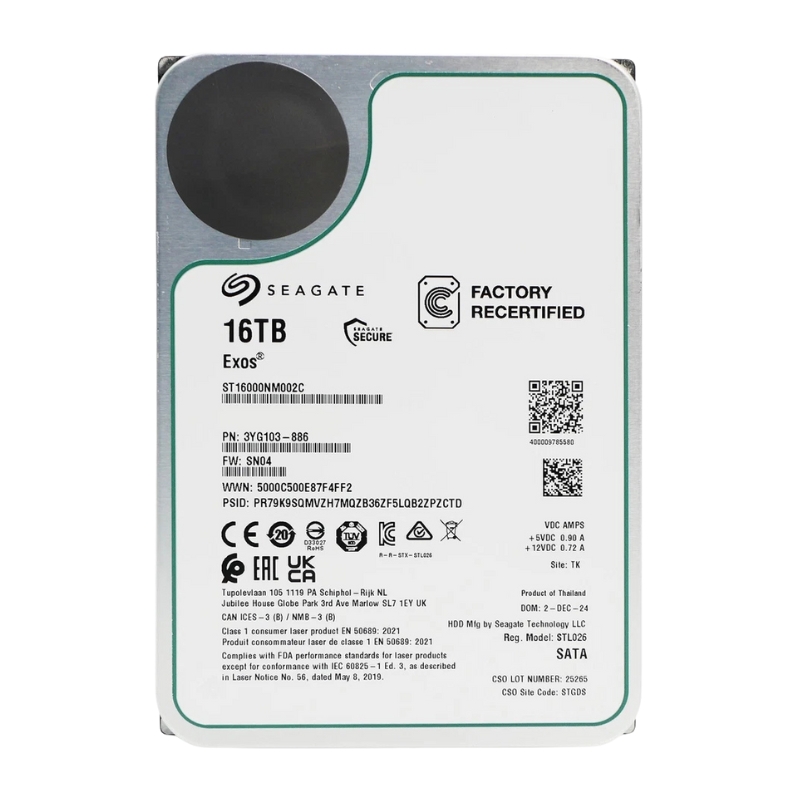
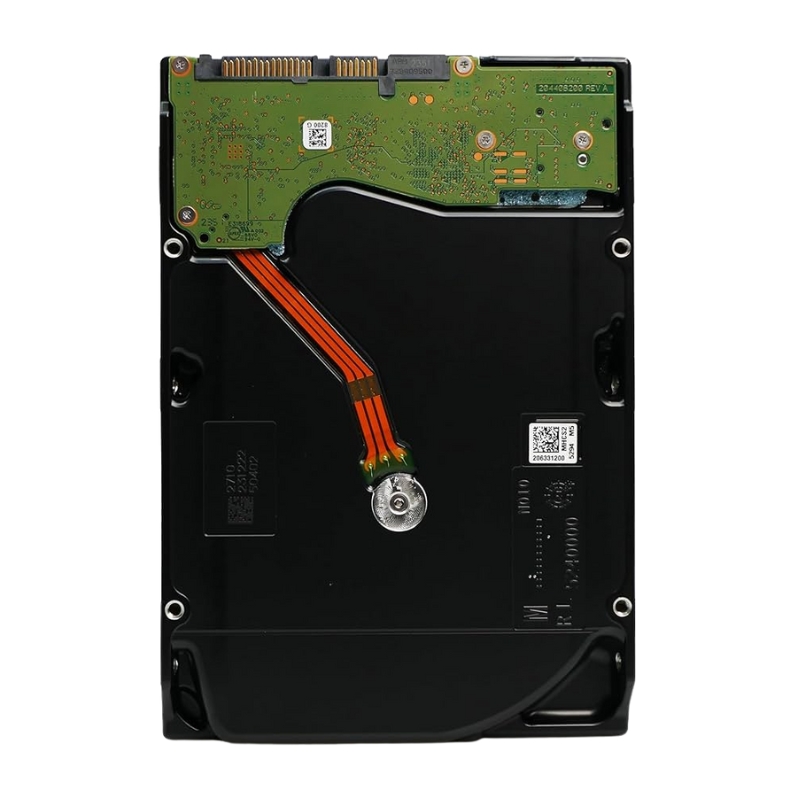
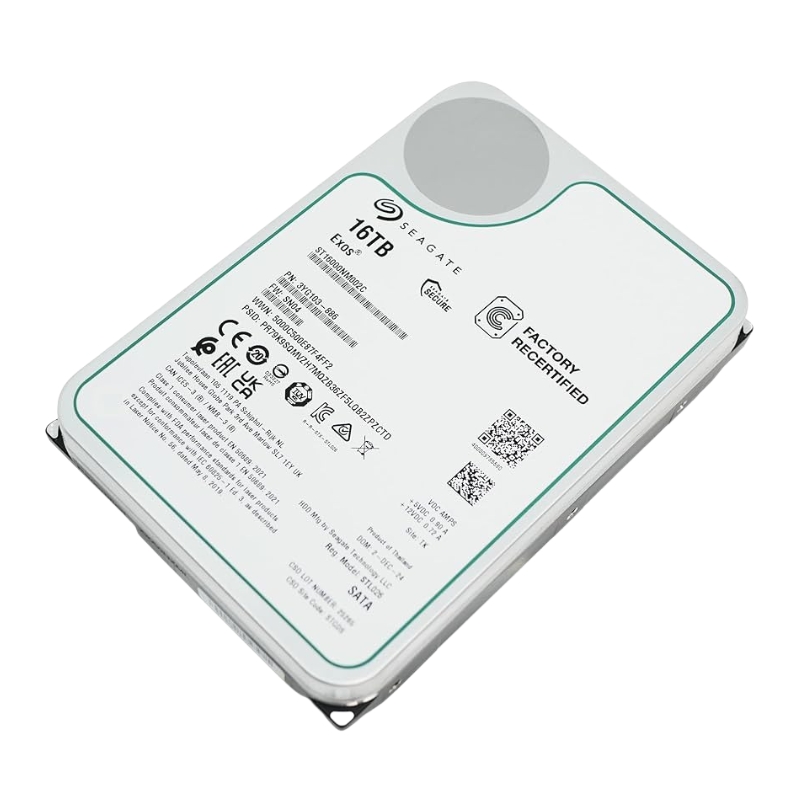
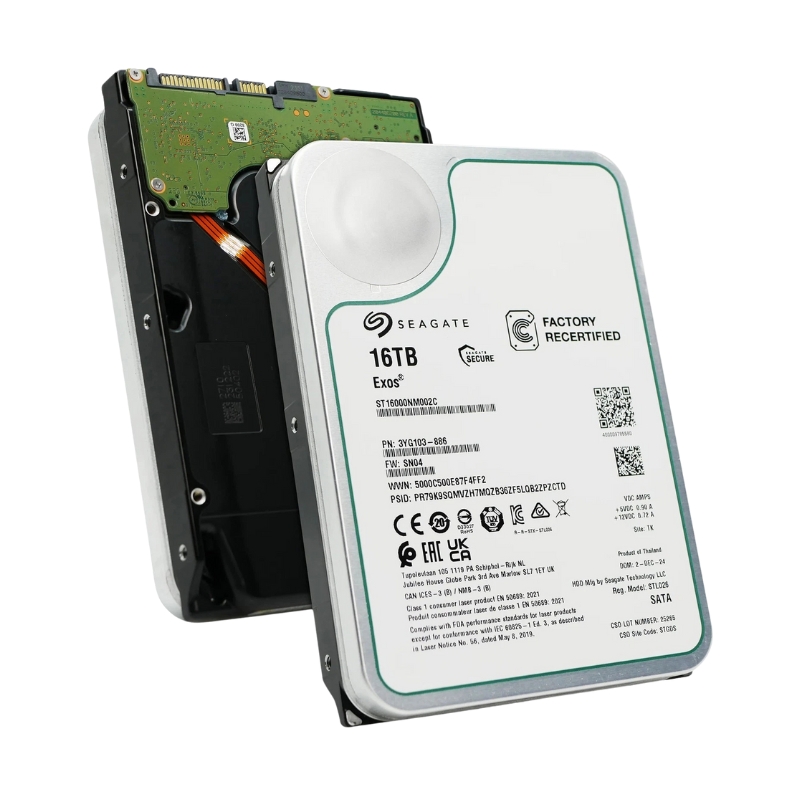
Seagate ST16000NM002C 16TB 7.2K RPM Exos SATA 6GBPS 512e 3.5inch Enterprise Hard Disk Drive. Excellent Refurbished with 1 year replacement warranty
The Seagate Exos 16TB ST16000NM002C is engineered for enterprise-class environments that demand massive capacity, consistent performance, and reliable uptime. Designed with 3.5-inch form factor and SATA 6Gb/s interface, this high-performance storage solution ensures smooth handling of data-intensive workloads.
Built for intensive operations, this enterprise hard drive delivers stable throughput and optimized read/write efficiency. It ensures dependable data processing for business-critical applications.
This enterprise hard disk is widely compatible with servers, NAS setups, and data center applications where scalability and consistency are critical. It is suitable for:
The Seagate Exos ST16000NM002C is built with CMR (Conventional Magnetic Recording) technology, offering stable write performance and ensuring long-term compatibility with various enterprise systems. With 512e emulation and 4Kn sector formats, it provides flexibility for different deployment models.
Designed with a robust build and tested for continuous workloads, this enterprise HDD maintains data integrity over time. The drive’s reliability is backed by its high MTBF rating, supporting uninterrupted operations in demanding environments.
Data centers rely on storage that is scalable, durable, and cost-effective. The Seagate Exos 16TB SATA HDD offers unmatched capacity per disk, reducing overall rack space and lowering operational costs while maintaining enterprise-class reliability.
With its massive storage density, this drive integrates seamlessly into cloud-based platforms, offering scalability and efficiency for distributed systems. Its consistent throughput is well-suited for virtualization workloads.
Archiving large datasets and managing backups requires dependable storage. The Seagate Exos ST16000NM002C’s high capacity and stable performance ensure long-term retention of mission-critical information.
This model is purpose-built for cloud storage platforms, scale-out NAS and SAN arrays, archival and cold-storage tiers, and any environment demanding massive per-rack petabyte density. Typical use cases include:
The Exos X16 line’s focus on rack-level density and optimized power-per-TB makes the ST16000NM002C particularly attractive to operators who want to minimize footprint while maximizing capacity.
The ST16000NM002C provides 16 TB of raw capacity in a 3.5-inch form factor and connects via a standard SATA 6.0 Gb/s interface (backwards compatible with SATA 3.0 Gb/s). The drive supports both 512e and 4Kn logical sector formats depending on firmware and product revision, making it flexible for legacy and modern storage stacks that prefer different sectoring schemes.
Spinning at 7,200 RPM, the Exos ST16000NM002C offers a balance of rotational speed and sustained sequential throughput suitable for large-block transfers and streaming reads/writes commonly seen in backup and archive operations. Average rotational latency is approximately 4.16 ms (half a revolution at 7.2K), which combined with advanced caching and read-ahead optimizations gives consistent sustained performance across large datasets. On recertified or retail listings this drive is often shown with enterprise-grade cache implementations (varies by sub-model and firmware).
While the SATA 6Gb/s interface sets an upper bound on burst transfers, real-world throughput on high-density arrays is determined more by media transfer rates, caching algorithms and the device’s internal servo/seek characteristics. For sequential large-file transfers (typical of backups or object storage ingest), these drives can sustain multi-hundred MB/s aggregates when deployed in parallel. For small random I/O workloads, operators should expect higher latency relative to SSD tiers and plan for tiered caching or hybrid solutions where low-latency access is required.
The ST16000NM002C uses Conventional Magnetic Recording (CMR) for reliable sequential writes and consistent performance in mixed workloads. It supports 512e (512-byte emulation) sectoring, which helps compatibility with existing OSs and legacy storage controllers that expect 512-byte sectors while offering higher physical capacity. Some Exos family variants also support native 4K sectoring (4Kn) — check firmware/model specifics for exact sectoring support.
A notable Seagate innovation for the Exos series is the PowerBalance tooling and firmware tuning, which helps optimize watts-per-terabyte and can lower total operating costs at scale. When you multiply improved power efficiency by thousands of drives in a hyperscale cluster, the savings in energy consumption and cooling requirements become material. This is why operators targeting minimal OPEX per petabyte often select X-class drives like the ST16000NM002C.
The Exos drives ship with enterprise-level firmware intelligence including advanced error recovery controls, TLER-style behaviors for RAID compatibility, and background media scan capabilities that proactively identify and remap marginal sectors. These capabilities reduce rebuild times and improve overall array resiliency in multi-drive configurations. For environments requiring self-encrypting drive (SED) functionality or FIPS-certified options, refer to other Exos SKUs in the X16 family that explicitly list SED or SED-FIPS support.
The ST16000NM002C follows the standard 3.5-inch enterprise form factor with mounting holes compatible with industry-standard trays and sleds. Physical dimensions make it simple to integrate into rack-mounted storage systems, servers, and JBOD enclosures that support 3.5-inch drives. Weight and specific mechanical drawings are available in the official datasheet for engineers planning mechanical integration.
High-density drive deployments require careful airflow planning. The Exos drives are designed to dissipate heat predictably; nevertheless, when populating chassis with many drives per shelf, ensure sufficient front-to-back airflow and monitor drive inlet/outlet temperatures to remain within Seagate’s recommended operating envelope. Proper cooling reduces thermal stress and extends drive longevity, especially in sustained-write or high ambient temperature environments.
Enterprise drives like the Exos X16 are engineered for multi-bay vibration environments. They typically include firmware and mechanical features to mitigate the negative performance impact of adjacent drive vibration. While acoustics are not a primary design goal for data center drives, Seagate specifies vibration and shock tolerances in the product manual, which is important when evaluating suitability for dense racks or mobile server deployments.
The ST16000NM002C is intended to be used in RAID arrays, erasure-coded object stores, or distributed storage pools. When planning redundancy:
Because of the scale of data on a single 16TB drive, architects often pair these HDDs with a small SSD caching tier or NVMe-based metadata tier to accelerate small random I/O while keeping cold data on economical spinning media.
The SATA interface ensures broad compatibility across mainstream server and storage platforms. Still, verify controller firmware and HBA compatibility lists before large rollouts — some controllers may require firmware updates to fully support advanced features like 4Kn or large sector emulation. Enterprise resellers and hardware vendors commonly publish compatibility lists for the Exos X16 family.
Selecting the ST16000NM002C should be driven by capacity density needs and workload profile:
Implement proactive drive health monitoring via SMART attributes and vendor diagnostic tools. In large-scale environments, set up centralized telemetry to flag indicators such as increasing reallocated sectors, read error rates, or growing vibration-related metrics. Timely drive replacement on warning signs avoids extended rebuilds and reduces the risk of data loss during correlated failures.
Firmware updates can add features or improve stability. For new deployments, source drives from authorized vendors to ensure factory firmware and warranty are intact. Many vendors sell Seagate recertified Exos drives (refurbished and tested), which can provide cost savings but may carry shorter warranties — always check the seller’s recertification and warranty terms. Listings for recertified ST16000NM002C units are common in surplus and enterprise-secondary markets.
Compared with smaller high-capacity drives, the 16TB Exos reduces rack space and lowers hardware overhead per terabyte. The trade-offs include increased rebuild durations and slightly higher per-drive recovery complexity. Organizations with mature automation, rapid spare availability and erasure-coded storage benefit more from 16TB drives, while those prioritizing faster rebuilds may consider a mix of smaller-capacity drives or faster media in critical tiers.
HDDs remain the most cost-effective medium for large-scale cold storage. The ST16000NM002C’s role is straightforward: bulk capacity. Modern storage architectures typically combine HDD capacity tiers with SSD or NVMe caching and metadata layers to deliver acceptable latency for active datasets while keeping cold data on spinning disks to optimize cost-per-GB. This tiered approach delivers the best of both worlds: economical storage for archival content and fast access for hot data.
Street pricing for enterprise 16TB drives varies by region, condition (new vs. recertified), and supply chain effects. When evaluating vendor quotes, include:
Because enterprise drives are a long-lived capital expense, the TCO calculation should extend across expected drive lifetime, energy, administration, and the cost to rebuild or restore data in worst-case scenarios.
Technical teams should consult the official Exos X16 data sheet and product manual for precise electrical, mechanical and environmental specifications, as well as supported operating ranges and firmware notes. These documents contain the authoritative numbers for MTBF, power draw (idle vs. active), shock/vibration tolerances, and sector/format support. Seagate’s product pages and datasheets are the primary references for design and procurement decisions.
Follow Seagate’s documented temperature, humidity and altitude limits to ensure optimal drive longevity. Store unused drives in anti-static packaging and climate-controlled conditions to prevent moisture or thermal stress that could shorten service life. For in-field drives, ambient temperature monitoring and proper airflow are critical for predictable performance.
When a drive reaches EOL, perform secure data sanitization according to organizational policy and regional regulations. For highly sensitive data, consider physical destruction or NIST-compliant sanitization workflows. Seagate provides guidance on secure erase and decommissioning for enterprise customers; consult vendor documentation for recommended procedures.
Organizations choose the Seagate Exos ST16000NM002C for its combination of very high capacity per drive, enterprise-grade reliability targets, and firmware features designed specifically for data-center scale deployments. When used correctly in a tiered storage architecture and managed with appropriate monitoring and redundancy, these drives reduce per-terabyte acquisition and operating costs while delivering the predictable behavior required by large-scale storage systems.
The Exos X16 family includes several capacity points and feature variants (SATA vs. SAS, SED/SED-FIPS models, and recertified SKUs). If your deployment needs hardware encryption, or a SAS-based connectivity option, consider comparing the ST16000NM00xx range and consult Seagate’s product matrix for specific SKU differences and firmware capabilities.
To maximize discoverability for the ST16000NM002C category page:
Use purchase-focused, trust-building CTAs such as "Validate compatibility", "Download datasheet", "Request volume quote", or "Compare Exos SKUs" to guide buyers deeper into the funnel. Provide TCO calculators or watts-per-TB charts to help technical buyers present the value case to procurement stakeholders.
For concise comparison and technical design conversations, reference Seagate’s Exos X16 datasheet and product page for the authoritative values on warranty, MTBF, environmental ranges, and sectoring options. These official documents should be linked from any enterprise product page to ensure engineering teams can validate mechanical and electrical integration details. :contentReference[oaicite:20]{index=20}


 Contact Us
 Information
 Catalog
 Solid State Drives (SSD)
 Network Switches
 Hard Disk Drives
 HBA & Controllers
 PC & Servers
 PC & Server Memory
 CPU & Processors
 Network Routers
 Power Supplies
 Tape Drives & Libraries
 Network Devices
 Computer & Network Cables