(7% discount is applied at checkout)
Cart is empty
Your go-to destination for cutting-edge server products
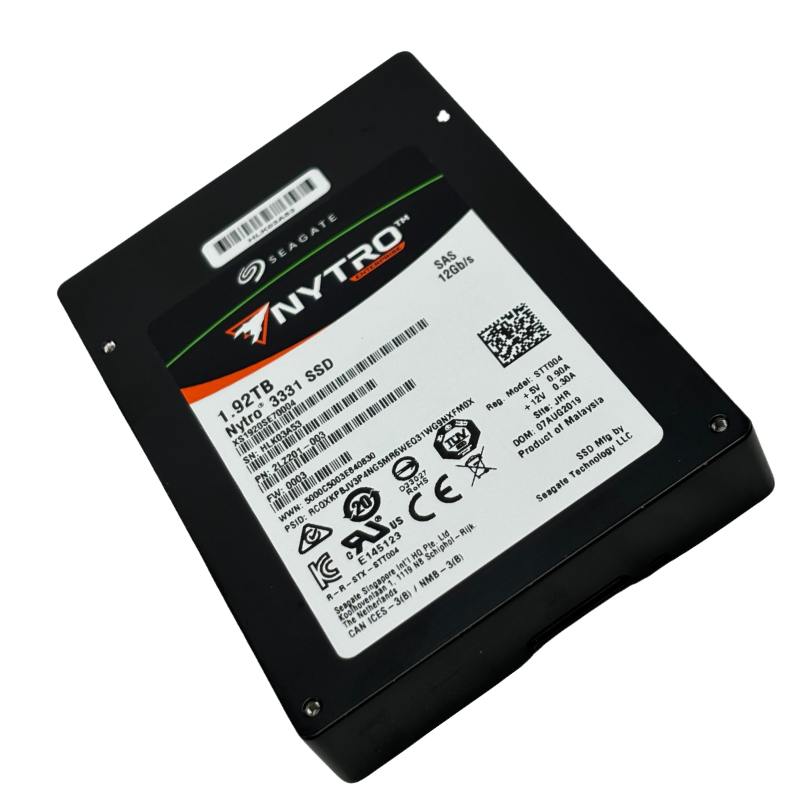


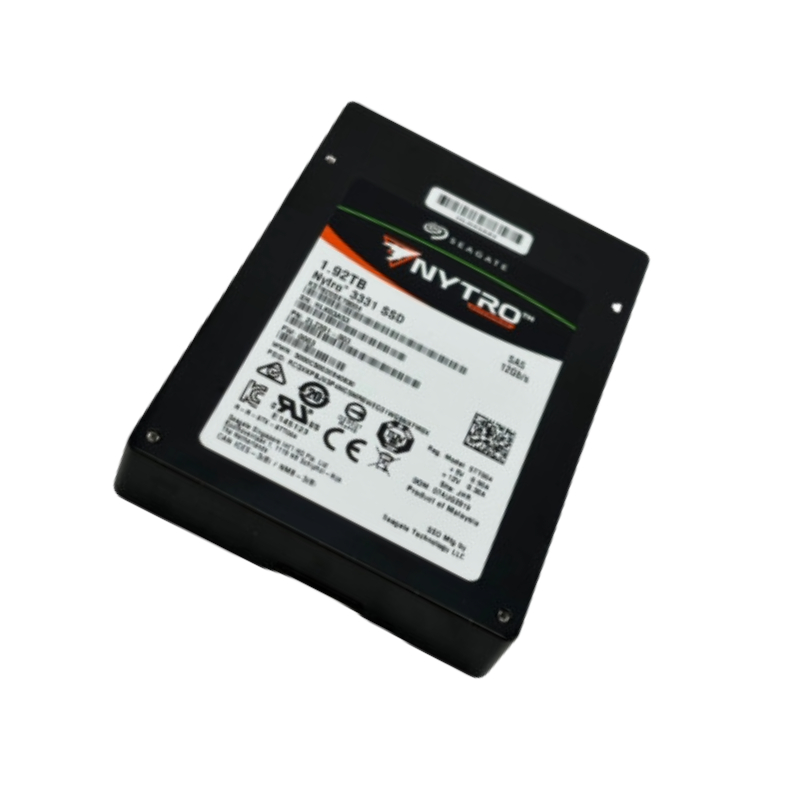
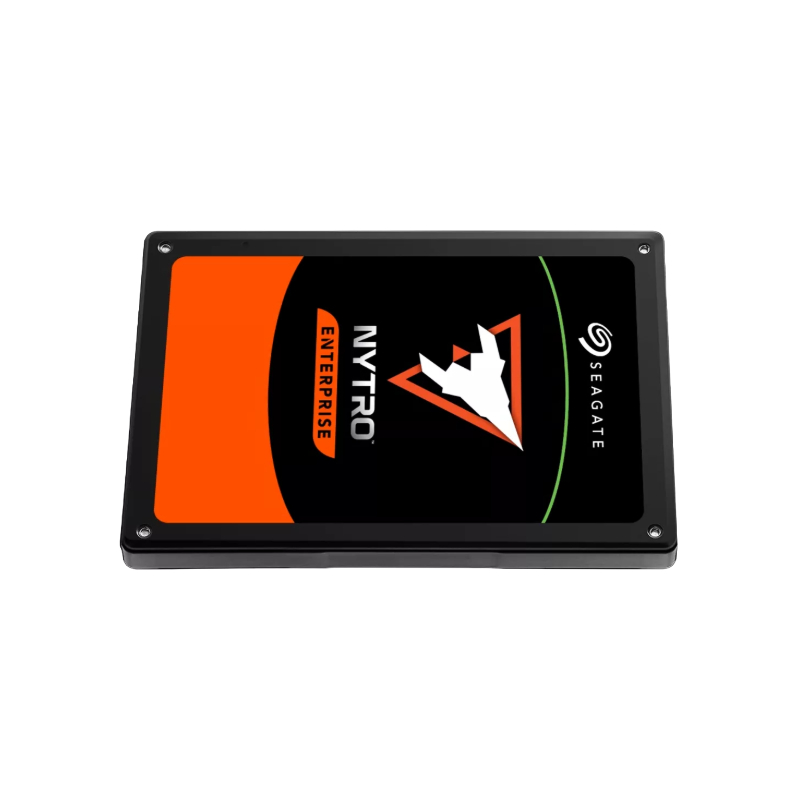
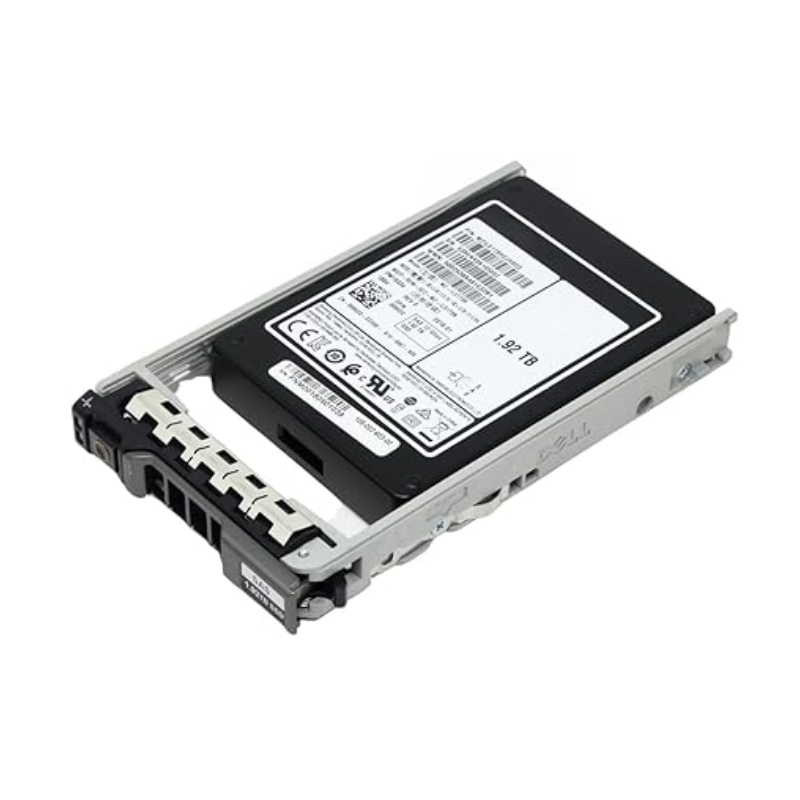
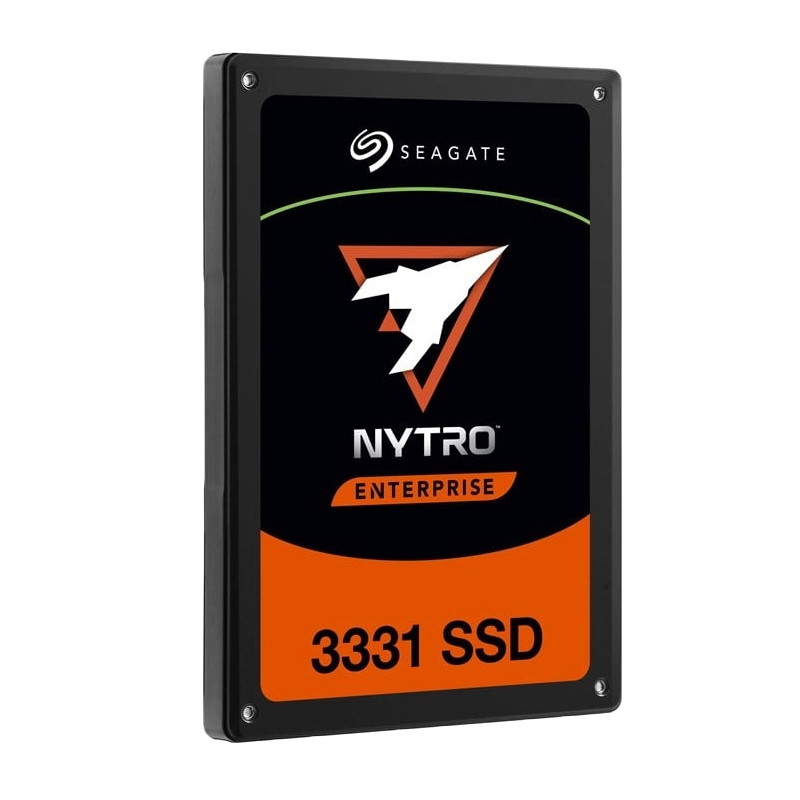
Seagate XS1920SE70004 Nytro 3331 1.92TB SAS-12GBPS Read-Intensive Internal SFF 3D eTLC Solid State Drive. Excellent Refurbished with 1 year replacement warranty
The Seagate Nytro 3331 XS1920SE70004 1.92TB SAS-12Gbps Read-Intensive Internal SFF 3D eTLC Solid State Drive represents a carefully balanced enterprise storage offering that targets read-heavy workloads in modern data centers. Engineered for reliability and strong sustained throughput, this model brings together Seagate’s Nytro family design principles—efficient power management, enterprise-grade firmware, and high-density 3D eTLC NAND—to deliver predictable latency and consistent I/O performance. The drive’s 1.92TB usable capacity in a small form factor complements applications where rack density, energy efficiency, and long-term operating costs are important. Designed to operate on SAS-12Gbps backplanes and controllers, the Nytro 3331 is optimized for mixed and read-focused enterprise environments such as boot drives, content delivery, caching layers, database read replicas, analytics read sets, and virtualization read caches.
The heart of the XS1920SE70004 is its use of 3D eTLC NAND, which stacks memory cells vertically to increase density while keeping a focus on endurance appropriate for read-intensive service profiles. The SAS-12Gbps interface provides a robust enterprise-class connection with dual-port options available on many Nytro series drives for high availability in SAN deployments. The small form factor (SFF) design reduces footprint without compromising thermal handling; the drive platform integrates thermal throttling and power control algorithms to maintain consistent performance under sustained load. Enterprise-oriented firmware handles error correction, wear leveling, and garbage collection routines tuned to minimize latency spikes often noticeable in client-class SSDs.
The controller architecture in the Nytro 3331 family is selected to drive predictable queue depth behavior and low tail latency. Firmware implements features such as dynamic over-provisioning, adaptive read retry algorithms, and background media management tasks that prioritize foreground I/O. This is critical for server environments where high-percentile latency (for example 99.9th percentile) dictates application responsiveness. The XS1920SE70004’s firmware is also tuned for SAS command sets and enterprise scheduler patterns, maintaining high throughput while protecting against performance degradation during long garbage collection cycles. Seagate’s certification processes with major server and storage vendors ensure broad compatibility across controllers and RAID/FIO toolchains often used in performance testing.
The Seagate Nytro 3331 is positioned for read-intensive workloads where a majority of operations are small-block random reads, sequential reads for streaming assets, or mixed reads with lighter write ratios. With SAS-12Gbps connectivity, the drive is capable of delivering high sustained read bandwidth and steady IOPS under multi-threaded server loads. For content-delivery networks hosting frequently accessed media, the 1.92TB capacity enables substantial cache or hot-set storage per drive, improving cache hit rates and reducing backend fetch operations. In virtualization environments, the drive’s consistent read performance accelerates VM boot storms and read-saturated database analytics. While not a high-endurance write-optimized device intended for heavy logging or intense write databases, the Nytro 3331’s endurance and over-provisioning still permit use as a reliable read cache or nearline SSD in tiered storage architectures.
Enterprise houses and cloud providers appreciate drives that maintain tight latency distributions under stress. The Nytro 3331 implements QoS-aware scheduling and prioritization to reduce wide latency variance during background maintenance cycles. This is important for multi-tenant environments where a single noisy neighbor write spike should not impede stored-critical read operations. Performance consistency is achieved via a combination of firmware-level wear management, robust ECC strategies, and the resilient SAS transport layer that supports enterprise-class error recovery. When choosing drives for latency-sensitive stacks, architects will find that the XS1920SE70004’s tail-latency characteristics make it a compelling candidate for read-dominant tiers.
Endurance ratings for this type of read-intensive 3D eTLC enterprise SSD are calibrated to typical read-heavy service lifecycles rather than the heavier write endurance of SAS write-intensive drives. Seagate’s manufacturing and validation processes include industry-standard durability testing, including power-loss protection scenarios, sustained random and sequential workload validation, and extensive error rate validation across device temperature ranges. Data integrity is reinforced with strong ECC, sector-level protection, and firmware that attempts to detect and remediate potential media degradation before it impacts client workloads. Consumable wear is monitored and surfaced through SMART attributes and SAS log pages so system administrators can integrate predictive replacements into maintenance workflows, reducing the risk of unplanned downtime.
Power consumption is a practical consideration in dense rack deployments. The Nytro 3331 XS1920SE70004 is built with power management states that balance performance and efficiency, allowing data center operators to manage thermal envelopes and power provisioning more effectively. In high-density SFF chassis, thermal interplay between adjacent drives can influence drive throttling behavior; Seagate addresses this with drive-level thermal feedback and host-level SMART metrics that help orchestration layers make informed scheduling decisions. The drive’s power profile under typical read-heavy workloads tends to be lower than equivalent write-intensive SSDs, which makes it suitable for large-scale caching fleets and read-dominant storage tiers where both throughput and rack-level power consumption are important.
The small form factor variant of the Nytro 3331 allows it to be deployed in a wide range of enterprise servers, blade chassis, and storage arrays that accept SFF drives with SAS 12Gbps interfaces. Integration is straightforward where the hardware supports SAS-domain connectivity and enterprise RAID controllers. Administrators should check firmware compatibility matrices and vendor HCLs (hardware compatibility lists) for the specific server and controller combination to ensure optimal operation and to access vendor-validated performance profiles. Hot-swap trays, caddies, and backplane cabling for SAS architectures typically support the drive’s dual-port and single-port configurations; selecting the right model variant matters when implementing multipath configurations or high-availability SAN topologies.
Compared to write-intensive enterprise SSDs using higher-endurance media or SLC/MLC variants, the Nytro 3331 prioritizes density for read-dominant environments. Versus consumer NVMe SSDs, the SAS-based Nytro provides enterprise-level manageability, dual-port SAS options, and robust compatibility with legacy storage infrastructure that still largely relies on SAS and SAS-based arrays. When compared with newer NVMe architectures, SAS SSDs like the Nytro 3331 may have higher protocol overhead but offer mature ecosystem support for many SAN and RAID deployments. Choice among these options depends on performance targets, existing infrastructure investments, total cost of ownership objectives, and the specific read/write workload balance in the target environment.
For a media delivery platform, a cluster of Nytro 3331 drives can serve as the hot cache for frequently accessed video and image objects, improving response times and reducing origin fetch costs. In an analytics cluster, the drives can store read-optimized partitions of data lakes so ad-hoc queries and read-heavy map-reduce tasks avoid spinning disk latencies. In virtualized desktop infrastructure (VDI) or cloud-hosted VM fleets, the Nytro 3331 can hold user-profileed read sets and commonly accessed application binaries, reducing boot times and improving perceived performance for end users. Each narrative underscores the drive’s strengths: predictable read throughput, compact form factor, and enterprise-grade manageability that simplify integration into existing data center stacks.


 Contact Us
 Information
 Catalog
 Solid State Drives (SSD)
 Network Switches
 Hard Disk Drives
 HBA & Controllers
 PC & Servers
 PC & Server Memory
 CPU & Processors
 Network Routers
 Power Supplies
 Tape Drives & Libraries
 Network Devices
 Computer & Network Cables