(7% discount is applied at checkout)
Cart is empty
Your go-to destination for cutting-edge server products
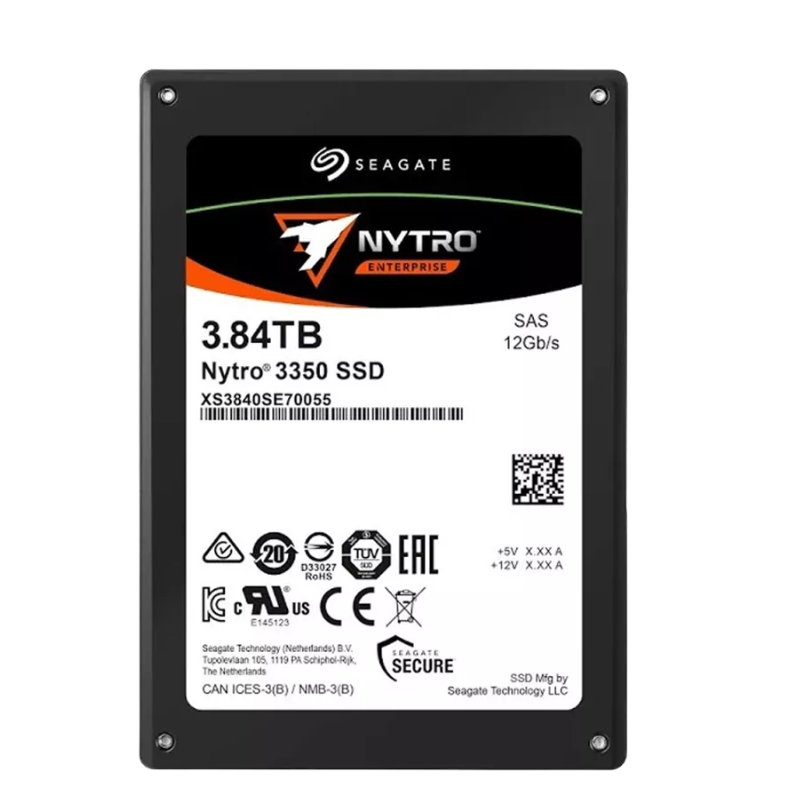


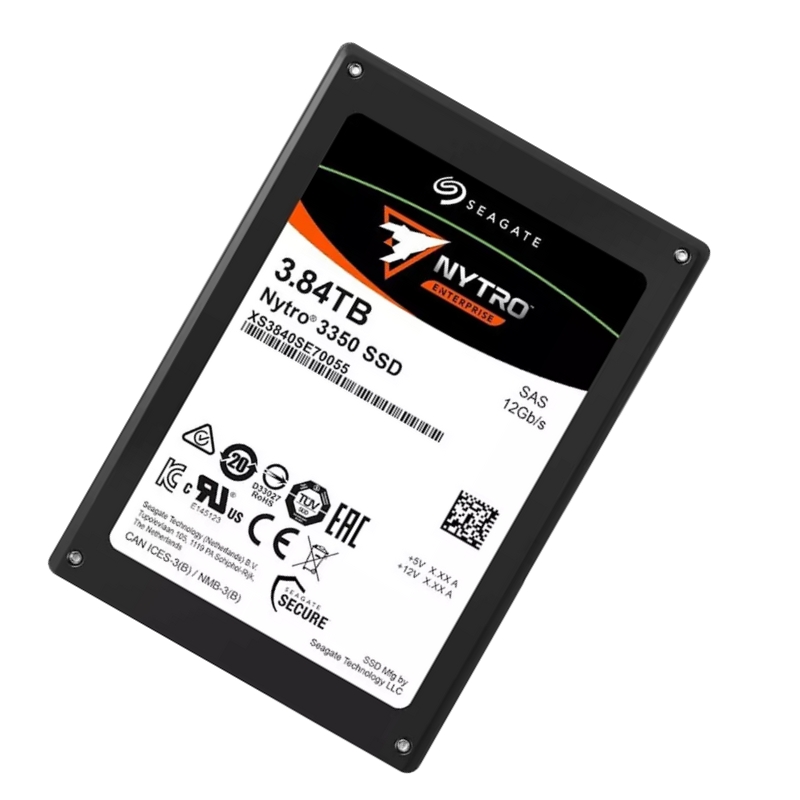
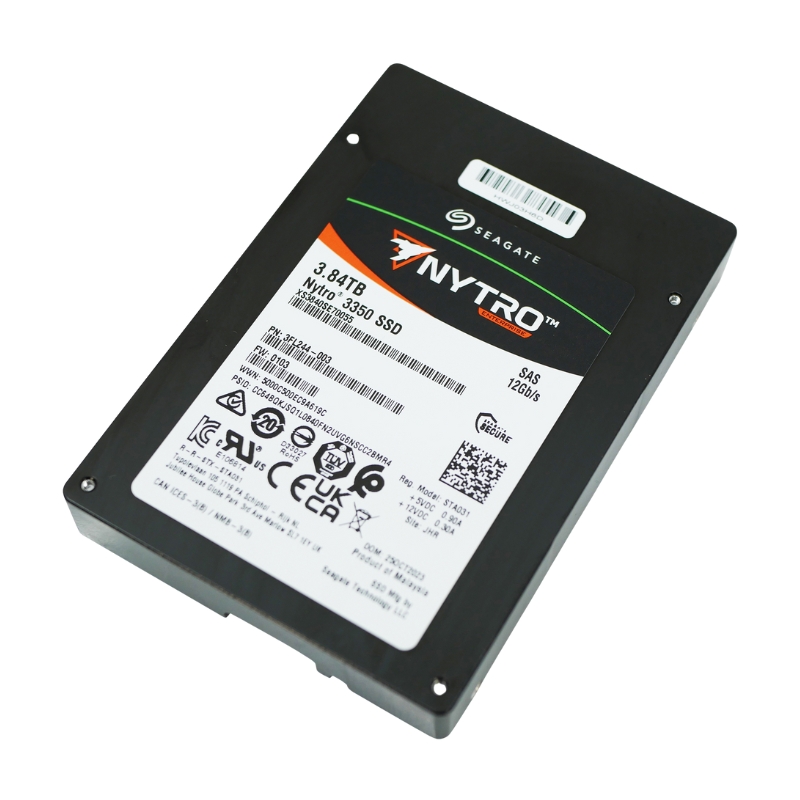
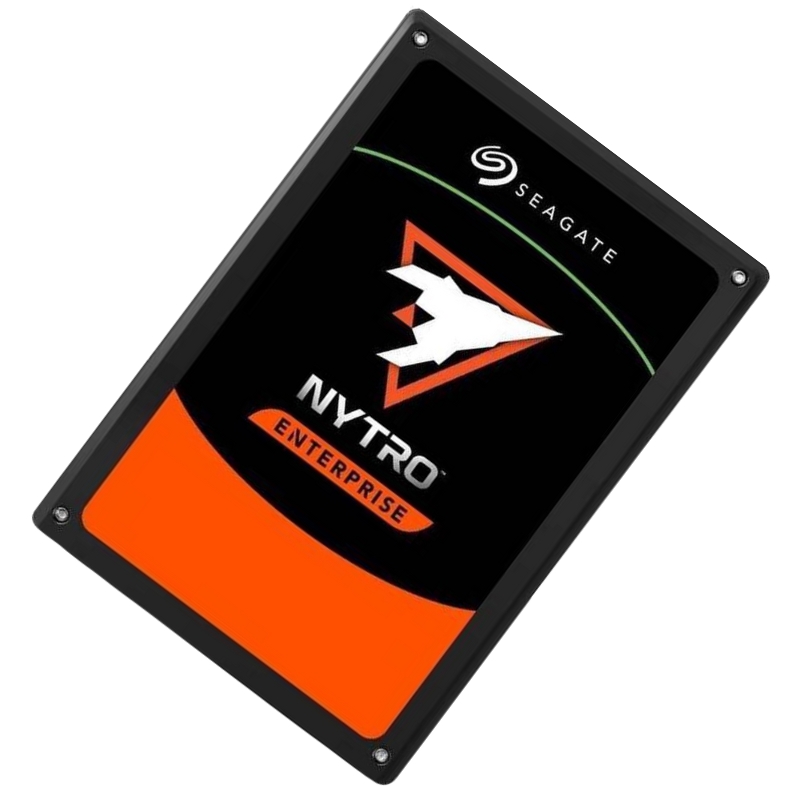
Seagate XS3840SE70055 Nytro 3350 Series 3.84TB SAS-12GBPS 3D eTLC SED SFF Internal Solid State Drive. New Sealed in Box (NIB) with 3 Years Warranty
The Seagate XS3840SE70055 Nytro 3350 Series 3.84TB SAS-12GBPS 3D eTLC SED SFF Internal Solid State Drive presents an enterprise-class storage solution designed for demanding data center workloads where consistent performance, strong endurance characteristics, and hardware-level security are essential. The description focuses on architectural design, interface advantages, real-world workload behaviour, compatibility considerations, and long-term operational factors that influence total cost of ownership and system resilience.
The SAS 12Gbps interface of the Seagate Nytro 3350 Series drives provides a robust enterprise-grade connectivity path that supports full-duplex communication, advanced error detection and recovery, and multi-pathing in storage fabrics. For servers and storage arrays that rely on high-availability topologies, SAS delivers native support for expanders, dual-port configurations, and fabric-level redundancy, enabling uninterrupted I/O during component failover or planned maintenance. Integration into modern SAN and DAS environments is straightforward because SAS controllers are widely supported across server OEMs, RAID controllers, HBAs, and enterprise storage platforms. In practical terms, deploying a 12Gbps SAS drive versus older SAS or SATA variants means reduced queuing delays under concurrency, improved small-block I/O throughput, and simpler scaling paths when adding drive shelves or expanding node capacity.
Mixed application environments that combine database transaction processing, virtualization consolidation, and analytics benefit from SAS's predictable latency and enterprise signaling. When a data center consolidates virtual machines, containerized workloads, and latency-sensitive middleware on shared infrastructure, the ability of the SAS interface to handle multiple simultaneous requests with consistent response times mitigates “noisy neighbor” effects. The Nytro 3350's SAS link pairs well with enterprise RAID and caching strategies that amplify small random I/O performance without requiring more expensive PCIe/NVMe redesigns.
The Nytro 3350 Series uses 3D embedded Triple-Level Cell (eTLC) NAND to strike a balance between cost-efficiency and endurance suitable for mainstream to heavy mixed-use enterprise workloads. 3D stacking increases density while reducing per-GB cost compared to legacy planar NAND. eTLC stores multiple bits per cell, increasing effective capacity while firmware and controller innovations compensate for the cell-level endurance differences through advanced wear leveling, dynamic over-provisioning, and aggressive error correction algorithms. For IT teams assessing endurance profiles, the implication is that 3D eTLC models provide a pragmatic compromise: higher raw capacities and acceptable sustained performance for write-heavy but not extreme write-constancy applications, making the 3.84TB capacity a cost-conscious choice for tiered storage, hot cache pools, and boot volumes.
Robust error correction is fundamental to enterprise SSDs that use multi-level NAND. The Seagate Nytro drives typically implement strong ECC engines and advanced signal processing capable of correcting multi-bit errors and compensating for NAND aging effects. ECC helps preserve data integrity under heavy usage and supports retention of high read reliability when devices are employed in RAID groups or as part of erasure-coded storage pools. The presence of hardened ECC and data path protection minimizes silent data corruption and improves system-level MTBF expectations.
The Seagate XS3840SE70055 includes self-encrypting drive functionality that provides hardware-based encryption without perceptible performance degradation. SED implementation helps satisfy data protection and regulatory obligations by encrypting all user data on the drive using cryptographic keys managed in hardware. For organizations subject to compliance frameworks, including those requiring encryption-at-rest, deploying SED-equipped Nytro drives simplifies auditability and reduces the software overhead associated with host-level encryption. The ability to perform cryptographic erase further accelerates secure decommissioning and repurposing workflows.
The small form factor (SFF) design of the Nytro 3350 Series makes it a versatile component for dense server nodes, blade systems, and storage enclosures where space and thermal budgets are at a premium. SFF drives enable higher drive counts per chassis, improving usable capacity density and permitting more granular tiering within a single enclosure. Dense deployments reduce rack footprint and can lead to operational savings in rack space and related facilities overhead. The mechanical compatibility of the SFF drive with hot-swap trays and sleds simplifies replacement and scaling while minimizing downtime during drive service operations.
The Nytro 3350 Series targets predictable mixed I/O performance across a variety of workloads. Measured results under typical enterprise conditions emphasize consistent low-latency responses for small-block random reads and acceptable sustained write throughput for larger sequential transfers. The SAS interface and internal controller logic prioritize IOPS stability under concurrency so that latency-sensitive applications such as OLTP databases, virtual desktop infrastructure, and caching tiers can maintain service level objectives. When configured in RAID 10, RAID 6, or more sophisticated erasure-coded pools, Nytro drives provide the low-latency layer that accelerates front-end application response times and reduces the load on back-end disk tiers.
Before deploying Seagate Nytro 3350 drives, system integrators must verify controller compatibility, firmware interaction, and OS support for SAS-connected SSDs. Modern server platforms with up-to-date HBAs and RAID controllers typically support 12Gbps SAS devices, but older hardware may require firmware updates or may not support all enterprise features. Operating systems and hypervisors must be configured to recognize and manage SED attributes if encryption features are to be used. Storage orchestration tools and infrastructure-as-code templates should capture drive-specific settings to ensure consistent treatment across provisioning workflows and automation pipelines.
SFF enterprise drives are commonly serviced while systems are live, and hot-swap procedures must follow strict change control and documentation. Replacement processes usually include flushing host caches, offlining affected volumes, and ensuring that RAID rebuilds or resynchronizations occur under less volatile load conditions. Training for operations staff on drive sled handling, firmware upgrade sequencing, and secure erase procedures reduces human error and accelerates safe maintenance cycles.
The Seagate XS3840SE70055 Nytro 3350 Series 3.84TB SAS-12GBPS 3D eTLC SED SFF Internal Solid State Drive is well-suited for several common enterprise scenarios. It serves as a high-performing cache layer in hybrid arrays where it accelerates reads and writes to slower capacity tiers. It provides reliable boot and OS volumes in hyper-converged infrastructure where predictable low latency is necessary for system responsiveness. For database systems and analytics clusters that require low-latency random reads and moderate sustained writes, the 3.84TB capacity enables larger working sets on fast storage without moving to higher-cost NVMe tiers. The SED feature adds appeal to environments with strict data protection or regulatory compliance needs, such as finance, healthcare, and government sectors.
Deploying enterprise SSDs in redundant configurations requires specific attention to rebuild impact and write amplification. RAID levels that provide a balance between performance and resilience, such as RAID 10 or RAID 6 with SSD-friendly rebuild strategies, are common choices. Erasure coding in distributed storage systems can offer improved storage efficiency but may impose computational overhead during rebuilds. The Nytro 3350's predictable performance characteristics allow architects to model rebuild windows and set alerts to avoid overload during degraded states.
The Nytro 3350 SAS 12Gbps offering occupies a middle ground between legacy SATA options and the higher-performance NVMe family. Compared to SATA, SAS delivers better concurrency, higher sustained throughput, and enterprise signal robustness. Compared to NVMe, SAS 12Gbps provides a more familiar integration path for many existing server fleets and storage arrays while offering compelling performance for many enterprise workloads without requiring NVMe host changes. Organizations selecting between these interfaces should weigh expected latency requirements, host controller costs, scalability plans, and migration complexity before choosing the drive interface that aligns with their long-term architecture.


 Contact Us
 Information
 Catalog
 Solid State Drives (SSD)
 Network Switches
 Hard Disk Drives
 HBA & Controllers
 PC & Servers
 PC & Server Memory
 CPU & Processors
 Network Routers
 Power Supplies
 Tape Drives & Libraries
 Network Devices
 Computer & Network Cables