(7% discount is applied at checkout)
Cart is empty
Your go-to destination for cutting-edge server products
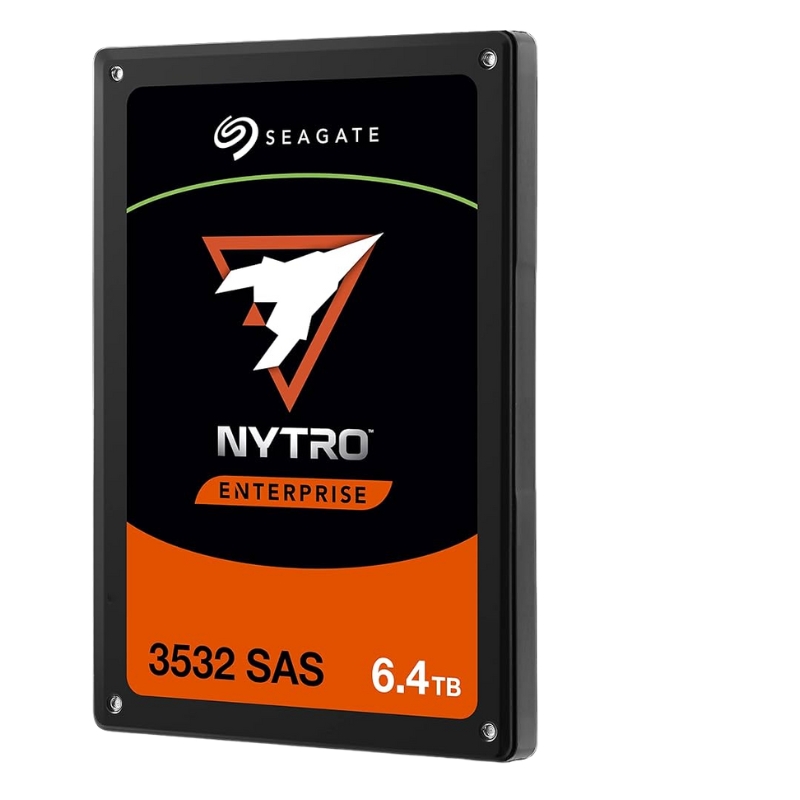


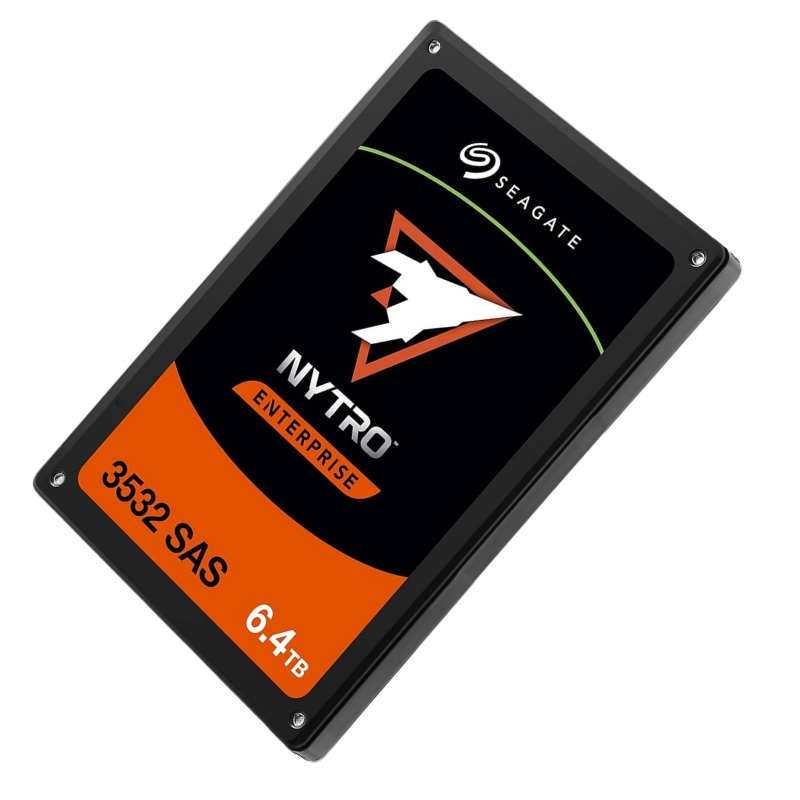
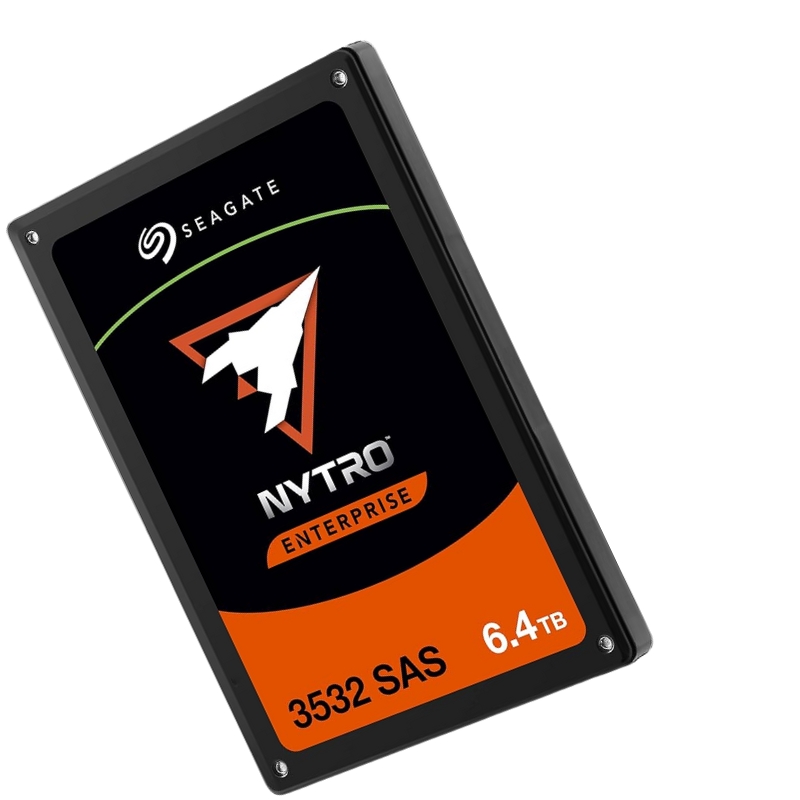
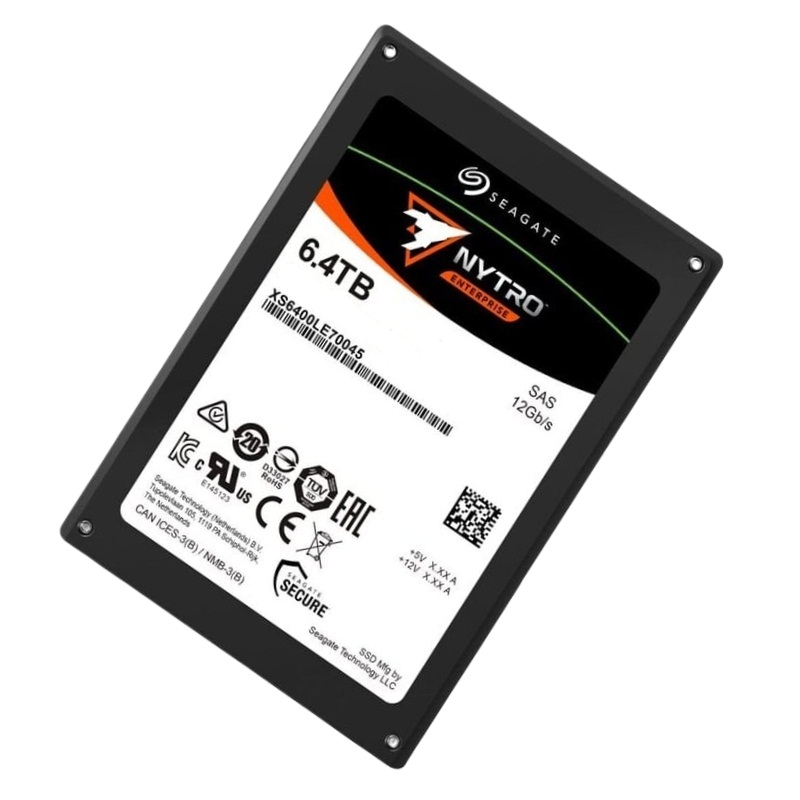
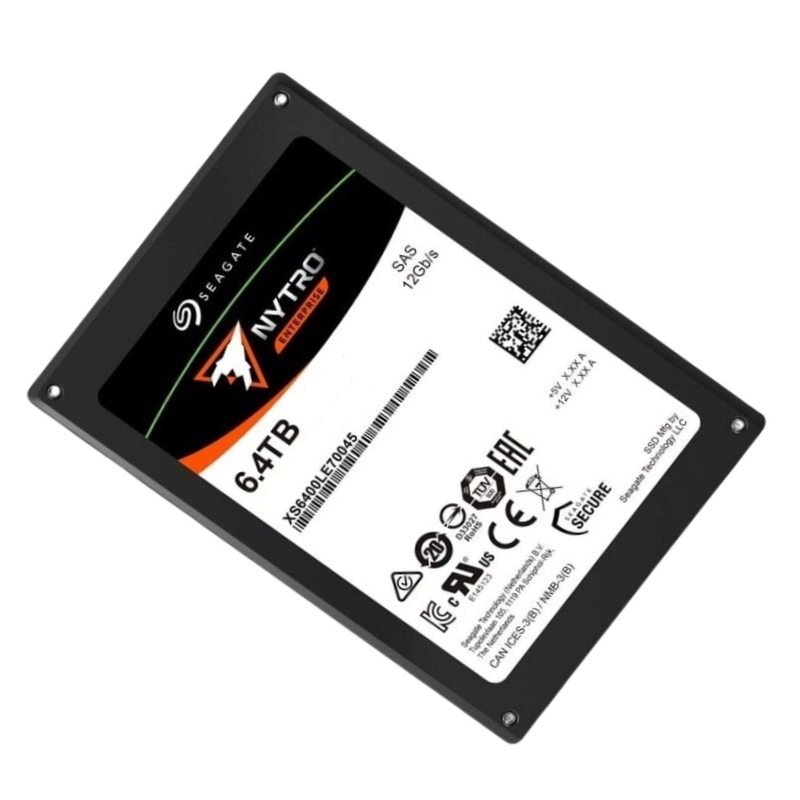
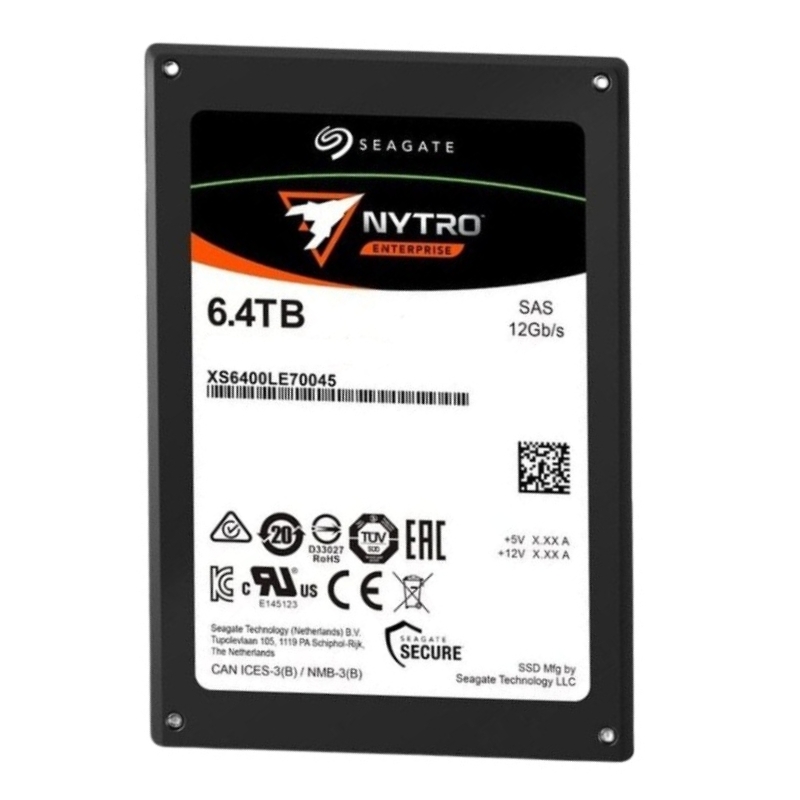
Seagate XS6400LE70084 Nytro 3532 6.4TB SAS-12GBPS Mixed-Use 3D eTLC SFF Solid State Drive. Excellent Refurbished with 1 year replacement warranty
The Seagate XS6400LE70084 Nytro 3532 6.4TB SAS-12Gbps Mixed-Use 3D eTLC SFF Solid State Drive represents a class of enterprise-grade storage engineered for dense data center deployments, mixed transactional workloads, and cloud-scale virtualization. Within the Nytro 3532 family, this 6.4TB configuration balances capacity and sustained performance to meet modern application demands that require both throughput and consistent low latency. Built on 3D eTLC NAND, the drive targets mixed-use scenarios where read and write activity coexist—such as database systems, virtualization hosts, scale-out storage nodes, and caching layers—delivering cost-efficient endurance while maintaining the enterprise-level feature set expected from a SAS-12Gbps interface. The small form factor (SFF) design allows systemic density in rack environments while providing the mechanical and thermal characteristics necessary for hot-swap, high-availability systems.
Performance for enterprise workloads is not only about peak throughput; it is about predictable behavior under sustained load. The Nytro 3532 series is designed to provide high sustained sequential throughput combined with strong random I/O performance at low latency. The SAS-12Gbps interface supports an aggregated bandwidth that enables faster command completion times and improved queuing compared with older interfaces, while enterprise-class controller logic, optimized firmware, and advanced NAND management techniques reduce latency spikes. For mixed-use workloads—where random writes, reads, and background housekeeping run concurrently—this drive is engineered to keep average response times low across a high IOPS footprint. This predictability benefits latency-sensitive applications such as online transaction processing, user-facing web services, virtual desktop infrastructure, and Tier-1 databases that cannot tolerate wide latency variance.
The 6.4TB capacity point in an SFF package targets customers who need to scale usable storage without significantly increasing rack space or power consumption. High-capacity SFF SSDs allow administrators to consolidate more data per 1U or per server chassis slot, reducing the number of spindles or nodes required and lowering overall system complexity. For data centers and service providers, the density gains translate into lower rack unit cost per terabyte and improved energy efficiency, since solid-state media draw less power than equivalent rotating disk arrays while delivering greater performance per watt. This advantage becomes particularly relevant in environments where floor space and power budget are at a premium but application performance cannot be compromised.
Enterprise deployments place heavy emphasis on data integrity, endurance, and reliability under continuous operation. The Nytro 3532 Mixed-Use SSDs incorporate enterprise-grade NAND management and error-correction strategies to maximize usable life while protecting against silent data corruption. Wear-leveling algorithms, over-provisioning strategies, and background garbage collection combine to preserve performance and extend endurance, enabling the drive to sustain mixed read/write workloads for long duty cycles. In addition, power-loss protection mechanisms and robust firmware ensure that in the event of an unexpected power interruption, in-flight data is protected and metadata consistency is maintained, reducing the chance of data loss or long rebuild windows.
SAS-12Gbps is a widely supported, enterprise-grade interface that provides backward compatibility with earlier SAS generations and robust support for multi-pathing and enterprise controllers. This makes the Nytro 3532 family straightforward to integrate into existing server ecosystems, storage arrays, and HBA or RAID controller configurations. Whether used as direct-attached storage in a hyperconverged node, as cache/Tier-0 storage in a hybrid array, or as primary storage in all-flash configurations, the drive is designed to coexist with enterprise software stacks and orchestration layers. Vendor-certified interoperability with major servers, storage platforms, and operating systems simplifies validation and accelerates time-to-production.
Virtualized environments place heavy demands on storage in the form of small-random I/Os, snapshots, and metadata-intensive operations. The performance profile of a mixed-use SSD in the Nytro 3532 line is well suited to virtual machine boot storms, desktop virtualization workloads, and containerized microservices where many small transactional requests arrive simultaneously. In hyperconverged infrastructure, these drives can be used to host hot working sets and accelerate local reads and writes, improving cluster-wide responsiveness and reducing latency across distributed storage fabrics. Service providers running multi-tenant clouds can benefit from consistent QoS characteristics to maintain predictable performance across tenant workloads.
As storage stacks evolve, close integration with orchestration frameworks and storage software enhances the value of enterprise SSDs. Software-defined storage, container storage interfaces (CSI), and storage orchestration layers can dynamically place hot data on Nytro 3532 drives, migrate colder data to less expensive tiers, and automate lifecycle actions based on telemetry. Integration with monitoring and alerting systems enables automated remediation for thermal events, predictive replacement, and firmware orchestration. For cloud-native environments, persistent volumes backed by these drives provide consistent performance for stateful services and make it easier to manage resilience and capacity at scale.
When evaluating storage, comparing mixed-use SSDs across capacity, interface, endurance, and vendor support clarifies trade-offs. The 6.4TB Nytro 3532 is positioned between smaller, lower-capacity offerings and larger, higher-endurance drives. Buyers should compare rated endurance sustained IOPS at target queue depths, and latency percentiles, not just peak IOPS. In many cases, specifying a pilot deployment to test interoperability in the specific stack will prevent costly surprises at scale.


 Contact Us
 Information
 Catalog
 Solid State Drives (SSD)
 Network Switches
 Hard Disk Drives
 HBA & Controllers
 PC & Servers
 PC & Server Memory
 CPU & Processors
 Network Routers
 Power Supplies
 Tape Drives & Libraries
 Network Devices
 Computer & Network Cables