(7% discount is applied at checkout)
Cart is empty
Your go-to destination for cutting-edge server products
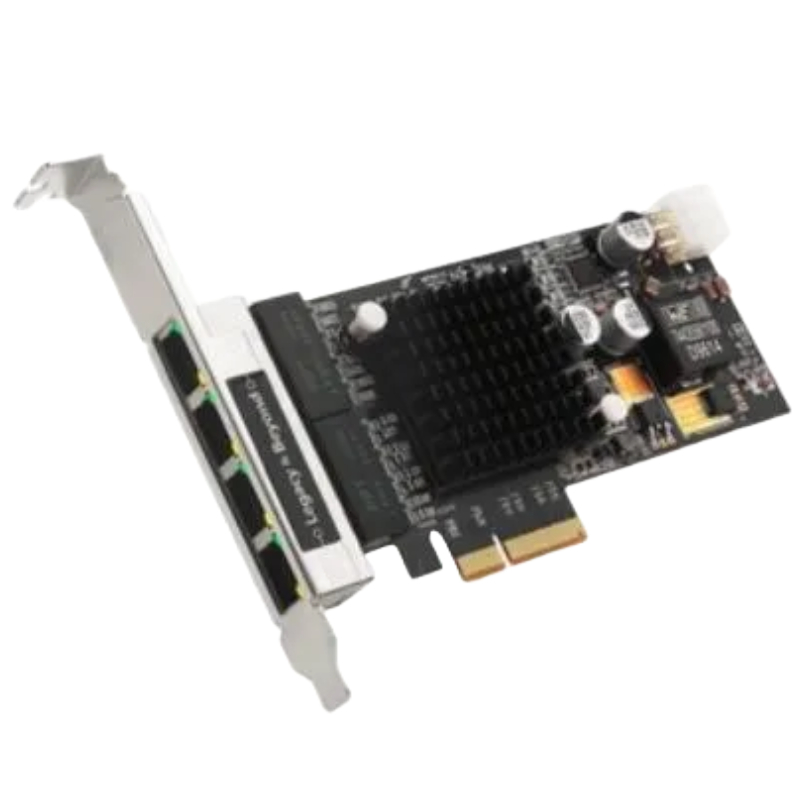


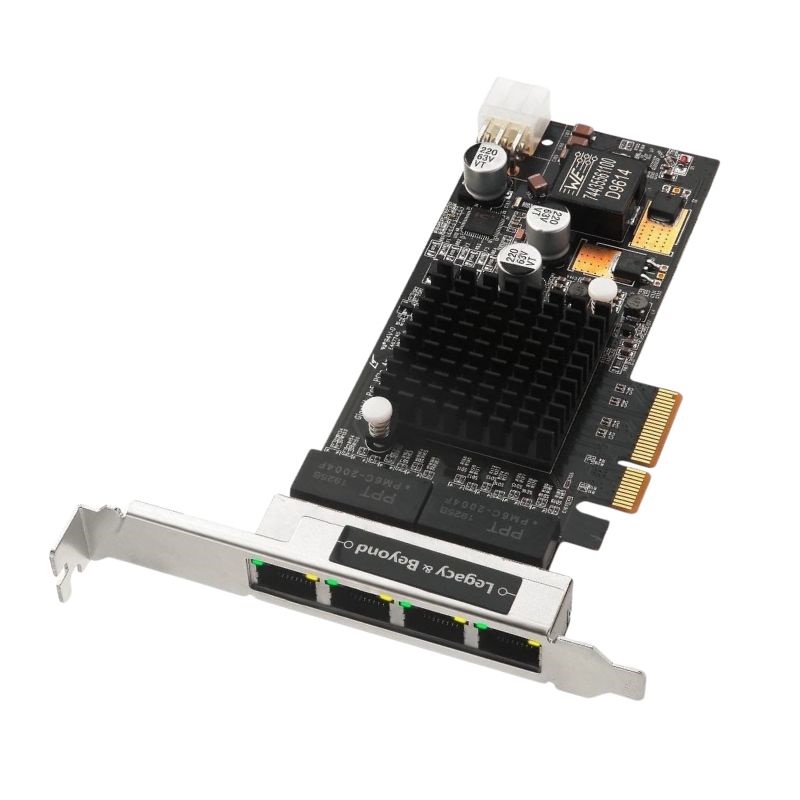
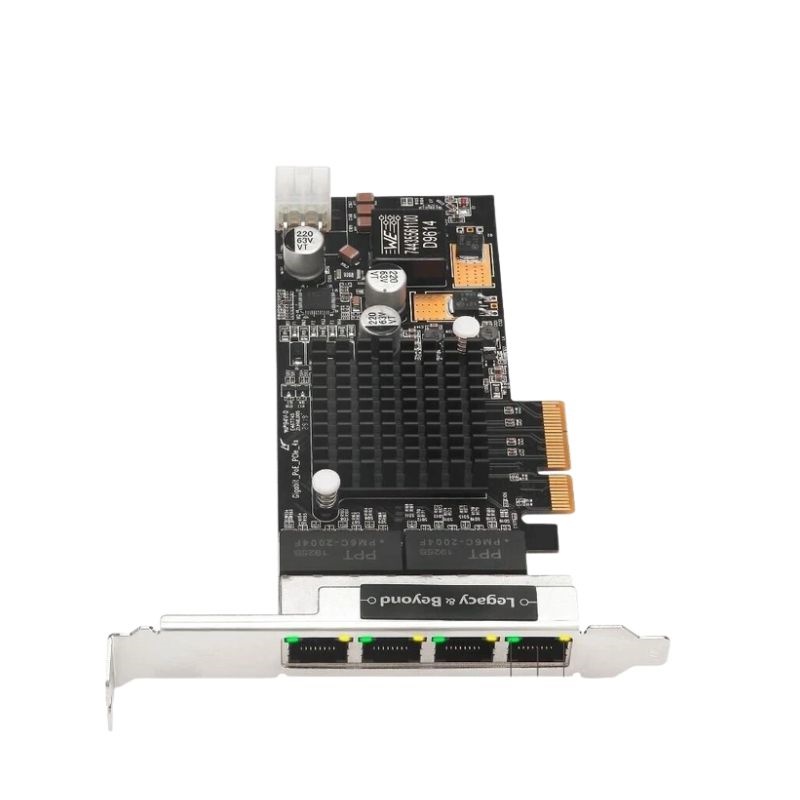
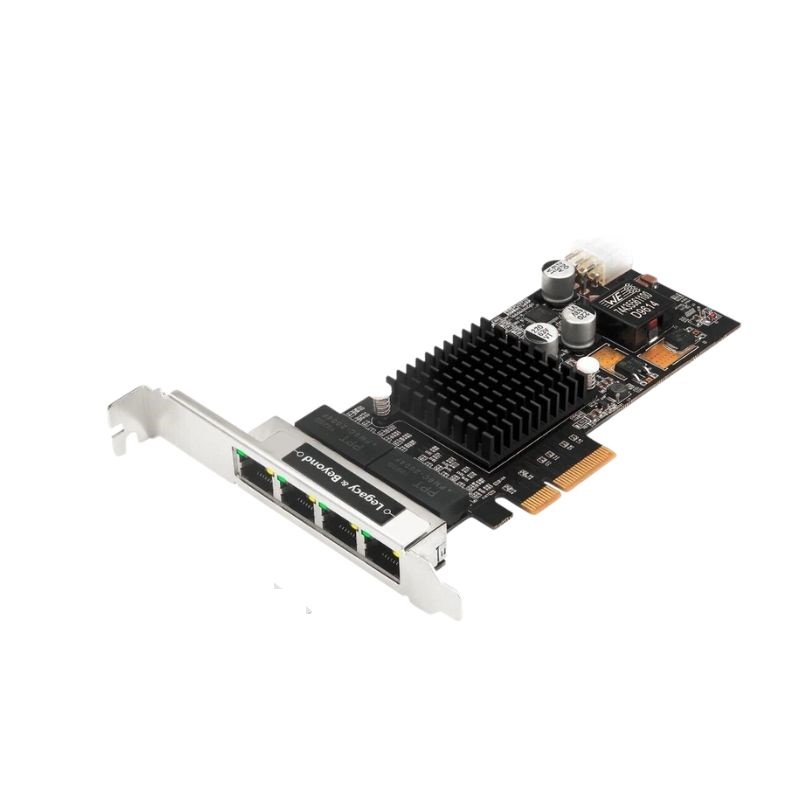
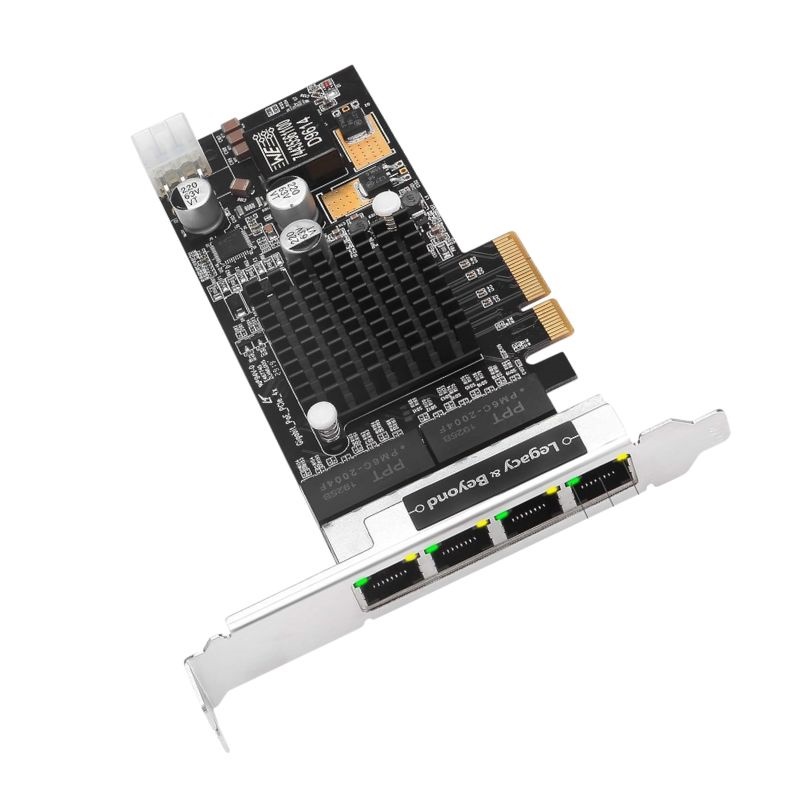
SIIG LB-GE0811-S1 4 Port Gigabit Ethernet with Power over Energy Efficient Ethernet PCIe Card. Factory-Sealed New in Original Box (FSB) with 3-Years Warranty
The SIIG LB-GE0811-S1 4-Port Gigabit Ethernet PCI Express Network Adapter is a high-efficiency networking solution designed to deliver stable multi-port connectivity, advanced power delivery, and energy-conscious performance. Built on the Intel 350 chipset, this adapter provides reliable throughput, low-latency communication, and scalable network expansion for enterprise, SMB, and advanced home networking environments.
Core Technical Specifications
The SIIG LB-GE0811-S1 4 Port Gigabit Ethernet with Power over Energy Efficient Ethernet PCIe Card represents a high-density network expansion solution designed for systems requiring multiple simultaneous wired connections, advanced network segmentation, high-throughput data routing, and efficient power-conscious networking operations. This category of multi-port PCI Express network interface cards is widely used in enterprise servers, network appliances, virtualization hosts, industrial computing systems, and advanced workstation environments where a single network interface is insufficient to meet operational demands.
By integrating four independent Gigabit Ethernet ports into a single PCIe expansion card, the SIIG LB-GE0811-S1 provides scalable network connectivity that supports complex networking architectures, including load balancing, failover configurations, VLAN segmentation, and multi-network routing scenarios. Combined with Energy Efficient Ethernet (EEE) and Power over Ethernet (PoE) related efficiencies depending on deployment configuration, this class of network adapter emphasizes performance optimization alongside power-aware networking design principles.
Multi-port PCIe Ethernet adapters are designed to address the increasing demand for network segmentation and high-density connectivity within modern IT environments. As organizations expand their digital infrastructure, single-port network interfaces often become limiting factors in performance, redundancy, and network architecture flexibility. The SIIG LB-GE0811-S1 category addresses these challenges by providing multiple independent Gigabit Ethernet interfaces on a single expansion card.
This architecture allows administrators to design more efficient network topologies that distribute workloads across multiple physical interfaces, improving throughput and reducing congestion. It also enables the creation of isolated network segments for security, performance optimization, or application-specific traffic separation.
The PCI Express interface provides the foundational communication channel between the network card and the host system. PCIe architecture is based on a high-speed, point-to-point communication model that eliminates shared bus limitations found in older PCI standards. This ensures that each network port on the card can operate efficiently without significant internal bottlenecks.
The SIIG LB-GE0811-S1 typically utilizes a PCIe x4 or higher slot, allowing sufficient bandwidth to support multiple Gigabit Ethernet interfaces simultaneously. This ensures that even under full load conditions, each port maintains stable and predictable performance characteristics.
Energy Efficient Ethernet (EEE) is a key feature in modern network interface design, focusing on reducing power consumption during periods of low network activity. This technology dynamically adjusts power usage based on network load, allowing the adapter to conserve energy without compromising performance during high-demand operations.
The SIIG LB-GE0811-S1 integrates these energy-saving principles to support environmentally conscious computing environments and reduce operational costs in large-scale deployments. This is particularly important in data centers and enterprise environments where thousands of network interfaces operate simultaneously.
Each of the four ports on the SIIG LB-GE0811-S1 supports standard Gigabit Ethernet speeds of up to 1000 Mbps, with backward compatibility for 10/100 Mbps networks. This ensures compatibility with a wide range of networking equipment, including legacy switches, modern routers, and enterprise-grade network infrastructure.
Gigabit Ethernet remains a widely adopted standard due to its balance of cost-effectiveness and performance. In multi-port configurations, it enables aggregated bandwidth potential that significantly enhances overall network throughput when properly configured with link aggregation or load balancing techniques.
The presence of four independent Ethernet ports allows for highly flexible network architecture designs. Administrators can assign each port to a different network segment, creating isolated communication channels for different applications or departments. This enhances both performance and security within complex IT environments.
Multi-port configurations are particularly beneficial in environments that require traffic separation between production systems, management networks, backup systems, and guest or external-facing services.
Enterprise servers often require multiple network interfaces to handle diverse workloads, including database management, virtualization traffic, storage communication, and external service delivery. A four-port PCIe Ethernet card allows servers to separate these workloads across dedicated physical interfaces for improved performance and reliability.
This separation reduces network congestion and improves system stability, particularly in high-traffic environments where multiple services operate concurrently.
Virtualization platforms rely heavily on efficient network distribution to support multiple virtual machines. Each virtual machine may require dedicated or shared network resources depending on workload requirements. The SIIG LB-GE0811-S1 enables hypervisors to allocate physical interfaces to different virtual switches or networks.
Multi-port Ethernet cards are commonly used in custom routing systems, firewalls, and network appliances. Each port can serve a specific role, such as WAN connection, LAN distribution, DMZ configuration, or internal service routing.
The flexibility provided by four independent ports allows administrators to build advanced networking systems without requiring additional hardware devices.
Small businesses benefit from multi-port Ethernet cards by consolidating multiple network roles into a single system. This reduces hardware costs while improving network management efficiency. A single system equipped with a four-port adapter can function as a file server, router, firewall, or network gateway.
The SIIG LB-GE0811-S1 installs into a compatible PCI Express slot, typically requiring x4 or higher bandwidth availability depending on system design. Proper installation ensures stable physical connection and optimal performance across all network ports.
Once installed, the operating system detects each port as an independent network interface, allowing separate configuration for each connection.
Driver support is essential for enabling full functionality of multi-port Ethernet cards. Modern operating systems typically include built-in drivers for standard Gigabit Ethernet controllers, simplifying setup and deployment. In enterprise environments, vendor-specific drivers may be used for advanced features and optimization.
Virtual Local Area Network (VLAN) support enables administrators to logically segment network traffic across physical interfaces. This improves security, reduces broadcast traffic, and enhances overall network organization.
Each port can be configured to operate within different VLANs, allowing precise control over traffic flow and network access policies.
Hardware-based Ethernet controllers ensure efficient packet processing with minimal latency. This is critical for real-time applications such as VoIP, video conferencing, and financial systems where timing accuracy is essential.
The SIIG LB-GE0811-S1 ensures that each port operates independently, reducing contention and improving responsiveness across all network channels.
The SIIG LB-GE0811-S1 4 Port Gigabit Ethernet with Power over Energy Efficient Ethernet PCIe Card represents a powerful and flexible networking solution for modern computing environments requiring high-density connectivity, efficient power usage, and advanced network segmentation capabilities. Its combination of PCIe-based performance, multi-port architecture, Gigabit Ethernet support, energy-efficient operation, and deployment versatility makes it a foundational component for enterprise servers, virtualization systems, network appliances, and small business infrastructure. This category of networking hardware continues to play a critical role in enabling scalable, efficient, and reliable network architectures across diverse IT ecosystems.


 Contact Us
 Information
 Catalog
 Solid State Drives (SSD)
 Network Switches
 Hard Disk Drives
 HBA & Controllers
 PC & Servers
 PC & Server Memory
 CPU & Processors
 Network Routers
 Power Supplies
 Tape Drives & Libraries
 Network Devices
 Computer & Network Cables